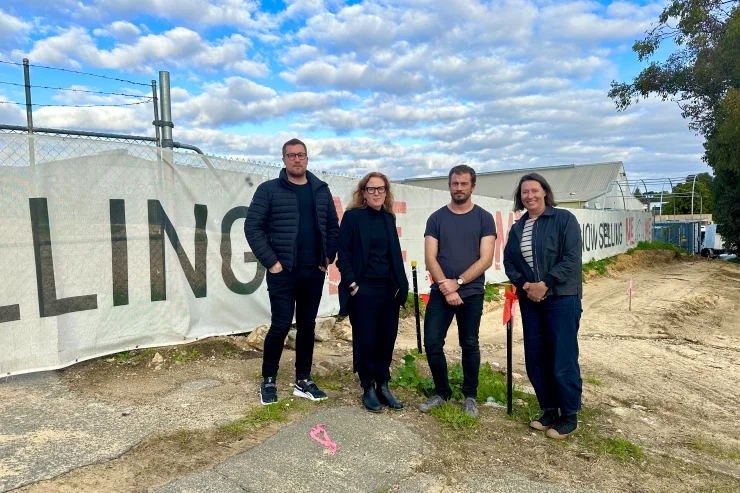
TFA Partner Emma Williamson was in the press this week for her efforts in opposing a proposed housing development near our Fremantle studio. Emma convened a group of design advocates to convince the State Administrative Tribunal that the development ignored the principles set out in the
Medium Density Code
and would do little to contribute to character and quality of the surrounding neighbourhood. Fortunately, SAT listened and the development was unanimously rejected! Go here to read more about
Monument East
.
We are aware of the demand for development and the need for housing. But it is all about getting the balance right. Our agenda is not to have award-winning design but good design that can be implemented as quickly and cost-efficiently as possible.
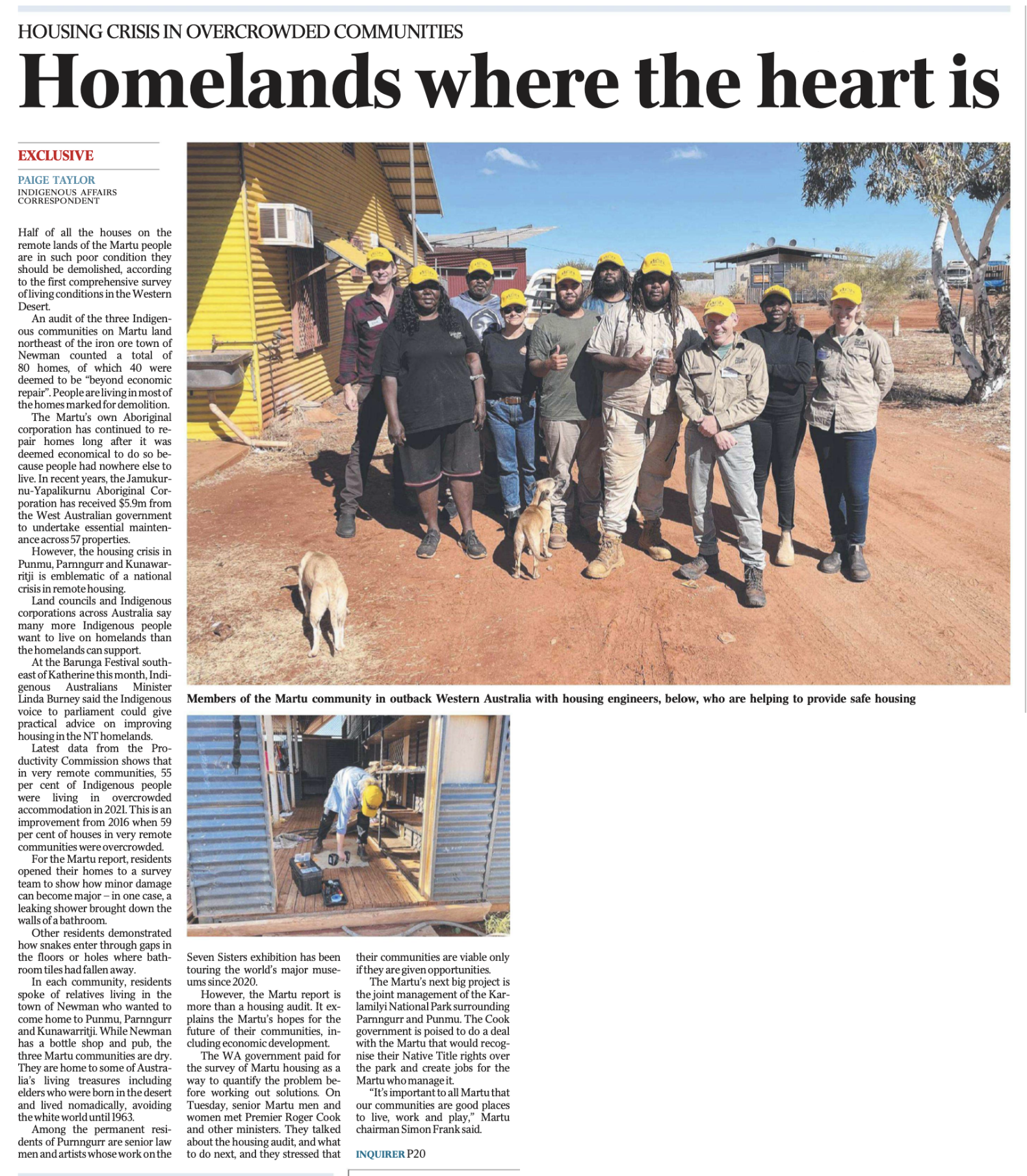
The Australian recently published an article about three Martu communities we are working with now.
Homelands where the heart is
describes the housing crisis in Punmu, Parnngurr and Kunawarritji, where half of the existing homes have been deemed ‘beyond economic repair’. We have been working alongside JYAC and HealthHabitat on Ngurra Palyamaniny, a ‘survey-fix’ program enabling houses to be repaired in two-steps: simple repairs first followed by major works. The work is pacy and requires meaningful community involvement. You can read more about this project
here
.
We are pleased that the poor quality of housing in remote communities has been raised in a major national publication. It’s something we address daily as part of our work. Our clients and the community tell us that
people want to live in community on Country
, rather than in the mining towns that dominate the northwest. Our job is to deliver the housing and community infrastructure to make that happen.
The
Yes Campaign
has developed a very handy guide to talking about the Voice to Parliament. It gives you the tools to design a conversation about tricky issues and provides straightforward answers to genuine questions.
We cannot afford to be complacent about this referendum and it’s incumbant on all of us to educate ourselves and be open to sharing our knowledge. Hopefully this document might make potentially awkward conversations that little bit easier.
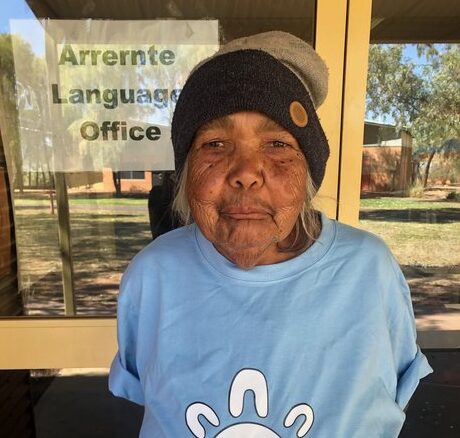
This is Christobel Swan, a respected Elder and founder of the Perfume School, a community-led language revival program empowering Pertame Elders to pass their language and cultural knowledge onto the next generation.
There are currently around 20-30 fluent speakers of Pertame still with us, all within the grandparent and great grandparent generation. Without serious action, Pertame will be lost within the next generation.
We are pleased to be assisting the
Pertame School
with their campaign to raise funds to build a school on Country south of Alice Springs. Our role is pro bono and involves the development of a design brief and grant writing. Time is critical with this project and if you are able, we ask that you consider making a donation to the school
here
.
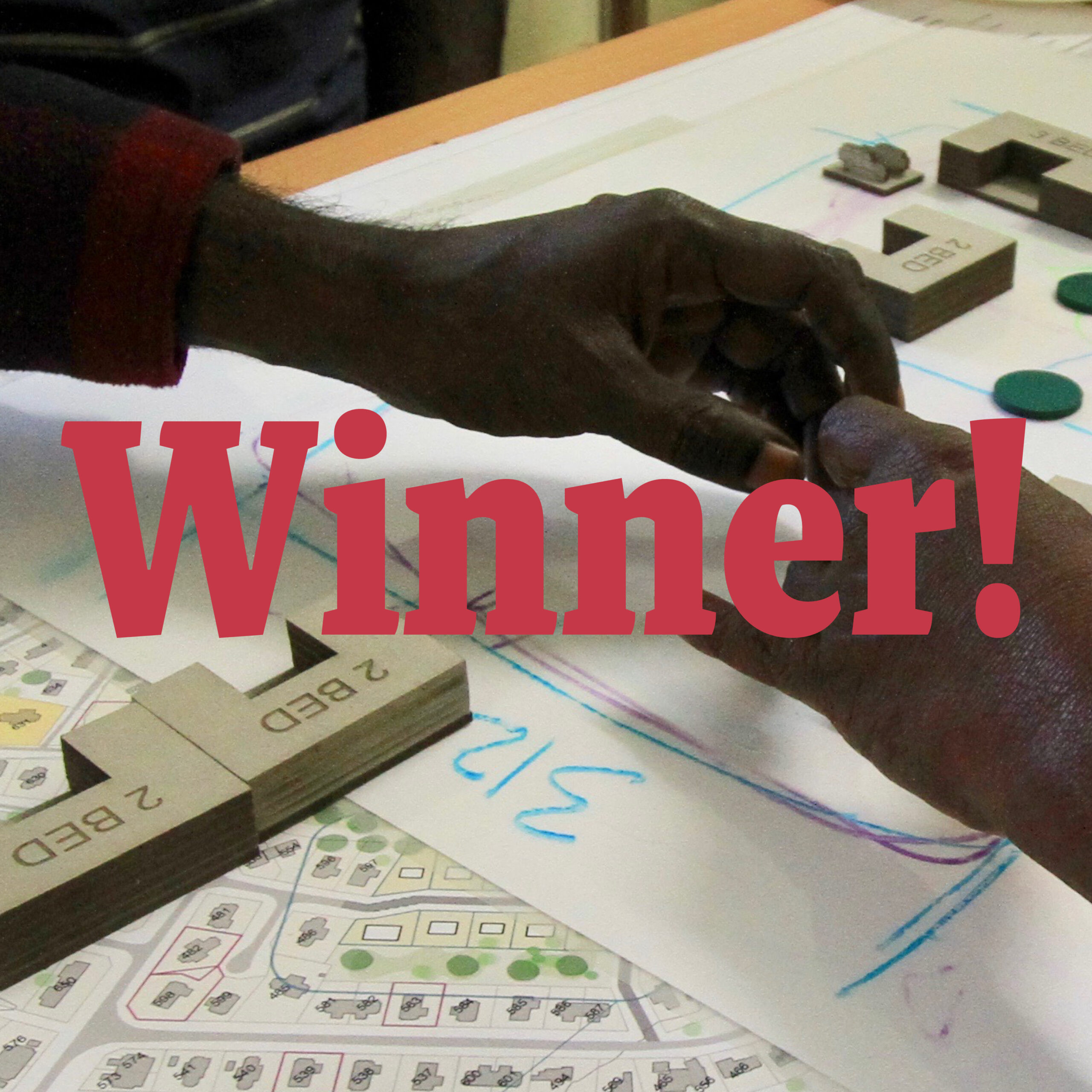
Our work on the Groote Archipelago Housing Programme has just won the inaugural ArchitectureAU Award for Social Impact and we could not be happier! We have been working with the Anindilyakwa community for eight years and have have made lifelong friendships and almost consider the archipelago our second home. For long enough it was! This project demanded a new way of thinking about our role as designers. We developed a Social Impact toolkit to measure our work and totally re-shaped the way we practice. Read the full Jury Citation
here
.
Congratulations also to joint winner Kaunitz Yeung Architecture for their work on the Puntukurnu AMS Healthcare Hub.
The architects were expert in technical and planning information, and Anindilyakwa cultural expertise was also recognized as central to the program. This two-way learning means the community now has the knowledge and confidence to determine their own housing projects with a long-term lens.
Peter Finney, Anindilyakwa Housing Aboriginal Corporation
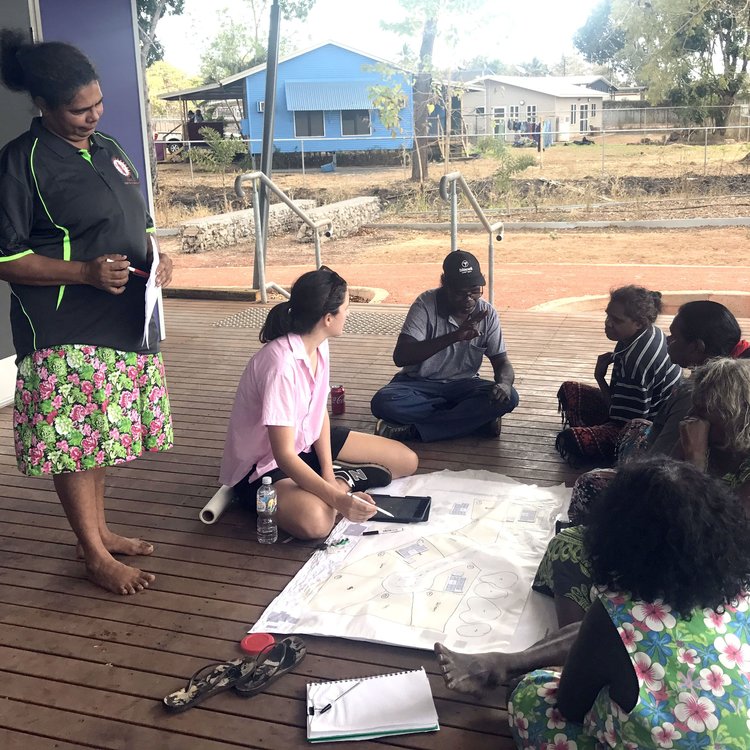
Nick Juniper in conversation with community on Groote Eylandt.
This morning started with the good news that we’d made the shortlist for the inaugural
ArchitectureAU
Award for Social Impact! Our work on Groote Eylandt conveys what this award is all about – ’empathy over aesthetics, extending the spatial possibilities of architecture to advance the discipline and to empower its users.’ We are chuffed to be included amongst a lineup of outstanding projects. Find out more
here
.
In the final article from Equity, art historian Melissa Miles the media portrayal of women in cities at night, and how these constructed images fail to capture the breadth of safety issues in public space. Miles argues that we need to look beyond white, middle class and heteronormative experience to develop cities in which all people feel safe.
Visually representing the anxiety experienced by many women, girls, particularly those who are members of the LGBTIQ community, when walking city streets alone at night involves contending with a weighty tradition. Decades of crime reporting, TV and visual culture have solidified into a set of visual tropes that are both pervasive and persistent.
The empty stretch of footpath. The young woman seen from the back, walking alone. Perhaps she’s looking over her shoulder. Harsh streetlamps creating disconcerting deep, dark shadows. Blurred neon or oncoming car headlights flaring on the camera’s lens, obscuring visibility. Grainy CCTV footage. The empty carpark. Misty roads and parklands. An imagined figure lurking in the dark. An abandoned shoe lying on its side. A handbag left in a lane. Flowers and candles transforming a street into a make-shift memorial. What geographer James Tyner describes as the ‘politics of fear underlying our representation of the street’ has been distilled over decades, from Jack the Ripper to crime films and more recently, news reports on the Claremont killings and Jill Meagher’s ‘final walk’.
[1]
HyperSext Exhibition; image: Brett Brown
Commercial stock photo archives like Getty Images and Shutterstock are indicative of the ubiquity of such imagery. These massive image archives trade in generic photographs for billboards, brochures, websites and magazines, forming what media theorist Paul Frosh refers to as the ‘wallpaper’ of cities and consumer culture.
[2]
Getty Images offers staged and documentary photographs of women in city streets after dark by the thousands. Yet four types of images overwhelmingly predominate: young, pretty ‘feminine’ women smiling and confidant when walking with their male partners or friends; young, pretty ‘feminine’ women standing alone but confident because they are connected to others through their mobile devices; young, pretty ‘feminine’ women isolated, unidentifiable or vulnerable when walking alone after dark; and sexualised young women walking alone and looking provocatively towards the viewer. The repetition of very limited tropes like these in news, entertainment and commercial media produces more than just ‘wallpaper’. It helps to create an ambient image environment that habituates members of the public to certain types of people in particular contexts and reinforces expectations about who is entitled to access certain types of spaces with confidence and who does not.
A Billion Views
This essay asks what is at stake in such representations of gender and safety in urban spaces, and how we might move towards more productive conversations. Imbued with very potent ideas about crime, fear, risk, race, responsible citizenry, and heteronormative and middle class norms, these images of urban threat, desire and safety are ingrained in us and inscribed into the spaces in which we live. Consciously or not, they inform where we walk, when we walk, how we walk and how we feel when we walk with others. Cumulatively and over time, these representations reinforce impressions of the urban spaces and conditions in which women and girls can reasonably have an expectation of safety and those which are sites of risk. For perpetrators of verbal harassment, physical intimidation and violence, they may also help to validate or legitimise abusive behaviours in certain types of spaces. Scholars have pointed out how the mass media’s disproportionate focus on a relatively small number of murders of young women by strangers also renders thousands of daily experiences of harassment and violence invisible.
[3]
Catcalling, unwanted sexual attention, objectification, stalking, harassment and physical violence form part of a spectrum of behaviours, which are the products of a culture that sustains heteronormativity and related constructions of masculinity and femininity.
[4]
The challenge for those seeking to address issues of safety and urban gender inequity visually, is that attempts to capture the public’s attention with imagery that already has currency risks inadvertently supporting the very problems they seek to overcome.
HyperSext City Graphic by Gene Bawden
In the geographies of risk mapped in popular representations of urban safety, the journey home is a particularly perilous terrain. The space between workplace or venue and home is a recurring trope in reporting of random attacks on women in public, where phrases like “just a kilometre from her home” and “walking towards her home in the early hours” are used strike a chord with readers.
[5]
Home is figured as the safe harbour in this problematic public-private divide. Although we know that that violence against women is most often perpetrated by someone they know, in the spectacularised culture of urban crime drama and reporting, the devil we don’t know looms far larger than the ones we do.
[6].
Police warnings and media commentaries supplement these narratives and images with cautionary tales. Victoria Police’s Acting Commander, David Clayton, controversially warned Melbourne women after the rape and murder of Eurydice Dixon in 2018: be ‘aware of your surroundings’, ‘walk in well-lit areas and if listening to music … consider using only one headphone in’.
[7]
For many of us, these and other behaviours taught by parents, authorities and peers to supposedly ward off the threat of violence and harassment in public are so normalised that we may not attach them consciously to a sense of fear. Walk with bravado – appear assertive. Don’t meander or dawdle. Don’t attract attention. Stick to the well-lit streets. Vary your route, but don’t take quieter paths. Be careful where you park your car. Carry your phone. Be aware of who is around you. Carry your handbag close. Tone down your look. Don’t show affection in public. Look out for your mates. Text a friend when you get home. Take a taxi. Behave like ‘a good woman’ and you’ll be ok.
[8]
Tell yourself it’s just anxiety. Don’t be hysterical. Tell yourself that women are more likely to be attacked or killed by someone they know by than a stranger in the street. Deny that the social relations, cultures, gender values, expectations, institutions and structures that give rise to and sustain domestic violence have any connection to acts of gender-based harassment, abuse and violence by strangers in public.
[9]
The unspoken flipside of these self-help crime prevention strategies (or myths) is highlighted by Elizabeth Stanko: ‘Women who do not follow the rules for prudent behaviour, it is presumed, deserve to be excluded from any benefits of public provision of safety, because
those
women fail to take appropriate measures to protect themselves from harm.’
[10]
Social geographer Alexandra Fanghanel points out the ultimate irony: ‘even the notion of personal security, of things that you could do to make yourself safer in order to avoid rape and sexual harassment, are ingrained in vernacular rape culture that fetishises safety at any price, and casts public spaces where these attacks are imagined to take place as inherently dangerous, from which women as always-already victim, should be excluded.’
[11]
Home is figured as the safe harbour in this problematic public-private divide
The offensive judgements implicit in recurring cautionary tales are not simply linked to certain self-regulating behaviours. As the plethora of stock photographs of women alone on the streets at night attest, there is a preferred cast in representations of fear and risk in urban spaces. The so-called ‘innocent victim’ is typically a cisgender woman, white, able-bodied yet apparently helpless, young, pretty and childless.
[12]
Scholars looking at news accounts of violence against women through an intersectional lens have shown the striking variability in reporting of the deaths of women based on the extent to which the victim aligns to these ideals. In their study of media coverage of the deaths of Irish woman Jill Meagher, Indian woman Jyothi Singh and Indigenous woman Lynette Daley, Chelsea Hart and Amanda Gilbertson show how some crimes are presented as more ‘grievable’ than others based on preconceptions about the race and class of the victim.
[13]
In popular representations of gendered risk in public, different lives seem to matter and different ways. Conversely, perpetrators of ‘grievable’ public attacks on women are commonly framed as deviant or disconnected from society due to mental illness, disability or other supposed outsider status, as was the case with Meagher’s, Dixon’s and Aiia Maasarwe’s killers. Media depictions of ‘evil’ criminals and abhorrent crimes troublingly ‘sustain the inaccurate myth that violence against women is rare and when committed, not reflective of society’s true values.’
[14]
It is clear that we need alternative ways of representing the experiences and risks of gender-based harassment and violence in public. We may use social media and public gatherings to reclaim the streets and the night, march against violence and hold vigils for peace. Tweet our rage, Insta empowering images, and Facebook our own stories. However, there is also a risk in unwittingly figuring urban space as the inert stage for violence and harassment, rather than the product of decades of non-gender-inclusive design produced by those with the privilege of feeling safe in public space. We must remember that gendered spatial inequity is not simply the product of harassment or violent acts that occur in public. Tyner puts it succinctly: ‘We need to recognize that violence not only
takes place
, but that violence is
part of place
, that violence and place are iterative. In other words, both that violence contributes to the production of place, and that place is foundational to the practice of violence.’
[15]
HyperSext City Opening Night
The ability to occupy and traverse urban spaces free from harassment and violence is the product of privilege. And when cities are designed as though this privilege is the norm experienced by all, spatial inequities quietly persist. As Michael Kimmel writes in his study of masculinities: ‘The processes that confer privilege on one group and not another are often invisible to those upon whom that privilege is conferred. Thus, not having to think about race is one of the luxuries of being white, just as not having to think about gender is one of the “patriarchal dividends” of gender inequality’.
[16]
Privileges also function by degrees. To suggest that spatial inequity and injustice operate according to dualistic gender categories is to deny intersectional experiences and gender diversity. When ‘public spaces are (over)coded as androcentric, heterocentric, ableist, transphobic, racist, [and] classist’,
[17]
they perpetuate inequity, hinder engagement and delimit full participation in urban space in myriad ways. For LGBTIQ+ communities, unsafe spaces can be spaces that are heterosexualised through the prevalence of advertisements and displays showing images of happy heterosexual couples and nuclear families. Such spaces can create a sense of being out of place and act as reminders of vulnerability to harassment, verbal abuse, intimidation and physical hate crimes.
[18]
In her study of the experience of architectural space for trans and gender diverse people, Simona Castricum also notes: ‘Trans people who live with different aspects of marginalization as well – through race, class, ability, or a combination of these – experience compounding effects; this is one reason why particularly trans women of colour endure disproportionate amounts of extreme violence and murder rates in their communities.’
[19]
Monash University XYX Lab, 2021
We can choose to turn away from exclusionary images altogether and let the numbers speak loudly to the scale, breadth and complexity of the problem. The Australian Bureau of Statistics, the Australia Institute and Plan Australia tell us that ‘90 per cent of women in Australia have experienced catcalling or sexually aggressive comments, and more than half were still children the first time it happened.’
[20]
While 80% of Australian men report feeling safe while walking alone at night, a 2019 Community Council for Australia report notes that only 50% of women say the same. This gap between the perceived safety of women and men in Australia is the largest of all OECD countries, and is growing wider in Victoria where women’s perception of safety is diminishing.
[21]
While the particular experiences of trans women were addressed in this report,
The 2018 Australian Trans and Gender Diverse Sexual Health Survey
found that 53.2 percent of trans and gender diverse people had experienced sexual violence, compared to 13.3 percent of the broader Australian population.
[22]
According to the 2020 Australia’s National Research Organisation for Women’s Safety report
Crossing the Line
, trans women from culturally and linguistically diverse (CALD) backgrounds report more frequent instances of sexual harassment by a stranger than other groups of women.
[23]
Data is power, but it is also partial and says more about effects than their cause. While shocking data like this can form a compelling call to action, it does not show the way forward.
Criminologists, geographers, philosophers, feminists and social scientists have spent decades studying women’s experiences of public space, yet gendered experiences of sexualised harassment and violence persist. These are complex issues – too complex to solve with a silver bullet. Single propositions, whether they be design or policing strategies, queer practices or feminist imagery and analysis, will not be able to compete with the cumulative effects of decades of news coverage, popular culture, gender norms, classism, homophobia and transphobia, racism and deeply ingrained intergenerational anxieties. Like any long-term systemic change, we need to come together and be in it for the long haul. Intersectional dynamics will be a source of strength. We need to talk and to listen;
really
listen, sensitively and respectfully. Only through a comprehensive, interdisciplinary and intersectional practice can we create shared understanding and a common vision for change. People from across the spectrums of age, class, gender, profession, experience, interests and skills can together activate new pathways and forge new spaces, and through a multitude of small, complementary actions, can help edge closer towards long-overdue change.
[1]
James Tyner,
Space, Place and Violence
(New York: Routledge, 2012), 102. For examples of this representation of the city as site of risk see: Candace Sutton, ‘Shadowed by a killer: Jill Meagher’s final walk’, news.com.au, 4 May 2017.
https://www.news.com.au/national/victoria/shadowed-by-a-killer-jill-meaghers-final-walk/news-story/ebe461b014086b7a31c6c8d47d5ee0cf
; ‘Three women were murdered in Claremont. This is why it took two decades to reach a verdict’,
SBS News
, https://www.sbs.com.au/news/three-women-were-murdered-in-claremont-this-is-why-it-took-two-decades-to-reach-a-verdict.
[2]
Paul Frosh, “Is Commercial Photography a Public Evil? Beyond the Critique of Stock Photography,” in
Photography and Its Publics
, ed. Melissa Miles and Edward Welch (London: Routledge, 2020), 195.
[3]
Janine Mary Little, “Jill Meagher CCTV,”
Feminist Media Studies
15, no. 3 (2015): 407. For a compelling account of incidents of domestic violence in just one day in the UK, see Elizabeth Stanko, “The Day to Count: Reflections on a methodology to Raise Awareness about the Impact of Domestic Violence in the UK,”
Criminology and Criminal Justice
1, no. 2 (2001): 215-26.
[4]
Alexandra Fanghanel,
Disrupting Rape Culture: Public Space, Sexuality and Revolt
(Bristol: Bristol University Press, 2019), 8.
[5]
See, for example, Bill Hosking, ‘Anita Cobby murder: ‘Everyone in the car that dreadful night had a passport to doom’’,
The Guardian
, 20 March 2017, https://www.theguardian.com/australia-news/2017/mar/20/anita-cobby-everyone-in-the-car-that-dreadful-night-had-a-passport-to-doom; Aisha Dow, ‘Murder of Jill Meagher was ‘preventable’, Victorian Coroner finds’, the Age, 27 May 2016,
https://www.theage.com.au/national/victoria/murder-of-jill-meagher-was-preventable-victorian-coroner-finds-20160527-gp5y0w.html
; ‘Eurydice Dixon’s killer stalked her for 5km before murder in Melbourne park’,
The Guardian
, 15 August 2019, https://www.theguardian.com/australia-news/2019/aug/15/eurydice-dixons-killer-stalked-her-for-5km-before-in-melbourne-park
[8]
Elizabeth Stanko, “Safety Talk: conceptualizing women’s risk assessment as a ‘technology of the soul’,”
Theoretical Criminology
1, no. 4 (1997): 486.
[9]
For more on these systemic issues, see Geraldine Connon Becker and Angel T. Dionne, eds.,
Rape Culture 101: Programming Change
(Ontario: Demeter, 2020).
[10]
Stanko, “Safety Talk: conceptualizing women’s risk assessment as a ‘technology of the soul’,” 486.
[11]
Fanghanel,
Disrupting Rape Culture: Public Space, Sexuality and Revolt
, 12.
[12]
Stanko, “Safety Talk: conceptualizing women’s risk assessment as a ‘technology of the soul’,” 483.
[13]
Chelsea Hart and Amanda Gilbertson, “When does violence against women matter? Gender, race and class in Australian media representations of sexual violence and homicide,”
Outskirts
39 (2018): 1-19. See also Jay Daniel Thompson and Rebecca Louise, “Sexed Violence and its (Dis)appearances: Media Coverage Surrounding the Murders of Jill Meagher and Johanna Martin,”
Outskirts
31 (2014).
[14]
Hart and Gilbertson, “When does violence against women matter? Gender, race and class in Australian media representations of sexual violence and homicide,” 3.
[16]
Michael Kimmel, “Foreword,” in
Masculinities Matter! Men, Gender and Development
, ed. Frances Cleaver (London: Zed Books, 2002), xi-xii.
[17]
Fanghanel,
Disrupting Rape Culture: Public Space, Sexuality and Revolt
, 13.
[18]
Karen Corteen, “Lesbian Safety Talk: Problematizing Definitions and Experiences of Violence, Sexuality and Space,”
Sexualities
5, no. 3 (2002): 260.
[19]
Simona Castricum, “When Program is the Enemy of Function… Gender- Nonconforming Experiences of Architectural Space,”
Architecture and Culture
5, no. 3 (2017): 378.
[20]
Jane Gilmore, ‘If you don’t believe the harassment statistics, listen to these women’,
Sydney Morning Herald
, 10 May 2019, https://www.smh.com.au/lifestyle/gender/if-you-don-t-believe-the-harassment-statistics-listen-to-these-women-20190509-p51lp2.html
[21]
Community Council for Australia,
The Australia We Want
, Community Council for Australia (Canberra, 2019), 32-33, https://www.communitycouncil.com.au/sites/default/files/Australia-we-want-Second-Report_ONLINE.pdf.
[22]
Denton Callander et al.,
The 2018 Australian trans and gender diverse sexual health survey: Report of findings
, The Kirby Institute (Sydney, 2019), 10, https://kirby.unsw.edu.au/sites/default/files/kirby/report/ATGD-Sexual-Health-Survey-Report_2018.pdf.
[23]
Australia’s National Research Organisation for Women’s Safety,
Crossing the line: Lived experience of sexual violence among trans women of colour from culturally and linguistically diverse (CALD) backgrounds in Australia
ANROWS (Sydney, 2020), 10, https://apo.org.au/sites/default/files/resource-files/2020-06/apo-nid306359_0.pdf.
We made a commitment when we sold our first journal in 2018 to distribute all revenue to First Nations community projects. Since then, sales have been ticking over and we’ve been steadily stashing away the funds.
We are chuffed to announce that we’ve been able to make a $1000 donation to the language preservation program at
Kanyirninpa Jukurrpa
(KJ), an organisation based in Newman and servicing Martu communities in the Western Desert.
Thank you to everyone who has bought one of our journals – Pivot, Agency, Leverage, Commune, Equity – and made this donation possible. Thank you also to Pauline at the
Fremantle Foundation
for your work in facilitating the grant. Happy days!
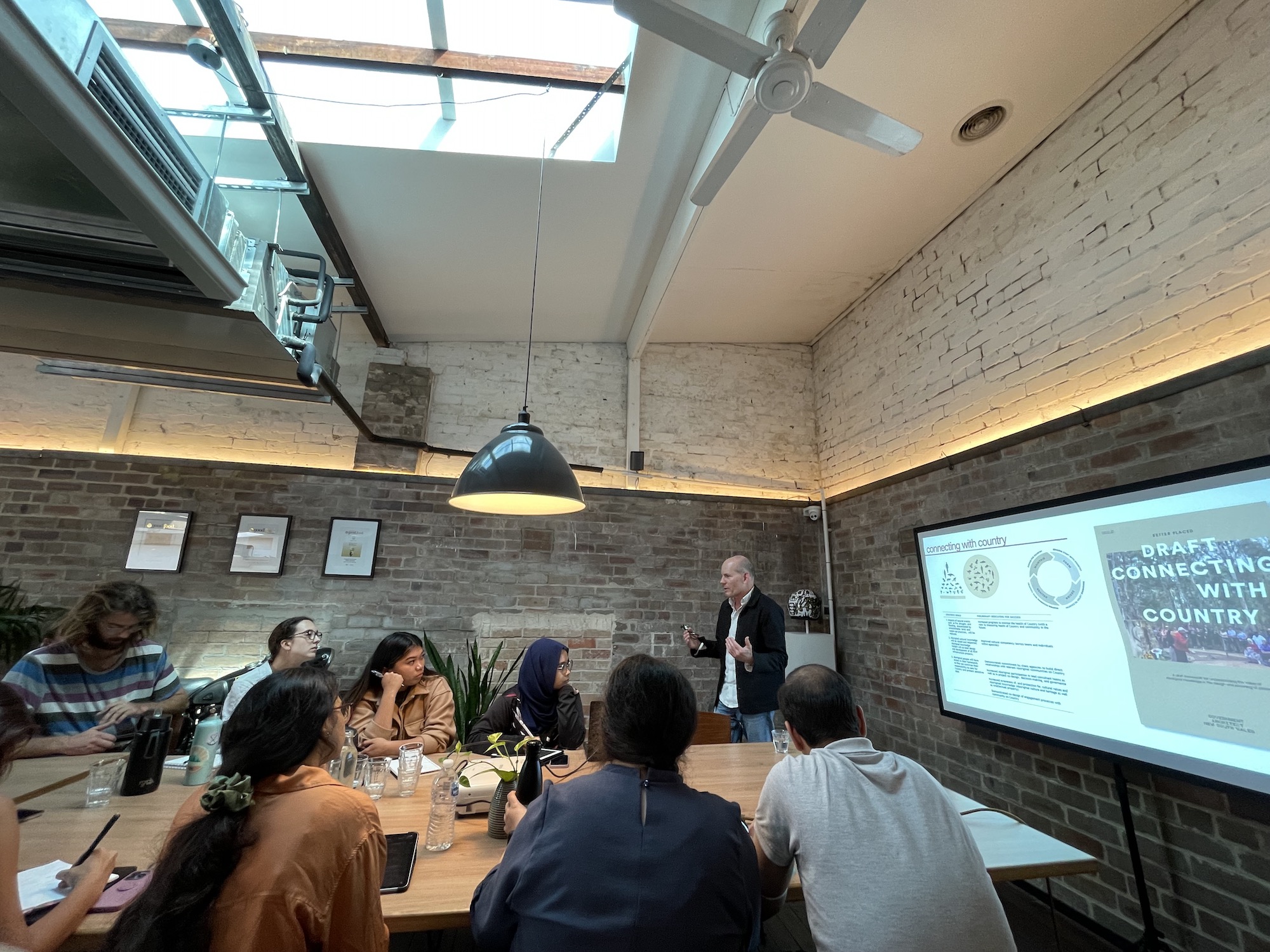
TFA’s Andrew Broffman and students from The University of Newcastle
Andrew Broffman from our Sydney Studio was recently invited to share his knowledge with students from the School of Architecture and the Built Environment at the University of Newcastle. His contribution was part of a Masters’ course designed to enhance the students’ understanding of the relationship between First Nations culture and the built environment, and the intricacies of working with First Nations communities. Other contributors include our colleagues at
Healthhabitat
, Tess Lea from the
Housing for Health Incubator
and Simon Quilty from the Australian National University. Go
here
to learn more.