By Kieran Wong, Partner and Founder at The Fulcrum Agency
Last week I attended the Aboriginal Housing and Homelands Conference, held from April 9-12, 2024, in Mparntwe (Alice Springs), which brought together around 250 delegates to discuss the crucial topics of housing and homelands in Aboriginal communities. Set against the backdrop of Arrente Country, the conference theme, “Building a strong, self-determined Aboriginal housing and homelands sector in the Northern Territory,” emphasized the importance of empowering Aboriginal communities to take control of their housing and homeland initiatives.
I was there to present our work with JYAC on Martu-led initiatives for housing in their homelands and to listen and learn from the line-up of dedicated people working in this niche space. These are my observations on the event starting with Day 1…
I arrived at the convention centre after a brisk and beautiful walk along the Todd River to a Welcome to Country from Traditional Owner, Benedict Stevens. It was a stirring start to the week. The conference was spread out over four days and with multiple sessions, it was impossible to listen and engage with all the content and stories on offer. I found this hard as there were so many great presentations that I couldn’t attend. With the small cohort of practitioners, housing experts, tenancy managers and government, it could have been organised to allow for a single stream of content more targeted towards the theme.
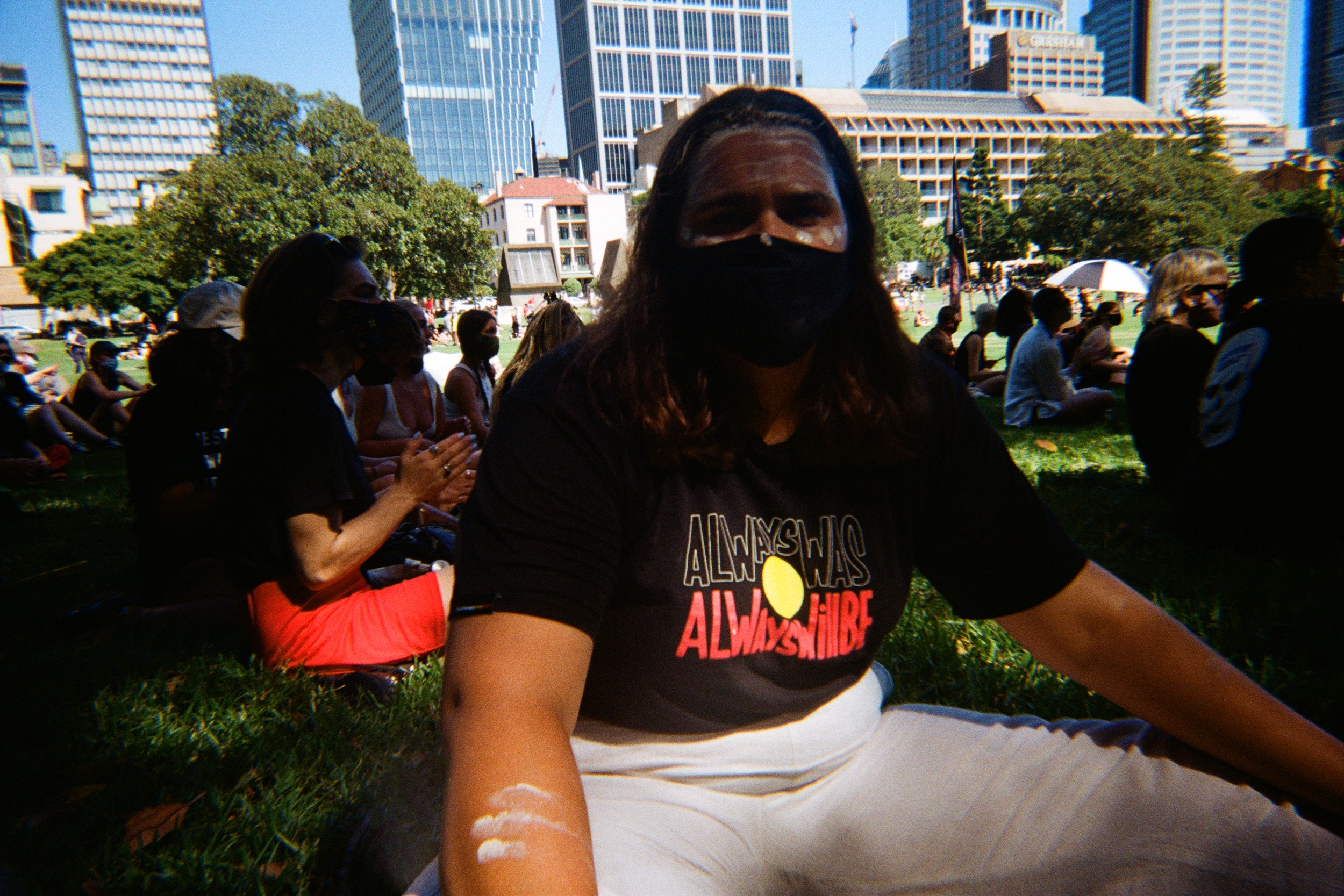
Dr. Josie Douglas, a long-time advocate for social justice, challenged the audience’s perception of home and belonging. She compared the song ‘I Still Call Australia Home’, an anthem consumed by the notion that you can choose where to call home with ‘always was, always will be’, the rallying cry for First Nations peoples across Australia. Douglas noted that for Aboriginal people, home isn’t chosen – it is a birthright and an obligation deeply rooted in tens of thousands of years of connection to Country. This obligation is best maintained through homelands, those communities on Country, where old people were born and will go to die.
Through her work at the Central Land Council, Dr Douglas is developing strategies for the maintenance of homelands and policies that recognise their importance to Aboriginal people, culture and the broader nation. This is the kind of nationalism or obligation that Peter Allen’s song just can’t comprehend. Her speech served as a poignant reminder of the ongoing struggle by Aboriginal communities to maintain a connection to Country and their homelands.

Queensland architect, Paul Memmott revisited his 1988 and 2004 essays on the ‘State of the Art of Aboriginal Housing’. It has been 35 years since he wrote his original essay and he asked the question, ‘Has anything changed’? The five recommendations outlined in the 1988 essay may as well have been written yesterday, with perhaps the only slight increase in the number of Indigenous architects now working in Australia. He called on the Australian Institute of Architects to return to the field they once occupied by providing stable, evidence-based advice on Aboriginal housing to the government and funding bodies.
It was delightful to watch AHAC (Aboriginal Housing Aboriginal Corporation) present their inspiring journey towards independence and to know we played a small part in their story. As an Aboriginal-led and robust organisation, AHAC is seen as a beacon of empowerment and self-determination. Someone said to me afterwards that this was due to money, and I agreed to a point. If the challenge is simply money (and not intelligence, agency, resilience, commitment) then it isn’t a challenge at all, just a choice made by governments about where to spend it. Budgets are about choices and governments express their values through these choices. Many people talked about choice in their presentations – the choice to fund sealed roads versus failed prawn farms or the payout to the French for submarines we didn’t want or need. The simple fact is that AHAC demonstrates that, with appropriate money, many of the so-called barriers that face Aboriginal housing can be mitigated.
Liam Greeley from Menzies School of Health Research provided an evaluation of the NT Government’s Healthy Homes program. I’ll summarise his excellent work:
Data is important.
Knowing if a program is working is important.
Developing any program for future works should be based on knowing what works.
Not knowing implies not caring if what you are doing is what you are being paid to do. This seems crazy, and yet, is the baseline format for how most programs roll out in Aboriginal housing.
Greely noted the challenges in understanding and evaluating data when most completed work completed is labelled as “miscellaneous” or “other”. The world of taxpayer-funded social housing repairs and maintenance remains opaque, and perhaps this is how the funders like it.
Finally, Matthew Ryan, the newly appointed chair of the Northern Land Council (NLC), delivered a powerful and passionate speech. He started slow but by the end, was not mincing his words when addressing the need for better partnerships and trust between the government and Aboriginal people. Ryan’s frustration was palpable as he used the word “appalling” a dozen times, emphasizing government failure. He stressed the importance of governments in telling the truth and the NLC’s role in fighting for the rights of Aboriginal people: NLC needs to get the gloves on and start punching, fighting the government . It was a provocative speech and an interesting start to the next chapter for the NLC.

My second day and another sun-drenched walk along the Todd.
First up, was a talk by David Donald and Bobby Bayley from Healthabitat – a resilient organisation that has been working to improve living conditions in Aboriginal communities for decades. I found Bobby’s ‘maintenance is sexy t-shirt’ disconcerting – sexiness is fleeting and this is a space where I want to see long-term romance. So, her presentation on localized waste disposal sites was a relief and a refreshing take on an age-old problem. Their proposition to develop waste management solutions closer to the communities, rather than transporting septic pump-outs over long distances, was pragmatic and environmentally conscious. As they delved into the details, it became clear that their approach was not only cost-effective but also had the potential to create local job opportunities. Donald and Bobby’s presentation served as a reminder that sometimes the most effective solutions are the ones that are right in front of us.
I was chuffed to meet the group from the Nawarddeken Academy in Western Arnhem Land, the recipients of a travel bursary that we sponsored as part of the conference. Our funding contributed to the cost of the charter flight from community to Darwin – the most expensive part of their journey. I was disappointed to miss their talk as I flew out just prior, but hearing community voices is so critical for these conferences. AHNT – count us in for sponsoring next year!

The conference also featured a closing panel discussion on “The Way Forward,” which brought together key stakeholders from government, academia, and community organisations to discuss the next steps in building a strong, self-determined Aboriginal housing and homelands sector in the Northern Territory. I was struck by the question posed by a Commonwealth public servant, “How do you stay optimistic?” The answer lies in success stories like AHAC, which demonstrate that community leadership, coupled with adequate funding, can lead to transformative change. Rather than more policy work, reviews, or strategic commissioning frameworks, the key to progress is empowering Aboriginal communities with the resources they need to take control of their own destinies.
Several presentations by the CLC used the iconic image of Gough Whitlam pouring sand through Vincent Lingiari’s hand – the return of land to Aboriginal people. I kept imagining Albo pouring money into the hands of Aboriginal leaders like Barb Shaw or Robin Granites – long-overdue recompense and recognition that while governments may not be able to cede power, they can at least hand back wealth. “From little things, big things grow” and the “always was, always will be” – lyrics of a new song for Australia’s reckoning with home.