• Hot Mess, an essay by Kieran Wong

    Hot Mess, an essay by Kieran Wong

    2022 was a pretty great year to attend Garma. It was equal parts electric and emotional. To be under the shade of a large tin roof, in view of the Gulf of Carpenteria, whilst the newly appointed PM outlined the referendum questions that would enshrine the Voice in our Constitution… it felt like a moment of sunshine after a long and challenging winter of silence.

    I even got to ask a question on Q&A. According to my family it was career highlight, but in truth it wasn’t the question I had hoped to ask. I submitted two questions but the more pressing one wasn’t selected by the show’s producers. Missing from Garma’s forums and Q&A’s panel was any discussion around the impact of rising temperatures on culture and community and the viability of inhabiting Country across the north and at the centre of Australia.

    After failing to get traction in my one shot on national television, I have been testing my concerns in smaller forums.  Since returning from Garma, I have been talking with John Singer, Executive Director at Nganampa Health Service on the APY Lands. John has described the way in which cultural practice is changing to deal with the increasing heat; ceremonies and activities are either taking place in the evening, reduced in length, or not being done at all.

    If the science holds true and the situation worsens, what is the future of cultural practice on Country that is being irreversibly changed as a result of the warming planet? John noted (with irony) our new Government’s acknowledgement of the impact of the climate crisis on our Pacific Island neighbours, without recognising the crisis that’s occurring in our own country – displacement, forced migration, loss of culture, community and the ability to care for Country. He questioned whether the Government would acknowledge that ‘climate refugees’ exist here in Australia right now

    The standard definition of the term ‘refugees’ refers to people fleeing across national borders. People displaced inside a nation are generally not considered refugees under international law. If we think of Australia as a place more akin to Europe and made up of numerous nation states, then the movement of people across First Nations borders (with Nations being the critical bit) aligns more closely with the UNHCR definition of a refugee. That is, people moving across national borders as “persons displaced in the context of disasters and climate change.” [i] We need to acknowledge the multitude of nations that make up the continent we now call Australia, and the real and challenging impact of movement across these nation state lines for Indigenous people.

    Human comfort is the result of the right mix of factors, in particular temperature and humidity. A critical measurement is known as the ‘wet bulb temperature’ [ii] (shown in degrees Tw ) and indicates the temperature of a thermometer after a wet cloth has passed its surface. With higher levels of humidity, less evaporation occurs to cool the surface. Humans rely on sweating to cool their bodies and wet bulb temperatures of 31.5Tw have been described as the upper limits of human survivability. [iii]

    Several places around the world have recently recorded wet bulb temperatures of above 31.5Tw and this includes two sites in Western Australia and the Northern Territory. So far, these temperatures are unprecedented (and brief in occurrence), but most climate experts predict that wet bulb temperatures above 31.5 will occur in more locations and for longer periods as vulnerable regions are increasingly affected by the climate crisis.

    So, what is the link to ‘equity’ here? There are many – the first being the inequitable distribution and impact of the climate crisis on poor and vulnerable populations. Think here of the people without insurance in Lismore or displaced farmers in Pakistan flooded by unprecedented monsoonal rains. Our neighbours in the Pacific Islands are experiencing ongoing inundation and coastal erosion as well as the wildfire ravaged rural populations of Europe. Those with the least are being hit the hardest, and this, of course, includes many First Nations communities around the world.

    Migration due to the climate crisis is happening across all populations, with many people in wealthier communities and populations around the world participating in what’s known as a ‘managed retreat’. [i] In Australia the search for better climates is often part of a midlife tree or sea-change, made easier by digital connectivity, improved regional infrastructure, the accumulation of wealth as a result of a suite of generous tax incentives focussed on housing.

    Our government is acutely aware that many voters view Australia’s housing supply as a wealth creating asset, not as a human right or societal responsibility.

    This is especially relevant to First Nations communities, where people have been dispossessed of land, ‘resettled’ into reserves, pushed off Country and had their traditional lands acquired, thereby denying them the means of inter-generational wealth accumulation through land ownership afforded to the settler state. [i]

    There is also vast inequity in infrastructure between Australia’s urban towns and cities and our regional and remote communities. Access to clean drinking water, reliable power, adequate telecommunications, safe roads, and appropriate waste removal varies significantly depending on where you live. The divide between remote communities and mainstream Australia is stark and well documented. [ii]

    And let us also consider the inequity of mobility. The movement of people due to seasonal, cultural, or social reasons, has always been seen as problematic by governments who like to be able to ‘see’ their subjects at a known fixed address. Tying a citizen to a parcel of land (and thus keeping them sedentary) certainly assists. It is interesting to contrast this problematising of mobility in Indigenous populations by the State, and the subsidisation of mobility in wealthier cohorts, such as holiday house owners through taxation systems and infrastructure investment.

    So how can we address this lack of equity – and the combined impacts of a warming climate, poor infrastructure, and the requirement for mobility? And, perhaps more importantly, is there even the desire to do so? The sixth Assessment Report by the IPCC [iii] suggests that we only have a very small window to reduce our greenhouse gas emissions, and even then, substantial global warming is inevitable. For people already living on the edges of climate survivability, this has dire consequences, and it is not something we have started to meaningfully address.

    For many First Nations communities, the predicted effects of rising temperatures do not need to hit the extremes of probability to make a real difference to the already over-stressed health system and individual vulnerabilities. Community infrastructure has been neglected for decades – power outages or disconnections are commonplace, air-conditioning often doesn’t work, insulation is lacking, buildings offer no shade or thermal control – all amplified by the negative impacts of crowding. It is an ecosystem of policy and delivery failure which demands urgent, system wide reform.

    In Indigenous Affairs, reform has been a word rolled out across successive governments, Ministers, and bureaucrats. Despite this reformist zeal, genuine action and meaningful change has been glacial in pace. And thus, communities have become adept and skilled in the art of waiting. A large part of this waiting can be seen in the ‘testimony’ of housing adaptations. It is one of the few areas where agency is seen in the built environment in Indigenous communities. Building ‘hacks’ are commonplace, removal of louvres to install cheap wall air-conditioners, the use of tarpaulins, aluminium foil and shade cloth to protect inhabitants from climatic or privacy pressures, or the re-alignment of living/sleeping spatial norms most houses are designed to construct.

    Governments have paid little heed to this testimony. While tenant involvement in Indigenous housing design is often recommended, it seldom takes place in practice. Demand for housing continues to outstrip supply, and in rental situations, it can be difficult for tenants to have much of a say about the design features that would improve their everyday living conditions. Each building hack holds clues that would help architects, planners, builders, and policy makers deliver new housing and refurbishments in harmony with tenant needs. Unfortunately, Indigenous tenants instead occupy the space between ‘take what you can get’ and ‘no money for appropriate designs.’

    Despite research and community advocates who repeatedly recommend Indigenous-led housing design processes, Indigenous tenants in social housing are usually represented by organisational brokers, and if consulted directly, will be asked questions about their likely household composition/demographic profiles. These ‘briefing sessions’ reduce people’s agency to a function of bedroom and bathroom allocations. Tenancy Agreements forbid tenants from making any structural changes to their housing and design responses fail to address basic needs.

    I was trained in the value of passive design – responding to a site’s climate by seeking opportunities for natural ventilation, effective shading to shield summer sun and welcome winter rays and orientation that assists all the above. Air-conditioning was seen as a design failure, an inability to design sensitively to your context, to ‘touch the earth lightly’. One could think of this approach as a kind of ‘thermal moralism’ – design judgments that believe natural systems are inherently better than mechanical (or man-made) ones. Design responses that took advantage of the site’s natural attributes, buildings that ‘breathe’, ensuring its occupants were in harmony with nature were celebrated as exemplars of the architectural discipline – positioning itself against the mindless housing of the mass market, which was closed and shockingly reliant on air-conditioning to maintain thermal comfort.

    What is our design response when the temperature outside becomes lethal? Are we positioned as a profession to care about challenges such as cyclical maintenance, crowding and mobility, dust and corrosion that have left so many architect-designed ‘remote houses’ derelict without the ongoing maintenance support that is needed? Architects have ‘declared’ it’s a crisis, but in what ways are we acting?

    And what then about the impending challenge of ‘managing the retreat’ of communities away from Country due to human-induced climate warming. Are we ready for the moral, ethical and logistical requirements to move people off Country, far away from their homelands? Again. Are our regional and peri-urban centres ready for this forced migration; places already feeling the squeeze of the housing crisis and impact of tree/sea changers? And how will we, as a nation, grapple with the shame of forced migration due to climate warming – an ideology of neglect – not only of the planet, but of the First Peoples who are disproportionately affected by it? Can governments and agencies adapt quickly enough to support seasonal or continuous mobility without penalty to tenants?

    As always, there are pockets of hope. Places where communities are taking control, driving towards their own localised vision of community infrastructure, appropriate housing, responsive and culturally safe policy. There are innumerable advocates pushing for change – from Tangentyere Council delivering cogent arguments against government energy policy, or rental calculations, to practical demonstrations like Norman Frank Jupurrurla’s practical activism against energy poverty and for improving housing standards.

    We need a massive investment in housing upgrades to make them thermally effective, to install air-conditioning, to change the system of power supply in community, and support ongoing planned and cyclical maintenance. We need new housing to be built in a way that is mindful of the impending future, to have climate boundaries drawn on maps not by policy makers seeking to simplify the lives of building certifiers, but in an accurate response to the changing climate. We need better tenancy policy to enable mobility, supporting people to move between regional centres and homelands. These are not issues of equality in housing supply for social housing tenants, and the likely comments sections of news sites calling out perceived unfairness for Indigenous peoples “being given two houses”. These are issues of equity, of justice and the re-distribution of the wealth.

    This is complex, messy and challenging terrain. We must be open to this conversation, even as we argue for a Voice, for greater community control, for a handing back of land and assets. This must not be done as a way of retuning places devoid of liveability, the creation of a new form of Terra Nullius – a land nobody can survive in. John Singer and the countless others calling for a response cannot be left waiting any longer. For tens of thousands of generations, culture and community have not just co-existed, but thrived across this continent, nourishing through intimate connection to Country, ceremony and law. We are facing the very real possibility that this could be lost within the next two. The Uluru Statement called for Australians to walk together. I reckon we need to start running.

    Footnotes

    Oliver Prince Smith (October 26, 1893 – December 25, 1977) was a U.S. Marine four star general and decorated combat veteran of World War II and the Korean War . He is most noted for commanding the 1st Marine Division during the first year of the Korean War, and notably during the Battle of Chosin Reservoir , where he said “Retreat, hell! We’re not retreating, we’re just advancing in a different direction.” [1] He retired at the rank of four-star general, being advanced in rank for having been specially commended for heroism in combat.

    https://en.wikipedia.org/wiki/Oliver_P._Smith

    [2] https://www.unhcr.org/en-au/climate-change-and-disasters.html

    [3] Wet Bulb Temperature: The Temperature of Evaporation

    The wet bulb temperature Tw (or tw) or isobaric wet bulb temperature, is the temperature an air parcel would have if adiabatically cooled to saturation at constant pressure by evaporation of water into it, all latent heat being supplied by the parcel.

    https://www.sciencedirect.com/topics/engineering/wet-bulb-temperature#:~:text=2A.&text=The%20wet%20bulb%20temperature%20T,being%20supplied%20by%20the%20parcel .

    [4] Wet bulb temperature: The crucial weather concept that actually tells us when heat becomes lethal – https://www.salon.com/2021/07/18/wet-bulb-temperature-climate-change/

    [5] See: https://theconversation.com/managed-retreat-done-right-can-reinvent-cities-so-theyre-better-for-everyone-and-avoid-harm-from-flooding-heat-and-fires-163052

    Or,

    https://theconversation.com/government-funded-buyouts-after-disasters-are-slow-and-inequitable-heres-how-that-could-change-103817

    or,

    https://theconversation.com/how-managed-retreat-from-climate-change-could-revitalize-rural-america-revisiting-the-homestead-act-169007

    [6] https://www.shelterwa.org.au/wp-content/uploads/2021/05/HousingHealthWealth_Summary_Oct2020_SUMMARY.pdf

    [7] Chris Bowen’s comments as Minister for Climate Change and Energy such as at the Electric Vehicle Summit on 19 Aug 2022: ( https://minister.dcceew.gov.au/bowen/speeches/address-national-ev-summit )

    “As we acknowledge our First Peoples, I’d like to acknowledge two truths: Firstly, that there is no inequality that climate change doesn’t make worse. This includes Indigenous disadvantage, whether it be people in sub-standard remote housing or the people of the Torres Strait dealing with the impacts of climate change on their beautiful island homes that I visited recently. And secondly, First Nations people must be partners in charting the way forward. I was pleased that my state and territory Energy Minister colleagues agreed with me last week to the development of a First Nations Clean Energy Strategy that will be co-designed with First Nations people.

    [8] The IPCC finalized the first part of the Sixth Assessment Report, Climate Change 2021: The Physical Science Basis, the Working Group I contribution to the Sixth Assessment Report on 6 August 2021 during the 14th Session of Working Group I and 54th Session of the IPCC .

  • Building Bonds, an essay by Kieran Wong

    Building Bonds, an essay by Kieran Wong
    Monopoly board (Mayfair, Park Lane, and Super Tax) circa 1940

    Current fiscal policies have lead to a chronic, and worsening, housing crisis. Here, TheFulcrum.Agency’s Kieran Wong argues that it’s time for radical new ideas that could allow ‘the market’ to heal itself.

    It’s been over a decade since the release of the book The Spirit Level: Why More Equal Societies Always Do Better by Richard Wilkinson and Kate Pickett. In that time, the gap between the rich and poor in the developed world has grown wider. Despite the rhetoric of post-Third Wave social democrats, the grotesque disparities of the top 1% and everyone else seem to continue unabated. COVID-19 has only made it worse.

    Why does inequality matter?

    The language of inequality has started to change, with leaders like Boris Johnson now talking about ‘levelling up’ rather than ‘trickling down’ – but the underlying premises, systems and biases of neo-liberal economic management persist. The stellar trajectory of billionaires such as Bezos and Branson into space serve as direct metaphors for the rocketing differences between the rich and poor. And being poor is less uncommon than you think. In 2020, a study determined that 1 in 8 people (or 13.6%) in Australia were living below the poverty line – that’s over 3 million Australians (including 774,000 children under 15) below the median cost of living.

    “The rich may fear the type of violence that characterizes highly unequal societies, but they are more likely to build bigger walls around their gated communities than raise the red flag of egalitarianism in response. It is the hard work of everyday politics – from community organizing to political education – that will bring about more equal societies.” wrote Simon Black in the Canadian Dimension.

    I am doubtful that we can wait in Australia for ‘everyday politics’ to make the changes necessary to really address the issues of inequality and disadvantage. Both major parties have walked off hand in hand from the battlefield for progressive tax policy. Disinformation and distrust characterise the relationships we now have with media, authority, and the rules of law. Meanwhile, governments are doing all they can to silence charitable organisations and welfare advocacy groups through legal and contractual means.

    We know that access to safe, affordable, and permanent housing is a key determinant in social mobility, it drives economic productivity, improves health and education outcomes, and can break the cycle of disadvantage. Yet in Australia, the cost of housing is the biggest burden faced by the lowest quintile of income earners, whilst the highest have had their relative costs of housing reduced, thanks to record low-interest rates, ever increasing house prices and a regressive taxation system.

    The Housing Challenge

    Last year I accepted the role as Chair of Shelter WA, the peak body for an effective housing system and ending homelessness in WA. I started on the Board with what I thought was an understanding of both the drivers of, and some solutions to, housing inequities. The truth is I didn’t have much of either. It is not until you combine a working understanding of the cold, hard statistics with the lived experience of individuals, that you can start to grasp the effects that housing precariousness is having on our society, not just on those who cannot find shelter.

    Over the past year, I have heard powerful testimony from our most vulnerable citizens and many facing housing stress for the first time in their lives. Working families who cannot find a rental home, people left behind in the COVID-19 pandemic – an ever-widening gulf between those with and those without in our society. This gulf is seen in many comparative statistics – mortgage stress, housing arrears, rental demand and demand for frontline services.

    Across Australia, we have seen waves of housing booms making housing tenure precarious for many in the rental and private housing markets. The net effects of our taxation system, land delivery models, erosions of tenancy rights and the casualisation of labour is driving the gap between those who owned property before 2004 and those who came too late to the party.

    Successive governments have failed to match supply with the demand for social and affordable housing.

    Applications to public housing waitlists are increasing month by month. At the time of writing, around 30,000 West Australians are on it. Rental vacancies are at a historic low, with areas such as the regions at levels below 1%. The drivers are complex and intertwined but what is clear is that successive governments have failed to match supply with the demand for social and affordable housing. Despite a massive increase in demand and an ever-growing inequality gap in Western Australia, we have less public housing stock today than we did in 2016.

    Of course, there is a simple political equation underpinning this. There are more people (voters) who own homes than those in the rental market or in public housing. As the often-primary mode of wealth creation, housing asset prices are fiercely protected by homeowners, and any move to make the housing system fairer, or more balanced, to open up affordable options, or change models of delivery is met by instant and vehement opposition. Governments do not have the political capital (or appetite) to consider a future without inequality.

    And there is a philosophical belief underpinning this too – a belief in ‘the market’ as a system that is efficient, objective and can create greater outcomes through innovation. The market is often used a shield to describe why (or why not) certain opportunities may be possible. We are starting to see the pushing back of neo-liberalism ignited by Thatcher and Reagan and adopted here in Australia, but the power of its grasp means our institutions are still beholden to the notion of governments role being one to reduce red tape and let ‘the market’ get on with it. In the language of the market then, I wonder if it is possible to financialise and incentivise investment in affordable and social housing. Can we look to other invented markets that have done the same with other wicked problems?

    What even is a market?

    Markets are dynamic and challenging to pin down. Markets are not necessarily efficient or productive; they can be opaque, and often as a result of their complexity, can elude regulators from scrutiny. They can be seen as games played by people with a penchant for bending rules and betting on futures. From the entrepreneurial mind of Greek philosopher Thales betting on the future olive crop, to the Dutch futures market designed to hedge against losses from global shipping during the 1600’s, trading against a future event that is linked to tangle asset, underpinned the logic of futures trading until the 1980’s. I added a comma to the last part of the sentence but I’m not sure if it’s correct.

    After the floodgates of financialization were opened in the mid 1980’s, some markets, such as futures trading, have become spectacularly decoupled from the tangible commodities that they were devised to hedge against. Like the wild daydreams of a ten-year-old boy, markets have emerged limited only by the imagination of the inventors, and at a speed that often eludes oversight. Futures markets trade (or bet) on changes to the weather, or the cost of shipping or other more bizarre possibilities. The ‘Policy Analysis Market’ was originally proposed by the US Defence Department to trade futures contracts based on political events or changes in the Middle East. “T he theory was that the investment value of a futures contract on a particular political event reflected the probability that the event would actually occur – for example, the outcome of polls or elections. Some US officials claimed, however, that such offerings would encourage speculation on events such as coups d’état and terrorist events” .

    Although the market never made it to fruition, similar forms of political futures markets were proposed. After the Global Financial Crisis, US President Obama introduced a “sweeping overhaul of the United States financial regulatory system, a transformation on a scale not seen since the reforms that followed the Great Depression”. The resultant legislation (the Dodd-Frank Bill) sought to stabilise markets, protect consumers, and it also banned all futures trading based on events such as assassinations and terrorism.

    So, could this wildly inventive market mechanism be used to address inequality? Perhaps our other shared societal challenge – the climate crisis – could provide a clue. For many decades the extent of the climate crisis failed to gain traction with politicians and policymakers using communication based on environmental science, economic logic, and social impact. Governments have sought to address the emergency through ‘market mechanisms’. A market was invented in response – carbon trading.

    Vintage British Monopoly board (Electric Company utility and Whitehall) circa 1940

    Hot Air?

    Established as a result of the 1997 Kyoto Protocol, carbon emissions trading has had its successes and failures. Designed to limit carbon emissions (agreed to be driving global warming) market systems sought to offset high carbon emitters with innovative forms of emission reduction or carbon sequestration. Despite their rhetoric of ‘open markets’, governments have applied a political lens to regulations around emission trading, including the US withdrawal from Kyoto in 2001, and the changing nature of target settings for emissions to reach ‘net zero’. But for around fifteen years since 2000, the financialization of the carbon market created opportunities, leveraged funds for investment projects and delivered a mixed bag of results across the world. Importantly it imagined a financial market to address a human challenge and drive investment in assets and processes aligned to that goal.

    What can we take from this as an idea to address inequality, or perhaps an element of its underpinning –  housing? To develop a tradeable market, you need a system of measurement (ideally with a compelling counterfactual – i.e. if we don’t do something, this is what will happen) and you need agreements on targets to drive trading value.

    Market inequality?

    There are standardised measures, such as the Gini Coefficient, that track income distribution as a measure of inequality in society. More granular measures are taking form in the emerging system of Social Impact Measurement that seek to make a case for the long-term impacts of projects beyond their start-up and operational costs.

    In the UK, measuring and reporting on social impact is now an essential component of taxpayer-funded projects, with business cases required to evaluate the long-term impacts of government’s capital expenditure. In Australia, this idea is gaining traction amongst funders who are now able to evaluate their investment in social services programs. The notions of a Social Return on Investment (SROI) require funders and developers to consider broader attributions of societal change through their projects. Measuring social impact is rapidly becoming better understood, more organised and more widely accepted as a method for determining project success. Accounting practices and consulting forms are expanding to meet the demand for such measures

    Social Impact Bonds are another example of investment vehicle that can provide private financing into the social services sector. Investment is rewarded through evaluation of particular social metrics (such as lowering rates of imprisonments, or restoration of children to families) with the reduction in government costs in justice health education, etc used to provide financial returns to investors. Examples such as this have existed in Australia for almost a decade now. But Social Impact Bonds are long-term investment vehicles, reliant on stable government policy to ensure programs can be evaluated accurately. What is needed to address the housing crisis in Australia must deliver faster outcomes and be less prone to government policy mood—swings.

    The response to the housing crisis must be able to deliver faster outcomes and be less prone to government policy mood-swings.

    Credit where credits due

    With secure housing becoming more precarious and the challenge of affordable housing now impacting the working poor, there has never been a more urgent time to address the crisis (sound familiar?). Delivering a mechanism that seeks to rebalance social inequality over the longer term through immediate investments in the drivers of disadvantage is critical. We must investigate models that can deliver responses at scale, that are market-led and that are lightly regulated by government to allow for agility, delivery, and value for money.

    It could be possible to develop a Social Inequality (SI) Credit system – applied to a range of projects from infrastructure to financial products, to ‘offset’ outcomes that are currently driving the foundations of inequality. An example might be an infrastructure development project that includes residential accommodation, with developers required to provide through inclusionary zoning targets, a minimum number of these social and affordable housing projects?. If not fully incorporated into the development, a SI credit system could be utilised to offset this and aggregate housing funds to deliver projects at scale through other community housing providers.

    Independent investment funds, such as a Social Housing Subsidy Fund, that seek to address the yield gap in rental costs and development costs for social housing could be the receivers of such offset credits, creating value for community housing providers to invest in the delivery of housing. Government-funded infrastructure would need to be evaluated for its social impact (using SROI) and could provide another form of offset funding, or seek credits, depending on its social impact and effectiveness in addressing inequality.

    Governments have typically struggled to make the link between the burgeoning health costs of its citizens, and the supply of healthy, safe, and affordable housing. Despite decades of evidence that housing can reduce the costs on the health system, increase productivity and reduce inequality, governments seem caught in a market failure of their own making. Using SI Credits in the private market could correct this self-inflicted failure of bureaucracy by achieving societal impact through a range of market mechanisms, driven by ambitious targets to a net-zero inequality future.

    An unequal Australia is to the detriment of us all, but as Simon Black noted, it will not be upturned by the wealthy (or political elite) through obligation or community spirit. A market that seeks to reduce inequality into the future should be part of the conversation. To recycle (pardon the pun) a line from the climate crisis – ‘if not for us, for our children and their children to follow’. A market designed and scaled to reduce inequality and deliver a more just world – imagine that future.

    *Building Bonds was first published in Commune, issue 03 of our journal.

  • The Architect WA Homes Edition

    The Architect WA Homes Edition

    The latest edition of The Architect includes an article by Kieran Wong that explores his trajectory from a childhood in Willetton to Chair of Shelter WA . The article is both a reflection on his personal values and a clear statement about social and affordable housing in WA: https://lnkd.in/gTpE2pzj

    Thanks to Sandy Anghie and the team at the Australian Institute of Architects WA for the invitation to contribute.

  • In conversation: David Cain + Kieran Wong

    In conversation: David Cain + Kieran Wong
    Ouroboros, rezed up.

    David Cain (Executive Director, Communicare) and Kieran Wong (Partner, TheFulcrum.Agency) are old friends who don’t need much of a prompt to chat! In a conversation that oscillates between unwieldy and profound, Dave and Kieran workshop politics, the state of social services and making an impact.

    Kieran: There’s an interesting story that I heard about an architect who worked in Indigenous communities. After a while he realized that to make meaningful change he had to go into government to effect policy. He then realized he couldn’t affect the change he wanted there and went into the private sector.  This way he could form an alliance with government and deliver greater change.  He moved through these different structures to try and effect changeand ultimately ended up back in architecture again.

    I often wonder whether I am being useful… You’ve gone through a few different steps on your journey in this space. Given your interest in politics, where do you think the most meaningful impact can be made?

    David: Well, I think there are multiple areas in which we can have impact. I do think that it stands on the individual; I think it’s really important to engage people and encourage them to think and challenge their concerns. Not just think about them but to try and connect to them. To find ways we can cascade and amplify effect.

    I also think it’s about looking at the global capacity of your organization and your broader connections. How can you connect or advocate or amplify or agitate? But ultimately, it’s about having a constellation of people that work together to achieve the things we need to achieve. And, having spent six years in government as part of my journey, you help to shape policy, you have an impact and you change things.

    But progressive, broad scale change in ways that are seminal, I think are sort of above and beyond all of us. I think that we need to be pushing and agitating for change in different ways and that work is incremental.

    A great example for me was the last federal election and the whole range of criticisms about the position that the Labor party put together. It was complex, it was poorly managed, but it was a comprehensive suite of reforms for Australia. And it was rejected. And so, I think it shows we have to be able to bring people along.

    Kieran: I agree. I think one of the challenges is that this idea of a progressive reformist agenda might underpin a lot of things people think about when they’re in their 20s and 30s and that the edges startcoming off in their 40s.

    Snakes and Ladders

    David: Yeah, I read something the other day… this is an epiphany actually – sorry to cut you off – about research around the way people move through progressive to conservative views from 20 through to 50. For so many people it’s a trajectory.

    Kieran: That’s right, yeah.

    David: You can sort of see that it happens. People get comfortable in their life and the status quo suits them.

    Kieran: Yeah, they want to protect it.

    David: They protect their resources and those kinds of things.

    Kieran: Yeah, also in Australia, if you’re of a certain age like we are, which allowed us to get into the property market before it became insane, there’s a kind of meta-narrative that says, “We’ve worked really hard to get here.” discounts all of the changes in tax policy and the middle welfare handouts of the ’90s. A false sense of how what you’ve earned is created and the need to protect it

    David: It’s absolutely true. I actually think some of the nationalism that we see in Australia, some of the emerging or re-emerging of nationalist thought is around this trope.  That people believe that their being born in Australia was a measure of their genius rather than a measure of their luck. And they get really belligerent around being Australian. Funny thing is, it’s just luck.

    Kieran: Yeah. I mean, just to go back to the politics thing. I think theoutcome of last election will mean that the Labor Party are going to be incredibly cautious in terms of policy reform. It’ll be a kind of bipartisan choice really in terms of policy settings with furious agreement on everything but the most minor of details.

    I heard an interesting talk a few weeks ago about the Uluru Statement and the notion that bipartisanship has really not served Indigenous Australia well. Because what is meant to happen with a twin chamber of government, is that you’ve got a conservative side and a progressive side and they argue the toss over a whole range of ideas to come to a position.

    As a result of kind of wedge politics, the constituencies that both sides are fighting for are blurred now. You end up pretty much with the same group of people that both parties are looking to try and get the vote from. And therefore, bipartisanship as a result of aiming for some of that nationalist idiocy also then excludes the opportunity for meaningful reconciliation.

    In Australian politics we’re ending up with an inability for effect because no one will want to put forward a policy that has a kind of reformist proposition. Maybe the NDIS is the last thing that’ll ever happen in politics for a while?

    David: I was listening to a great podcast the other day, Mark Keenwas interviewing someone who had looked at the previous election. Theyhad done an in-depth analysis of the election result and their view was that progressive politics needs to be more emotive in the way in which it captures the imagination of Australian people.

    She was discussing the way in which the conservative side is emotive – in terms of taking away your ute or of those kinds of thing. Whereas the progressive side presents lots of facts, lots of data.

    I think that we need to think about, emotionally, what does reconciliation genuinely mean? What does fairness mean? What does equality genuinely mean? And try and bring people along that way.

    Kieran : Do you think that’s possible? I mean, this is a question that we often talk about. Does true reconciliation and empowering communities require some handing over of power by those with the power? Symbolism is not enough. The actual relinquishment of power is what’s required.

    MEMBERS OF WA'S DOMINION LEAGUE MATTHEW LEWIS MOSS, H K KEITH WATSON, JAMES MACCALLUM SMITH MLA AND SIR HAL COLEBATCH FLY THE FLAG IN LONDON.

    David: I think it’s really important that we have multiple views on our landscape, on our political landscape. That’s how I think we arrive the best decisions and the best people.

    David (cont): There is no doubt that the concentration of media ownership in this country is problematic. The dissenting and alternate views, they come but they’re rare. Five years ago, you’d get disparate views around different issues and so the reader would be able to read things with much more detail, get a different lens on a different set of data, different sets of facts. We’re losing that – it’s all just melding into one centre right position

    Kieran: I agree with you that there should be a tension in politics between the conservative and progressive perspectives. I wonder what the trajectory is for contemporary democracy, and the impact of that on the way in which providers of services or providers of infrastructure can plan for the future.

    For me it feels like there almost needs to be a kind of devolution of one of the strands of government to allow it to occur. A kind of a beefing up of the states and a diminution of the Commonwealth.

    David: But our federated model has struck a balance where the federal government has the cash but not the service delivery infrastructure or the relationship with the community and the state government has the service delivery infrastructure and relationship with the community but not necessarily the cash. And there’s such a symbiotic relationship that just underpins our federation.

    One of the things in Western Australia that’s been looked at is how we all start to tell a story about the impact that we’re having (in the community?) sector? How does government and the sector look at collective impact? Is it around outreach to young people? Around mental health? Around children, the early years?

    Kieran: I had lunch with Michelle McKenzie from Shelter the other day and she was saying this interesting thing about COVID and the opportunity that it’s brought for a greater level of compassion. Suddenly there’s all these people realizing that they’re about to interact with a (welfare) system they’ve never anticipated interacting with, and the sheer workload involved in interacting with a system that they’ve never dealt with. Maybe there’s an opportunity for empathy through this whole thing?

    David: Well, you would hope that many more people have a much crisper understanding about the impact of JobSeeker, living on $40 a day. It’s outrageous that we are comfortable with people living on $40 a day.

    And to your point about this new empathy, I think part of that design thinking that is needed is how do we support what will be lots of new people that need our support but not necessarily drag them into the system? Providing the support in their community, I guess, in different ways.

    Kieran: Yeah, maybe in less confronting ways.

    David: Less confronting ways, yeah.

    Kieran: Okay, so I think that’s all pretty good. I don’t know if you want to just say something about what you think your impact … for you, what’s the kind of personal driver of why you do what you do? Beyond the kind of beach house and the …

    Dave: My personal driver, I guess is around the innate vulnerabilities of children. I really have a connection to the safety and well-being of children. I mean, the findings from the Royal Commission into Child Sexual Abuse were just breathtaking in their sadness and how we’ve failed, really failed, a whole generation of children. That drives me. And again, now through our Stewardship of the White Ribbon Australia campaign, focusing on reducing family and domestic violence as well. I think it’s a major issue that impacts so many families, impacts our community, and impacts our country.

    Kieran: Yeah. Well, they have two pretty good things to drive you. Okay. That’s great. Thanks Dave.

    David: Thanks Kieran.

    Good luck with that.

  • Kieran Wong in conversation with Alan Ricks

    Kieran Wong in conversation with Alan Ricks
    Founding Principal, MASS Design Group
    Alan Ricks

    Kieran Wong’s interview with Alan Ricks is full of the sort of sharp observations that make you want to pull out a journal and write them down for later. Ricks is a Founding Principal at Boston-based MASS Design Group, a not-for-profit architectural studio with a radical approach to practice and projects.

    The interview is the first in a series curated in lieu of the 2020 National Architecture Conference.

    We did a study of how others were doing socially impactful work, and we tried to figure out how to hack the system.

  • Co-Design.Counter-Mapping

    Co-Design.Counter-Mapping

    In an article first published in Leverage, TF.A’s Andrew Broffman and Kieran Wong grapple with the shortcomings of current community engagement practices and suggest an alternative approach using the principles of critical cartography.

    There is a lot spoken of ‘co-design’ processes and the importance of ensuring that community has a voice in projects, processes and systems that ultimately affect communities in myriad ways – ‘ nothing about us, without us ‘ has become an important mantra. As architects and designers, we have also promoted the notion of community voice in the development of infrastructure. But have we done enough to create genuine dialogue – a conversation between two parties where each gain understanding and insight?

    Co-design processes now take many forms, from game-play, collective writing onto ‘sticky notes’, or via the use of Play-Doh to allow people to express their creativity and describe their imagined futures. These techniques are decidedly optimistic – imagining a brighter horizon, one with a new skate park, or a new drug and alcohol program, or an upgraded community centre. The projects are motivated by the perceived need to repair, fix or regenerate something in community.

    But is this optimism a fantasy?

    Crucial and foundational decisions are often made well in advance of the first piece of modelling clay being warmed in the hands of an eager participant.

    These ‘upstream’ decisions could include the building location, its functional requirements, operational model and program governance. And if/when a formal process of community consultation and co-design occurs, the ability of participants to genuinely be involved and to make meaningful and knowledgeable decisions is effectively constrained.

    What motivates funders and governments to implement a co-design process? Is it to simply refine and gain support for their own design and infrastructure formulations? The choice to even have such processes is often made without community involvement, and the design of the process done in such a way as to limit the opportunities, instead ‘focusing’ the attention of the audience on a defined set of questions and parameters.

    Focusing on the ‘issues that matter’ to governments limits the possibilities for dialogue with community. Key community members are invited to participate in co-design workshops or ‘charrettes’ with limited preparation, resources or tools. The co-design framework has already been established to support the requirements of the funders or facilitators, but does little to promote community agency.

    Think again of the game pieces, the plasticine models, and the post-it notes that are collated and simplified, until a ‘consensus’ is built  by moving away from the complex, overlapping and messy contradictions of real life towards an agreed and unified statement or vison depicted with pleasing arrows, bubbles and colours signifying future possibility.

    In this scenario the role of the facilitator is to ensure that ‘deliverables’ are achieved by meeting’s end. The words, scribbles, notes, complex and sometime ambiguous notions are all ‘distilled’ and ‘synthesised’ into a series of readily re-workable ideas, vague enough to ensure that any changes that will be required due to technical limitations or further design development will still be able to play back against the ‘co-designed community narrative’, creating the illusion that the voices of the community are embedded within the design.

    These methods can be fun and engaging, but they rely on culturally specific signs and symbols to encourage participation. These tools – an ill fit when language difference and lived experience are considered – are designed to suit limited time frames and according to pre-arranged agendas. What they lack, above all, is uncertainty, ambiguity, inclusivity and possibility.

    Co-design, then, has become shorthand for gaining support for processes and projects that ultimately limit the scope of interaction and outcome. It is hard to imagine a co-design workshop where the decision was made to abandon the project, or to proceed without the original proponent.

    We might liken this to a modern car engine where the owner and driver is only able to add water to the wipers and (perhaps) check the oil level. Everything else is shrouded in smooth grey plastic, obscured from view, unable to be understood or repaired except by technicians and experts.

    Infrastructure Literacy

    How can we reimagine this process, one in which outcomes are not pre-determined, where the parties meet on equal footing, and in which the messiness of life is embraced?

    As designers we have facilitated co-design processes that have sometimes failed to capture the complexities of people’s lives. Until recently we have been using the term ‘infrastructure literacy’ to try and describe better processes of engagement. But this, too, may be wanting. It suggests an ‘us’ and ‘them’ dynamic in which the designers dispense knowledge while community merely receives. What we wish to describe, instead, is a two-way learning process that aims to support community agency and expand the thinking of technical experts with local knowledge of people and place.

    This requires a new shared language to discuss infrastructure, one that vibrates between the technical and lived experience, but is neither one nor the other. Infrastructure literacy, described thus, might be this new language, and like any new language the aim is not necessarily fluency but rather communication and understanding. Critically, infrastructure literacy should enable co-design to be transparent, reciprocal and utilise tools and speech that are both familiar and imaginative to all participants.

    EJ Holden which belonged to series creator Francis Jurpurrula Kelly
    Production still: Bush Mechanics

    Co-design in this sense is more closely aligned to bush mechanics – getting stuff done with the tools at hand, but with a level of preparedness, invention, and a willingness to re-configure to the situation at hand.

    A screwdriver, for example, might be used as a ground anchor for a ratchet strap to compress a coil spring. Francis Jupurrurla Kelly’s popular television series ‘Bush Mechanics’ took fans on a wild ride through bush ingenuity, using limited tools, re-purposed to ensure that the car kept moving and the band made it to the gig on time

    Underpinning this ingenuity was the knowledge of how the car worked –the ‘bush mechanics’ knew what they could adapt and cut away while still allowing the car to drive. Without this literacy (the foundations of mechanical knowledge), adaptation to the problem at hand could have been a fool’s undertaking. How can we expect participants in infrastructure co-design workshops to make decisions, or have meaningful inputs on matters if they are not aware of the impacts of their cuts and modifications?

    Rather than limiting co-design by a misguided notion that participants are not technically minded, the opportunity exists through ‘infrastructure literacy’ to generate a discussion over discovered compromises, celebrating the mess and blurriness of spaces and places containing real lives and lived changes, with facilitators having to adapt, learn new languages, rethink their expertise and widen their lens.

    This letting go and opening up to other modes of seeing the world around us is extraordinarily difficult for professional designers to do. We have been trained to see, write, draw and talk in a confident, though limited manner; taught through school, university and workplaces as if it is the ‘right, logical and objective’ process.

    And yet, there are other ways. Most recently we have started to explore the opportunities of ‘infrastructure literacy’ through what has come to be known as Critical Cartography or Counter Mapping.

    Critical Cartography

    As architects we are known for making buildings, yet when we talk about our work it is often the effects our buildings have (or we hope they have) that we lean on. We often conflate the building project with the community or client objective – strengthening family and community connections, or getting kids through school, or eliminating domestic violence, or fostering personal and collective well-being, or promoting political engagement, ending racism, creating livelihoods, or celebrating cultural diversity. These are challenging goals that do not so easily inhabit a building.

    It is difficult for urban designers, architects, and landscape architects to imagine their efforts leading to anything other than a liveable city, an iconic building or a sublime landscape. We hope, of course, that these objects are invested with the aspirations of cohesive, engaged, productive and inclusive communities. But the impacts of the built environment are only revealed over time and across generations. We are an impatient bunch who want to see results now, so we look instead to measures such as ‘fit for purpose’ as a way of assessing our efforts. But this term, with its basis in consumer protection, is also deficient if we believe the built environment is more than something to be consumed

    The value of design is not found solely in the objects that comprise the built environment, but in the very techniques we use to create it. How we shape, for example, the processes of community engagement and their relevance to community members may have the more lasting impacts on city shaping, building making, and landscape creationCritical Cartography (variously referred to as Counter-Mapping, Radical, or Alternative Cartography, and Community Mapping ) has developed over recent decades as a provocative response to traditional methodologies used to understand human geography. Critical Cartography starts with the notion that mapping as both a process and physical (or digital) outcome is not value-free.

    It is instead a political act, an exercise of the power and agency of those who ‘make the map’, who are empowered to choose what to look at and what to ignore.

    Think of gerrymandering in the United States as an extreme example of power exerted on, and through map making. Or zoning maps that limit development to specific building types and sizes and fail to imagine alternative, fluid and more dynamic uses. By recognising this bias and by shifting agency from the ‘expert’ to the community, the more subtle contours of human geography are more fully revealed, and the progressive potential of mapping unlocked. Perhaps in this process we can come closer to engaging with Country, in a meaningful and complete manner.

    Mapping Infrastructure Literacy

    Critical cartography has developed creative alliances with arts practice, and it is at the intersection of surveying and art that a methodology of community engagement for designers of the built environment may emerge.

    ‘Position Doubtful’ is the metaphor artist and author Kim Mahood uses in her memoir of the same name to describe how white Australians have historically negotiated their way through remote Australia. Mahood’s book is a considered meditation on her own experience as an artist and a writer whose work is intimately woven with the lives of Aboriginal Australians living in the Western Desert. Her memoir’s subtitle, ‘mapping landscapes and memories’ foreshadows her integration of cartography and story-telling thorough art as a means of reaching a shared understanding of Country.

    ‘Position Doubtful’ is also a fitting description for how designers might approach community collaborations around the built environment. It suggests a posture of humility and a willingness to entertain uncertainty over clarity, accepting that one’s own position may be mis-placed, thereby making room for the place of others. From a position of doubt, Mahood suggests, a deeper understanding of Country and the connections between land, people, ecology and culture is possible.

    Image by Kim Mahood in collaboration with UDLA
    Cross-cultural map of UWA’s Crawley Campus

    For the designer, the plan and map are fundamental tools for organising information. They are essential resources for establishing the principles of design thinking, and are therefore a natural place to explore engagement methodologies. The map typically delimits an area defined as the ‘site’. Once identified, the site is then analysed for solar access, prevailing winds, transportation links, pedestrian connections, environmental corridors, recreational nodes, development zones, heritage, and so forth. These elements are then inscribed on the map, establishing the constraints of design. The designer then exploits the gaps within these constraints to arrive at a design response. Within this analytical and linear process, there is a conceit of objectivity and rationality that lends veracity to the design, which itself assumes a truthful and logical relationship to the site analysis that has come before. The loop is neatly closed.

    In working with communities, however, these maps and plans when used as tools of community engagement often fail to resonate with the lived experience of the community members themselves. This is partly due to the content of the map with its circles and arrows, dashed lines and shadings whose meanings are clear to the designer but often opaque to the community whose lives may be obscured by the technical overlay. Critical cartography suggests that embedded in the map’s folds and lines are competing agendas and geographies of power. A mapping of built heritage, for example, will describe the histories of some, but fail to acknowledge the lives of others whose stories may be hidden by a building’s ruins

    Another reason these engagement tools may fail to recognise the diversity of community interest is in the techniques that are used to ostensibly elicit public participation. Shannon Mattern, in her critical review of community engagement methods used by Google subsidiary Skywalk Labs in their Smart City project in Toronto, argues that ‘Participation is now deployed as part of a public performance wherein the aesthetics of collaboration signify democratic process, without always providing the real thing’ (Mattern, 2020).

    Mattern describes the kinds of ‘maps, models and games,’ noted above that are used to evoke community feedback, but she questions their efficacy. She points, instead, to critical cartography as a way of framing co-design and community collaboration, citing, for example, Rhiannon Firth’s work in a South London community. Firth’s examination of the community centre’s map archive uncovered a rich collection of maps that she classified as geopolitical maps, collective walks and radical history trails, art maps, practical maps and immanent utopias, affective cartographies, and affinity maps . These maps describe resistance movements, fossil fuel supply chains, working class oral histories, locations of edible plants, alternative tourist destinations, and maps of friendships. ‘Critical cartography,’ Firth suggests, ‘thus provides alternatives to disembodied, abstract practices of dominant geographic knowledge through the perspective of embodied experience’ (Firth, 2014).

    The practice of community mapping through the technique of, for example, ‘Transect Walks’ addresses this question of power and knowledge in planning and infrastructure development. A transect map is developed by literally walking through a community (sometimes over several hours, or even days) with a range of community members and technical experts, each observing, commenting and recording on the map the infrastructure issues facing a community.

    These maps, like Firth’s community centre archive, are grounded in community knowledge, and offer clues to an engagement model that combines mapping with art. As Firth notes elsewhere, ‘maps need not be drawn on paper, nor need they be two-dimensional. Indigenous practices show possibilities for mapping such as textile pattern weaving, orally narrated storytelling and mythological maps, or maps that communicate using notches in sticks’ (Firth, 2015).

    The Art of Co-Design

    In 2011 a group of CSIRO scientists, artists and Mulan community members came together at Paruku (Lake Gregory) in Walmajarri Country on the edge of the Great Sandy Desert to collaborate across scientific and cultural knowledge of Country. IMAGE The record of that experience, Desert Lake , describes the challenges and successes of working collaboratively to map a shared understanding of place. Among those present was Kim Mahood who noted a key challenge: ‘We needed a means of recording both kinds of knowledge that didn’t compromise either. The template of a painted topographic map provided common ground, and could be read easily by both Aboriginal people and kartiya’ (Morton, 2013).

    Conversations about the ecology of Paruku and its embedded cultural knowledge occurred over a map that was painted at a large scale on canvas by Walmajarri people, with enough accuracy to satisfy CSIRO’s scientific requirements while allowing for significant places and stories to be inscribed as well.

    Like the bush mechanic, the critical cartographer can adapt, remake, and re-use fragments of existing maps in creative and collaborative ways that tell stories of people and Country. These maps comfortably contain, side by side, technical detail and cultural knowledge, heritage and future possibility.

    There is an optimism to the urban designer, the architect and the landscape architect that is compelling. We seek to fix and to change, and our work is located in both the here and now and in the future. There is a utopian element to critical cartography as well, and what we have called ‘infrastructure literacy’. Kim Mahood reminds us, however, that, ‘what drives me is not a desire to help, to fix or change, but to understand something about my country’ (Mahood, 2016). As design professionals, if we were to simply start with an understanding of place, the more ambitious changes may follow.

    • Crampton, Jeremy, and John Krygier. 1. “An Introduction to Critical Cartography”. ACME: An International Journal for Critical Geographies 4 (1), 11-33. ( https://www.acme-journal.org/index.php/acme/article/view/723 )

    • Firth, Rhiannon, “Critical Cartography,” The Occupied Times , April 23 2015.

      Critical Cartography

    • Firth, Rhiannon, “Critical cartography as anarchist pedagogy? Ideas for praxis inspired by the 56a infoshop map archive,” in Interface: a journal for and about social movements , Volume 6 (1): 156 – 184, May 2014.

    • Mahood, Kim, Position Doubtful: mapping landscapes and memories , Scribe Publications, Victoria, 2016.

    • Mahood, Kim, “Why The Martu Don’t Need A Map,” in We Don’t Need A Map , exhibition catalogue, Fremantle Arts Centre, 2013

    • Mattern, Shannon, “Post-It Note City,” in Places Journal, February 2020. ( https://placesjournal.org/article/post-it-note-city )

    • Morton, Steve et al, Desert Lake: Art, Science and Stories from Paruku , CSIRO, 2013.

  • Who made leverage?

    Who made leverage?

    1724, ‘action of a lever’; use (something) to maximum advantage.

    If this definition is anything to go by, then this third edition of our journal is the embodiment of leverage. A few months ago (in the midst of the pandemic) we looked to at our address book and used it to maximum advantage. Once again, we have been amazed by the generosity of our contributors – colleagues, friends and people we’ve admired from afar – and the intelligence that they have applied to our theme.

    * Huge thanks to Tyrown Waigana aka Crawlin’ Crocodile for taking our headshots and turning them into the cutest illustrations ever.

  • Housing is a social vaccine

    Housing is a social vaccine

    This opinion piece by TFA Partner and Shelter WA Chair, Kieran Wong, was published in The West Australian on Tuesday, 29 December 2020.

    It has been quite a year. Amid increased uncertainty, added stress and unfamiliar constraints, we have seen a growing sense of community and compassion, despite our enforced separation.

    One thing we have all understood more clearly is the importance of home. During lockdown, it was all we had, our horizons limited to four walls and a roof. More recently, we’ve seen returning loved ones able to get home after months of absence, and how much it means to come home to WA.

    Sleeping in a Park

    But in recent months we have also seen what it’s like for people, here in WA, who don’t have a home to go to. In this newspaper, week after week, we have met men, women and children who don’t have the basic foundation of a stable, secure home to safely raise their family. We’ve heard their stories and we’ve seen the impact on their lives and the community.

    In August we met Maria, who spent the entire pandemic sleeping in a park in central Perth with her family, including two pregnant daughters. Maria told us that she felt let down and abandoned, as though the duty of care this State owes all its citizens did not extend to her

    We heard from Charmaine, just as figures showed that more than 40 people have died on Perth streets this year. Charmaine lost her partner to suicide last year, and spoke powerfully about the impact of that loss on her, and how she was struggling to keep going herself.

    Meanwhile, Anselm was camped out on the steps of WA Parliament.

    The People’s House

    After months camped at tent city, the sprawling homeless camp in the Perth CBD, Anselm took his tent to the people’s house to demand housing for his people.

    His bold and moving sermon on the steps sounded an irresistible call for action, and shortly afterwards it was rewarded with the news that supported, temporary accommodation was coming for tent city — though not until next year.

    Image supplied by Shelter WA
    Tent City in Perth’s CBD

    Behind the foreground of people living in tents in Perth this year, we have witnessed the unfolding catastrophe of families unable to keep their children safe because they don’t have homes. The horrific tragedy of eleven-year-old Annaliesse taking her own life while her family was homeless led to an outpouring of sadness and outrage that culminated with an open letter from dozens of eminent West Australians demanding immediate action from the Premier to address WA’s Aboriginal housing crisis.

    WA’s Housing Crisis

    But homelessness is not just an issue that affects Aboriginal people, though it often hits them first and hardest. WA’s housing crisis affects the whole community, and in the new year that truth is set to really hit home.

    There are currently 15,000 families on the waitlist for social housing in WA. When the moratoriums on increases in rent and evictions end in March, thousands more people face losing their homes.

    In a climate where the rental vacancy rate is less than one per cent, the lowest in decades, the private rental market is no refuge for desperate renters.

    Housing Insecurity

    Queues for existing listings could match the queues we saw outside Centrelink last March, except this time there will be no JobKeeper and JobSeeker will be reduced.

    WA has managed the pandemic well, but homelessness is a continuing crisis. With housing insecurity on the rise for thousands of WA families, many may wonder what the new year will bring.

    In 2021 we need WA’s housing and homelessness crisis to be treated with the same resolve and common sense WA displayed this year during the pandemic.

    Housing is a Vaccine

    WA needs a minimum of 2500 new social houses every year of the next government.

    Housing is a vaccine against the spread of chronic social ills. It keeps our jails and hospitals clear for those who really need to be there and allows people to reintegrate back into society safely. It keeps families together, keeping kids safe and out of the system and in school. It protects against suicide and a self-harm contagion that has reached epidemic levels on our streets. It prevents outbreaks of violence that impact us all.

    In the same way that a COVID-19 vaccine will unlock the world to us once more, a real commitment to social and affordable housing will unlock a home for every West Australian family.

    This year we have learnt the hard way the importance of home. Next year we need to ensure that every West Australian family has somewhere safe to call home.

    It’s not hard, it’s not complicated, and it’s the most effective way to protect our most vulnerable and keep the whole WA community safe.

  • Our Pivot

    Our Pivot
    Image: Bo Wong
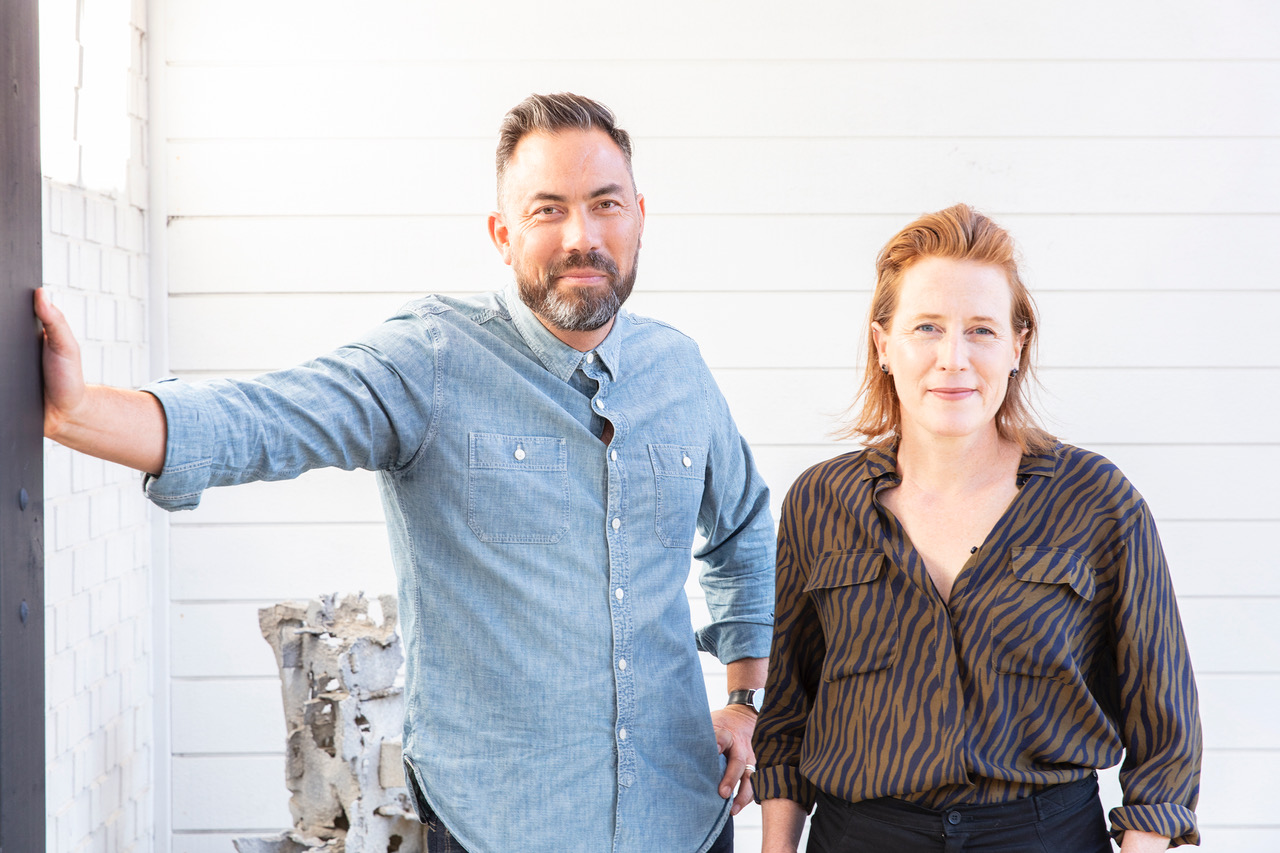
    Kieran Wong Emma Williamson

    In recasting our business, we have had the opportunity to open up a conversation about where we want to place our energy, how we want to spend our time and where we want to make an impact.

    One of the things that came up quickly was our shared desire to create a platform for conversation. A conversation that exposes different approaches and views on how we interact with the built environment and offers commentary on issues of social justice, education, equity, art, culture and architecture.  Our journal is the start of that conversation.

    In each edition we want to invite contributors to help us unpack their experience or reflect on their work as it relates to a specific theme. Perhaps, because of recent experience and the journey of starting something new, we’ve decided to centre the first edition around the idea of the ‘pivot.’

    Pivot is a word that has started to creep into commentary about all manner of things; an old word but with new significance. In the brash, confident world of Silicon Valley, it has come to refer to the need to adapt to failure and to shift the experience into new, more positive territory. In short, it is a word that turned failure into a rite of passage for the innovator and made it a strength rather than a weakness. It celebrates those that are not afraid, those that are open to change, are agile and resilient. It alludes to moving at pace, being willing to change direction but keeping up momentum. It rejects the idea of losing face.

    Kieran and I have worked together for more than two decades now. In that time, I have come to appreciate that we spur each other on and make each other brave in the face of change. We have been bold in building our working life around our shared values.

    With the benefit of hindsight, the bigger changes have happened in roughly five year intervals – that was until last year when we picked up a bit of speed and made a radical shift from large practice to small after only 18 months.

    For us, the increase in pace afforded us the chance to refocus our internal drivers and to see where we can make the biggest impact, how we can leverage maximum impact through our efforts. With the reinvention of our practice life, also came the opportunity to confront and define what it means to be an architect and where we think architecture will make an impact in another 20 years’ time.

    As our careers have evolved, our appreciation of the breadth of skills of an architect has deepened. The impact of buildings on our environments cannot be understated but nor can the processes and decisions that have led to the point of building. Architecture is far bigger process then we originally thought. Consider, the capacity for collaboration with so many people who are not architects.  The capacity to really listen to what they are saying about our past and our future.  We embrace the idea of a problem becoming bigger before we can work toward an answer. We think of this as a unique skill that comes from design thinking.

    We have had the great benefit of support from our profession, our staff, family and friends as we have travelled (and pivoted) through practice.  Many have been on this journey with us for many years and we are deeply grateful and indebted to you all.

    In this issue we were overwhelmed by the enthusiasm and speed with which people agreed to be part of our next bold adventure.  Either through their conscious decision making or for reasons outside of their control each contributor has in some way engaged in something of a pivot. We hope you enjoy the read!

  • ArchAU on the 2020 National Architecture Conference

    ArchAU on the 2020 National Architecture Conference

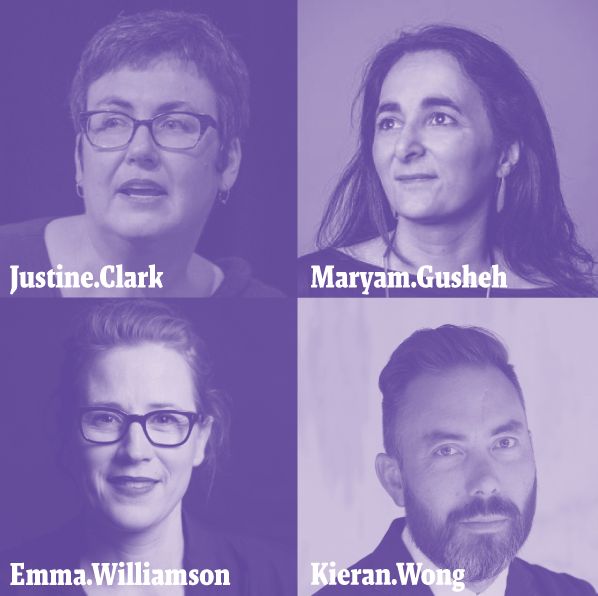
    Justine Clark, Maryam Gusheh, Emma Williamson and Kieran Wong will be creative directors of the 2020 National Architecture Conference that will take “Leverage” as its theme.

    “The role of the architect and architectural knowledge in contemporary society is shifting from a service provider to new roles that have the potential for transformative influence,” said creative directors Justine Clark, Maryam Gusheh, Emma Williamson and Kieran Wong. “This fluidity is hallmark of contemporary culture as rigid boundaries are increasingly blurred and challenged. Architecture appears uniquely positioned to extend its reach and amplify its impact. This is the ripple effect, the ability for architectural thinking to leverage positive change.

    Where do we find our leverage, as individuals, as practices or organisations, as a profession? How can we exploit our contemporary professional circumstance, training and knowledge to instigate positive change well beyond our disciplinary remit? How can architectural wit and intelligence, agility and diligence, cheekiness and humour, restraint and flamboyance, ethics and goodwill maximise (social, environmental, economic) impact and advantage? How can we play with and agitate the rules to sustain our culture while we embrace new associations? What are the levers, large and small, at our disposal? How do we find them and how far do they need to be moved to make a difference?”

    The conference will be organized around four streams: Policy and Politics (leverage through advice, strategy and negotiation), People and Partnerships (leverage through discourse, argument and education), Practice and Projects (leverage trough speculation, process and production), Publishing and Polemics (leverage through discourse, argument and education).

    The creative team represents “intersecting fields of research, advocacy, agency, practice, production and teaching.”

    Justine Clark is former editor of Architecture Australia and co-founder and director of Parlour: Women, Equity, Architecture. Maryam Gusheh is associate professor and deputy director of architecture at Monash University. Emma Williamson and Kieran Wong cofounded The Fulcrum Agency in 2018. The pair were previously directors of Cox Architecture and CODA Studio. Williamson is currently chair of the Design Advisory Committee for the City of Canning in Perth. Wong is also immediate past national president of the Association of Consulting Architects.

    The 2020 National Architecture Conference will take place in Perth from 7 to 9 May 2020.

    * This article was first published in ArchitectureAU on 2 July 2019.