We made a commitment when we sold our first journal in 2018 to distribute all revenue to First Nations community projects. Since then, sales have been ticking over and we’ve been steadily stashing away the funds.
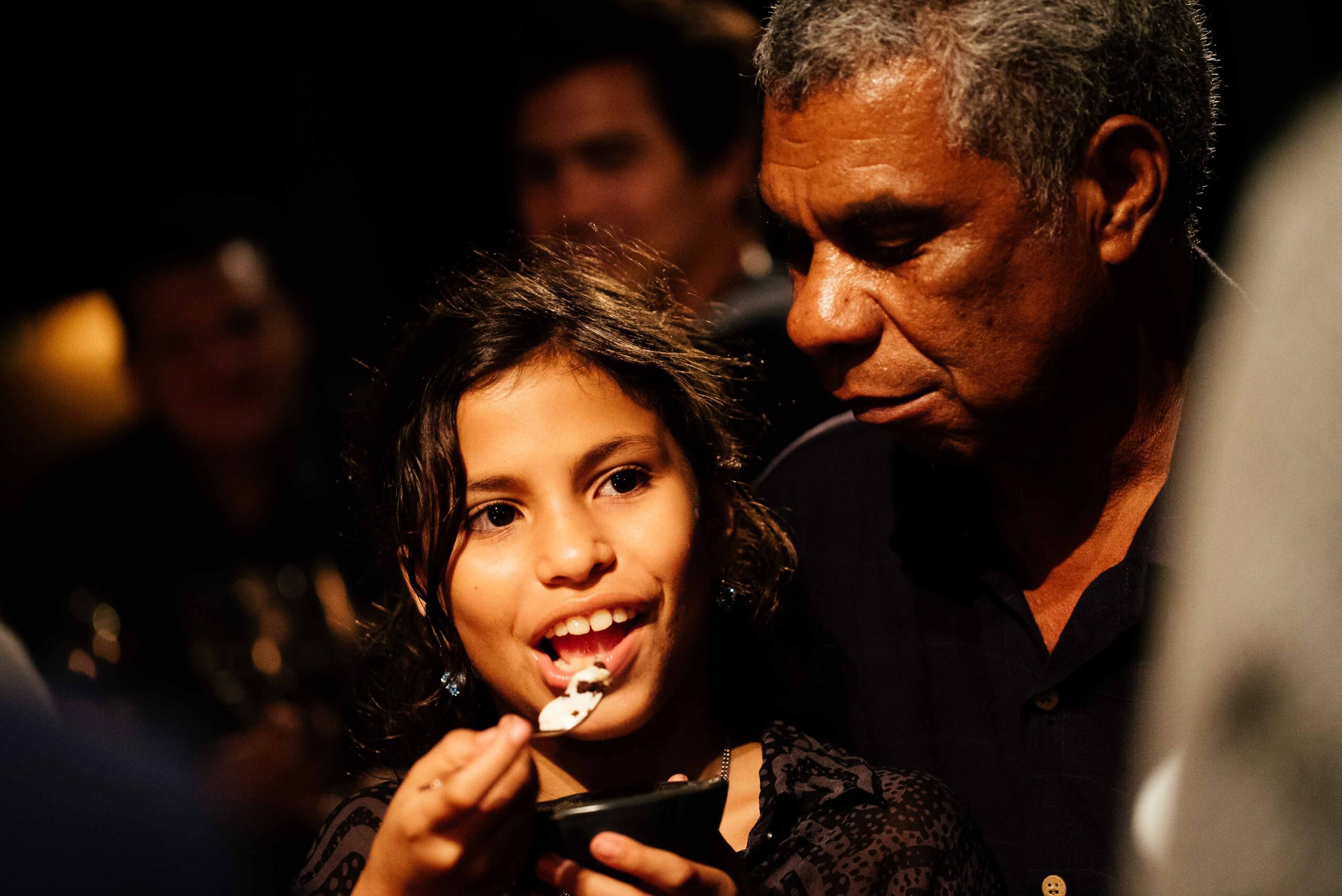
We are chuffed to announce that we’ve been able to make a $1000 donation to the language preservation program at
Kanyirninpa Jukurrpa
(KJ), an organisation based in Newman and servicing Martu communities in the Western Desert.
Thank you to everyone who has bought one of our journals – Pivot, Agency, Leverage, Commune, Equity – and made this donation possible. Thank you also to Pauline at the
Fremantle Foundation
for your work in facilitating the grant. Happy days!
Architect and historian, Flora Samuel is internationally respected for her work uniting the principles of social impact with the built environment. We practically leapt for joy when she agreed to share her thoughts on ‘building back better’ in a post-COVID world.
As the UK government struggles with the second wave of Coronavirus local and city authorities are developing plans for recovery. These are set to dominate the agenda for several years and practices are starting to shed staff while second guessing how to position themselves for the new situation. Plans and strategies to address Climate Change, inequality and good growth will now have to be looked at through the lens of COVID 19. During this time, we have also experienced remarkable, hopeful stories that speak of an emergent paradigm of collaboration, care and social value. It is really important to keep these fresh in our memories as we co-create the new normal.
Without wishing to descend into hyperbolae it feels like we really are on a knife edge between ‘
building back better
’ and a future too grim to contemplate. As part of a larger
project
by the UK Collaborative Centre for Housing Evidence on the impact of
COVID
, I’ve been interviewing policy makers, local authorities, providers of social housing, charities and developers to find out what they believe will be the key issues and opportunities for homes and neighbourhoods going forward. The report can be read
here
but I’ve summarised a few points below:
The pandemic offers an opportunity to build back better both for resilience and to address the Climate Change Emergency which has not been forgotten.
Planning policy and local authorities that focuses on wellbeing and placemaking are more resilient to events such as the pandemic. Similarly, organisations with flexible working arrangements with staff that regularly work from home have been more resilient.
Resilience starts with the home, its design and its context. Flexible space is needed in all homes as they increasingly become places of work. All homes should have access to balconies, daylight and broadband.
There is need for a statutory requirement to mandate adequate levels of green and amenity space based on metrics.
Community spaces need to be protected and enhanced. They play a major role in volunteering efforts and in reducing social isolation. These could be expanded to include a healthcare role (for example for the homeless).
The pandemic offers an opportunity to rethink density and the way people move around their neighbourhoods. Travel and health need to be seen as an integrated agenda.
The centralisation of services needs to be reconsidered, with better dispersion of jobs across the UK, including rural areas, facilitated by digital communication.
The use of local services and materials needs to be encouraged at every level, especially public procurement and in the choreography of our high streets. This includes local construction companies who need support and investment (including the development of safer off-site construction) as they are best positioned to deliver new homes to their communities.
New administrative groupings are needed in government and local authorities to ensure a joined up strategy across the health, social care and planning agendas.
Advanced budgetary planning is needed for emergencies enabling national governments and local authorities to act responsibly and efficiently without concerns about who will pay. After years of austerity there is not enough fat in the system to cover such emergencies.
Changes to the planning system to accelerate economic growth have been shown not to work. Planning is too important to be done hastily. Given the likelihood of a recession great care needs to be taken with the use of scant resources.
It is worth noting that each of the countries in the UK has a very different planning system. Over the last few years Wales has been busy putting together ‘place based’ policy that puts the ‘Wellbeing of Future Generations’ at its core. Community resilience is so central to Welsh Government thinking that their documents keep their relevance even in the current pandemic situation. In contrast to this the English government is, as a knee jerk reaction, consulting on streamlining the planning system to kick start economic growth. Yet many of the people I interviewed observed that this had been tried after the financial crash of 2008 and hadn’t worked. Planning is way too important to be done in haste although as Hal Pawson at the University of New South Wales has observed, if the Australian government wants to stimulate the economy this should be done through accelerating the delivery of
social and affordable housing
. Unfortunately it seems like the national government is looking to the private sector to do the investing
I’ve also been bringing together some of the research, stories and initiatives that have taken place during the pandemic in terms of the built environment, in particular housing and neighbourhoods. So much fascinating ephemera has emerged which may feel like a distant memory very soon. Clever practices are capturing the positive impact of their architecture during this time, see for example Stride Treglown’s interviews with residents at
Paintworks
Bristol. Others are undertaking Post Occupation Evaluation (POE) housing projects to develop evidence of the benefits of good design for residents during the pandemic.
The Social Value Toolkit for Architecture, published in July by the RIBA, offers a set of useful post occupancy evaluation (POE) questions for architects who want to chart the social value of their projects. The SVT is being further tested by developers such as TOWN on their CoHousing scheme Marmalade Lane in Cambridge and by researchers such as Mhairi McVicar at Cardiff University who is using it to chart the impact of the Grangetown Pavilion, a community hub developed in close collaboration with locals. It is going to be interesting when we start to gather comparators. In Australia, I am developing a funding bid with colleagues at the University of South Australia to develop a version building on the
Social Impact Measurement Australia
and the Australian Social Value Bank which focuses on the and not on the wellbeing, and other, contributions of the built environment rather than the current focus on the delivery of services.
Crucially we need solutions that can connect what communities want with ‘the designer’s pen’.
POE
is so important, not only for practice learning, but also to be able to use evidence from past projects when pitching for work. It can also be used in the development of research specialisms –there is likely to be quite a bit of funding coming through for research on the impact of COVID for some time. Our recently published special edition of
Architectural Design
on Social Value in Architecture offers a range of methods for capturing social value as well as a critique (see for example Taylor and Hinds Krakani Lumi project in Tasmania).
How homes might change has been subject to much speculation. See for example Kirsty Volz’s observations on open plan living on the
Parlour
website.
‘There are lots of ideas about the future, but as usual less evidence’ writes Dinah Bornat of ZCD Architects who has initiated a
Mass Observation
project asking people to capture the view from their windows during lock down. Another example of a practice based survey, this time on the impacts of
home
working, is by Ben Channon at Assael Architecture. Not only are these practices gathering really important data, they are rightfully consolidating their place as research leaders in the field.
It is possible to upload your own examples of the way in which the built environment has been adapted for COVID 19 on the
Tactical Space
website. This is interesting because it seems to be a collaboration between built environment professionals and digital designers. I am very pleased to see a lot more evidence of architects working with web and App designers as the creation of online tools and services has to be central to architects ‘earning while sleeping’ in the future.
Others have focused in on the way in which the profession itself has been adapting to its new circumstances. In response to a barrage of questions from architectural clients on how best to work at a distance PropTech startup Weaver, has undertaken a
survey
of 190 UK architects on the ‘remote studio’ and has revealed that ‘hyper-accelerated digital transformation is leading to unexpected design innovations, cost efficiencies, and more collaborative relationships with clients’.
Crucially we need solutions that can connect what communities want with ‘the designer’s pen’, a kind of on-going, non-stop community feedback loop. This is our aspiration with the research project Community Consultation for Quality of Life (currently under consideration by funders). Digital mapping is also at the heart of our collaboration with Stantec on the
Building Better Places Toolkit
that seeks to build social value into the world of land acquisition, the origin of most of the problems with the built environment, in my experience.
Extracted from ‘The Food Resources of the Aborigines of the South-West of Western Australia’, a comprehensive overview by Sara Meagher written in 1975, these words remind us how lucky we are to have shifted from a position of observation to one of participation as our understanding of First Nations culture and culinary practice has grown. Natural Ingredients was first published in Leverage, Issue 02 of our journal.
Knight (1886) states that before it was cooked, the thigh bones of the possum were invariably bent back and broken, ‘this being a superstitious observance which is never neglected.’
Possums, like most of the other smaller animals, were cooked whole. They were roasted on hot coals, or were covered with hot ashes. Before being cooked, however, the intestines were taken out, and the fur plucked off and stuffed into the stomach which was then pinned together with a stick. When the possum was cooked the fur, which had been stuffed into it, was removed and sucked to obtain the juices it had soaked up.
Birds’ eggs were taken and eaten, Nine (1831) says that: ‘at the spring time of the year, they live principally upon the eggs and young of birds, chiefly of the parrot tribe, but also of hawks, ducks, swans, pigeons, etc’.
Photo: Wagner Souza e Silva
When eggs were cooked they were placed on end in moderately hot ashes. A small hole was pierced in the upper end to prevent them from bursting.
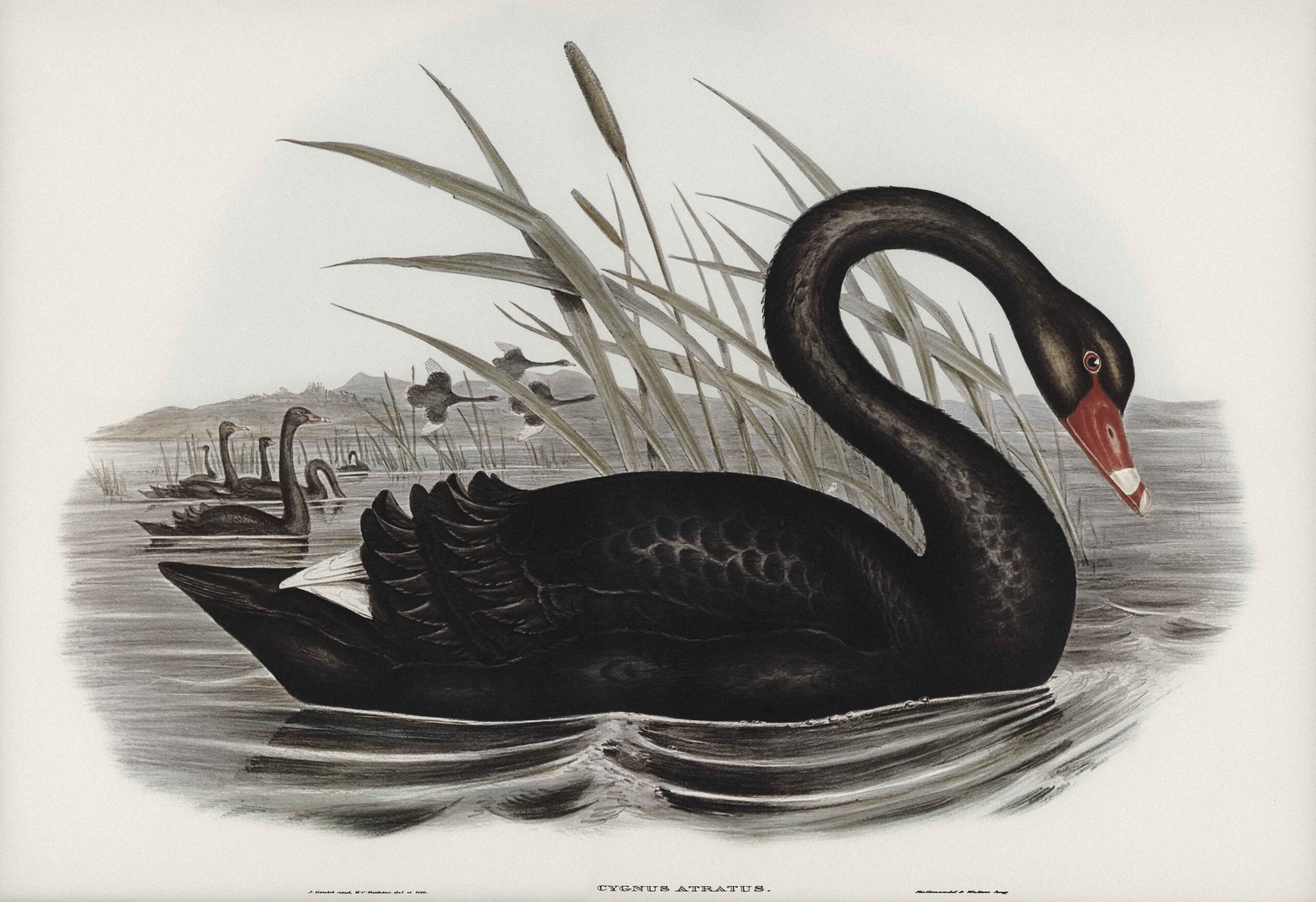
The black swan (Cygnus atratus) is abundant in the South-West and is particularly common in inlets and estuaries such as Peel Inlet, Leschenault Estuary, Augusta, Wilson Inlet, Pallinup, and Bremer Bay estuary where large flocks occur. It was easily taken by the Aborigines when it was moulting, and large numbers of both young and old birds were also taken when it was nesting.
According to my informant Doust, water fowl were cooked by first being covered with mud, placed in a hole, and then covered with ashes, where they were left for several hours. When the baked mud was cracked open the feathers came away in the mud leaving the body clean. Chauncy (1878) noted that this method of cooking large birds was also used in other parts of Australia.
Grey (1841) described how water fowl in general were either speared or caught with a noose, but, apart from the black swan, there are no references to species by name.
Hammond (1933) however, says that large birds were always cut up before being cooked. Grey (1841) says that birds were plucked before being cooked but Hammond says that the feathers were wetted and then burnt off.
Paul foraging in the Mary Aiken in the Fitzroy Crossing region.
Fervor describe themselves as a ‘culinary experience’, committed to raising the profile of native ingredients whilst building community and cultural knowledge in WA’s regions. Founder, Paul Iskov, takes us on a photographic journey trough their exquisite and unique dining experiences.
After travelling across the world working in some of the world’s best restaurants, many of whom were using produce native to their regions, I started wondering why there wasn’t more Australian produce used in restaurants here. Surely there had to be something other than lemon myrtle and pepperberry. I returned home at the end of 2012, inspired. I found many ingredients that I’d never heard of or tasted. More importantly, I discovered this incredible culture that goes hand-in-hand with the food.
One of our good friends, Neville Poelina and his daughter Angelina sitting down for dinner after taking us foraging ro collect produce around Broome.
In March 2013, our very first event was held, and Fervor was established as a roaming restaurant to explore, learn and share what we have discovered with others. Some guests travel from afar and some guests are from five minutes down the road. Foodies, farmers and families are all part of the diverse group that join us at each dinner.
When we first started out, we had an old Tritan ute, which we were told wouldn’t go very far. It kept going for years, even after we upgraded it! Today we have Trev the Truck who takes us where we need to be.
Paul’s Macadamia with Youlk
Prep/Cook
40 mins
Serves
4 as a starter
Ingredients
400g macadamia nuts
250ml filtered water
1 tsp lemon myrtle oil
1 small youlk* or white radish
500ml grape seed or vegetable oil for frying
2 bunches sea celery (or parsley)
4 tsp lemon myrtle emulsion
Youlk, also known as Ravensthorpe radish, is an edible bushfood root. Naturally occurring, you can find it growing across Ravensthorpe, Newdegate and Jerramumgup in Western Australia.
Method
1 Preheat oven to 180C
2 Chop 50g of the macadamia nuts and roast in the oven at 180C for 6-8 minutes or until just golden brown. Set aside.
3 In a food processor, pulse 200g of the macadamia nuts until they’re the consistency of couscous. Don’t over puree or the nuts will turn to paste. Set aside.
4 Using a jug blender, process 120g of the macadamia nuts with the water for 2 minutes to form a macadamia nut milk.
5 Strain macadamia nut milk through muslin cloth or into a bowl or pot. Add the lemon myrtle oil. Set aside.
6 On a mandolin, carefully shave the remaining macadamia nuts into paper thin slices. Set aside.
7 Shave youlk into paper thin slices on a mandolin and set aside.
8 In a medium pot, heat oil to 200C.
9 Cut celery into 10cm long stalks and fry. Remember to stand back or cover the pot – oil will spit when sea celery goes into the pot because of the water content. Once it has stopped bubbling, remove from oil and place on paper towel to drain.
To serve: Place 1 tsp of lemon myrtle emulsion onto each plate. Cover with a quarter of the macadamia nut couscous. Add 1tbsp of roasted macadamia nuts. Now add the shaved youlk and shaved macadamia nuts. Place sea celery stalks on top.
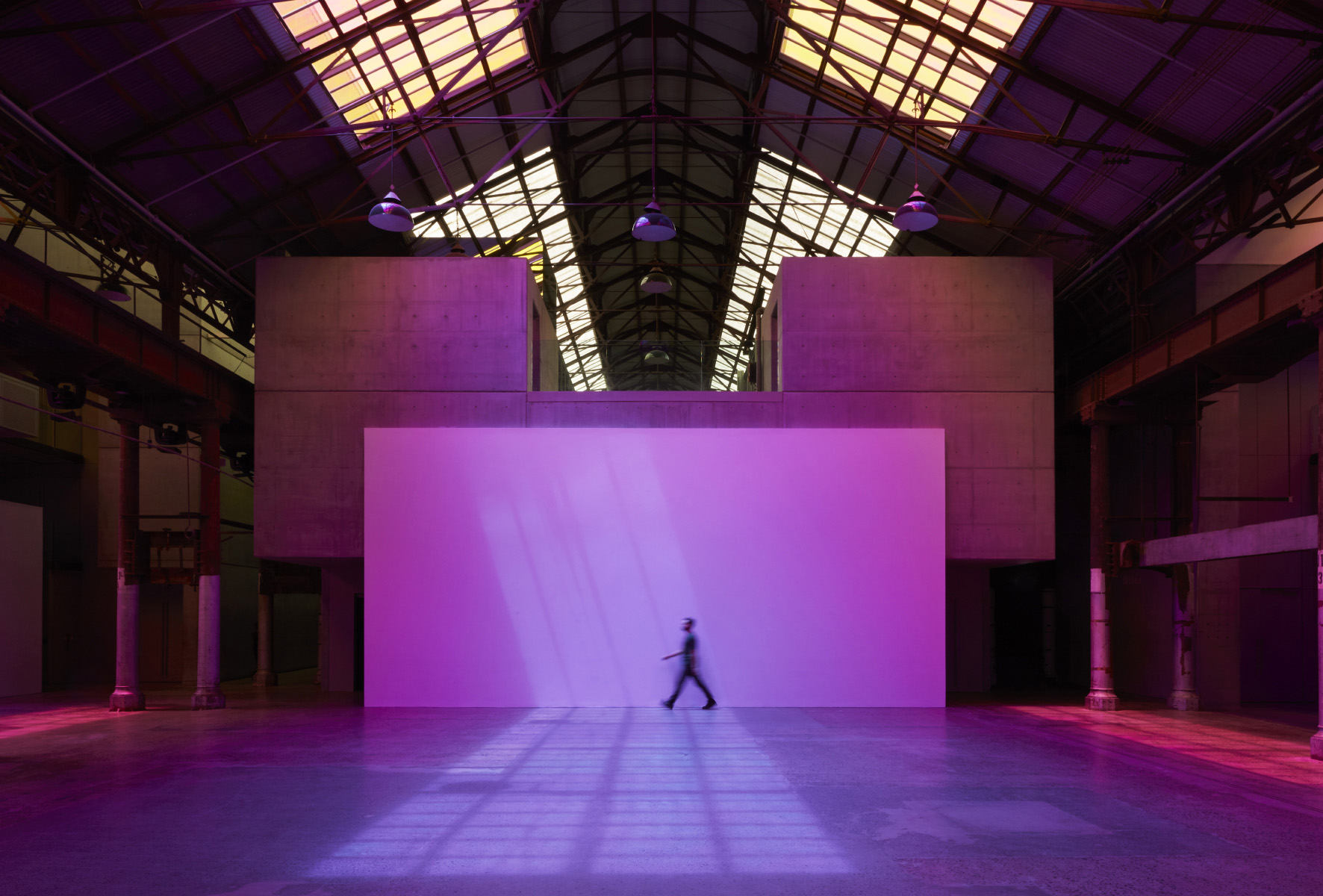
We wish we’d been in Sydney to experience Rebecca Baumann’s immersive exhibition ‘Radiant Flux’ in the flesh, but these images go along way in capturing the transformative nature of the work. In a short essay, Rebecca reflects on her installation at Carriageworks in relation to the overarching theme of Leverage.
When thinking of how the word ‘leverage’ might relate to my art practice, I did the rather unimaginative thing and consulted a dictionary. The Merriam-Webster dictionary defines leverage as
the power to direct the thinking or behaviour of others usually indirectly.
This definition piqued my interest when thinking about the way I have approached making work in recent years, and in my most recent installation
Radiant Flux
.
I started working as a professional artist in 2007, and in the early years I made kinetic objects – I was interested in motion, creating works with inherent change, that would be different for each viewer. In my more recent practice I’ve expanded beyond objects, to experiential and immersive installations which consider light, space, and architecture. I’ve been thinking more about exhibition making, considering how the audience moves through an environment, and how you can affect that interaction through different spatial interventions.
‘The site becomes the performer as it shifts through the sun’s position and the colours that illuminate it.’ Emma-Kate Wilson on Radiant Flux, Hunter & Folk, 2020
In my most recent work
Radiant Flux,
I was commissioned to make a light based installation for the 100-metre foyer space at Carriageworks in Sydney. The Carriageworks were built between 1880 and 1889 as part of the Eveleigh Railway Workshops, and the site was redeveloped as a cultural precinct in 2007. The commission was a huge opportunity to work within this beautiful late-Victorian industrial building, with its ornate brickwork, steel trussing and cast iron columns.
For
Radiant Flux
I covered every glass surface of the Carriageworks exterior and skylights in dichroic film, a dynamic material that shifts colour when viewed from different angles and transmits the opposite chromatic spectrum to what it reflects. The result is an immersion into a kaleidoscopic world of colour and light that responds continuously to the environmental conditions around it. I was interested in working immaterially with light and colour as a way to affect the viewer’s relationship to the building – which still has the raw, industrial feel of its history but transforms it into a cathedral like space.
I liked to think of the building as an entity, and its fluctuating nature would aim to direct the audience to be more cognisant of the change which is happening all around them, all the time.
Ten large skylights create lightwells which move across the space throughout the day.
I was not interested in dictating how the work might be responded to per se, but when the sunlight streams down the walls and spills coloured light onto the floor in the foyer…I have felt like I have created a stage – or an invitation for the audience, who can use it as they wish.
During the time
Radiant Flux
has been open, visitors to the space have been seen dancing in the lightwells or using them as hopscotch squares for example. An encounter with
Radiant Flux
will never be the same twice. I liked to think of the building as an entity, and it’s fluctuating nature would aim to direct the audience to be more cognisant of the change which is happening all around them, all the time. To be more present in the ever-changing moment.
‘Radiant Flux’, Carriageworks, Summer, 2020
I have felt like I have created a stage – or an invitation for the audience, who can use it as they wish.
In each issue of our journal, we ask a handful of people we admire to reflect on our chosen theme. This is Pippa Hurst, Chair at DesignFreo and Senior Communications Advisor at Lindy Johnson Creative, on Leverage:
Leverage is putting weight behind something to make a change, using minimum effort for maximum effect.
For me it means asking how I can most effectively use the skills and connections I have to make a difference.
That was the impetus for
DesignFreo
. I love design, I love my town and I care about its future. How do we harness design to make the place we live better, now and for those that will come after us? I leveraged my connections to seek out like-minded local designers and creative industry professionals and we’ve come together to make design more visible and accessible. I see my role as connecting people to amplify impact.
The more people leaning on the spade, the greater the leverage. And when we all lean in together at the same time to achieve a common goal, we leverage the power of community. It’s a double-leverage.
*Completely coincidentally, I came across Donella Meadows essay
Leverage Points: Places to Intervene in a System
, which describes the most and least effective types of interventions in a system (of any kind). Enlightening – Google it!
David Cain (Executive Director, Communicare) and Kieran Wong (Partner, TheFulcrum.Agency) are old friends who don’t need much of a prompt to chat! In a conversation that oscillates between unwieldy and profound, Dave and Kieran workshop politics, the state of social services and making an impact.
Kieran:
There’s an interesting story that I heard about an architect who worked in Indigenous communities. After a while he realized that to make meaningful change he had to go into government to effect policy. He then realized he couldn’t affect the change he wanted there and went into the private sector. This way he could form an alliance with government and deliver greater change. He moved through these different structures to try and effect changeand ultimately ended up back in architecture again.
I often wonder whether I am being useful… You’ve gone through a few different steps on your journey in this space. Given your interest in politics, where do you think the most meaningful impact can be made?
David:
Well, I think there are multiple areas in which we can have impact. I do think that it stands on the individual; I think it’s really important to engage people and encourage them to think and challenge their concerns. Not just think about them but to try and connect to them. To find ways we can cascade and amplify effect.
I also think it’s about looking at the global capacity of your organization and your broader connections. How can you connect or advocate or amplify or agitate? But ultimately, it’s about having a constellation of people that work together to achieve the things we need to achieve. And, having spent six years in government as part of my journey, you help to shape policy, you have an impact and you change things.
But progressive, broad scale change in ways that are seminal, I think are sort of above and beyond all of us. I think that we need to be pushing and agitating for change in different ways and that work is incremental.
A great example for me was the last federal election and the whole range of criticisms about the position that the Labor party put together. It was complex, it was poorly managed, but it was a comprehensive suite of reforms for Australia. And it was rejected. And so, I think it shows we have to be able to bring people along.
Kieran:
I agree. I think one of the challenges is that this idea of a progressive reformist agenda might underpin a lot of things people think about when they’re in their 20s and 30s and that the edges startcoming off in their 40s.
Snakes and Ladders
David: Yeah, I read something the other day… this is an epiphany actually – sorry to cut you off – about research around the way people move through progressive to conservative views from 20 through to 50. For so many people it’s a trajectory.
Kieran:
That’s right, yeah.
David:
You can sort of see that it happens. People get comfortable in their life and the status quo suits them.
Kieran:
Yeah, they want to protect it.
David:
They protect their resources and those kinds of things.
Kieran:
Yeah, also in Australia, if you’re of a certain age like we are, which allowed us to get into the property market before it became insane, there’s a kind of meta-narrative that says, “We’ve worked really hard to get here.” discounts all of the changes in tax policy and the middle welfare handouts of the ’90s. A false sense of how what you’ve earned is created and the need to protect it
David:
It’s absolutely true. I actually think some of the nationalism that we see in Australia, some of the emerging or re-emerging of nationalist thought is around this trope. That people believe that their being born in Australia was a measure of their genius rather than a measure of their luck. And they get really belligerent around being Australian. Funny thing is, it’s just luck.
Kieran:
Yeah. I mean, just to go back to the politics thing. I think theoutcome of last election will mean that the Labor Party are going to be incredibly cautious in terms of policy reform. It’ll be a kind of bipartisan choice really in terms of policy settings with furious agreement on everything but the most minor of details.
I heard an interesting talk a few weeks ago about the Uluru Statement and the notion that bipartisanship has really not served Indigenous Australia well. Because what is meant to happen with a twin chamber of government, is that you’ve got a conservative side and a progressive side and they argue the toss over a whole range of ideas to come to a position.
As a result of kind of wedge politics, the constituencies that both sides are fighting for are blurred now. You end up pretty much with the same group of people that both parties are looking to try and get the vote from. And therefore, bipartisanship as a result of aiming for some of that nationalist idiocy also then excludes the opportunity for meaningful reconciliation.
In Australian politics we’re ending up with an inability for effect because no one will want to put forward a policy that has a kind of reformist proposition. Maybe the NDIS is the last thing that’ll ever happen in politics for a while?
David:
I was listening to a great podcast the other day, Mark Keenwas interviewing someone who had looked at the previous election. Theyhad done an in-depth analysis of the election result and their view was that progressive politics needs to be more emotive in the way in which it captures the imagination of Australian people.
She was discussing the way in which the conservative side is emotive – in terms of taking away your ute or of those kinds of thing. Whereas the progressive side presents lots of facts, lots of data.
I think that we need to think about, emotionally, what does reconciliation genuinely mean? What does fairness mean? What does equality genuinely mean? And try and bring people along that way.
Kieran
: Do you think that’s possible? I mean, this is a question that we often talk about. Does true reconciliation and empowering communities require some handing over of power by those with the power? Symbolism is not enough. The actual relinquishment of power is what’s required.
David: I think it’s really important that we have multiple views on our landscape, on our political landscape. That’s how I think we arrive the best decisions and the best people.
David (cont):
There is no doubt that the concentration of media ownership in this country is problematic. The dissenting and alternate views, they come but they’re rare. Five years ago, you’d get disparate views around different issues and so the reader would be able to read things with much more detail, get a different lens on a different set of data, different sets of facts. We’re losing that – it’s all just melding into one centre right position
Kieran:
I agree with you that there should be a tension in politics between the conservative and progressive perspectives. I wonder what the trajectory is for contemporary democracy, and the impact of that on the way in which providers of services or providers of infrastructure can plan for the future.
For me it feels like there almost needs to be a kind of devolution of one of the strands of government to allow it to occur. A kind of a beefing up of the states and a diminution of the Commonwealth.
David:
But our federated model has struck a balance where the federal government has the cash but not the service delivery infrastructure or the relationship with the community and the state government has the service delivery infrastructure and relationship with the community but not necessarily the cash. And there’s such a symbiotic relationship that just underpins our federation.
One of the things in Western Australia that’s been looked at is how we all start to tell a story about the impact that we’re having (in the community?) sector? How does government and the sector look at collective impact? Is it around outreach to young people? Around mental health? Around children, the early years?
Kieran:
I had lunch with Michelle McKenzie from Shelter the other day and she was saying this interesting thing about COVID and the opportunity that it’s brought for a greater level of compassion. Suddenly there’s all these people realizing that they’re about to interact with a (welfare) system they’ve never anticipated interacting with, and the sheer workload involved in interacting with a system that they’ve never dealt with. Maybe there’s an opportunity for empathy through this whole thing?
David:
Well, you would hope that many more people have a much crisper understanding about the impact of JobSeeker, living on $40 a day. It’s outrageous that we are comfortable with people living on $40 a day.
And to your point about this new empathy, I think part of that design thinking that is needed is how do we support what will be lots of new people that need our support but not necessarily drag them into the system? Providing the support in their community, I guess, in different ways.
Kieran:
Yeah, maybe in less confronting ways.
David:
Less confronting ways, yeah.
Kieran:
Okay, so I think that’s all pretty good. I don’t know if you want to just say something about what you think your impact … for you, what’s the kind of personal driver of why you do what you do? Beyond the kind of beach house and the …
Dave:
My personal driver, I guess is around the innate vulnerabilities of children. I really have a connection to the safety and well-being of children. I mean, the findings from the Royal Commission into Child Sexual Abuse were just breathtaking in their sadness and how we’ve failed, really failed, a whole generation of children. That drives me. And again, now through our Stewardship of the White Ribbon Australia campaign, focusing on reducing family and domestic violence as well. I think it’s a major issue that impacts so many families, impacts our community, and impacts our country.
Kieran:
Yeah. Well, they have two pretty good things to drive you. Okay. That’s great. Thanks Dave.
I have learnt to always look for and never underestimate the good will in others.We all just want a chance to show it.
In each issue of our journal, we ask a handful of people to reflect on our chosen theme (and provide a selfie of themselves!). This is Pete Stone, Creative Producer at the City of Melville, on Leverage:
A sense of belonging to a living collaboration and genuine attachment to a project beats all. Details can be worked out; attitudes need to be cared for.
Words by Meri Fatin / Illustration by Giullana Alarkon / Photos by Daniel Grant
The Last Great Hunt are an ensemble of outrageously talented Western Australian theatre makers, responsible for creating some of the most thought-provoking new work in recent years. Their radical approach is visible on stage and in their company structure.
As part of Leverage, issue 03 of our journal, Meri Fatin spoke with Jeffrey Jay Fowler and Sian Roberts in a conversation that encompasses friendship, funding and the re-thinking of live theatre to find opportunity in a post-pandemic world.
Meri Fatin
[00:00:33]
I want to start by talking about the formation of The Last Great Hunt, particularly because it happened at a time where there was a gap to fill in the Perth theatre landscape. Perhaps you could tell a bit of that story, Jeffrey.
Jeffrey Jay Fowler
[00:00:58]
2013, I had just come back to Perth. Katt Osborne was running the Duck House Theatre Company and together we looked across the landscape at who was getting funding and what we were doing to get funding. Tim Watts was part of Weeping Spoon. I had Mythophobic. Chris Isaacs, Arielle Gray and Adriane Daff were working independently. We were all applying for grants and putting in a lot of effort trying to justify what we wanted to do artistically. Katt said if we all formed one “supergroup” (laughs) so to speak, we might get the attention of funding bodies. If we share our clout, we might make a big enough impact.
Meri Fatin
[00:02:00]
What did you weigh up as being the pros and cons of doing that?
Jeffrey Jay Fowler
[00:02:04]
I had nothing to lose by joining the company. There was no agreement that we couldn’t undertake work outside. I had just started at Black Swan and was exhausted from writing my own grants. I’m not particularly good at writing grants, it’s not in my skillset; I think I was frustrated with having to justify myself knowing that you write a grant and it goes to a panel of people you never find out about. You get very little feedback and you need to prove your idea before you’ve created the show.
So our idea was that if our reputations combined could get us annual funding we could reverse things. And that, I think, has been the very basis of what has made us different as a company. Also, we are six very different artists who can collaborate well with each other and with guest artists. That’s obviously part of the success of the company. I do believe it’s a model where we get an idea and work straight away while the idea is hot – rather than getting an idea, writing a grant, waiting nine months to find out if you were successful. By that time, you might not want to make that show anymore.
Meri Fatin
[00:03:33]
I’m really interested in hearing how you worked out how the company would function.
Jeffrey Jay Fowler
[00:04:44]
For me, the formative moment was a meeting at Katt’s house, in the shed, sitting around trying to pick a name for the company. It took a really long time and we kept having meetings – it was very hard to come to a conclusion. And then the first project we ever worked on was a nightmare. All of us at once tried to work on a project before we had really finessed how we should collaborate. It was all in with no clear leader. We tried to look at Joseph Campbell’s The Hero’s Journey and create a play. It was exhausting and we hadn’t worked ourselves out yet. But I think the great thing is we scrunched it up, threw it in the bin and said – okay, next project! It wasn’t a bad idea to create a group, we just burnt the first pancake.
Lé Nør
Meri Fatin
[00:05:56]
In the beginning The Hunters actually capitalized on your individual successes by performing some of the work that had already been developed.
Jeffrey Jay Fowler
[00:06:04]
We did. So, shows like Alvin Sputnik, It’s Dark Outside, Minnie and Mona Play Dead, probably a few others.
Siân Roberts
[00:06:13]
Bruce.
Jeffrey Jay Fowler
[00:06:16]
Bruce. These were all actually created before the (formation of the) company. Alvin Sputnik and It’s Dark Outside had pretty great touring records. So at the moment that we became a company there were already a few shows to bring in and those shows toured and were a big part of the early life of the company.
Meri Fatin
[00:06:41]
When did you join Siân?
Siân Roberts
[00:06:43]
I joined in 2015, so it’s my five-year anniversary. It’s my longest ever job. I think it was my longest ever job at two years to be fair! I remember everyone was applying for the same big grant. It was after Deckchair Theatre had gone under, where I was the marketing manager. I remember The Last Great Hunt got that grant and that was the first time that everyone was like “oh, here we go”. I just thought they were so clever to pool resources. It was so smart to form a company. Then I went out of the arts sector into the not for profit sector and I kept seeing their shows, and watching their donor campaigns. I always thought the shows were very clever, you know, socially conscious, funny – you could (see) the intelligence behind the shows. And then I saw this job advertised as General Manager for The Last Great Hunt and I thought, ‘imagine if I got that job!’ My dream job – and I nearly didn’t apply for it. Jeffrey was on my interview panel.
Jeffrey Jay Fowler
[00:09:09]
I was! I remember exactly where we were sitting and the sun on your face (both laugh) that fateful day.
Meri Fatin
[00:09:20]
Since you were on that interview panel, what were you looking for when one of your original members who was really the linchpin needed to be replaced. What was important to you at the time?
Jeffrey Jay Fowler
[00:09:34]
Katt is an artist as well as a fantastic manager but the plan had always been that once we could afford it, we would hire a General Manager and let Katt be an artist like the rest of us. We wanted someone that would go on this crazy adventure with us because the company felt clear to us but was very hard to explain to outsiders. How we worked was kind of unusual. We had a lot of people saying that the model wouldn’t work. We had a lot of people saying it’s a bad idea to have no artistic director, that there would be interpersonal conflict. We wanted someone that could come and accept the deal. I think it was quite hard for Siân at the beginning. It’s like dealing with a company where your artistic director is a Hydra. We wanted someone that would go on that journey with us but would also help build the company and have a vision for it. And you know Siân, and a lot of other wonderful people that have worked for us, have endured an incredibly difficult job. There’s a huge amount of work to manage and produce the amount of shows that we create, debut and tour. I mean some years have just been mental, all around the world, and so we wanted someone that we felt we could grow with and negotiate with and be inspired by. We were looking for a lot. We actually ask a huge amount of Siân.
Lé Nør
Meri Fatin
[00:11:27]
And Siân, when you got a sense of what the job would actually entail, how did you feel about it?
Siân Roberts
[00:11:39]
I remember looking at the specs and it was, you know, basically you have to do everything, you have to have your own phone, your own computer, and we’ll pay you almost nothing. Kind of crazy, but I remember saying to you Jeffrey, it’s going to be a steep learning curve, but I reckon I can do it. It’s been the biggest challenge of my career and it’s still challenging every day. But I think that’s what keeps me interested and it’s why I’m still doing it. Those seven artists. Yeah. At first, they didn’t trust me, and I had to spend a lot of time… I knew it was a long game to show that I had the right intentions, that I could see the art, that I wasn’t trying to take control, that I didn’t want the limelight for myself. I understood the creative process and I understood the business side. And then I spent a lot of time helping the board understand the creative side and helping the creatives understand the governance side. We did a lot of strategic planning work at the beginning and we lost a few board members along the way.
Jeffrey Jay Fowler
[00:13:41]
It was becoming a much bigger commitment for them and a different company. We wanted a more active board that would really help us. We have plans to become a much bigger company than we are now.
Siân Roberts
[00:13:57]
Jeffrey’s right, a lot of people told us that it wouldn’t work. A lot.
Meri Fatin
[00:14:03]
People whose opinion you respected?
Jeffrey Jay Fowler
[00:14:08]
Yeah, I’d say so…
Siân Roberts
[00:14:10]
Yeah, I think so.
Jeffrey Jay Fowler
[00:14:13]
You know that tone of voice and that lean forward… “Are there rifts? How’s it going? It must be tricky.” They really wanted to see the cracks in the walls. People were sceptical because they’d had bad experiences of “rule by committee” and didn’t believe it could work.
Siân Roberts
[00:14:45]
I was on board from the beginning. I was already kind of a fangirl and so I believed in it. I really did. I believed in the work and I believed in the artists… so why can’t we do it our way? There’s a lot of companies that went under and there were all these other companies that weren’t working the old way. We had nothing to lose by trying a different way.
I came on board in October 2015 and Katt had put in all the work to get that three-year funding. I think she was still doing my handover when we found out that we had that funding and it was a huge celebration. A lot of people did tell us that it wouldn’t work, but it has. It takes longer to make decisions but there’s trust and I think the thing about The Hunters is that they’re all friends. They’re close friends, and have been for years. Some of them are going out with each other. Some of them have lived together as flatmates, some of them were students together. So, there’s a long history that we want to continue. And really the art is what it’s about. And I think that’s why we make it work.
Meri Fatin
[00:17:01]
Do you think the audiences have come to sense and be attracted to the cohesion between the artists as well? Have you ever thought about that?
Jeffrey Jay Fowler
[00:17:32]
I’ve thought about it. I don’t know. I think that our audiences come from all different places and angles and all different levels of knowledge about art. We certainly do have fans. That’s a thing. And then we have people that might see a few shows and not really have the full context. I’m sure some people enjoy it. I think on those big collaborative shows like Le Nör, part of the meta narrative and the enjoyment of it is knowing that that’s everyone in the company working altogether. I think that is thrilling for people. Sometimes you talk to people about the company and they’ll have seen a few of the shows and it’s a real light bulb moment for them in conversation when I’ll explain there’s six of us and we work in all different configurations. They’re like “Oh that’s why I saw New Owner and Fag/Stag and was like whoa! This is a kid’s company who do puppetry. No wait. This is a very adult company.” They understand it when you explain the company a bit more. Our art doesn’t have one genre, doesn’t have one brand. We don’t have any rules about the aesthetic of the company, and I think that can disarm people until they “get” the ensemble.
Meri Fatin
[00:19:14]
Can we reminisce about Le Nör for a little while?
Jeffrey Jay Fowler
[00:19:22]
Sure! Let’s!
Meri Fatin
[00:19:23]
Was it meant to have another season this year?
Siân Roberts
[00:19:26]
Not this year. No. It’s been a different show to sell because (while) we do have quite a big touring history, that history is with less expensive shows. It’s a one hander. Le Nör is ten people and a big set. It’s a different market — it’s a festival show. It had two Helpmann nominations including Best New Australian Work, which is amazing. Who knows what would have happened but we’re looking to do some redevelopment of it next year if some funding comes through. It lends itself to live streaming because of the video elements so we want to do some work on it to see how we can do that. Tour it without physically touring.
Meri Fatin
[00:20:45]
My recollection of it was the edge of your seat excitement through the whole thing. It was one of the most fantastic things I’ve ever seen and part of it was just noting the extreme “hecticness”” of what was going on for every single person on stage!
Jeffrey Jay Fowler
[00:21:05]
Speaking a make-believe language and lighting the show, then acting in it, swapping costumes, moving set pieces, operating the camera… it went very fast as a performer. It was 90 minutes long and it would begin and then you’d blink twice, and you’d be doing the final scene in a helicopter covered in water with your wig off, with some strange metallic fabric wrapped around you. There was not a moment that any single person was not busy
Meri Fatin
[00:21:41]
What’s the feeling when Le Nör is finished and you know you’ve delivered a really spectacular performance? What was the energy like?
Jeffrey Jay Fowler
[00:21:52]
It was incredibly satisfying. Incredibly fun just to be on stage doing silly things with people that you really like. The process was (laughs) nightmarish and full of thinking “this can’t work” and feeling like the roof was caving in, which can happen in any company, in any production. The nervousness of putting a show up is intense, but after that first show we realised oh we can run this… audiences get it, they’re like, ‘it was the freshest breeze I’ve ever felt.’ And then the season just went so quickly. You’ve worked on something so hard — it was years of work culminating in a two-week season.
Siân Roberts
[00:22:48]
And years of fundraising.
Jeffrey Jay Fowler
[00:22:50]
Yeah of course!
Siân Roberts
[00:22:52]
I remember when we were in Edinburgh in 2017, we were having meetings with people over there to fund it and to commission it.
Jeffrey Jay Fowler
[00:23:04]
People keep dangling carrots and then taking them away.
Siân Roberts
[00:23:07]
It was probably the most stressful project that I’ve worked on up until the one that I’m working on now.
Lé Nør
It’s a real light bulb moment for them in conversation when I’ll explain there’s six of us and we work in all different configurations.
Meri Fatin
[00:23:19]
In the context of everything that The Last Great Hunt has ever produced, how would you describe Le Nör? You said it was the most stressful thing you’ve ever worked on….
Siân Roberts
[00:23:29]
Stressful but also gratifying because the thing about this company is that the way that we’re set up to fund creative development, you’re setting these creative minds free to do whatever they feel, whatever they want. And I don’t like to say no. People can do their stuff and if we see it could be something then we start bringing people in to have a look and that’s what happened with Le Nör.
Meri Fatin
[00:24:09]
Did it feel risky in the early process where you started to understand what it was going to be?
Siân Roberts
[00:24:16]
It always feels risky. We find it hard even bringing people on board to some of the projects because they say they can’t do that job because they’ve never done it before. And we say we’ve never done it before either. So, it’s more often about the attitude of the people that are coming on board saying I don’t know how to do it but let’s find out!
Meri Fatin
[00:24:43]
You’ve got to be mentally free enough to join in with something like that.
Siân Roberts
[00:24:47]
Yes, and have an open mind and be excited by things. When the going gets tough you’ve got to have some passion to fall back on. There was a point in Le Nör where we had unconfirmed funding and I had to make the call to go ahead with a development period that was going to be very expensive – basically using company reserves – just hoping that the other money would come through. And luckily it did. But what Jeffrey’s referring to is that the process was under funded and didn’t have enough time. Premiering at Perth Festival with no previews (to Jeffrey) do you remember the first night was the opening night with the press there as well? I remember sitting there… my heart… as the producer you can’t do anything but keep your fingers crossed and hope that all goes fine. Two days before I’d seen a dress run and all the tech had failed, and it all needed to be rewired! Oh my God.
Meri Fatin
[00:26:18]
That’s an expressive sigh Jeffrey….
Jeffrey Jay Fowler
[00:26:21]
You have a nightmare as an actor that one day you’ll forget a line, or the show will fall apart and then it happens. And the show is Le Nör, and the show just stops for 20 minutes and the tech is broken, and no one knows what’s gone wrong and people are on ladders and house lights are on and you stand there and go, “this is it. This is the actor’s nightmare.” The whole show, which is put together with sticky tape sometimes literally has broken. What happens now? Do we just send this audience home? I think it happened on the second night and you just sit in it for 20 minutes and then the show goes on again and the lights go down and you’re back into performing and you think OK what? Where were we up to? What am I doing? What costume am I wearing? OK here we go. And then it got to the end and the audience just gave the biggest round of applause ever. Le Nör was like facing your nightmare of being unprepared as an actor and realizing everything’s okay at the end and actually people kind of love it even more. They were so on our side.
It’s okay for theatre to not be perfect. And I think when you’re doing something so ambitious people embrace the faults in the work.
Lé Nør
Siân Roberts
[00:28:16]
When I first joined, we were doing Blue Room shows where you make it up to the last minute and you test it. Now we’re doing Perth Festival shows. We’ve got a new commission for this coming Perth Festival. They saw what we could achieve with Le Nör and now they’ve given us more space and more time and more resources because they understand that that process needs time. And we’ve developed our artistic process over the last five years. I think we’ve improved it a lot. You don’t want to be too formulaic about things but trying, before we premiere work or before we program it, to have an open showing where we bring in outside eyes and get some feedback and then leave ourselves enough time to make changes. Then have a break and then do another development period rather than making it right up to the last minute.
Jeffrey Jay Fowler
[00:29:24]
Showings aren’t just for us and for the work, they’re also for our followers who’ve become really involved in the works and want to see them at all different stages of development. By the time our audiences are seeing our work, the people close to us are really championing it and they know the journey we’ve been on to create it. I think that’s a really important part of our brand and our company and the experience we have as artists and the experience we offer to audience members who get close enough.
Meri Fatin
[00:30:24]
What does The Last Great Hunt’s strategy involve in terms of your focus on community and inclusion and creating a space for West Australian artists to remain and work in Western Australia?
Siân Roberts
[00:30:56]
This year when all of our work stopped, we realized that while we weren’t employing seventy people anymore, we could employ ten. We saw our friends lose all of their work; we saw Black Lives Matter stuff and we were able to have a hard look at ourselves and what we’re doing. I think everyone had an existential crisis in the arts. What are we doing? Are we actually making a difference? Why ARE we doing this? And so, we’ve taken our strategic plan and we’ve turned it into a whole bunch of plans and strategies for employing independent artists, providing emerging artists a pathway to paid work, including more people in our development periods. Up until recently, we could only really pay for those six artists to develop work, so if anyone wanted to work with an external person, we maybe had one or two weeks-worth of funding. So, we’re working now to increase that funding and reach new audiences. We’re waiting on a bunch of grants to hopefully come in and if they do Jeffrey will be leading an emerging artist program where we will be deliberately finding people who are coming into the arts through different ways like WAAPA, but (also) other community areas….
Jeffrey Jay Fowler
[00:32:51]
Even making space for people that have really missed out on WAAPA or not realized they wanted to be in the arts till they were thirty or a bit lost. It’s a weekly meet up to help people develop their skills and build pathways to try and increase diversity in the industry and also to enrich our company by changing what we do and seeing what we can learn from other people. The next chapter has to be about us sharing. I’m thirty-four and we rode the last wave of really healthy funding. The year that I turned twenty-six was the year that the twenty-five and under category disappeared from the Department of Culture and the Arts. Then the year I turned thirty was the year that the Australia Council got rid of their thirty and under category. So, it was like we are riding a wave with the world collapsing behind us. The funding opportunities that were available to us before the Last Great Hunt have evaporated and now I see fantastically talented young people coming out of the Bachelor of Performing Arts having nowhere near the amount of grants or money available to them that we did at that time. And also, you look at someone who might stand on the outside of the industry and watch some Last Great Hunt shows and think, “wow I wish I could do that! Oh, it’s impossible” and walk away because we’re in a world that tells you that you have to do everything in your 20s or you can’t do it at all. Bizarrely. We want to provide an opportunity and a place for those people. We were so lucky. We were so lucky to be in Perth, it was smart to stay in Perth. We’re so lucky to get the grants we’ve got – the first time and then the second time. You know I often look at my life and just think this is just bizarre. Bizarre and so good.
Lé Nør
Meri Fatin
[00:34:54]
You talked about how the touring program had been really hectic but is the strategy to take The Last Great Hunt out of Perth even more?
Siân Roberts
[00:35:18]
International touring has been what we’ve done from the beginning and arguably the touring work has funded a lot of other stuff. About forty per cent of our income is from touring. Touring and also having commissions for work. It’s really hard to say. I’ve heard some advice the other day that said we shouldn’t be touring internationally till after 2021.
Jeffrey Jay Fowler
[00:35:54]
That’s even a conversation among the artists. Should we still be touring? Is it environmentally friendly to be flying our shows around the world? One of the ideas for the next development of Bad Baby Jean is a show that can be made live but digitally and served fresh to the Internet. Is this a format that we want to pursue more? Because actually there is something environmentally wrong about flying all around the world to perform shows live in a world that is so digitised.
So how can we find that sense of creativity and connection and audience and togetherness maybe without getting on a plane?
Siân Roberts
[00:36:32]
Saying that, touring employs a lot of artists. B and C casts go on tour for us with our work. We’ve got multiple casts for multiple shows and then they’ll tour while the creators stay back in Perth and make something else. So, it does employ a lot of people, tech people, tour managers. I don’t know. I think we probably will be getting back to the US when we can. I think that will continue to happen, but I think we will have other offerings as well. The changes that we’re starting to make are not just about air travel but also accessibility. There’re so many good things that have come out of the digital work. It’s a lot of stuff we were thinking about already, but the pandemic has given us the time to really delve into it a bit more deeply. And, that’s one of the reasons we’re re-strategizing. We were looking at our vision and mission the other day and it says something like “make work and take it around the world” and we thought is that it? Or is it just about connecting with audiences wherever they are? What IS live theater?
Meri Fatin
[00:40:37]
You talked about people in the arts having a kind of existential crisis over what COVID 19 has represented for all of us but if any group of creative people are going to come up with some kind of yet unimagined future it’s probably The Last Great Hunt. Thank you both so much.
In each issue of our journal, we ask a handful of people to reflect on our chosen theme (and provide a selfie of themselves!). This is architecture consultant and climate activist, Gemma Hohnen, on Leverage:
Leverage is situational, tactical and organic; there is uncertainty in the outcome. At its best leverage is that point used to shift outcomes for the better. Architectural skills can be applied across multiple fields and in a time when it has been challenging to find traditional practice work that is the right fit, it has made sense to explore other avenues, paths of lesser resistance built upon interests beyond designing an excellent building with a great team. Voluntary work is the perfect way to build upon and develop your skills beyond what an office might offer, meet new people in related fields and form alliances.
My agenda has become clearer and within my means I am looking for opportunities to use my skills to push the message of the climate emergency.Sometimes leverage is the simple act of asking.