• Home Grounding

    Home Grounding
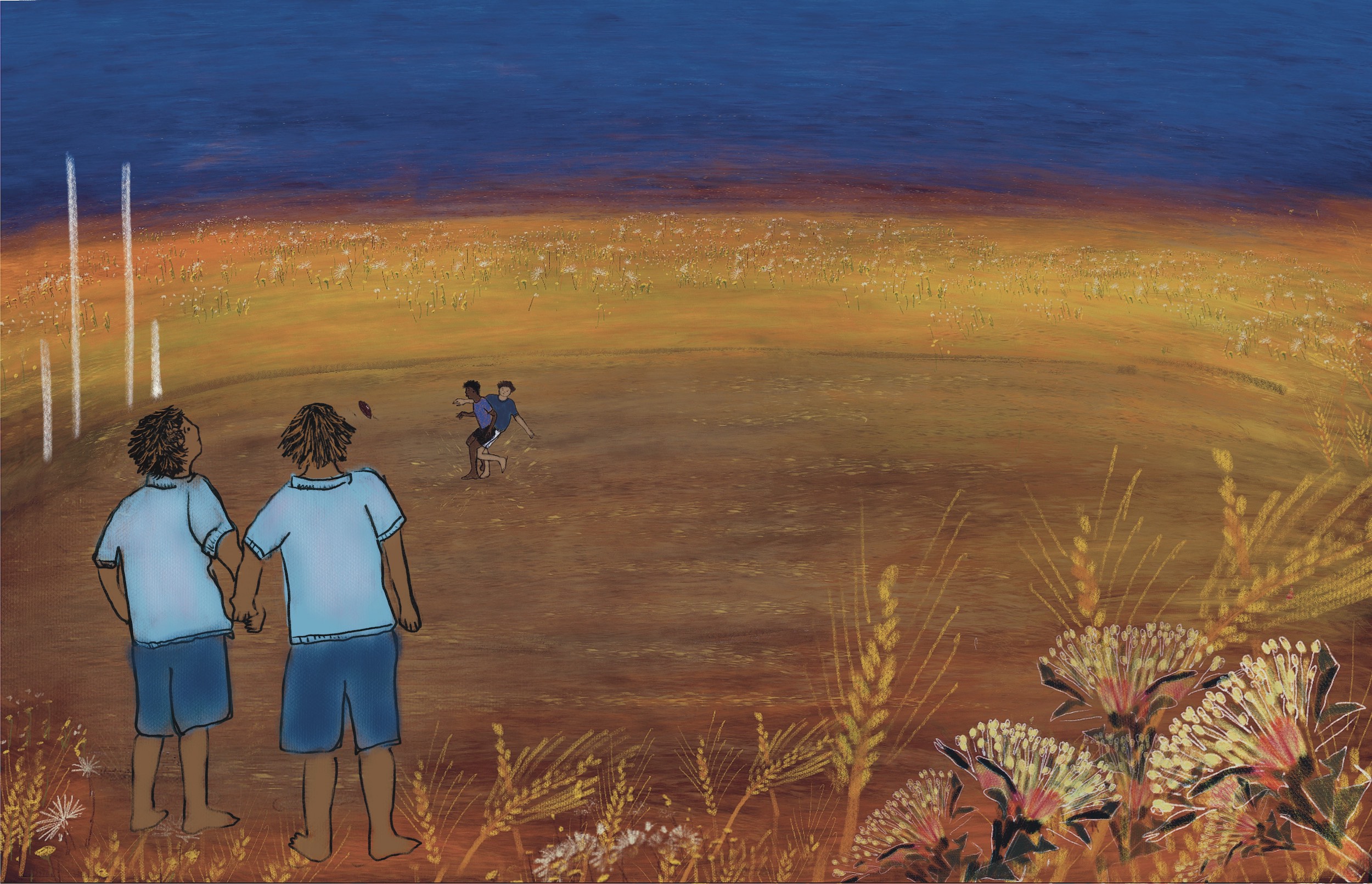
    Illustration by Jasmine Seymour

    As a gay Aboriginal-Italian kid growing up in a small Western Australian Wheatbelt town, it’s not easy to find your community. As part of Commune, issue 04 of our journal , entrepreneur Gerard Matera chats to Meri Fatin* about how self-acceptance was the spark he needed to create businesses with social good at their heart.

    Meri Fatin [00:00:27]

    How do you introduce yourself when you when you meet someone for the first time?

    Gerard Matera [00:00:48]

    I tell them that I’m very proud to be Noongar and then I tell them a little bit about my journey. More recently, I let them know that I’m part of the LGBTQI community too.

    Meri Fatin [00:01:28]

    Why does it matter for you that they know?

    Gerard Matera [00:01:33]

    I think it has to do with my age to be honest. What I’ve found is the more open and transparent I am with myself – for many, many years, I didn’t know who I was – the more success I have, the deeper friendships I get, and the more my business succeeds.

    Meri Fatin [00:02:10]

    You’re the youngest of eight children. How has being in that position in the family impacted you?

    Gerard Matera [00:02:30]

    I’m one of seven boys and one sister. As the youngest, I became very close to my mum because my dad had to work seven days a week, in two jobs, to put food on the table. I was in the kitchen a lot. I had this passion to be a chef from a very young age. I always enjoyed bringing people together with a full table.

    I grew up in a really small country town called Wagin, about three hours southeast of Perth, with an Italian father and an Aboriginal mother. As I was growing up, I didn’t really understand why these two people came together, particularly with what was playing out. Wagin was built in an era where Aboriginals lived on one side of town and white people lived on the other. Mum and dad didn’t have a lot of money and we were raised in state housing. When you come from a place of not having a lot, then it’s really about the love, the relationships.

    I think I was 10 years old when my mum took me to the doctors because I wasn’t playing football or any sports. I had quite a close relationship with the doctor back in Wagin and he said, “just take him and force him to play”. And she did – I started playing basketball and football and I actually enjoyed it. But I didn’t really see myself… being gay and also Aboriginal – it was very difficult for me to see myself anywhere. Yeah. So that’s kind of, you know, the reason why I was quite isolated in the beginning.

    Matera family home in Wagin

    Meri Fatin [00:06:15]

    It’s amazing when you think about how for the Matera family, not wanting to play footy was almost a pathology. What was the broader social picture that you grew up in?

    Gerard Matera [00:06:58]

    Wagin was a very dysfunctional town. We lived with a reserve at the back of our house and most weekends a lot of Aboriginal families would be fighting, fuelled by alcohol and drugs, and there was lots of unemployment. As I got a little bit older, I definitely saw the divide. I don’t know if someone in the planning department thought, oh, let’s put all the blackies over here and then put all the white fellas over here. Funnily enough, you know, 50-plus years later, Mum and Dad are still in that house.

    Meri Fatin [00:08:45]

    When we started you said that you introduce yourself as a Noongar man. Where is the bit of you that identifies with your Italian heritage?

    Gerard Matera [00:08:58]

    Yeah, I think through food. When we were growing up Mum would cook a lot. But Dad would make pizzas and pasta and all that sort of stuff and a lot of bread. And still today, you know, if you’re heading to Wagin on the weekend, he’ll make sure there’s pizza and some bread that he’s made to give you. I think the Italian heritage has always been about the vino, the fruit and veg, living off the garden.

    We came from a place of not having a lot of money and so Dad was very vocal about eating from the garden, you know, making sure there’s chooks that gave us eggs. He tried to be quite self-sufficient in that sense. We always had rows and rows and rows of fruit and veggies in the backyard. And Mum would probably get yelled at if she went to the shops and bought apples. When I went to Italy for the very first time in my late 20s, it was very similar. I actually thought that I was going to see a wealthy side of the family. I pictured Italy being this the most amazing country and my family to be living in these estates with vineyards and all that sort of stuff. It just wasn’t the case. My Italian family weren’t wealthy either. So, when I saw the Italian part, I realised that the Aboriginal part is actually very similar when you’re talking about culture, food and bringing people together.

    Centre: Dad and Mum (Michele and Jane)
Back right: Michael
Front left: Frank
Left on Dad's knee: Phillip
Middle front: Carmel (the only girl)
Right bottom: Gino
Right on Mum's knee: Me (baby)
Back middle: Wally
Back left of middle: Peter
    There’s a backstory to this photo. A photographer would travel through country towns each year to take family photos, a bit like the Avon Lady. Mum and Dad said yes to the picture but could not really afford it. Somehow, they made it work and this is the only formal photo that we have of the young years.

    Meri Fatin [00:10:28]

    Before we move away from your earliest years, I want to ask you, when were you first able to articulate to yourself that you were gay? Tell me a bit about that side of what was going on for you.

    Gerard Matera [00:10:45]

    Yeah, I think early teens to my early 20s. I definitely knew that I was gay, but obviously with the laws and restrictions and also growing up in a family environment that was very footy-focussed and very masculine, I didn’t ever feel comfortable.

    Meri Fatin [00:11:10]

    So, what did you know about what it was to be gay, that stopped you from telling anybody at that time? What was your sense?

    Gerard Matera [00:11:18]

    Yeah, I was seeking love and affection but being in Wagin, I didn’t find that in anyone. I didn’t see the LGBTQI community anywhere in Wagin. That’s why I think it took me a very long time to realise that I was gay, because I didn’t really feel comfortable and didn’t see other people that were similar until I was probably late teens, early 20s.

    Meri Fatin [00:11:54]

    So, does that mean that you knew that there was something not quite right but you couldn’t tell what it was?

    Gerard Matera [00:11:59]

    Yeah, most definitely. I knew that there was something going on and I knew quite clearly that I couldn’t talk about it and I had to hide it from everybody.

    Meri Fatin [00:12:14]

    So, before we leave Wagin, I’m interested in the impact on you of being part of a footy family and the expectation placed on you. The impact that football had on the Matera family.

    Gerard Matera [00:12:28]

    Yeah. Look, don’t get me wrong, I’m very happy that my brothers found success through football. But for me, what played out was finding myself getting more and more depressed and struggling with anxiety because I just couldn’t be myself. I couldn’t talk about myself. I couldn’t, you know, say to my mum or my family, hey, I’ve fallen in love or this is who I am. It was never that environment. And even going to a football game whilst my brothers were playing AFL, even being invited down to the bar that the players’ families go to after a game; everyone’s got a girlfriend, everyone’s got a partner. I didn’t see an LGBTQI person anywhere.

    While my brother was playing, particularly in 1992, the memory is quite prominent because I was in my late teens and I was kind of just realising… I lived a lie for so long, telling my brothers that I had girlfriends, dating girls for years just to fit in and, you know, lying to everybody about that. It did not make me feel very good.

    Meri Fatin [00:14:16]

    Was it about protecting the public reputation of the family?

    Gerard Matera [00:14:24]

    Yeah, yeah. Most certainly. I think twenty plus years ago when my brothers were playing footy I don’t think they would have been comfortable with me rocking up with a boyfriend to the members bar at the AFL. Certainly not.

    Meri Fatin [00:14:58]

    It’s important to remember how recently that that was the case.

    Gerard Matera [00:15:04]

    Yes, but I want to make this point. My mother also was treated in a very similar way. For many, many years, my mum was never properly accepted in Wagin. I feel that no one really embraced her up until my brother won the Norm Smith Medal in 1992, when they changed the street name to Matera Street and they changed the football oval to Matera Oval. They had a banner that stretched across the main street welcoming my brother as the Norm Smith medallist of Wagin and then gave mum and dad the key to the town… so when your successful, football rallies behind people with differences.

    I think if you subtracted the whole AFL thing, I don’t think Mum ever would have been celebrated in such a way.

    When Peter won that Norm Smith medal in ’92, Channels Seven and Ten rocked up at my mum and dad’s house wanting to interview them, but before that, you know; no way. So, the point I want to make is that it’s hard to see your mother vilified for her race and her not feeling very comfortable with who she is. You know, my mum never went to an AFL game. She went to South Fremantle in the early days when Phil and Pete and Wally were playing because I think a lot of Noongars were hanging out back then and my aunties and extended family were there. But I don’t think Mum was ever really comfortable going to an AFL game.

    And so in the early days, I was very reluctant to tell anyone that I was Aboriginal, particularly after moving to Perth and being a young Aboriginal boy looking for employment. I was always involved in conversations that were very, very negative about Aboriginal people. And then when you let them know that you’re Aboriginal, the conversation kind of changes. So, I had two fronts. I was reluctant about telling people that I was Aboriginal but I wasn’t telling people that I was part of the LGBTQI community either.

    Meri Fatin [00:18:04]

    I want to get onto the racism directly. But first I want to ask you about leaving Wagin. Where did you go and what did you do next?

    Gerard Matera [00:18:21]

    When I was about 16, I said to my mum that I want to become a chef. I came to Perth hunting for an apprenticeship and I ended up getting one at Radisson Observation City, which was then a five-star hotel. I worked there for all of my apprenticeship and I did some really cool things, like you know, hosted an array of different people, cooked for Elle MacPherson. I still have that passion today, I’m still in the food industry, but not cooking commercially anymore. I worked in hospitality for a very long time and then I moved into the government space and worked for the apprenticeship board for many years, overseeing apprenticeships and the traineeship sector. And again, I didn’t see a lot of Aboriginal people working there and LGBTQI people just didn’t really exist.

    Meri Fatin [00:22:35]

    So how did you end up having multiple businesses all creating opportunity and overcoming obstacles for Aboriginal people?

    Gerard Matera [00:22:46]

    It’s funny. Working for government, I realised that the energy level is quite vanilla, and no one is out there campaigning unless you’re a politician. So for most of Government it’s about what you can and can’t do. I was always striving to do something bigger. When you grow up in a family that has nothing except love and food in the backyard, and sometimes going without lunch because there’s no food in the cupboard… I knew that I didn’t want to struggle like that.

    I wanted a life that was an abundance of experiences and drive and I wanted to be self-sufficient and I wanted to have enough money to do the things that I want to do. I’m not interested in having billions of dollars just sitting in the bank, I’d rather just have a life full of experiences and things.

    I wanted a life that was an abundance of experiences…

    So many years ago, pre-2010, I started to strategize. I wanted to start a business that was based around giving back. My first business was a company called EON, which stands for Empowering Our Nation. I designed a business that was really about social change – from the name, the purpose, the vision, the values. It was built around giving back to people that might not see opportunity for themselves. EON was founded to try to lower incarceration rates for people. I was quite big on understanding the landscape in all these different business sectors, particularly for Aboriginal people. Security is an industry where government and the private sector spend billions of dollars per year but when you go to a shopping centre or a bank and there’s a security guard standing at the front, it’s not an Aboriginal person. That needed to change.

    So today we’ve got some huge contracts. BP Kwinana, we’re looking at KATAGIRI out in Kalgoorlie. We’ve done some work with Woodside, with Wilson, an array of government contracts and our employment of Aboriginal people in that business is about 40 percent.  I’m trying to make it the norm that when there’s a building being secured the person standing at the front is Aboriginal. And it’s not like, “Oh, my God, there’s an Aboriginal security guard!”. It is the same for all the businesses. Now I’ve got a security business, I’ve got a construction business, I have a food business and an energy business. They’re all built around looking at where Aboriginal people aren’t succeeding. So, education, housing, providing energy for themselves out in communities, incarceration rates – all those things.

    When I launched Marawar (Building and Civil Services), there were 40,000 apprentices and trainees in the state of WA and less than 100 of them were Aboriginal.

    You look at the billions of dollars that is spent by government and also by the private sector and that’s the bang for buck we get? Less than 100 Aboriginal apprentices in the whole state. So I wanted to address this and start a building business that looked at employing Aboriginal people. I want it to be the biggest Aboriginal building company in WA.

    Even in the food business you don’t see an Aboriginal person serving you when you’re in a café. There’s not an Aboriginal barista. It’s just not commonplace. As I found out when I was young, you’ve really got to see yourself in normal places, in normal positions. It shouldn’t be “Oh, my God, will I be accepted?” Because that’s the landscape we’re dealing with.  So, all the businesses are driven with the same purpose, same values – how do we get more Aboriginal people in these jobs so that it becomes the norm?

    Left to right: Wally (holding me), Peter, Gino, Michael and Carmel

    Meri Fatin [00:27:38]

    That classic saying “You can’t be what you can’t see”. What interests me about you in this enormous landscape that you’re creating is that you’re the interface in a lot of racist conversations, fronting up to blunt prejudice. You’re that person. You are that guy every single time.  So how do you brace yourself and deal with that stuff so that you stay safe?

    Gerard Matera [00:28:12]

    Yeah, If I was to go back 10 years, I don’t think I would have been ready to be the face of a business and be openly out and also be telling people that I’m Aboriginal just because of the backlash. I don’t want to give the illusion that it is easy being an Aboriginal business because it isn’t, and it isn’t easy being part of the LGBTQI community and Aboriginal. I’ve had some shocking conversations with corporates about them wanting to have diversity and inclusion in their business, but they really go about it in a clumsy and inauthentic way.

    It just becomes so much easier when you are authentic, and you don’t hide. Hiding yourself from the world is a horrible thing to do. And when I look at my family, my brothers and colleagues, no one’s hiding themselves – no one. They’re able to hold hands in public, get married and do all those things. So I think that I’ve got this resilience now but it’s taken time. I don’t think 15 years ago I could have stood up and said who I am. But now I realize that corporates and government need to do better in a sense that if you want to have an honest conversation about diversity and inclusion, we need to have a different dialog. Because rainbow ticks and black cladding and all those things where Aboriginal people and LGBTQI people are being used to paint a certain facade, that definitely needs change.

    Meri Fatin [00:30:35]

    Yeah, it sounds when you talk about it now, like you are squarely standing on two feet full-frontally facing this thing and ready to challenge that topic.

    Gerard Matera [00:30:49]

    I think when you become successful in business, people do want to have a different conversation with you. But when you’re an employee or someone at a different level, no one wants to sit down and find out who you are and how you are doing what you’re doing. And many, many people now say to me, how the hell do you do all the stuff that you do? Sit on all these boards and run all these businesses. It hasn’t been easy. I’m out in public doing all the things that I’m quite passionate about, so that people understand what we’re doing so I can potentially get more opportunities to employ more people. That’s the ultimate game.

    Meri Fatin [00:32:23]

    Yes. So, you’re establishing yourself on behalf of all the people that you’re creating opportunity for and overcoming obstacles for…

    Gerard Matera [00:32:30]

    Yeah. I mean, I’ve got a trans woman at the moment working for me as a painter. And, you know, I’ve had conversations with her about being so happy and excited and thankful that she’s in an organisation that embraces her for who she is. And we’re here for her journey. When that kind of stuff plays out and we become an organisation where people are seeking me out for employment because they can see what we’re doing, that makes you feel good, that really cements that we are doing the right thing. The businesses are doing what they’re supposed to be doing. When I set the businesses up and I had that whole thing about empowering our nation, you know, it wasn’t just a silly dream. It really has come to fruition. And, unless you’ve got a business, no one will really understand what it takes. The hours and the commitment and the sleepless nights and the stress and all those things. But it does get easier. It’s all about critical mass. As the businesses grow, it does get a little bit easier.

    Matera kids in Wagin

    Gerard Matera [00:40:09]

    One of the things that I came into Pride WA saying was that we need to make organisations more accountable for using Pride in a way that ticks a box or makes them look good. An example is a corporate would get in contact with Pride to say, “hey, can we be a part of your parade?” And, you know, they donate some money and they run their staff through the parade. And then after the parade is finished, we get crickets. We don’t hear from them again until next year when they might want to participate, or we don’t see them again at all. We couldn’t run the parade in 2020, so we used that time to work out how we could pivot Pride WA to be the organisation it should be. Moving forward, we are going to be having a conversation with corporates and government about how they can participate and partner with Pride more meaningfully, more inclusively, all year round, and not just for one day of the calendar year.

    Meri Fatin [00:44:27]

    Yeah, yeah. It’s obvious you’ve got a really strong hypocrisy-radar, right back from your parents being given the keys to Wagin in the footy years.

    Gerard Matera [00:44:38]

    Yeah. This story was the nail in the coffin. I went to speak to someone at a national organisation many years ago about a catering opportunity for my business. And the organisation said to me “no, no, we can’t be using an Aboriginal business because we have in the past and it didn’t work.” Apparently, they were holding an executive lunch and the Aboriginal business rocked up and provided sausage rolls and Twisties. All of a sudden, I’m sitting there and I’m like, oh, my God, here’s a guy who thinks that all Aboriginal people are the same, that we’re all useless, and now we’re not going to be given the opportunity. I basically begged him, I talked about my cheffing background, having a food business and our clients. We got the opportunity and this organisation now uses us for all their events year round. I think that’s what it’s about – having uncomfortable conversations with people about making a bit of a change and being authentic, you know.

    Meri Fatin [00:46:29]

    Over the last year or two especially, you’re in a space with PrideWA where your sexuality is completely the norm, and broadly in your work, your Aboriginality is fundamental to the success of your work. A lot more comfortable to be what you are, and who you are. How has that impacted your health?

    Gerard Matera [00:47:18]

    Look, I think being the first Aboriginal person to be elected to Pride WA says a lot about that organisation and about being accepted. But I have to say, I was in a really dark place for a very long time – probably a decade. I was depressed, I had anxiety, all those things set in.

    It’s hard to explain when people really don’t understand what it feels like not to see yourself anywhere.

    My immediate family haven’t always embraced it without difficult conversations. I got out of that dark place through a conversation with my brother about, you know, no one’s coming to save me (you said no one is going to save you or he said no one is going to save you?). No one’s coming to help you. You need to get off your ass and do it yourself.  The Aboriginal landscape and the LGBTQI landscape are very, very similar. The biggest eye-opener for me joining Pride is nothing has really changed. Yes sure, we’ve got an organisation. Yes, we’ve got a Pride flag and we’ve got a group that campaigns. But when you really go out into the community, it’s still dysfunctional, it’s still segregated. There are still young kids that need help, that need workplaces and government to make sure that they’re safe.

    Meri Fatin [00:51:20]

    Have you thought about what would satisfy you in terms of what you achieve through your work?

    Gerard Matera [00:51:37]

    If we’re talking about the LGBTQI-rights space, what I would love to do is leave a legacy of a hub in Perth that doesn’t exist right now. A place where kids could feel safe and where young LGBTQI entrepreneurs could come and get business coaching and just really get that sector flourishing and get more corporates involved and not the rainbow ticking that’s going on.

    In the last couple of years, I’ve been approached by corporates that are seeing some of the cool stuff we’re doing and reaching out about their diversity and inclusion strategy. That says to me that I’m on the right path.

    Meri Fatin [00:52:20]

    It’s going to be very interesting to see how Perth is increasingly impacted by your leadership and your steadying hand around this. Thank you so much for talking with me.

    Gerard Matera [00:53:43]

    OK, thank you so much.

    *Journalist Meri Fatin conducts the main interview in each edition of our journal, and always astounds us with her thoughtful, intelligent and kind approach to these conversations. Copies of Commune can be purchased at The Fulcrum Press , with all proceeds going to projects within First Nations communities.
  • Gathering Hunters

    Gathering Hunters

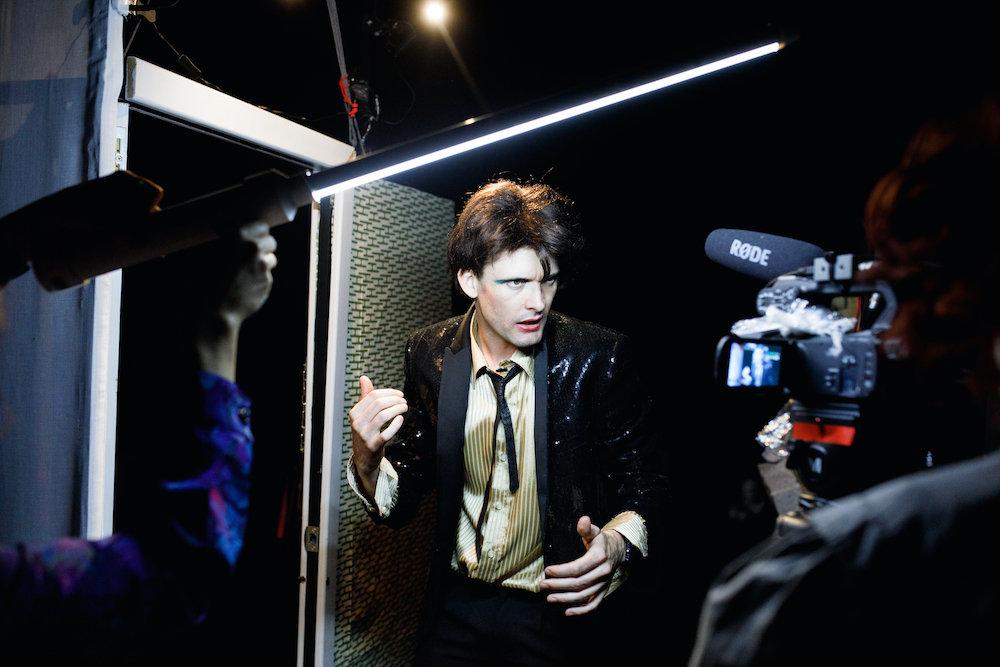
    Words by Meri Fatin / Illustration by Giullana Alarkon / Photos by Daniel Grant

    The Last Great Hunt are an ensemble of outrageously talented Western Australian theatre makers, responsible for creating some of the most thought-provoking new work in recent years. Their radical approach is visible on stage and in their company structure.

    As part of Leverage, issue 03 of our journal, Meri Fatin spoke with Jeffrey Jay Fowler and Sian Roberts in a conversation that encompasses friendship, funding and the re-thinking of live theatre to find opportunity in a post-pandemic world.

    Meri Fatin [00:00:33]

    I want to start by talking about the formation of The Last Great Hunt, particularly because it happened at a time where there was a gap to fill in the Perth theatre landscape. Perhaps you could tell a bit of that story, Jeffrey.

    Jeffrey Jay Fowler [00:00:58]

    2013, I had just come back to Perth. Katt Osborne was running the Duck House Theatre Company and together we looked across the landscape at who was getting funding and what we were doing to get funding. Tim Watts was part of Weeping Spoon. I had Mythophobic. Chris Isaacs, Arielle Gray and Adriane Daff were working independently. We were all applying for grants and putting in a lot of effort trying to justify what we wanted to do artistically. Katt said if we all formed one “supergroup” (laughs) so to speak, we might get the attention of funding bodies. If we share our clout, we might make a big enough impact.

    Meri Fatin [00:02:00]

    What did you weigh up as being the pros and cons of doing that?

    Jeffrey Jay Fowler [00:02:04]

    I had nothing to lose by joining the company. There was no agreement that we couldn’t undertake work outside. I had just started at Black Swan and was exhausted from writing my own grants. I’m not particularly good at writing grants, it’s not in my skillset; I think I was frustrated with having to justify myself knowing that you write a grant and it goes to a panel of people you never find out about. You get very little feedback and you need to prove your idea before you’ve created the show.

    So our idea was that if our reputations combined could get us annual funding we could reverse things. And that, I think, has been the very basis of what has made us different as a company. Also, we are six very different artists who can collaborate well with each other and with guest artists. That’s obviously part of the success of the company. I do believe it’s a model where we get an idea and work straight away while the idea is hot –  rather than getting an idea, writing a grant, waiting nine months to find out if you were successful. By that time, you might not want to make that show anymore.

    Meri Fatin [00:03:33]

    I’m really interested in hearing how you worked out how the company would function.

    Jeffrey Jay Fowler [00:04:44]

    For me, the formative moment was a meeting at Katt’s house, in the shed, sitting around trying to pick a name for the company. It took a really long time and we kept having meetings – it was very hard to come to a conclusion. And then the first project we ever worked on was a nightmare. All of us at once tried to work on a project before we had really finessed how we should collaborate. It was all in with no clear leader. We tried to look at Joseph Campbell’s The Hero’s Journey and create a play. It was exhausting and we hadn’t worked ourselves out yet. But I think the great thing is we scrunched it up, threw it in the bin and said – okay, next project! It wasn’t a bad idea to create a group, we just burnt the first pancake.

    Lé Nør is at its heart an ensemble romantic comedy... reminiscent of the sort of film you find late at night on SBS, a heavily subtitled cult favourite made in the Eighties with a Phil Collins heavy soundtrack.- Pelican Magazine, 2019
    Lé Nør

    Meri Fatin [00:05:56]

    In the beginning The Hunters actually capitalized on your individual successes by performing some of the work that had already been developed.

    Jeffrey Jay Fowler [00:06:04]

    We did. So, shows like Alvin Sputnik, It’s Dark Outside, Minnie and Mona Play Dead, probably a few others.

    Siân Roberts [00:06:13]

    Bruce.

    Jeffrey Jay Fowler [00:06:16]

    Bruce. These were all actually created before the (formation of the) company. Alvin Sputnik and It’s Dark Outside had pretty great touring records. So at the moment that we became a company there were already a few shows to bring in and those shows toured and were a big part of the early life of the company.

    Meri Fatin [00:06:41]

    When did you join Siân?

    Siân Roberts [00:06:43]

    I joined in 2015, so it’s my five-year anniversary. It’s my longest ever job. I think it was my longest ever job at two years to be fair! I remember everyone was applying for the same big grant. It was after Deckchair Theatre had gone under, where I was the marketing manager. I remember The Last Great Hunt got that grant and that was the first time that everyone was like “oh, here we go”. I just thought they were so clever to pool resources. It was so smart to form a company. Then I went out of the arts sector into the not for profit sector and I kept seeing their shows, and watching their donor campaigns. I always thought the shows were very clever, you know, socially conscious, funny – you could (see) the intelligence behind the shows. And then I saw this job advertised as General Manager for The Last Great Hunt and I thought, ‘imagine if I got that job!’ My dream job – and I nearly didn’t apply for it. Jeffrey was on my interview panel.

    Jeffrey Jay Fowler [00:09:09]

    I was! I remember exactly where we were sitting and the sun on your face (both laugh) that fateful day.

    Meri Fatin [00:09:20]

    Since you were on that interview panel, what were you looking for when one of your original members who was really the linchpin needed to be replaced. What was important to you at the time?

    Jeffrey Jay Fowler [00:09:34]

    Katt is an artist as well as a fantastic manager but the plan had always been that once we could afford it, we would hire a General Manager and let Katt be an artist like the rest of us. We wanted someone that would go on this crazy adventure with us because the company felt clear to us but was very hard to explain to outsiders. How we worked was kind of unusual. We had a lot of people saying that the model wouldn’t work. We had a lot of people saying it’s a bad idea to have no artistic director, that there would be interpersonal conflict. We wanted someone that could come and accept the deal. I think it was quite hard for Siân at the beginning. It’s like dealing with a company where your artistic director is a Hydra. We wanted someone that would go on that journey with us but would also help build the company and have a vision for it. And you know Siân, and a lot of other wonderful people that have worked for us, have endured an incredibly difficult job. There’s a huge amount of work to manage and produce the amount of shows that we create, debut and tour. I mean some years have just been mental, all around the world, and so we wanted someone that we felt we could grow with and negotiate with and be inspired by. We were looking for a lot. We actually ask a huge amount of Siân.

    Finding the words to describeLé Nøris a very difficult task, it just needs to be seen to comprehend. I was left in awe, and I keep finding things to dwell on the more I think about it.This cannot be missed to all lovers of film and theatre, or just anyone looking to have their mind blown.   - Out in Perth, 2019
    Lé Nør

    Meri Fatin [00:11:27]

    And Siân, when you got a sense of what the job would actually entail, how did you feel about it?

    Siân Roberts [00:11:39]

    I remember looking at the specs and it was, you know, basically you have to do everything, you have to have your own phone, your own computer, and we’ll pay you almost nothing. Kind of crazy, but I remember saying to you Jeffrey, it’s going to be a steep learning curve, but I reckon I can do it. It’s been the biggest challenge of my career and it’s still challenging every day. But I think that’s what keeps me interested and it’s why I’m still doing it. Those seven artists. Yeah. At first, they didn’t trust me, and I had to spend a lot of time… I knew it was a long game to show that I had the right intentions, that I could see the art, that I wasn’t trying to take control, that I didn’t want the limelight for myself. I understood the creative process and I understood the business side. And then I spent a lot of time helping the board understand the creative side and helping the creatives understand the governance side. We did a lot of strategic planning work at the beginning and we lost a few board members along the way.

    Jeffrey Jay Fowler [00:13:41]

    It was becoming a much bigger commitment for them and a different company. We wanted a more active board that would really help us. We have plans to become a much bigger company than we are now.

    Siân Roberts [00:13:57]

    Jeffrey’s right, a lot of people told us that it wouldn’t work. A lot.

    Meri Fatin [00:14:03]

    People whose opinion you respected?

    Jeffrey Jay Fowler [00:14:08]

    Yeah, I’d say so…

    Siân Roberts [00:14:10]

    Yeah, I think so.

    Jeffrey Jay Fowler [00:14:13]

    You know that tone of voice and that lean forward… “Are there rifts? How’s it going? It must be tricky.” They really wanted to see the cracks in the walls. People were sceptical because they’d had bad experiences of “rule by committee” and didn’t believe it could work.

    Siân Roberts [00:14:45]

    I was on board from the beginning. I was already kind of a fangirl and so I believed in it. I really did. I believed in the work and I believed in the artists… so why can’t we do it our way? There’s a lot of companies that went under and there were all these other companies that weren’t working the old way. We had nothing to lose by trying a different way.

    I came on board in October 2015 and Katt had put in all the work to get that three-year funding. I think she was still doing my handover when we found out that we had that funding and it was a huge celebration. A lot of people did tell us that it wouldn’t work, but it has. It takes longer to make decisions but there’s trust and I think the thing about The Hunters is that they’re all friends. They’re close friends, and have been for years. Some of them are going out with each other. Some of them have lived together as flatmates, some of them were students together. So, there’s a long history that we want to continue. And really the art is what it’s about. And I think that’s why we make it work.

    Meri Fatin [00:17:01]

    Do you think the audiences have come to sense and be attracted to the cohesion between the artists as well? Have you ever thought about that?

    Jeffrey Jay Fowler [00:17:32]

    I’ve thought about it. I don’t know. I think that our audiences come from all different places and angles and all different levels of knowledge about art. We certainly do have fans. That’s a thing. And then we have people that might see a few shows and not really have the full context. I’m sure some people enjoy it. I think on those big collaborative shows like Le Nör, part of the meta narrative and the enjoyment of it is knowing that that’s everyone in the company working altogether. I think that is thrilling for people. Sometimes you talk to people about the company and they’ll have seen a few of the shows and it’s a real light bulb moment for them in conversation when I’ll explain there’s six of us and we work in all different configurations. They’re like “Oh that’s why I saw New Owner and Fag/Stag and was like whoa! This is a kid’s company who do puppetry. No wait. This is a very adult company.” They understand it when you explain the company a bit more. Our art doesn’t have one genre, doesn’t have one brand. We don’t have any rules about the aesthetic of the company, and I think that can disarm people until they “get” the ensemble.

    Meri Fatin [00:19:14]

    Can we reminisce about Le Nör for a little while?

    Jeffrey Jay Fowler [00:19:22]

    Sure! Let’s!

    Meri Fatin [00:19:23]

    Was it meant to have another season this year?

    Siân Roberts [00:19:26]

    Not this year. No. It’s been a different show to sell because (while) we do have quite a big touring history, that history is with less expensive shows. It’s a one hander. Le Nör is ten people and a big set. It’s a different market — it’s a festival show. It had two Helpmann nominations including Best New Australian Work, which is amazing. Who knows what would have happened but we’re looking to do some redevelopment of it next year if some funding comes through. It lends itself to live streaming because of the video elements so we want to do some work on it to see how we can do that. Tour it without physically touring.

    Meri Fatin [00:20:45]

    My recollection of it was the edge of your seat excitement through the whole thing. It was one of the most fantastic things I’ve ever seen and part of it was just noting the extreme “hecticness”” of what was going on for every single person on stage!

    Jeffrey Jay Fowler [00:21:05]

    Speaking a make-believe language and lighting the show, then acting in it, swapping costumes, moving set pieces, operating the camera… it went very fast as a performer. It was 90 minutes long and it would begin and then you’d blink twice, and you’d be doing the final scene in a helicopter covered in water with your wig off, with some strange metallic fabric wrapped around you. There was not a moment that any single person was not busy

    Meri Fatin [00:21:41]

    What’s the feeling when Le Nör is finished and you know you’ve delivered a really spectacular performance? What was the energy like?

    Jeffrey Jay Fowler [00:21:52]

    It was incredibly satisfying. Incredibly fun just to be on stage doing silly things with people that you really like. The process was (laughs) nightmarish and full of thinking “this can’t work” and feeling like the roof was caving in, which can happen in any company, in any production. The nervousness of putting a show up is intense, but after that first show we realised oh we can run this… audiences get it, they’re like, ‘it was the freshest breeze I’ve ever felt.’ And then the season just went so quickly. You’ve worked on something so hard — it was years of work culminating in a two-week season.

    Siân Roberts [00:22:48]

    And years of fundraising.

    Jeffrey Jay Fowler [00:22:50]

    Yeah of course!

    Siân Roberts [00:22:52]

    I remember when we were in Edinburgh in 2017, we were having meetings with people over there to fund it and to commission it.

    Jeffrey Jay Fowler [00:23:04]

    People keep dangling carrots and then taking them away.

    Siân Roberts [00:23:07]

    It was probably the most stressful project that I’ve worked on up until the one that I’m working on now.

    Set on the fictional island nation of Solset where water is rationed and rain seldom falls - the story tells a compelling tale of a group of misfits who share an apartment complex, and their lives become entwined in numerous ways. The looming threats of climate change brings an urgent tension to the tale...As a seamless piece of cinema plays out on the screen, actors and technicians are scurrying around the stage to make sure everyone is hitting their mark at dangerously precise intervals.- Perth Now, 2019
    Lé Nør

    It’s a real light bulb moment for them in conversation when I’ll explain there’s six of us and we work in all different configurations.

    Meri Fatin [00:23:19]

    In the context of everything that The Last Great Hunt has ever produced, how would you describe Le Nör? You said it was the most stressful thing you’ve ever worked on….

    Siân Roberts [00:23:29]

    Stressful but also gratifying because the thing about this company is that the way that we’re set up to fund creative development, you’re setting these creative minds free to do whatever they feel, whatever they want. And I don’t like to say no. People can do their stuff and if we see it could be something then we start bringing people in to have a look and that’s what happened with Le Nör.

    Meri Fatin [00:24:09]

    Did it feel risky in the early process where you started to understand what it was going to be?

    Siân Roberts [00:24:16]

    It always feels risky. We find it hard even bringing people on board to some of the projects because they say they can’t do that job because they’ve never done it before. And we say we’ve never done it before either. So, it’s more often about the attitude of the people that are coming on board saying I don’t know how to do it but let’s find out!

    Meri Fatin [00:24:43]

    You’ve got to be mentally free enough to join in with something like that.

    Siân Roberts [00:24:47]

    Yes, and have an open mind and be excited by things. When the going gets tough you’ve got to have some passion to fall back on. There was a point in Le Nör where we had unconfirmed funding and I had to make the call to go ahead with a development period that was going to be very expensive – basically using company reserves – just hoping that the other money would come through. And luckily it did. But what Jeffrey’s referring to is that the process was under funded and didn’t have enough time. Premiering at Perth Festival with no previews (to Jeffrey) do you remember the first night was the opening night with the press there as well? I remember sitting there… my heart… as the producer you can’t do anything but keep your fingers crossed and hope that all goes fine. Two days before I’d seen a dress run and all the tech had failed, and it all needed to be rewired! Oh my God.

    Meri Fatin [00:26:18]

    That’s an expressive sigh Jeffrey….

    Jeffrey Jay Fowler [00:26:21]

    You have a nightmare as an actor that one day you’ll forget a line, or the show will fall apart and then it happens. And the show is Le Nör, and the show just stops for 20 minutes and the tech is broken, and no one knows what’s gone wrong and people are on ladders and house lights are on and you stand there and go, “this is it. This is the actor’s nightmare.” The whole show, which is put together with sticky tape sometimes literally has broken. What happens now? Do we just send this audience home? I think it happened on the second night and you just sit in it for 20 minutes and then the show goes on again and the lights go down and you’re back into performing and you think OK what? Where were we up to? What am I doing? What costume am I wearing? OK here we go. And then it got to the end and the audience just gave the biggest round of applause ever. Le Nör was like facing your nightmare of being unprepared as an actor and realizing everything’s okay at the end and actually people kind of love it even more. They were so on our side.

    It’s okay for theatre to not be perfect. And I think when you’re doing something so ambitious people embrace the faults in the work.

    Filmmaking is at the forefront as you watch a faux foreign movie filmed live on stage, complete with behind the scenes cinematic techniques and surtitles for the invented hybrid language, with ancient Germanic origins spoken by all actors.The Last Great Hunt already has a reputation for engaging and innovative works and Lé Nør only confirms the team is a theatrical force to be reckoned with.- Artshub.com.au, 2019
    Lé Nør

    Siân Roberts [00:28:16]

    When I first joined, we were doing Blue Room shows where you make it up to the last minute and you test it. Now we’re doing Perth Festival shows. We’ve got a new commission for this coming Perth Festival. They saw what we could achieve with Le Nör and now they’ve given us more space and more time and more resources because they understand that that process needs time. And we’ve developed our artistic process over the last five years. I think we’ve improved it a lot. You don’t want to be too formulaic about things but trying, before we premiere work or before we program it, to have an open showing where we bring in outside eyes and get some feedback and then leave ourselves enough time to make changes. Then have a break and then do another development period rather than making it right up to the last minute.

    Jeffrey Jay Fowler [00:29:24]

    Showings aren’t just for us and for the work, they’re also for our followers who’ve become really involved in the works and want to see them at all different stages of development. By the time our audiences are seeing our work, the people close to us are really championing it and they know the journey we’ve been on to create it. I think that’s a really important part of our brand and our company and the experience we have as artists and the experience we offer to audience members who get close enough.

    Meri Fatin [00:30:24]

    What does The Last Great Hunt’s strategy involve in terms of your focus on community and inclusion and creating a space for West Australian artists to remain and work in Western Australia?

    Siân Roberts [00:30:56]

    This year when all of our work stopped, we realized that while we weren’t employing seventy people anymore, we could employ ten. We saw our friends lose all of their work; we saw Black Lives Matter stuff and we were able to have a hard look at ourselves and what we’re doing. I think everyone had an existential crisis in the arts. What are we doing? Are we actually making a difference? Why ARE we doing this? And so, we’ve taken our strategic plan and we’ve turned it into a whole bunch of plans and strategies for employing independent artists, providing emerging artists a pathway to paid work, including more people in our development periods. Up until recently, we could only really pay for those six artists to develop work, so if anyone wanted to work with an external person, we maybe had one or two weeks-worth of funding. So, we’re working now to increase that funding and reach new audiences. We’re waiting on a bunch of grants to hopefully come in and if they do Jeffrey will be leading an emerging artist program where we will be deliberately finding people who are coming into the arts through different ways like WAAPA, but (also) other community areas….

    Jeffrey Jay Fowler [00:32:51]

    Even making space for people that have really missed out on WAAPA or not realized they wanted to be in the arts till they were thirty or a bit lost. It’s a weekly meet up to help people develop their skills and build pathways to try and increase diversity in the industry and also to enrich our company by changing what we do and seeing what we can learn from other people. The next chapter has to be about us sharing. I’m thirty-four and we rode the last wave of really healthy funding. The year that I turned twenty-six was the year that the twenty-five and under category disappeared from the Department of Culture and the Arts. Then the year I turned thirty was the year that the Australia Council got rid of their thirty and under category. So, it was like we are riding a wave with the world collapsing behind us. The funding opportunities that were available to us before the Last Great Hunt have evaporated and now I see fantastically talented young people coming out of the Bachelor of Performing Arts having nowhere near the amount of grants or money available to them that we did at that time. And also, you look at someone who might stand on the outside of the industry and watch some Last Great Hunt shows and think, “wow I wish I could do that! Oh, it’s impossible” and walk away because we’re in a world that tells you that you have to do everything in your 20s or you can’t do it at all. Bizarrely. We want to provide an opportunity and a place for those people. We were so lucky. We were so lucky to be in Perth, it was smart to stay in Perth. We’re so lucky to get the grants we’ve got – the first time and then the second time. You know I often look at my life and just think this is just bizarre. Bizarre and so good.

    Think early Eighties film clip, overlapping images, multiple perspectives viewed simultaneously - as if you were watching a film and watching its cast and crew creating the film at the same time.Throughout the production, director Tim Watts intrudes and comments on proceedings, sometimes seen by the characters, sometimes unobserved - part narrator, part psychopomp. If he ever turn up at one of your parties, run for the hills. The highest local hill you can find.- Artshub.com.au, 2019
    Lé Nør

    Meri Fatin [00:34:54]

    You talked about how the touring program had been really hectic but is the strategy to take The Last Great Hunt out of Perth even more?

    Siân Roberts [00:35:18]

    International touring has been what we’ve done from the beginning and arguably the touring work has funded a lot of other stuff. About forty per cent of our income is from touring. Touring and also having commissions for work. It’s really hard to say. I’ve heard some advice the other day that said we shouldn’t be touring internationally till after 2021.

    Jeffrey Jay Fowler [00:35:54]

    That’s even a conversation among the artists. Should we still be touring? Is it environmentally friendly to be flying our shows around the world? One of the ideas for the next development of Bad Baby Jean is a show that can be made live but digitally and served fresh to the Internet. Is this a format that we want to pursue more? Because actually there is something environmentally wrong about flying all around the world to perform shows live in a world that is so digitised.

    So how can we find that sense of creativity and connection and audience and togetherness maybe without getting on a plane?

    Siân Roberts [00:36:32]

    Saying that, touring employs a lot of artists. B and C casts go on tour for us with our work. We’ve got multiple casts for multiple shows and then they’ll tour while the creators stay back in Perth and make something else. So, it does employ a lot of people, tech people, tour managers. I don’t know. I think we probably will be getting back to the US when we can. I think that will continue to happen, but I think we will have other offerings as well. The changes that we’re starting to make are not just about air travel but also accessibility. There’re so many good things that have come out of the digital work. It’s a lot of stuff we were thinking about already, but the pandemic has given us the time to really delve into it a bit more deeply. And, that’s one of the reasons we’re re-strategizing. We were looking at our vision and mission the other day and it says something like “make work and take it around the world” and we thought is that it? Or is it just about connecting with audiences wherever they are? What IS live theater?

    Meri Fatin [00:40:37]

    You talked about people in the arts having a kind of existential crisis over what COVID 19 has represented for all of us but if any group of creative people are going to come up with some kind of yet unimagined future it’s probably The Last Great Hunt. Thank you both so much.

  • The Fatin Tapes: Scott Free

    The Fatin Tapes: Scott Free

    In July 2017, Scott Ludlam resigned from the Australian Senate after he was made aware that he held joint Australian and New Zealand citizenship, rendering him ineligible to hold elected Federal office. In this article first published in our journal, PIVOT, Meri Fatin spoke to Scott about life since his very public career change and the potentials of contemporary activism.

    Meri Fatin [00:00:00]

    Scott, you’ve been away from Perth for well over a year. Where the bloody hell are you and what are you doing?

    Scott Ludlam [00:00:10]

    (laughs) At the moment I’m camped up in southern New South Wales in a really beautiful part of the world, working on a book. I left Perth in January 2018 so it has been a little while.

    @scottludlam
    first light

    Meri Fatin [00:00:23]

    And tell me about the book.

    Scott Ludlam [00:00:27]

    Well it’s the first time I’ve ever tried to write anything longform and I spent nearly all of last year travelling around the world talking to social justice organisers, peace activists, architects, journalists, Greens MPs and candidates from global Greens parties and I’m trying to synthesize that together into something that hopefully will be useful… even if it’s just useful for me.

    Meri Fatin [00:00:55]

    So how did the book come about?

    Scott Ludlam [00:01:04]

    I was approached to write something and then I made a suggestion that it be something along these lines and they were like okay, sounds crazy, go do it.

    Meri Fatin [00:01:12]

    So how would you best summarize it then?

    Scott Ludlam [00:01:25]

    I guess what I’m most interested in is how social movements and political processes deliver change – or don’t. You know, we’re at a really important moment in history where, unless we’re able to unlock political power, the 21st century is going to be a very dark place. Unless we’re able to mobilise on a scale that we simply haven’t seen for a while then we’re going to cop the full force of climate change and all of the political and economic consequences of that. So, what I’m interested in, I suppose, are the kind of historical andcontemporary ways in which social movements and political machineries either deliver change or are used to prevent it.

    Meri Fatin [00:02:18]

    When you talk about mobilizing, what would you regard as sufficient mobilizing to actually generate some change now?

    Scott Ludlam [00:02:28]

    So, a mobilization that wasn’t successful was the campaign undertaken by millions of people in 2002 and 2003 to prevent the invasion of Iraq. That’s an example of a mobilization that was enormous, it gathered pace very fast. History has proven that we were absolutely right to do that and that we didn’t institutionalize any kind of outcome. The invasion still went ahead. It was clearly unlawful under international law and it cost hundreds of thousands of people their lives. And so, I’m interested in mobilizations that hit critical mass and are able to push over an outcome, whether it be the Arab Spring uprising in Tunisia where a dictator was toppled and now a democracy exists or, you know, the interesting kind of processes and success of the Occupy movement from 2011.

    What can we learn from movements around the world? Oneinteresting expression at the moment are the children striking against climate change. They’ve read the paralysis and they’ve taken action without asking for permission and it’s a really, really interesting development.

    Meri Fatin [00:03:41]

    You’ve talked about how that kind of activism with kids involved is a new challenge for the establishment.

    Scott Ludlam [00:03:50]

    Well it clearly is. It’s caught the establishment completely wrong-footed and I mean in this countrythe establishment isn’t simply preventing climate action, it seems tobe trying to accelerate it (climate change). It’s trying to accelerate the worst kind of climate consequences imaginable in hanging onto coal, in accelerating onshore and offshore gas extraction. You know, mainstream politics has completely failed to deliver an outcome and so hundreds of thousands of kids from primary school, high school and uni students have just taken it upon themselves. I don’t think the establishment has any idea what to make of it.

    @scottludlam
    this place is turning me into a morning person

    Meri Fatin [00:04:40]

    And also, the establishment is still, to some degree, trying to ask the general population to turn a blind eye to what these catastrophic consequences might be. Would you describe what you see transpiring that is so alarming? What you believe is an actual reality, say over the next 20 to 50 years?

    Scott Ludlam [00:05:08]

    I think unless we’re able to change course dramatically what we’re going to see over the next couple of decades is the age of climate disasters, super storms, droughts, fires, heatwaves and so on that we’re already seeing with less than one degree of average warming. And what that does, is it pushes people across borders. It accelerates the breakup of fragile states and ultimately it starts to inundate coastal sediments and destroy agricultural regions. There’s no real precedent for that on a global scale. We have no idea what that drives us into. Apart from that it’s unlikely to be very good.

    Meri Fatin [00:06:11]

    In these conversations that you spent last year recording, was there any solace where you felt there was some genuine progress being made? Some sort of genuine movement being created that might actually offer some hope?

    Scott Ludlam [00:06:27]

    Absolutely. Even in places where they’re really up against it, there’s hope. Not false or blind hope but hope with action and hope with a plan, all over the world. I was able to drop in on a conference of Young Greens from right across Europe, where these young people have grown up with climate change as a part of their lives, and the failure of political processes is also part of their lives.  What they’re turning the green movement to in Europe is something incredibly exciting and very practical. Something that we can learn from. But then I’ve also spent some time in Jharkhand in the eastern part of India where campaigners are trying to prevent an expansion of uranium mining and the imposition of a huge steel smelter on their land and their stories of struggle were just as inspiring, you know, opposite sides of the world working very different ends of the problem but incredible resourcefulness, courage… and some success.

    Meri Fatin [00:07:49]

    Coming from the idea of mobilisation and asking you now with your activist hat on, what do you miss about being a parliamentarian?

    Scott Ludlam [00:08:07]

    I think what I miss the most is having access to the kind of machinery (of parliament) and particularly the team. It’s an incredibly talented and very motivated group of people that I’ve been privileged to work with. You have one foot inside the parliament building and then one foot in all the other campaigns and community groups and other kinds of things that you want to support or be able to provide some backup to.  Being able to do that with a measure of resourcing and the levers and the machineries of Parliament is something that you can’t really place in other walks of life.

    Meri Fatin [00:08:46]

    Do you feel that you can still make a difference from the outside though? It’s known that changes, big changes don’t happen from inside government. They happen from agitation from the outside.

    Scott Ludlam [00:09:01]

    Yeah absolutely. And so that’s it. If I thought that the only way to make a difference in the world was in Parliament, we would be a very bad place indeed.  There’s only 76 senators and 150 members of the House of Representatives.  We know what happens if we leave it up to that building is that we end up in the kind of trouble that we’re in.

    I think one really interesting recent example is the campaign for marriage equality where you saw very clearly the parliament being the last place in the country to “get it”. All of the hard work got done by campaigners working as part of broader social movements and the government was the absolute last ones to get the memo. And that campaign was bruising and much harder than it needed to be because of the tactics that Malcolm Turnbull chose. But to my mind, it’s a really interesting recent example of how change comes from outside the building and then you get your allies in there to actually knock it through.

    Meri Fatin [00:10:01]

    I want to go back again to these conversations that you’ve been having (for your book) because you mentioned that you’ve been talking to architects among the people that you’ve spoken to. What kinds of conversations were you having with architects?

    Scott Ludlam [00:10:15]

    I suppose in a way the work that we started in Western Australia with the WA 2.0 Project and with the Transforming Perth work that we were doing just before I finished up, I wanted to work out how to continue that conversation and how that’s being read elsewhere in the world. Whether there’s more that we could do in that area. It was one of the most rewarding times and some of the most rewarding projects that I did while I was in office. So (the interviews were about) being able to see how these kinds of conversations are being had in other parts of the world.

    Meri Fatin [00:11:03]

    And is there some agreement about the frustrations that architects and designers have in being able to be involved in these projects from the earliest possible stage?

    Scott Ludlam [00:11:13]

    I guess it’s really difficult to generalise as most of my experience and learning in that area has come from the work that we were doing in Western Australia. In other parts of the world, the pattern is similar in the sense that architects, or designers more broadly are often forced to compromise (based) on issues of cost and on issues of economics.  What we were trying to do in W.A. was to really turn that on its head, turn that around. Not that we were ignoring the financial consequences of what was possible but that we were putting people and the planet at the centre of what we were talking about.

    @scottludlam
    this coast

    Meri Fatin [00:12:06]

    That whole experience of creating the Transforming Perth report was really rewarding, as you say in the sense that you presented, based on stark choices, quite an ambitious vision and then asked for help in finding solutions. What are your recollections of that collaborative effort?

    Scott Ludlam [00:12:28]

    Really that everybody bought something very interesting and valuable to the conversation. So we (The Greens) were bringing a policy perspective but also advocacy perspectives to the conversation. But I’m not an architect. I don’t have a background in that kind of design work. I don’t know the financial background. I suppose what we wanted to do was throw our hats over the wall and say what we are called upon to do at the moment is dramatically change the energy basis of industrial societies but also change how we get around, building materials that we use, spatial layout of cities,… it’s an enormously ambitious agenda and we’re being asked to do it very rapidly.

    Practically, how does that get done? You can’t just put a leaflet out and hope for the best and so that was why we found it really valuable to talk to people who do that kind of thing for a living and ask the question about what would happen if you got what you wanted? What would happen if we won? Not just the developers but the architects, the designers, the planners, homeless people, cycling advocates… people who actually have to live in these communities. What would it look like if we got it right? And the answers that we got back were really inspiring.

    Meri Fatin [00:13:48]

    And clearly everyone was energised in that conversation too.

    Scott Ludlam [00:13:53]

    Well I hope so. I mean WE certainly were. We got great response from it, not just in the media sense but also in a policy sense. The documents that we did, Design Perth (and Transforming Perth before it) we certainly used to inform our work, but I think, we found some of those reports ended up travelling quite widely.

    Meri Fatin [00:14:13]

    I was having a look at responses that had been received to Transforming Perth via social media and was really shocked at the amount of very nasty pushback on the Greens generally. I guess people use whatever forum they have to do that. Even now that the climate agenda is a mainstream understanding, the Greens seem to still have an image problem with what they’re bringing to the table. Is that how you see it?

    Scott Ludlam [00:14:51]

    I think when you take on really entrenched economic interests it’s going to make you unpopular. As we’re seeing over the last couple of weeks in the wake of the atrocities in Christchurch, that Government and some really extreme elements in the commercial press are trying to kind of weirdly point the finger back at the Greens and say that we are the real extremists here, which is incomprehensible until you realize why they’re doing it. If you’re a threat to the status quo, if you want to shake things up and if you’re directly challenging the industries that are driving us into this climate nightmare, then there’ll be pushback. I don’t know what you’ve seen on social media but it’s not surprising, in fact I think it’s part of the process.

    Meri Fatin [00:15:40]

    I want to ask you about cultural issues in governments that make them avoid including designers from the early stages in projects. I understand that in some parts of Australia, designers are considered one of the risk factors in being able to deliver a project within budget and on time. How do we turn that around? How do we change these attitudes?

    Scott Ludlam [00:16:04]

    Well I think we have processes of design backwards in that a particular project will be decided on and then it’s a case of kind of ramming it through. Whether it be planning permissions or your other certifications or whatever it may be. And that obviously runs the risk of stoking an oppositional response either from people living over the back fence or from neighbourhoods more broadly. And I suppose what we were doing (with Design Perth and Transforming Perth) was paying a bit of attention to processes of deliberative democracy and we worked with Janette Hartz-Karp a little bit on this as well, who ran the Dialogue with the City process for Minister Alannah MacTiernan going back quite a few years.

    Meri Fatin [00:17:06]

    Yeah early 2000s.

    Scott Ludlam [00:17:08]

    Yeah, which is to use the theory, I suppose, of the citizens jury. Use what’s good about the way that the criminal justice system uses the jury system, widen its scope to take on really difficult questions around planning because these laws are difficult. There are always going to be trade-offs and if you involve a really diverse cross-section of the community early, and if you provide them with whatever information they seek, make available architects, engineers, planners, technical people whatever it is that they are seeking, the design process that unfolds and the results that come out are the opposite of simply trying to drive headlong into a foregone conclusion.You get really nuanced, balanced, and to my eye, very compassionate design solutions come forth.

    Meri Fatin [00:18:04]

    Was there something that came directly out of Dialogue with the City that’s an example of that, that sticks in your mind?

    Scott Ludlam [00:18:11]

    Yeah there was… and this is something that happened quite a while back, I think around 2004. What came out of it was a planning concept for greater metropolitan Perth that was profoundly green. Small g, not party-affiliated but very people-centred. It proposed a dramatic increase in public transport, creating village-scale urban and suburban centres that would be linked together with public transport, a dramatic increase in green space. It wasn’t a Green initiative – it was a Labor initiative – but I think it’s one of the best examples of (what happens) when you turn your planning processes over to a broad cross-section of people.  The documents and the planning proposals you get back are better than anything put together by a narrow cohort of experts or people with financial interests.

    Meri Fatin [00:19:12]

    And it is a difficult thing isn’t it, where people who are working in the design, architecture field are very much wanting to deliver high quality work and to put their name against something that they genuinely, passionately felt was the best that they could deliver, but are being hampered in the current process. Having been inside government how do you think that approach needs to change so that they’re in amongst it from the very beginning?

    Scott Ludlam [00:19:51]

    Well, I guess some of that you can do around election time and a lot of it (you) can’t. Some of it is simply about making sure that commercial interests don’t have a chokehold on the policy making process. One of the nice things about the work that we were doing for both those projects was that developers and finance people were at the table. We weren’t trying to invert gravity or force people to build stuff that they weren’t going to be able to finance, but they didn’t have a chokehold on the process.

    I think one of the things that’s gone badly wrong with Australian democracy, not just in land planning and real estate but much more broadly, is that commercial interests have basically sabotaged democratic process and now have an outsized impact on policy making. What that looks like, is just an urban carpet of very low density suburbs with very poor amenity, rolling out across the horizon without public transport, without schools, without hospitals.We’re creating places that not only will be very difficult to live in, in an age of climate change, but are also going to be quite difficult to retrofit. So at a practical level a lot of the designs that people came up with in the Design Perth process couldn’t be done without networked rapid transit in the city of Perth, which successive governments have failed to deliver. And that’s a political question. It’s not that the technology isn’t there, it’s that budget decisions have gone into making tunnels and freeways and those are decisions that can change democratically.

    Meri Fatin [00:21:43]

    And it is interesting also that when you find yourself at the table with the people whose interests are around commercial and financial outcomes, that they’re still on Team Human.

    Scott Ludlam [00:21:56]

    Yeah. They’re not bad people. That was a pleasant surprise for us and hopefully for those folks too. When you sit around the table, they realised that we weren’t placard wielding lunatics and we realised that they weren’t voracious capitalists with no care for the world they were leaving their kids. Everybody ended up on Team Human and the designs that came forward were designed to be very human scale but, you know, it’s clear that something has gone deeply wrong not just in this country but around the world where we’re seeing these aggregations of very, very perverse outcomes leading to some pretty scary forecasts, if we don’t change direction quite soon.

    Meri Fatin [00:22:46]

    Is part of that direction change understanding that perhaps we might have to give up the idea of living in enormous houses and having a lot of space around us? That we need but go into high density living and actually accept THAT as being aspirational rather than the big show of wealth?

    Scott Ludlam [00:23:09]

    I think even that is probably more complicated than it looks and some of that is mythology spread by the real estate industry to make it look as though it wasn’t their idea all along. The Australian real estate market is structured around investors much more than it is structured around people on low incomes or people who might be renting for their entire lives or empty nesters who might want to move out of the suburbs and closer to amenity. I think it’s AHURI (Australian Housing and Urban Research Institute) who do a report every couple of years called “The Housing We Choose” that shows the dramatic mismatch between what the market is providing for investors and what regular people actually want to be able to live in. So, I don’t think it’s so much about giving up this Australian dream of a giant house fifty kilometres over the horizon with a lawn. I think what we’re going to have to give up is the idea that housing is simply another form of asset to be traded by people with nine other properties. It’s actually a human right and city building is a lot more complicated than just catering for land packaged up as an investment vehicle.

    Meri Fatin [00:24:29]

    What about regional and remote areas?  What have you been involved in where you’ve seen some good planning outcomes for country dwellers?

    Scott Ludlam [00:24:54]

    Much less to be honest. The work that I was doing before was expressly for cities. My thoughts on the regional areas somewhat are that it can be actually easier to experiment. I’m living about six hours down the coast from Sydney at the moment. I’m not living in a big city for the first time in my life and the kind of stuff that people are doing out here is crazy great. There’s more space. There’s more opportunity to experiment. What always occurred to me was we can’t all live in an eco-village in a regional area. We need to somehow bring this technology back into the city. So, what I see happening, at least in this part of the world, is people with tremendous ideas that need to wash back into the city because cities are wonderful in their own way. And you know in regional areas it’s not simply the case of walking down to the end of the street catching a bus or putting a light rail line in. Their spatial problems are very different to what you come across in the city.

    Meri Fatin [00:26:07]

    So, what’s an idea that you think would be worth washing back into a city context?

    Scott Ludlam [00:26:13]

    I think we need to invite the natural world back into cities. Where I’m living at the moment is a really interesting example of that. Your body clock works differently. I think your sensorium is completely different, the soundscape is completely different, you know, clocks move at a different speed. Purely for the practical benefit of shading streets and dropping temperatures, one of the things that we had in the Design Perth and the WA 2.0 work that we were doing was re-weaving the urban forests and re-growing the urban forest canopy. So, some of it is really kind of basic, it’s not rocket science. It’s planting more trees as though our lives depend upon it.

    Meri Fatin [00:26:56]

    I want to go back to asking you about the “report” work that you’ve been involved in, the collaborations that you’ve been involved in, the civic engagement …and then how those reports then get treated.  How the recommendations are then either ignored or delivered, because it seems to me that there must be a certain level of repetition in what those recommendations are. And yet we’re still making reports and we’re still making those same recommendations.

    Scott Ludlam [00:27:24]

    Yeah that’s true but progress is slow – it’s much too slow – but it’s also worth pausing to acknowledge progress where it does happen. Right at the beginning of 2017 there was a change of state government in Western Australia. Instead of building an incredibly costly and destructive urban freeway, the incoming state government ploughed some of that money (after they cancelled the Roe Highway extension) into new railway lines, to new rail corridors. And so slowly we do have some successes and the element of repetition, I guess, is just that stuff takes time. Not all these campaigns are spectacular. Some of them are pretty low key. The most important thing I guess is just to keep the pressure up because for some of those sustainability issues we’re running out of time.

    Meri Fatin [00:28:28]

    I was reading that you said that your political theory when you first joined the Senate was that “we should all just be nicer to each other” and that it was “dashed” before you even started in the Senate. But because I know that you’re a strong believer in the power of civic engagement, I’m curious to know what you believe the role of a cultural understanding and empathy is in getting design right for communities?

    Scott Ludlam [00:29:27]

    I guess I was being a bit tongue in cheek with that initial comment about “wouldn’t it be easier for us just to be nice to each other” but I believe that’s true. It was a recognition that power doesn’t concede anything without a fight. Concentrations of power here in this time or historically anywhere never concede anything without concerted effort. And so that almost builds confrontation rather than collaboration into your political makeup right from the beginning. Look at the way that refugee policy is unfolding, for example – a lack of empathy has been weaponized against an extremely helpless independent cohort of people who have managed to survive under these gruesome conditions for years and years. But empathy just keeps coming back to the fore. It keeps coming back into it. Human beings are empathetic creatures and I think you can only hold it off for so long. And part of our work politically has to be to mobilize that and to help people shape that into something that is politically effective so that change can happen.

    Meri Fatin [00:31:41]

    Do you see opportunities for people who are working in this urban planning space to make change? And what are the priorities?

    Scott Ludlam [00:31:54]

    I think to be honest the priorities need to focus around very short-term political change to at least make it politically impossible for climate change deniers to occupy any political office in this country. I think that’s a very urgent task because then that can unlocksome of policy machineries to be supportive of our work rather than in opposition to it. And then I think it’s a case of planting trees as though our lives depend upon it and getting new technologies into the ground where they exist, designing them where they don’t, and building cities that are climate ready.

    Some of it is going to be about retrofitting and shock-proofing infrastructure that already exists. Some of it is going to be about making sure that new build is being designed for the climate it’s going exist in. The last piece of that puzzle – to pick up on where we started with empathy – is that if we’re not willing to take people on, you know from, further afield then it’s not worth building. We’re all going to be in this together. I imagined in one sense building a lifeboat and then being able to welcome people to it because there’s other parts of the world are going to be hit probably harder than here.

    Meri Fatin [00:33:15]

    You’ve alluded a couple of times in this conversation to our looming opportunity to make change in government as voters. I’m interested in the result that you’d like to see. I guess not so much on the macro level, although that’s interesting, but more on the finer makeup of parliament and what we can achieve as voters with some thoughtful pencil markings.

    Scott Ludlam [00:33:38]

    Well I think we’re fortunate that we’ve got an electoral system which is more responsive to the popular will than most people realize. Certainly, more responsive than what they suffer in the U.K. or the United States or some of the world’s older democracies. In the sense that with preferential voting you don’t have to be satisfied with voting for the lesser evil, because I think that the those days are done. So, you can vote for progressive minor parties, you can vote for progressive independents with your number one and then if that person doesn’t get elected, your number two vote, which might be for the lesser evil (let’s just put it politely). Not only does that build numbers in the Parliament but it also builds that impression that collectively we’re quite a powerful political movement.

    I think there’s a mood for a change of government in Australia which should never be taken for granted but there’s also a mood for breaking up the monopoly of the two parties and we’re seeing that not just in Labor-held seats falling to the Greens but Liberal-held seats in the inner cities. I think what happened in Wentworth is quite an instructive example that maybe the days of the really brutal hard-line hard-right white male conservative just driving us down the drain are coming to an end.

    @scottludlam
    Scott, Scoot and Rose

    Meri Fatin [00:35:20]

    Scott Ludlam It’s been a pleasure. Thank you so much for spending time with me today.

    Scott Ludlam [00:35:24]

    Oh you’re very welcome. I really enjoyed that.

    Words by Meri Fatin

    Illustration by Sofia Varano