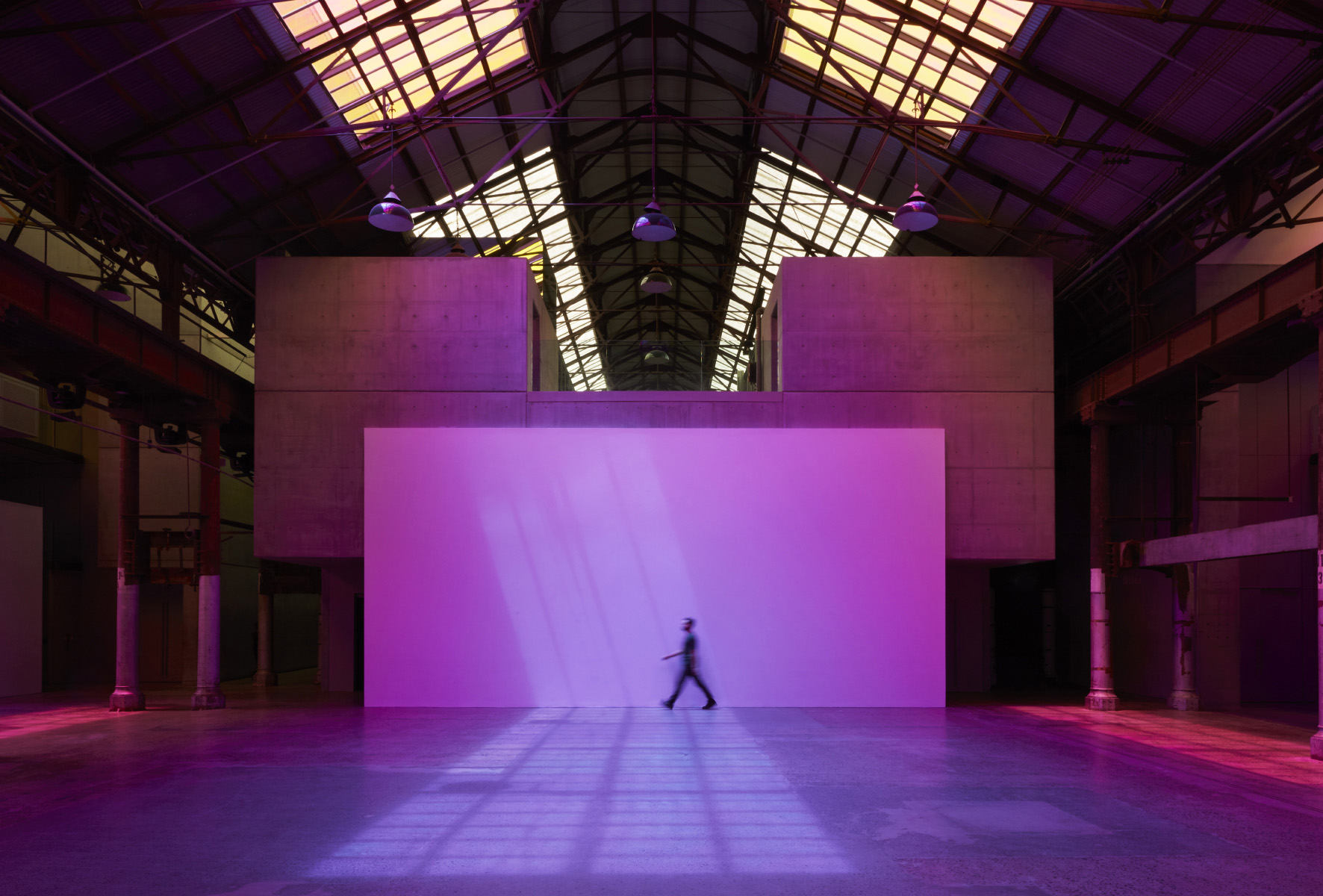
We wish we’d been in Sydney to experience Rebecca Baumann’s immersive exhibition ‘Radiant Flux’ in the flesh, but these images go along way in capturing the transformative nature of the work. In a short essay, Rebecca reflects on her installation at Carriageworks in relation to the overarching theme of Leverage.
When thinking of how the word ‘leverage’ might relate to my art practice, I did the rather unimaginative thing and consulted a dictionary. The Merriam-Webster dictionary defines leverage as
the power to direct the thinking or behaviour of others usually indirectly.
This definition piqued my interest when thinking about the way I have approached making work in recent years, and in my most recent installation
Radiant Flux
.
I started working as a professional artist in 2007, and in the early years I made kinetic objects – I was interested in motion, creating works with inherent change, that would be different for each viewer. In my more recent practice I’ve expanded beyond objects, to experiential and immersive installations which consider light, space, and architecture. I’ve been thinking more about exhibition making, considering how the audience moves through an environment, and how you can affect that interaction through different spatial interventions.
‘The site becomes the performer as it shifts through the sun’s position and the colours that illuminate it.’ Emma-Kate Wilson on Radiant Flux, Hunter & Folk, 2020
In my most recent work
Radiant Flux,
I was commissioned to make a light based installation for the 100-metre foyer space at Carriageworks in Sydney. The Carriageworks were built between 1880 and 1889 as part of the Eveleigh Railway Workshops, and the site was redeveloped as a cultural precinct in 2007. The commission was a huge opportunity to work within this beautiful late-Victorian industrial building, with its ornate brickwork, steel trussing and cast iron columns.
For
Radiant Flux
I covered every glass surface of the Carriageworks exterior and skylights in dichroic film, a dynamic material that shifts colour when viewed from different angles and transmits the opposite chromatic spectrum to what it reflects. The result is an immersion into a kaleidoscopic world of colour and light that responds continuously to the environmental conditions around it. I was interested in working immaterially with light and colour as a way to affect the viewer’s relationship to the building – which still has the raw, industrial feel of its history but transforms it into a cathedral like space.
I liked to think of the building as an entity, and its fluctuating nature would aim to direct the audience to be more cognisant of the change which is happening all around them, all the time.
Ten large skylights create lightwells which move across the space throughout the day.
I was not interested in dictating how the work might be responded to per se, but when the sunlight streams down the walls and spills coloured light onto the floor in the foyer…I have felt like I have created a stage – or an invitation for the audience, who can use it as they wish.
During the time
Radiant Flux
has been open, visitors to the space have been seen dancing in the lightwells or using them as hopscotch squares for example. An encounter with
Radiant Flux
will never be the same twice. I liked to think of the building as an entity, and it’s fluctuating nature would aim to direct the audience to be more cognisant of the change which is happening all around them, all the time. To be more present in the ever-changing moment.
‘Radiant Flux’, Carriageworks, Summer, 2020
I have felt like I have created a stage – or an invitation for the audience, who can use it as they wish.
In each issue of our journal, we ask a handful of people we admire to reflect on our chosen theme. This is Pippa Hurst, Chair at DesignFreo and Senior Communications Advisor at Lindy Johnson Creative, on Leverage:
Leverage is putting weight behind something to make a change, using minimum effort for maximum effect.
For me it means asking how I can most effectively use the skills and connections I have to make a difference.
That was the impetus for
DesignFreo
. I love design, I love my town and I care about its future. How do we harness design to make the place we live better, now and for those that will come after us? I leveraged my connections to seek out like-minded local designers and creative industry professionals and we’ve come together to make design more visible and accessible. I see my role as connecting people to amplify impact.
The more people leaning on the spade, the greater the leverage. And when we all lean in together at the same time to achieve a common goal, we leverage the power of community. It’s a double-leverage.
*Completely coincidentally, I came across Donella Meadows essay
Leverage Points: Places to Intervene in a System
, which describes the most and least effective types of interventions in a system (of any kind). Enlightening – Google it!
David Cain (Executive Director, Communicare) and Kieran Wong (Partner, TheFulcrum.Agency) are old friends who don’t need much of a prompt to chat! In a conversation that oscillates between unwieldy and profound, Dave and Kieran workshop politics, the state of social services and making an impact.
Kieran:
There’s an interesting story that I heard about an architect who worked in Indigenous communities. After a while he realized that to make meaningful change he had to go into government to effect policy. He then realized he couldn’t affect the change he wanted there and went into the private sector. This way he could form an alliance with government and deliver greater change. He moved through these different structures to try and effect changeand ultimately ended up back in architecture again.
I often wonder whether I am being useful… You’ve gone through a few different steps on your journey in this space. Given your interest in politics, where do you think the most meaningful impact can be made?
David:
Well, I think there are multiple areas in which we can have impact. I do think that it stands on the individual; I think it’s really important to engage people and encourage them to think and challenge their concerns. Not just think about them but to try and connect to them. To find ways we can cascade and amplify effect.
I also think it’s about looking at the global capacity of your organization and your broader connections. How can you connect or advocate or amplify or agitate? But ultimately, it’s about having a constellation of people that work together to achieve the things we need to achieve. And, having spent six years in government as part of my journey, you help to shape policy, you have an impact and you change things.
But progressive, broad scale change in ways that are seminal, I think are sort of above and beyond all of us. I think that we need to be pushing and agitating for change in different ways and that work is incremental.
A great example for me was the last federal election and the whole range of criticisms about the position that the Labor party put together. It was complex, it was poorly managed, but it was a comprehensive suite of reforms for Australia. And it was rejected. And so, I think it shows we have to be able to bring people along.
Kieran:
I agree. I think one of the challenges is that this idea of a progressive reformist agenda might underpin a lot of things people think about when they’re in their 20s and 30s and that the edges startcoming off in their 40s.
Snakes and Ladders
David: Yeah, I read something the other day… this is an epiphany actually – sorry to cut you off – about research around the way people move through progressive to conservative views from 20 through to 50. For so many people it’s a trajectory.
Kieran:
That’s right, yeah.
David:
You can sort of see that it happens. People get comfortable in their life and the status quo suits them.
Kieran:
Yeah, they want to protect it.
David:
They protect their resources and those kinds of things.
Kieran:
Yeah, also in Australia, if you’re of a certain age like we are, which allowed us to get into the property market before it became insane, there’s a kind of meta-narrative that says, “We’ve worked really hard to get here.” discounts all of the changes in tax policy and the middle welfare handouts of the ’90s. A false sense of how what you’ve earned is created and the need to protect it
David:
It’s absolutely true. I actually think some of the nationalism that we see in Australia, some of the emerging or re-emerging of nationalist thought is around this trope. That people believe that their being born in Australia was a measure of their genius rather than a measure of their luck. And they get really belligerent around being Australian. Funny thing is, it’s just luck.
Kieran:
Yeah. I mean, just to go back to the politics thing. I think theoutcome of last election will mean that the Labor Party are going to be incredibly cautious in terms of policy reform. It’ll be a kind of bipartisan choice really in terms of policy settings with furious agreement on everything but the most minor of details.
I heard an interesting talk a few weeks ago about the Uluru Statement and the notion that bipartisanship has really not served Indigenous Australia well. Because what is meant to happen with a twin chamber of government, is that you’ve got a conservative side and a progressive side and they argue the toss over a whole range of ideas to come to a position.
As a result of kind of wedge politics, the constituencies that both sides are fighting for are blurred now. You end up pretty much with the same group of people that both parties are looking to try and get the vote from. And therefore, bipartisanship as a result of aiming for some of that nationalist idiocy also then excludes the opportunity for meaningful reconciliation.
In Australian politics we’re ending up with an inability for effect because no one will want to put forward a policy that has a kind of reformist proposition. Maybe the NDIS is the last thing that’ll ever happen in politics for a while?
David:
I was listening to a great podcast the other day, Mark Keenwas interviewing someone who had looked at the previous election. Theyhad done an in-depth analysis of the election result and their view was that progressive politics needs to be more emotive in the way in which it captures the imagination of Australian people.
She was discussing the way in which the conservative side is emotive – in terms of taking away your ute or of those kinds of thing. Whereas the progressive side presents lots of facts, lots of data.
I think that we need to think about, emotionally, what does reconciliation genuinely mean? What does fairness mean? What does equality genuinely mean? And try and bring people along that way.
Kieran
: Do you think that’s possible? I mean, this is a question that we often talk about. Does true reconciliation and empowering communities require some handing over of power by those with the power? Symbolism is not enough. The actual relinquishment of power is what’s required.
David: I think it’s really important that we have multiple views on our landscape, on our political landscape. That’s how I think we arrive the best decisions and the best people.
David (cont):
There is no doubt that the concentration of media ownership in this country is problematic. The dissenting and alternate views, they come but they’re rare. Five years ago, you’d get disparate views around different issues and so the reader would be able to read things with much more detail, get a different lens on a different set of data, different sets of facts. We’re losing that – it’s all just melding into one centre right position
Kieran:
I agree with you that there should be a tension in politics between the conservative and progressive perspectives. I wonder what the trajectory is for contemporary democracy, and the impact of that on the way in which providers of services or providers of infrastructure can plan for the future.
For me it feels like there almost needs to be a kind of devolution of one of the strands of government to allow it to occur. A kind of a beefing up of the states and a diminution of the Commonwealth.
David:
But our federated model has struck a balance where the federal government has the cash but not the service delivery infrastructure or the relationship with the community and the state government has the service delivery infrastructure and relationship with the community but not necessarily the cash. And there’s such a symbiotic relationship that just underpins our federation.
One of the things in Western Australia that’s been looked at is how we all start to tell a story about the impact that we’re having (in the community?) sector? How does government and the sector look at collective impact? Is it around outreach to young people? Around mental health? Around children, the early years?
Kieran:
I had lunch with Michelle McKenzie from Shelter the other day and she was saying this interesting thing about COVID and the opportunity that it’s brought for a greater level of compassion. Suddenly there’s all these people realizing that they’re about to interact with a (welfare) system they’ve never anticipated interacting with, and the sheer workload involved in interacting with a system that they’ve never dealt with. Maybe there’s an opportunity for empathy through this whole thing?
David:
Well, you would hope that many more people have a much crisper understanding about the impact of JobSeeker, living on $40 a day. It’s outrageous that we are comfortable with people living on $40 a day.
And to your point about this new empathy, I think part of that design thinking that is needed is how do we support what will be lots of new people that need our support but not necessarily drag them into the system? Providing the support in their community, I guess, in different ways.
Kieran:
Yeah, maybe in less confronting ways.
David:
Less confronting ways, yeah.
Kieran:
Okay, so I think that’s all pretty good. I don’t know if you want to just say something about what you think your impact … for you, what’s the kind of personal driver of why you do what you do? Beyond the kind of beach house and the …
Dave:
My personal driver, I guess is around the innate vulnerabilities of children. I really have a connection to the safety and well-being of children. I mean, the findings from the Royal Commission into Child Sexual Abuse were just breathtaking in their sadness and how we’ve failed, really failed, a whole generation of children. That drives me. And again, now through our Stewardship of the White Ribbon Australia campaign, focusing on reducing family and domestic violence as well. I think it’s a major issue that impacts so many families, impacts our community, and impacts our country.
Kieran:
Yeah. Well, they have two pretty good things to drive you. Okay. That’s great. Thanks Dave.
I have learnt to always look for and never underestimate the good will in others.We all just want a chance to show it.
In each issue of our journal, we ask a handful of people to reflect on our chosen theme (and provide a selfie of themselves!). This is Pete Stone, Creative Producer at the City of Melville, on Leverage:
A sense of belonging to a living collaboration and genuine attachment to a project beats all. Details can be worked out; attitudes need to be cared for.
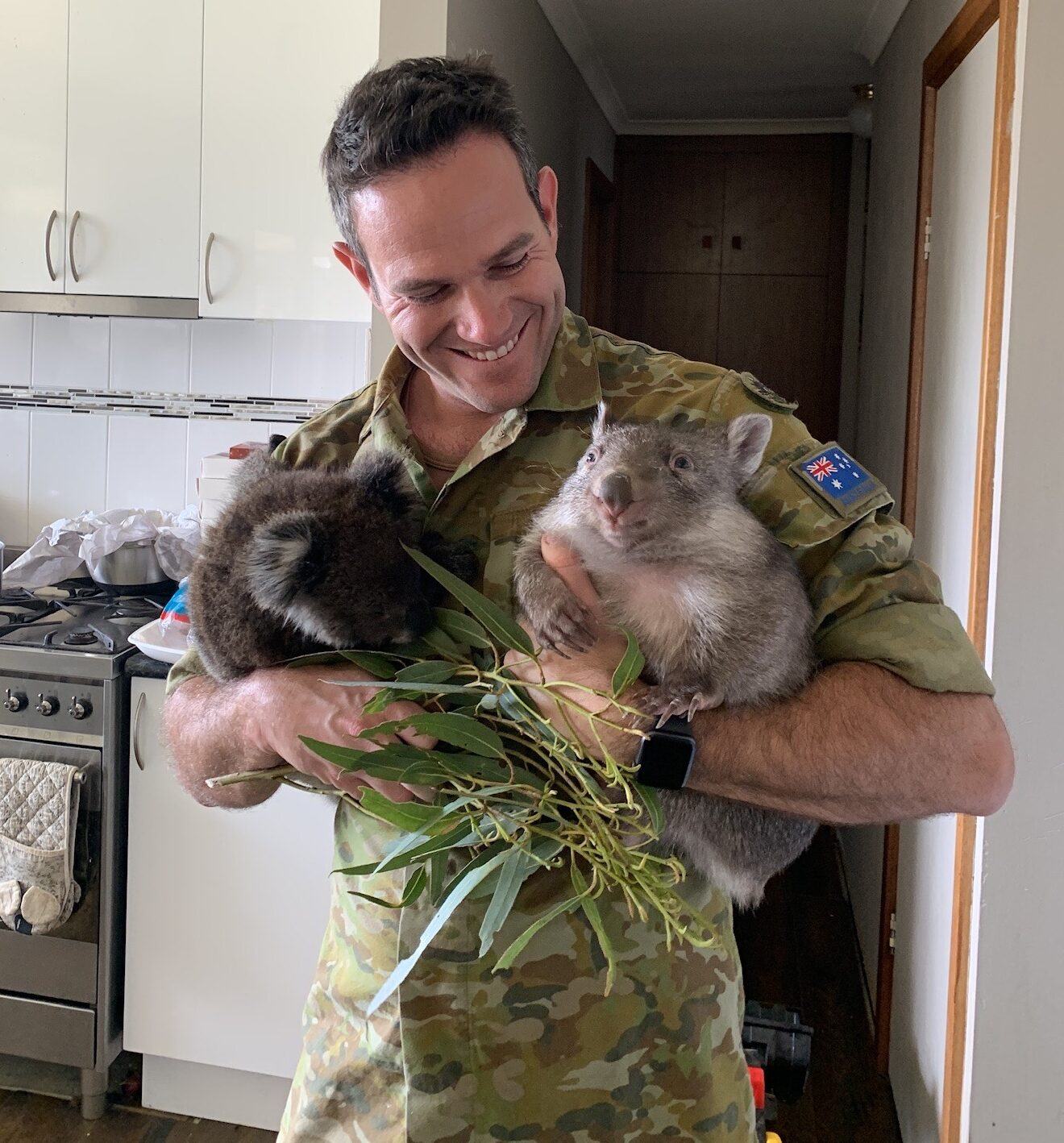
In each issue of our journal, we ask a handful of people to reflect on our theme. This is veterinarian, Dr Garnett Hall, on Leverage:
I am a bit of an optimist with a perpetual desire to achieve better outcomes for our planet, our community and my family. However, I am also enough of a realist to understand that humans are only equipped with a finite amount of strength, skill, and energy – thus creating a personal disparity between ‘lofty goals’ and ‘actual ability’.
The concept of leverage is important to me because it describes the achievement of disproportionate outcomes from a finite amount of possible effort.
It is more than simply finding the most ‘bang for your buck’, it is about applying your effort cleverly and using the social, political and physical environment to your advantage to achieve things that might otherwise be impossible.
The concept can even be applied to improve situations outside of our typical sphere of influence. These opportunities can be unexpected and fleeting, so always be prepared to jump in!
Dr Garnett Hall is a Perth veterinarian, innovator and entrepreneur. He is the owner of Fremantle Animal Hospital and is leading the development of implantable animal biosensors through his biotechnology start-up. He continues to apply his veterinary skills in the Army Reserve, where he provides care for our military working dogs and participates in veterinary humanitarian assistance missions in Australia and overseas. He was deployed to Kangaroo Island in response to last year’s devastating bushfires and has ‘leveraged’ the world-wide exposure from this experience to highlight the challenges facing our native animals and promote more sustainable climate practices.
Circus WA is a Fremantle institution, based in a big top on the CBD’s fringe.
Giac Patroni is an emerging cinematographer with an interest in ideas around identity, memory, time and mortality.
Leverage
is a film that reveals the exceptionalism of both performer and filmmaker and was commissioned by TheFulcrum.Agency as part of issue 02 of our journal:
Giac Patroni on Leverage
For me, leverage is about using what you have to maximum effect. Whether it is the physical action of a lever or a more abstract concept used in an interpersonal context. Leverage implies motion, change and to a certain extent, conflict. All things exist in a constant state of flux, leveraging and reacting off one and other. Leverage relies on this relationship and explores how entities interact with one other to achieve harmony.
Whilst leverage can take many forms, physical leverage is the most visually interesting in a project like this. The raw physicality and effort required by two or more people highlights the impressiveness of their abilities and by extension the phenomenum of leverage. In contemplating this project it was important for the act of leverage to be the main focal point of the film. I chose to have a locked off camera and let the action be the main kinetic aspect of the piece.
In this project I wanted to explore the relationship between people and their environment as well as the physical relationship between people.
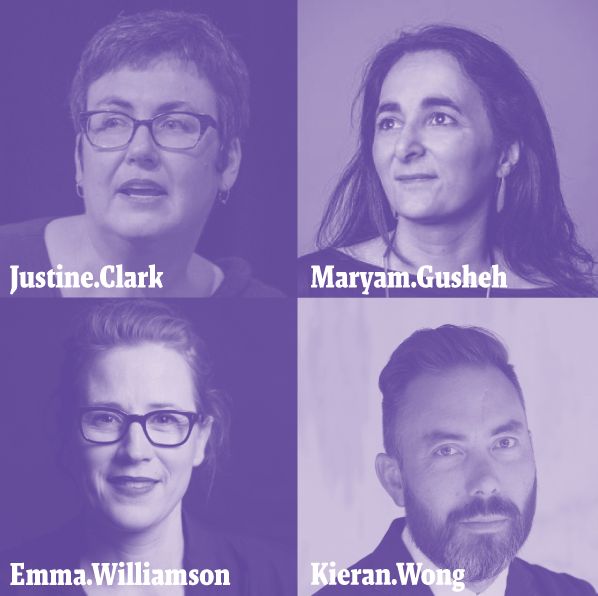
Justine Clark, Maryam Gusheh, Emma Williamson and Kieran Wong will be creative directors of the 2020 National Architecture Conference that will take “Leverage” as its theme.
“The role of the architect and architectural knowledge in contemporary society is shifting from a service provider to new roles that have the potential for transformative influence,” said creative directors Justine Clark, Maryam Gusheh, Emma Williamson and Kieran Wong. “This fluidity is hallmark of contemporary culture as rigid boundaries are increasingly blurred and challenged. Architecture appears uniquely positioned to extend its reach and amplify its impact. This is the ripple effect, the ability for architectural thinking to leverage positive change.
Where do we find our leverage, as individuals, as practices or organisations, as a profession? How can we exploit our contemporary professional circumstance, training and knowledge to instigate positive change well beyond our disciplinary remit? How can architectural wit and intelligence, agility and diligence, cheekiness and humour, restraint and flamboyance, ethics and goodwill maximise (social, environmental, economic) impact and advantage? How can we play with and agitate the rules to sustain our culture while we embrace new associations? What are the levers, large and small, at our disposal? How do we find them and how far do they need to be moved to make a difference?”
The conference will be organized around four streams: Policy and Politics (leverage through advice, strategy and negotiation), People and Partnerships (leverage through discourse, argument and education), Practice and Projects (leverage trough speculation, process and production), Publishing and Polemics (leverage through discourse, argument and education).
The creative team represents “intersecting fields of research, advocacy, agency, practice, production and teaching.”
Justine Clark is former editor of Architecture Australia and co-founder and director of Parlour: Women, Equity, Architecture. Maryam Gusheh is associate professor and deputy director of architecture at Monash University. Emma Williamson and Kieran Wong cofounded The Fulcrum Agency in 2018. The pair were previously directors of Cox Architecture and CODA Studio. Williamson is currently chair of the Design Advisory Committee for the City of Canning in Perth. Wong is also immediate past national president of the Association of Consulting Architects.
The 2020 National Architecture Conference will take place in Perth from 7 to 9 May 2020.
* This article was first published in ArchitectureAU on 2 July 2019.