The refurbishment and extension to Kalora Park Sports Pavilion in the perri-urban Melbourne suburb or Narre Warren is a joyful celebration of active participation and the important role that sport’s clubs play in our community. It is the work of one of our favourite Australian studios, WOWOWA Architecture & Interiors. In a review commissioned for Commune*, Amelia Borg shows us that modest suburban architecture need not be beige and uninspiring.
Small community buildings are notoriously hard to build, many complicated and opposing forces need to align perfectly and all at the right time. To get anywhere near breaking ground these projects require budgets to be allocated, strong political will, overcoming countless regulatory requirements and unwavering community support. If there was ever a project to demonstrate how determined local spirit and unstoppable architects came together against these odds to deliver a new sporting and event hub for a community– it is the Kolora Park Sports Pavilion by
WOWOWA Architects.
Located in Narre Warren, an outer suburb of Melbourne 38km southeast of the central business district, this growth corridor stretches out and borders the Dandenong Ranges National Park. Over the last twenty years this area has remarkably transformed from a semi-rural residential town to a suburb laden with row upon row of almost identical houses on winding suburban streets. Through all this change, one place for the community stood still, the home of both the Narre Warren Football and Netball clubs. This project delivers a large new club and event space through an extensive addition to the existing facilities.
The project came about through WOWOWA director Monique Woodward’s father, who had been member at the club for years and played for the club as a teenager. There was no budget to begin with, but after convincing the club to abandon the original plans they had drawn up by a draughtsperson, the architects got to work and hatched a plan to get the project moving.
The clients originally wanted to demolish the entire building and start from scratch, but WOWOWA cleverly decided that re-using elements of the existing slab and infrastructure could be a way get more value out of the limited funds. The 770m2 addition provides a new flexible club and event room, anchored by a new bar and amenities which wrap around the existing facilities-in what Monique describes as a “big warm hug”.
Central to the design is a roof plane which appears to sharply fold into the facade, creating a generous under croft which allows for spectators to gather and cheer as they onlook onto the oval. This element, which appears as a heavy hovering mass, works hard to provide adequate shading to windows as well as cover over entries and a place to gather around the kiosk. Humble and pragmatic in its material palette, a masonry and timber base give the building a warm and durable grounding. Translucent polycarbonate ends give off a warm glow at night, and the building acts as a beacon in the suburban context.
Drawing from the teams’ magpie mascot colours, and as a nod to the streamers which adorned the original clubrooms, a strong black and white graphic wraps up the façade of the building and continues within the wavy cranked internal ceiling. The bathrooms are a colourful and exuberant surprise against the monochromatic pallet of the clubroom. Explosive tones of reds, pinks and blues charge across the ceiling- colours which were chosen in consultation with the netball team.
Beyond just updating tired facilities, this modest project has an important ambition in making a new and inclusive community space. The historical 60-year-old clubroom held within its walls the culture that existed at sports clubs at the time, a private and secluded space for men to gather, clash and drink. The original dusty clubrooms excluded families, children and importantly the netballers who also shared the facilities. In line with many projects of this nature occurring across the country, a key objective of the project was to update this historical legacy and reimagine the facility as a community hub that is accessible and welcoming to everyone.
In addition to creating a place for the sports teams to feel at home, the architects also thought about how the facility could give back to the club and help raise funds to contribute to the cost of build. Central to the proposition was the inclusion of a large event space which could be rented to the public and additionally help generate funds for the club.
Monique explains that all design decisions had to pass through the metric of being “cheap, fun and classy”; ‘cheap’ to meet the budget constraints, ‘fun’ to appeal to a wide-ranging demographic of community and ‘classy’ to be attractive for events and venue hire.
The dedication and perseverance of the architects is remarkable –their initial scheme was done with no fees to get the community on-side and excited. They spent some long nights and weekends painting the columns and bathrooms themselves to ensure all aspects of the design got across the line. The architects lobbied government and were able to secure bipartisan support for the project, who contributed more than half of the total funds towards the build. The local Casey Council contributed additional funding, and the remainder was made up with hours of community pro-bono support.
The help of many associated with the club was enlisted and material donations came from a wide range of sources, including fridges for the bar and granite for the bar top. Players, many of whom are tradesmen and specialists contributed to the project and Monique says the thoughtful details and references to the club’s history and culture helped in creating an emotional investment for them in the project. The expertise of Monique’s father who is a truss manufacturer was also brought in- a simple and cost-effective truss roof system was employed to ensure that the large event space could be column free internally.
Whilst Covid has been a slight deterrent in bringing people together, after the completion of the new facilities the club has seen a big increase in patronage. Modest in budget, this project is big in heart and ambition. Small moments of detail and delight tell a story about the community and enshrine the shared memories that extend beyond the football pitch. The project celebrates the history of the club, whilst creating a shared space for the future of a community that includes all.
* Copies of Commune can be purchased through
TheFulcrum.Press
and all proceeds are directed to
The Fulcrum Fund
, a charitable fund that we established to support projects in First Nations communities.
Ian Michael is an emerging director, actor and current 2022 Richard Wherrett Fellow at Sydney Theatre Company. We first connected with Ian through our support of a play he was directing at the Blue Room Theatre in Perth, and he was one of the first people who came to mind when we were thinking about contributors for our next journal. This is Ian Michael on Commune*:
I think of theatre. The gathering of people from places all over, people who press pause on their differences and sit in the dark and share that collective breath, their hearts beating in synchronisation, the moment of stillness before the applause erupts and the responsibility of artists who hold an audience and reflect the world, our histories and stories back to us.
Selfie
As a Noongar man, I think deeply on the accountability to Elders, Community and family. From them I’ve learned and continue to learn about the values I carry with me, the role I play in the present and future and what it means to be a storyteller.
Lee Stickells is a lecturer in architecture and urban design at the University of Sydney. In an article for Commune*, he applies his enquiring lens to Belvidere, an experiment in communal living that grew from the bush south of Perth in the seventies.
In the early 1970s, perhaps 1972 he tells me, Devissaro (then David Mott) rode his childhood horse 150 kilometres south from Perth to Leschenault. There, he struck out onto the thin peninsula, bounded on one side by the Indian Ocean and by the Leschenault Estuary on the other. He found peppermint and tuart woodland behind the foreshore dunes, and within this Brushtail possums, kangaroos, and two fibreglass radar domes.
He also found a new home and a form of escape. Dev’s arrival signalled the beginning of a shared living experiment that lasted over a decade. It emerged on the former site of a short-lived colonial estate—Belvidere—established to raise horses for the British Army in India. The 1970s Belvidere commune was home only to one horse. But it did involve many dozens of people during its lifespan: some for weeks, some for years, all searching for an exit from mainstream Australia. That search perhaps has consequence when considered alongside the intense unsettlement of our present moment. Sea, tree and lifestyle changes are prominent in questioning of the way we currently live together. Does Belvidere have lessons for us?
Belvidere operated through a period in which the personal became political. Historian Michelle Arrow has described how 1970s Australia saw a new politics of personal intimacy, where public claims to rights and protections were made in the language of personal experience. In various social movements—feminist, gay, environmental and others—personal transformation and change was connected to new modes of solidarity and larger political ambitions. Belvidere’s communards hardly saw themselves as remaking Australian society so overtly. Still, it’s possible to understand their placemaking venture as more than just a dropout hippie commune. Living off-grid and trying to be self-sufficient, the Belvidere experiment produced intimate counter-forms to the dominant patterns and accepted wisdoms of Australian life. Hand-built homes, collective organic gardens, kilns, and other structures became tools for creating a space within which to work, teach, share, and play in a way that was not commodified, based on private property, or hierarchically organised. Along the way, participants’ ideas of domesticity, ownership, productivity, and spirituality were transformed.
Devissaro made the move to Belvidere with a small group of friends who’d shared a communal house on the outskirts of Perth. University dropouts, Vietnam draft-evaders, devout readers of the counterculture bible the
Whole Earth Catalog
; they were escaping expectations and figured themselves as part of a global back-to-the-land movement. Dev remembers the optimism:
So there’s a romance about creating something, building our own places, creating a new community. And I guess we really had the feeling that we could create an alternative lifestyle. And I think the fact that we as a movement, the anti-war movement, had actually managed to change a government and get Australians out of the war, we felt empowered. We felt that, you know, this was our time, and that we were going to make a difference.
There was nothing that could be described as a plan amongst the group. There was, though, “a sense of oneness” and 500 acres of land they had been given. The Belvidere property at Leschenault was owned by the architect Wallace “Wally” Greenham (who they had encountered at a “hippie” gathering in the Darling Scarp, east of Perth). Greenham was busy conducting his own unconventional life, which included forays into communal living and the development of a “nuts and berries” architectural modernism ahead of the Sydney School. He offered the land to the young people at no charge, provided there was “no dope, no dole, and no dogs.”
The group settled into life on the property, along with an American couple discovered living in the modified radar domes. The newcomers initially camped together in an open-ended Nissen hut, another of Wally’s gifts. After the chilly 1972 winter, though, there was a strong desire to spread out and build individual shelters. The results ranged from a simple tent to more elaborate hand-built homes, even a treehouse. There was no collective planning, just an intuitive siting of dwellings—not too close to each other, but not too far; private but connected. Any collectivism was more organic than structured—former residents remember regular evening gatherings hosted by Franco, Carol and their young daughter Gita. Homemade wine would be shared by the open fire of the couple’s A-frame house (one of the few Belvidere dwellings that may have passed a building inspection). Discussion might turn to chores needed to maintain the collective gardens or a shared shopping list for the next trip to town. Devissaro remembers no individual money in the earliest days— “one person would pay and the other would pocket the change.” A shared bathing facility was eventually constructed in a clearing by the water’s edge and a wooden shed became a food cooperative. However, Belvidere never really became a commune, in the typical sense of a group sharing living spaces, income and tightly held values. It’s perhaps better to view Belvidere as a venture in commoning: the piecing together of collective forms of creativity and exchange to meet concrete needs and build lives outside the enclosure of the city.
The community expanded and transformed in waves. New members would arrive and might reside for a week or for years. Homes were shared, extended, or passed on to others.
They continued to be unauthorised, off-grid, hand-built affairs, using salvaged and recycled materials, even flotsam, driftwood and zinc alloy printing plates, along with shared and bartered labour. An environmental care ethic precluded felling trees for building stock. There is almost no evidence on-site now, but memories of the buildings are strong amongst former residents. Sue’s tiny cottage (also known as “little house on the prairie”) was built just south of the shared windmill. The nearby “Glass House” was so named because it’s estuary-facing façade was built entirely from salvaged timber windows. Steve, a potter, built his own kiln. Morris, described as “mad about music”, installed a solar photovoltaic panel in a tree to power his cassette deck. An Iranian refugee carefully constructed his octagonal shelter under a tree Belvidere folk called “the Matriarch.”
Devissaro’s own building activities emphasise how critical material practices were to shaping Belvidere. In 1973 he sheltered himself in a rudimentary wooden hut built in a Peppermint tree grove. By the time he left Belvidere in 1977 (bound for a Buddhist monastery in Thailand) he was running an Ashram that included a sunken hexagon-shaped retreat, sauna and three cabins (“kutirs”). It was far from planned. As he sees it, he responded to the opportunities presented by material conditions: “you just see what’s available … and then the creative exercise is simply how best to use that … in a way, it’s an extension of play.” The only material he paid for was nails and he sometimes gathered items for years before finding a use for them. One element he remains most proud of is a set of windows, built from panes of glass taken from car doors found at the Bunbury tip
Oh, the windows, I love my windows … it turns out it [the car glass] fits perfectly into the groove in tongue-and-groove flooring. So, you simply put one at the bottom and you have another one with a groove at the top and you can slide [the glass]. If you put them side by side, you can have sliding windows … It was lovely.
While Devissaro was hosting Buddhist monks, Belvidere grew to selling fruit, vegetables and sandwiches at a shop in nearby Bunbury, producing pottery and staging a music festival. A school was built for resident children, who had great freedom—building cubby houses, go-karts, roaming the inlet and crabbing. Together, the community collectively found ways to open up space in order to do what it wanted. Building provided a vital sense of ownership and agency, whether it was as simple as making somewhere to sleep, work, to produce food or art.
However, the surrounding community’s tacit acceptance of Belvidere waned. By the late-1970s, Wally Greenham’s “no dope, no dole, no dogs” rules were being circumvented. Meanwhile, the local government found it could no longer ignore the settlement in the face of a public health complaint. All the buildings were bulldozed in 1985. Greenham reluctantly undertook the demolition himself and sold the land to the state government, to be incorporated into an industrial effluent disposal system.
What to make of the Belvidere experiment? An obscure, colourful historical episode, it offers easy romantic images of countercultural free spirits exploring the estuary waters. These images also have a darker resonance, though, recalling the 19th century colonisers who pushed the
Elaap
—a Wardandi Noongar people—from the country that nourished and sustained them, or uncomfortably mirroring the Indian “coolies” who had to row supplies from Bunbury to the first Belvidere farm. The communards gave little thought to this history. Devissaro concedes: “one of the things we did not really consider was that this land, we actually had no right on, no one had any right on it.”
Refracted in this way, the Belvidere commune connects waves of settler colonial dispossession and transformation of the land. These waves stretch back to 1836, when the keen eye of Lieutenant Henry William Bunbury was attuned to the extractive possibilities of the metallic sands he saw along nearby beaches. They flow through the initial 1838 Belvidere estate and its failed ventures in raising horse and water-buffalo, as well as its subsequent use by nearby farmers for grazing stock. They keep flowing through the 1960s into the 1990s as the peninsula was used as a disposal site for acid affluent—a result of the mineral sands that caught Bunbury’s attention coming to underpin Western Australia’s role as a key global supplier of titanium minerals for paints and colouring agents. And in the 2000s, even as the state sought to rehabilitate the peninsula environment, its reconfiguration as a recreational site for camping and boating keyed it into post-industrial tourism and experience economies.
In terms of a useable history, then, we might feel we’re faced with a meagre harvest. However, the value of revisiting the Belvidere commune in our present moment is the window it opens onto a different way of imagining everyday life. As one resident put it: “It wasn’t all rosy but it broadened my awareness of what is possible.” To be interested in the 1970s, to be interested in experiments such as Belvidere, is to be interested in alternatives to our neoliberal, consumerist present. Belvidere’s short history points to the way social relations of trust, care and mutuality can emerge when people collectively build forms of life outside commercial prerogatives, domestic norms, and conventional institutions. The potential of this commoning arises not as a form of protest but as a way of materializing an alternative—producing an actually existing crack in reality.
Acknowledgements
Research for this essay drew on various published histories of the site and surrounding region as well as social media material, interviews, and personal archives. I’d like to particularly thank contributors to the Lost Belvidere Facebook Group for all the posted memories, Wally Greenham’s family for access to his papers (and their own stories), the Harvey Historical Society, and those former Belvidere residents who answered my questions and supplied images, especially Devissaro, Alison Batten and Valli Waugh.
* Copies of Commune can be purchased through
TheFulcrum.Press
and all proceeds are directed to
The Fulcrum Fund
, a charitable fund that we established to support projects in First Nations communities.
In each edition of our journal*, we ask a handful of people to reflect on our chosen theme. This is Tanya Sim on commune:
One of the blessings of ageing, and with it, life experience, is that I have a much more intentional, sometimes belligerent approach to what I do with my time and who I choose to share it with. With this intentionality, I feel deeply caring and often fiercely protective of the community of people around me. I love this. Those that I ‘commune with’ aren’t centred in a physical space – certainly not a church, but we each choose to show up and share. It may be an exchange of thoughts or feelings but equally it may be a business transaction or an idea for a project. Many friends are also, or have been, colleagues, clients, suppliers, employees, family or part of a brains trust.
Selfie, Tanya Sim
I love bringing together people who may not know each other yet, or who I know would work really well together. And this communal pot of sharing is beneficial in so many scenarios – growing a business, raising children, emotional support, finding great information.
In my business, some of our best work has been because of the people we’ve collaborated with – in fact collaboration is fundamental to any success we’ve had.
Fundamentally, my close posse/s have shared values and will speak up with their opinions, thoughts and ideas. For me though, perhaps a difference between those that I commune with and ‘anyone’ – is my ability to be completely authentic, vulnerable and honest.
* Tanya is a Co-Founder and Director at Block Branding, Board Member at the Perth Theatre Trust, Chair of Highgate Primary School Board and Committee Member at the Borderless Friendship Foundation WA. Copies of Commune can be purchased at
The Fulcrum Press
, with all proceeds going towards projects within First Nations communities.
In each edition of our journal*, we ask a handful of people to reflect on our chosen theme. This is Matt Stack on commune:
As a Gen-X son of Boomers I have met actual hippies. My uncle and aunt lived in remote locations with alternative lifestyles, and sent postcards when their boat got stuck in Samoa. As a Bunbury teenager I explored the abandoned hippie commune of Belvidere on the Leschenault Peninsula.
Shelter
, Lloyd Kahn’s illustrated guide to alt-traditional building, was my gateway to architecture. For me,
Commune
resonates with cutting-off from the mainstream to pursue other ideals, and I’m a bit susceptible to that.
Selfie
My closest-to commune encounter was in a collective of fine art and architecture students who formed the Jacksue Gallery in Murray Street from 1995-1998.
We would have scorned the term Commune, but nonetheless we formed our own alternative world behind an opaque shopfront
I now work in the relentlessly mainstream world of state government planning, but there remains a commune-dweller part of me who can never fully believe that the way things are, is the way things have to be.
* Matt is an architect and urban designer working on the Metronet project at the Department of Planning, Lands and Heritage. Copies of Commune can be purchased at
The Fulcrum Press
, with all proceeds going towards projects within First Nations communities.
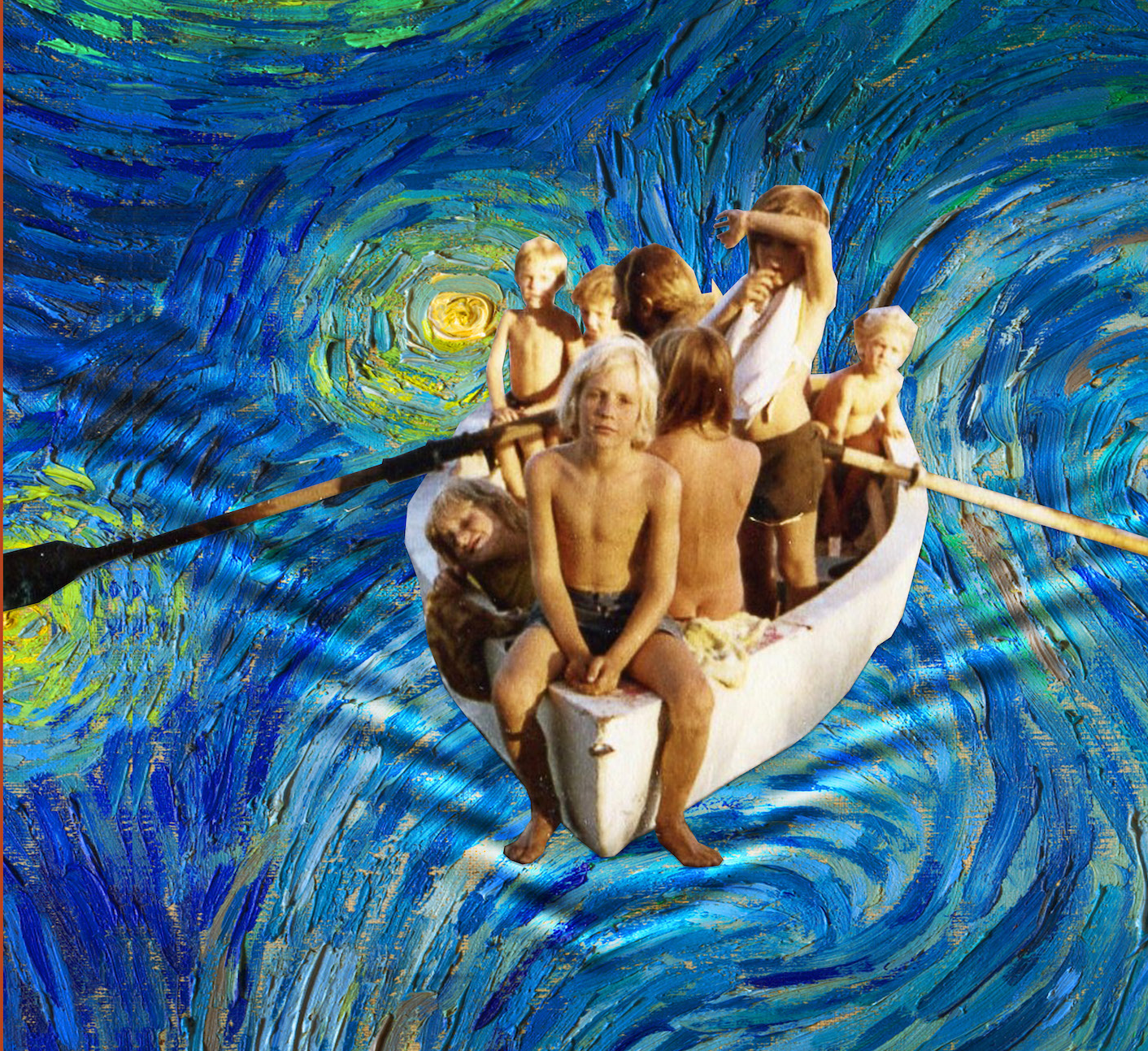
In each edition of our journal*, we ask a handful of people to reflect on our chosen theme. This is Joseph London, the filmmaker behind the extraordinary documentary ‘The Beloved’**, on commune:
Selfie 2021
To me, the commune represents the promise of being relieved of the grinding effort to get big things up on your own, of joining forces and to be ambitious.
Current fiscal policies have lead to a chronic, and worsening, housing crisis. Here, TheFulcrum.Agency’s Kieran Wong argues that it’s time for radical new ideas that could allow ‘the market’ to heal itself.
It’s been over a decade since the release of the book
The Spirit Level: Why More Equal Societies Always Do Better
by Richard Wilkinson and Kate Pickett. In that time, the gap between the rich and poor in the developed world has grown wider. Despite the rhetoric of post-Third Wave social democrats, the grotesque disparities of the top 1% and everyone else seem to continue unabated. COVID-19 has only made it worse.
Why does inequality matter?
The language of inequality has started to change, with leaders like Boris Johnson now talking about ‘levelling up’ rather than ‘trickling down’ – but the underlying premises, systems and biases of neo-liberal economic management persist. The stellar trajectory of billionaires such as Bezos and Branson into space serve as direct metaphors for the rocketing differences between the rich and poor. And being poor is less uncommon than you think. In 2020, a study determined that 1 in 8 people (or 13.6%) in Australia were living below the poverty line – that’s over 3 million Australians (including 774,000 children under 15) below the median cost of living.
“The rich may fear the type of violence that characterizes highly unequal societies, but they are more likely to build bigger walls around their gated communities than raise the red flag of egalitarianism in response. It is the hard work of everyday politics – from community organizing to political education – that will bring about more equal societies.”
wrote Simon Black in the Canadian Dimension.
I am doubtful that we can wait in Australia for ‘everyday politics’ to make the changes necessary to really address the issues of inequality and disadvantage. Both major parties have walked off hand in hand from the battlefield for progressive tax policy. Disinformation and distrust characterise the relationships we now have with media, authority, and the rules of law. Meanwhile, governments are doing all they can to silence charitable organisations and welfare advocacy groups through legal and contractual means.
We know that access to safe, affordable, and permanent housing is a key determinant in social mobility, it drives economic productivity, improves health and education outcomes, and can break the cycle of disadvantage. Yet in Australia, the cost of housing is the biggest burden faced by the lowest quintile of income earners, whilst the highest have had their relative costs of housing reduced, thanks to record low-interest rates, ever increasing house prices and a regressive taxation system.
The Housing Challenge
Last year I accepted the role as Chair of Shelter WA, the peak body for an effective housing system and ending homelessness in WA. I started on the Board with what I thought was an understanding of both the drivers of, and some solutions to, housing inequities. The truth is I didn’t have much of either. It is not until you combine a working understanding of the cold, hard statistics with the lived experience of individuals, that you can start to grasp the effects that housing precariousness is having on our society, not just on those who cannot find shelter.
Over the past year, I have heard powerful testimony from our most vulnerable citizens and many facing housing stress for the first time in their lives. Working families who cannot find a rental home, people left behind in the COVID-19 pandemic – an ever-widening gulf between those with and those without in our society. This gulf is seen in many comparative statistics – mortgage stress, housing arrears, rental demand and demand for frontline services.
Across Australia, we have seen waves of housing booms making housing tenure precarious for many in the rental and private housing markets. The net effects of our taxation system, land delivery models, erosions of tenancy rights and the casualisation of labour is driving the gap between those who owned property before 2004 and those who came too late to the party.
Successive governments have failed to match supply with the demand for social and affordable housing.
Applications to public housing waitlists are increasing month by month. At the time of writing, around 30,000 West Australians are on it. Rental vacancies are at a historic low, with areas such as the regions at levels below 1%. The drivers are complex and intertwined but what is clear is that successive governments have failed to match supply with the demand for social and affordable housing. Despite a massive increase in demand and an ever-growing inequality gap in Western Australia, we have less public housing stock today than we did in 2016.
Of course, there is a simple political equation underpinning this. There are more people (voters) who own homes than those in the rental market or in public housing. As the often-primary mode of wealth creation, housing asset prices are fiercely protected by homeowners, and any move to make the housing system fairer, or more balanced, to open up affordable options, or change models of delivery is met by instant and vehement opposition. Governments do not have the political capital (or appetite) to consider a future without inequality.
And there is a philosophical belief underpinning this too – a belief in ‘the market’ as a system that is efficient, objective and can create greater outcomes through innovation. The market is often used a shield to describe why (or why not) certain opportunities may be possible. We are starting to see the pushing back of neo-liberalism ignited by Thatcher and Reagan and adopted here in Australia, but the power of its grasp means our institutions are still beholden to the notion of governments role being one to reduce red tape and let ‘the market’ get on with it. In the language of the market then, I wonder if it is possible to financialise and incentivise investment in affordable and social housing. Can we look to other invented markets that have done the same with other wicked problems?
What even is a market?
Markets are dynamic and challenging to pin down. Markets are not necessarily efficient or productive; they can be opaque, and often as a result of their complexity, can elude regulators from scrutiny. They can be seen as games played by people with a penchant for bending rules and betting on futures. From the entrepreneurial mind of Greek philosopher Thales betting on the future olive crop, to the Dutch futures market designed to hedge against losses from global shipping during the 1600’s, trading against a future event that is linked to tangle asset, underpinned the logic of futures trading until the 1980’s. I added a comma to the last part of the sentence but I’m not sure if it’s correct.
After the floodgates of financialization were opened in the mid 1980’s, some markets, such as futures trading, have become spectacularly decoupled from the tangible commodities that they were devised to hedge against. Like the wild daydreams of a ten-year-old boy, markets have emerged limited only by the imagination of the inventors, and at a speed that often eludes oversight. Futures markets trade (or bet) on changes to the weather, or the cost of shipping or other more bizarre possibilities. The ‘Policy Analysis Market’ was originally proposed by the US Defence Department to trade futures contracts based on political events or changes in the Middle East. “T
he theory was that the investment value of a futures contract on a particular political event reflected the probability that the event would actually occur – for example, the outcome of polls or elections. Some US officials claimed, however, that such offerings would encourage speculation on events such as coups d’état and terrorist events”
.
Although the market never made it to fruition, similar forms of political futures markets were proposed. After the Global Financial Crisis, US President Obama introduced a
“sweeping overhaul of the United States financial regulatory system, a transformation on a scale not seen since the reforms that followed the Great Depression”.
The resultant legislation (the Dodd-Frank Bill) sought to stabilise markets, protect consumers, and it also banned all futures trading based on events such as assassinations and terrorism.
So, could this wildly inventive market mechanism be used to address inequality? Perhaps our other shared societal challenge – the climate crisis – could provide a clue. For many decades the extent of the climate crisis failed to gain traction with politicians and policymakers using communication based on environmental science, economic logic, and social impact. Governments have sought to address the emergency through ‘market mechanisms’. A market was invented in response – carbon trading.
Hot Air?
Established as a result of the 1997 Kyoto Protocol, carbon emissions trading has had its successes and failures. Designed to limit carbon emissions (agreed to be driving global warming) market systems sought to offset high carbon emitters with innovative forms of emission reduction or carbon sequestration. Despite their rhetoric of ‘open markets’, governments have applied a political lens to regulations around emission trading, including the US withdrawal from Kyoto in 2001, and the changing nature of target settings for emissions to reach ‘net zero’. But for around fifteen years since 2000, the financialization of the carbon market created opportunities, leveraged funds for investment projects and delivered a mixed bag of results across the world. Importantly it imagined a financial market to address a human challenge and drive investment in assets and processes aligned to that goal.
What can we take from this as an idea to address inequality, or perhaps an element of its underpinning – housing? To develop a tradeable market, you need a system of measurement (ideally with a compelling counterfactual – i.e. if we don’t do something, this is what will happen) and you need agreements on targets to drive trading value.
Market inequality?
There are standardised measures, such as the Gini Coefficient, that track income distribution as a measure of inequality in society. More granular measures are taking form in the emerging system of Social Impact Measurement that seek to make a case for the long-term impacts of projects beyond their start-up and operational costs.
In the UK, measuring and reporting on social impact is now an essential component of taxpayer-funded projects, with business cases required to evaluate the long-term impacts of government’s capital expenditure. In Australia, this idea is gaining traction amongst funders who are now able to evaluate their investment in social services programs. The notions of a Social Return on Investment (SROI) require funders and developers to consider broader attributions of societal change through their projects. Measuring social impact is rapidly becoming better understood, more organised and more widely accepted as a method for determining project success. Accounting practices and consulting forms are expanding to meet the demand for such measures
Social Impact Bonds are another example of investment vehicle that can provide private financing into the social services sector. Investment is rewarded through evaluation of particular social metrics (such as lowering rates of imprisonments, or restoration of children to families) with the reduction in government costs in justice health education, etc used to provide financial returns to investors. Examples such as this have existed in Australia for almost a decade now. But Social Impact Bonds are long-term investment vehicles, reliant on stable government policy to ensure programs can be evaluated accurately. What is needed to address the housing crisis in Australia must deliver faster outcomes and be less prone to government policy mood—swings.
The response to the housing crisis must be able to deliver faster outcomes and be less prone to government policy mood-swings.
Credit where credits due
With secure housing becoming more precarious and the challenge of affordable housing now impacting the working poor, there has never been a more urgent time to address the crisis (sound familiar?). Delivering a mechanism that seeks to rebalance social inequality over the longer term through immediate investments in the drivers of disadvantage is critical. We must investigate models that can deliver responses at scale, that are market-led and that are lightly regulated by government to allow for agility, delivery, and value for money.
It could be possible to develop a Social Inequality (SI) Credit system – applied to a range of projects from infrastructure to financial products, to ‘offset’ outcomes that are currently driving the foundations of inequality. An example might be an infrastructure development project that includes residential accommodation, with developers required to provide through inclusionary zoning targets, a minimum number of these social and affordable housing projects?. If not fully incorporated into the development, a SI credit system could be utilised to offset this and aggregate housing funds to deliver projects at scale through other community housing providers.
Independent investment funds, such as a Social Housing Subsidy Fund, that seek to address the yield gap in rental costs and development costs for social housing could be the receivers of such offset credits, creating value for community housing providers to invest in the delivery of housing. Government-funded infrastructure would need to be evaluated for its social impact (using SROI) and could provide another form of offset funding, or seek credits, depending on its social impact and effectiveness in addressing inequality.
Governments have typically struggled to make the link between the burgeoning health costs of its citizens, and the supply of healthy, safe, and affordable housing. Despite decades of evidence that housing can reduce the costs on the health system, increase productivity and reduce inequality, governments seem caught in a market failure of their own making. Using SI Credits in the private market could correct this self-inflicted failure of bureaucracy by achieving societal impact through a range of market mechanisms, driven by ambitious targets to a net-zero inequality future.
An unequal Australia is to the detriment of us all, but as Simon Black noted, it will not be upturned by the wealthy (or political elite) through obligation or community spirit. A market that seeks to reduce inequality into the future should be part of the conversation. To recycle (pardon the pun) a line from the climate crisis – ‘if not for us, for our children and their children to follow’. A market designed and scaled to reduce inequality and deliver a more just world – imagine that future.