TF.A Co-Founder, Kieran Wong, is also Chair at Shelter WA, Western Australia’s peak advocate for addressing homelessness. Yesterday, The West Australian newspaper published his latest opinion piece entitled, ‘Bring it home in the Budget’.
By now we are all familiar with the scale and severity of homelessness in WA.
Over the past year, we’ve seen the stories, many of them in this newspaper, about people forced to take refuge wherever they can find – on a friend’s couch, in their car, even on the street.
We’ve seen the impact it has on families, the impact on health and the health system, and the cost to the community. And we’ve seen the greatest tragedy of all play out in the pages of this newspaper, families forced to bury their children long before their time. Too often in recent weeks we have been confronted with stories of families grieving and broken by the loss of young people.
Worst of all, surely, are the stories of those who feel so desperate, hopeless and abandoned that they take their own lives.
Figures released last month showed that at least 56 people died while homeless in Perth in 2020. That means that in the past year, while we were all constantly consumed by COVID, we lost at least six times as many people in WA to homelessness.
Fortunately, after a year in which most of us have sought refuge by staying home, there has been more focus than ever on those who don’t have a safe place to stay in WA. Increased awareness of the problem has drawn responses that leverage our unique resources.
At a local government level, the City of Perth Safe Night Spaces have opened this freezing winter to provide some respite from the storms soaking our city streets.
Other interim responses have run off the back of a trial of hotel accommodation for people sleeping rough during our first lockdown last year. As Uniting WA CEO Amanda Hunt said last week, “transitional accommodation and support provides a stable environment to build confidence, capacity and the ability to identify and address the issues that led to homelessness.”
An important response is Boorloo Bidee Mia, culturally appropriate, supported accommodation for people experiencing homeless in the heart of our city. This accommodation, as the name states, aims to deliver a Perth Pathway to Housing that will benefit everyone. And investment into new programs like the Moorditj Mia Strong Home program will make a significant difference supporting individuals and families sleeping rough across the metropolitan area.
Congratulations are due to the Western Australian government, and everyone involved in driving these welcome steps out of homelessness. Now is the time to ensure WA reaches its destination – social housing and sustainable investment into support services to ensure that the end of all our journeying is a home for everyone who needs it.
WA has a first-class homelessness strategy which is guiding new investment and partnerships to end homelessness. Embedded in the strategy is Housing First, an international model for housing and supporting people who have experienced long term and recurring homelessness and who face a range of complex challenges.
To successfully implement housing first, and to prevent homelessness in the first place, along with sustained investment into services we need a strong social and affordable housing system.
Recent government housing investment has stimulated new housing construction with 23,000 dwelling commencements expected in Western Australia in 2020/21, with up to 21,000 per year projected for the next two years. Research by the Bankwest Curtin Economic Centre (BCEC), anticipate that as a result, 10,000 households will leave the private rental market over the next six to twelve months. Whilst this new supply will ease some pressure on the private rental market, presumably including at least part of the affordable housing segment, the BCEC research highlights over 50,000 renters who consider their housing unaffordable. With a social housing waitlist of around 17,000 households, this new housing construction whilst welcome, will not address the fundamental need for more social and affordable rental homes. Modelling by the University of New South Wales showed a social housing shortfall of 39,200 homes and an affordable rental shortfall of 19,400 homes across Western Australia in 2019 to meet demand.
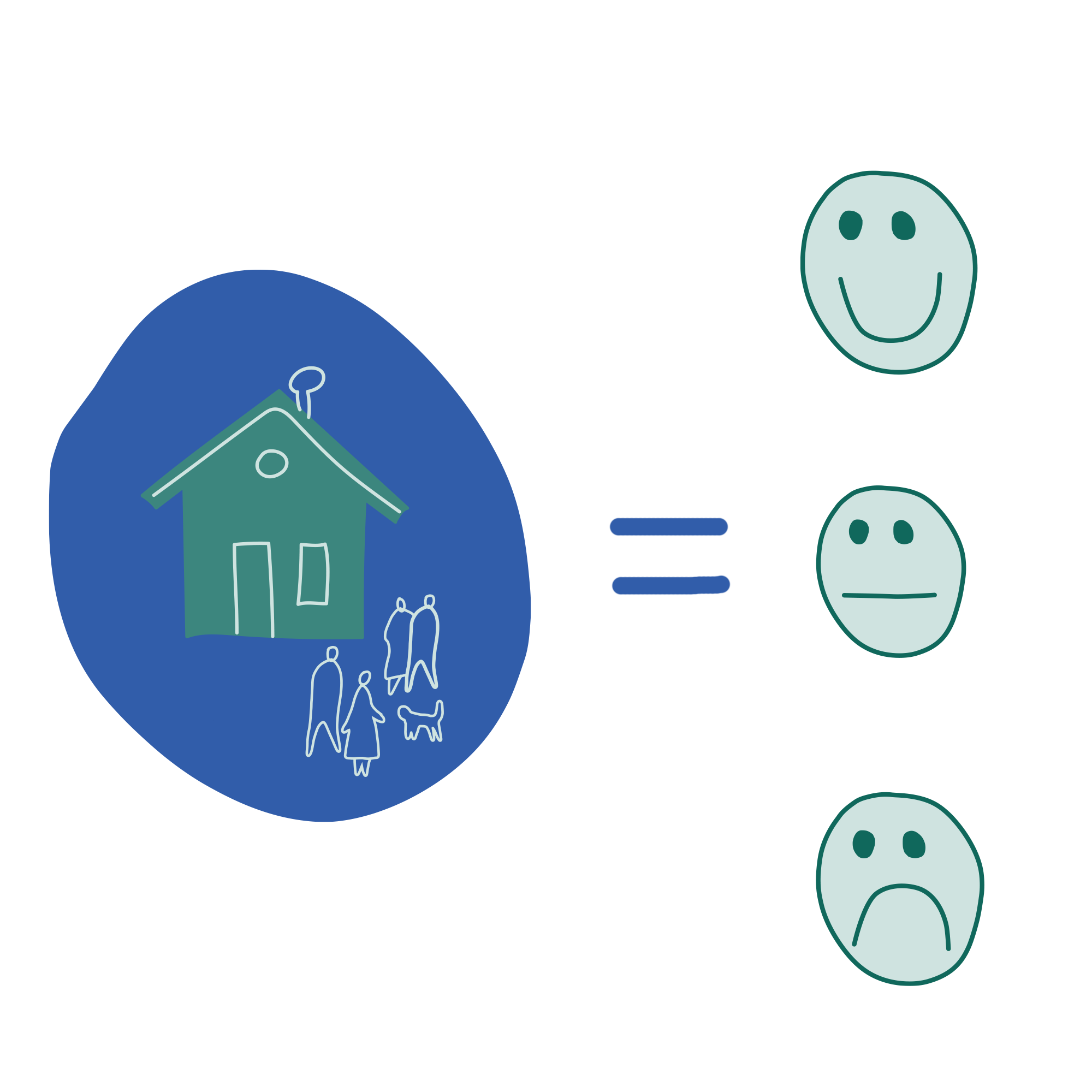
Independent polling released this week by Shelter WA shows the community overwhelming supports investment to end homelessness and build more social and affordable rental homes. Over fifty per cent ranked housing and rental affordable and homelessness in the top five issues that they’d like to see the state government focus on its upcoming budget, behind only the public health system and the cost of living. One in five people ranked housing affordability and homelessness as their number one issue for government to spend more of its budget on.
The WA government has an opportunity to build on their recent initiatives and accelerate and increase the rate of investment into social and affordable housing and homelessness initiatives. This investment will drive the outcomes sought from the homelessness strategy. It will unlock social and economic opportunity for thousands of Western Australians and set us all up for a bright housing future.
The Western Australian government deserves credit for its swift action in protecting our state from the worst ravages of the pandemic. COVID-19 showed the importance of home to keep everybody health and well. However, across Western Australia, it is estimated over 9000 people experience homelessness each day.
We urge the McGowan government to use the same resolve to ending homelessness by using the surplus to solve the housing shortage.
Systemic change seems impossible until it’s inevitable, and our time has come.
TF.A Partner,
Emma Williamson
led a great conversation between
Danna Walker
and
Andy Fergus
, who are both passionate about increasing diversity in the architecture and construction sector and finding leverage in roles outside of traditional practice.
The interview touches on many of the topics that we regularly discuss in our studio – building inclusive environments, making impact, the transferability of an architect’s skills – and provides food for thought for those working in the in and outside the profession.
This article by TF.A Principal, Andrew Broffman, was first published in the Jan/Feb 2021 edition of Architecture Australia and is the second in a series of discussions on Indigenizing architectural practice in Australia. Sarah Lynn Rees invited Andrew to respond to the theme of unbuilt work by exploring projects that are never constructed not because they are speculative or utopian, but because their Indigenous association is met with complex barriers that are often impossible to overcome.
Architecture is as much about the flow of capital as it is about design. “Follow the money” used to be whispered by cops chasing gangsters. It is now on the lips of architects pursuing their next commission. For public infrastructure, the decisions made about project location and scope are invariably political. While patronage and pork-barrelling have long been accepted features of the political landscape, the bipartisan spoils of political largesse creates its own inequities. The circulation of capital and its trickle to Indigenous communities operates according to yet a different set of rules.
When one considers “unbuilt” projects, there is often a wistful regard for their visionary qualities. Untethered to gravity, these schemes challenge the imagination and provoke debate. Think Piranesi, Archigram, Hejduk and early Hadid. But “unbuilt” has an unsavoury side as well, where racism and the limits of distributive justice are laid bare. For Indigenous communities in Australia, many projects remain unbuilt, not because of their critical eye or utopian promise, but for more prosaic reasons: inadequate funding allowances, opaque grant requirements, lengthy contract negotiations, complex governance preconditions and onerous reporting constraints
Patronage exposed
Unlike Claude Rains’s character Captain Renault in
Casablanca
, we are no longer “shocked, shocked to find that gambling is going on in here.” The so-called “sports rorts” scandal that momentarily engulfed the federal Coalition just before the 2019 election, or the 2020 Crown Casino inquiry into money laundering, or the ongoing New South Wales saga regarding questionable grant approvals for local council projects in Coalition-held seats, are all reminders of the collusive nature of politics and the built environment.
For Indigenous organizations that rely on grants for capital works, the “house rules” are far more demanding. Corporate registration and governance compliance are strictly enforced. It can take months to gain government agreements before a ministerial sign-off occurs. Acquittals impose onerous reporting regimes on grant recipients.
(1)
And the servitude expected of Indigenous organizations, as they “beg” for what should be normal government business to foster civil society, reminds us that the rules for marginalized Australians – particularly Indigenous Australians – are always different.
During my time working on building projects with Indigenous communities in central Australia, I witnessed the arbitrary operation of the grant system and its effect on childcare centres, art and culture projects, food stores and community centres, all of which failed to materialize for reasons unrelated to the quality or buildabilty of their designs. In one project, a community store’s funding was contingent on the removal of soft drinks from the store’s shelves. In another, a women’s organization had its design of a memorial to victims of domestic violence ignored by a government infrastructure manager who believed he could deliver the project more quickly with his own scheme.
I have seen government, distrustful of an Indigenous community group’s ability to manage its finances, insist on third-party grant auspicing arrangements before funding would be approved. On a fully developed childcare project, created through a strong community engagement and design process, the building was shelved by government managers in favour of more expedient, “ready-made” transportables. For these projects, “unbuilt’ was not about visionary propositions, critique and provocation; it was about the barriers that First Nations communities confront to get things built – barriers that the broader community does not have to endure.
Indigenous Advancement Strategy
The typical avenue for the funding of building projects in remote Indigenous communities in Australia is through the Commonwealth’s Indigenous Advancement Strategy. In 2014, this Liberal–National Coalition (under prime minister Tony Abbott) diverted some 150 programs into five funding streams, including the Remote Australia Strategies Programme, under which capital works are supported. Urban and regional Indigenous community projects are funded under various state-based programs.
In 2015, within the first year of the Indigenous Advancement Strategy’s operation, it was found that “less than half of the successful applicants for the first round of the new federal Indigenous Affairs funding scheme were Aboriginal organisations.”
(2)
The federal government’s 2019–2020 budget includes a $5.2 billion allocation over four years for projects and proposals that fall into its various streams. The program’s funding application process involves a range of complex requirements that are outlined in the
Indigenous Advancement Strategy Grant Guidelines
, a 56-page document that covers the broad parameters of the program and its eligibility.
Applications are assessed through processes that require repetitive negotiations between the grant recipients and local bureaucrats, who must then negotiate with their Canberra counterparts before the minister potentially signs off. Successful applicants might breathe a sigh of relief upon approval, were it not for the equally difficult and lengthy process of formalizing the agreement, which itself can take up to a year. During this time, building prices continue to rise and the project’s scope must therefore be reduced to stay within the grant amount. A reduced scope then becomes cause for a variation to the funding agreement, which can lead to further delays. Communities begin to lose faith in the grant approvals process when it is prolonged for seemingly arbitrary reasons, reducing their willingness to engage in further conversations around the development of their projects.
Aboriginals Benefit Account
Another funding source for building projects in the Northern Territory is the Aboriginals Benefit Account (ABA). The ABA distributes funds from the royalties of mining on Aboriginal lands for projects in Aboriginal communities in the territory. Although grants are assessed by a committee made up largely of First Nations representatives, including members nominated by each of the four Northern Territory Land Councils, it is the Commonwealth that continues to exercise “more control over the purse strings and functions of the ABA in the Northern Territory.”
(3)
Eligibility for an ABA grant requires registration under the
Corporations (Aboriginal and Torres Strait Islander) Act 2006
or the
Corporations Act 2001
, and grants are typically capped at $250,000. Applications exceeding this amount are permitted but require a more detailed Business Plan and/or a Project Management Plan. Rules of the grant program are covered in a 22-page
Beneficial Grant Guidelines
booklet, a 15-page
Grant Funding Application Kit
and the 23-page
Head Agreement for Indigenous Grants
(the same funding agreement under the Indigenous Advancement Strategy). Consider this in contrast to how grants have been distributed in New South Wales, for example, where one local council received $90 million under the Stronger Communities Fund and was asked to apply for the amount only after they had received it.
(4)
Image: Andrew Broffman
National Aboriginal and Torres Strait Islander Art Museum: a case study in the still unbuilt
For an architect, there are few more exciting public building commissions than a cultural facility. Cultural projects can galvanize communities and garner the creative imagination of the many participants to result in places that celebrate cultural diversity. Art and culture centres can foster community cohesiveness and reinvigorate cities and regional towns. They can also be vexed and plagued by missteps and indecision that ultimately prevent the work from being built.
In August 2016, the Northern Territory Labor Party won government on a range of commitments, including a $50 million pledge to build an “iconic National Aboriginal Art Gallery” in Alice Springs. With great promise, an Initial Scoping Steering Committee was established in early 2017 comprised of Indigenous and non-Indigenous experts in the arts industry, including co-chairs Philip Watkins, chief executive officer of the locally based Desart, and Hetti Perkins, the former curator of Aboriginal and Torres Strait Islander art at the Art Gallery of New South Wales – both with local family ties to Arrernte Country. Also part of the committee was senior Alyawarre man Michael Liddle; respected arts administrator Michael Lynch; and co-chief executive officer of the Museum of Old and New Art in Hobart, Mark Wilsdon. In November 2017, the committee released its recommendations, including comprehensive consultation with Traditional Owners, strong First Nations representation throughout the development and running of the museum, and a proposed location on the outskirts of town.
(5)
Largely ignoring the recommendations of the Steering Committee, the Northern Territory government has pushed ahead with its own plans to build the facility, not in the “spectacular natural setting of the Desert Park precinct of Mparntwe,” as recommended, but instead in the town centre. The original vision to celebrate and promote Indigenous art and culture, though still proclaimed, has been subsumed by an agenda of business revitalization for the CBD. So focused has the Northern Territory government been on a CBD site that it has threatened compulsory acquisition of a nearby council-owned sports oval; the Alice Springs Town Council and some senior Custodians have been less enthusiastic.
Suggested alternative proposals include a further Northern Territory government offer to pay for a new council chamber if council agrees to vacate its site for the new gallery. The proposed move would then require further investment in a new sports facility to replace the premises given over to the relocated council. These sleights of hand have been dizzying. Though a new committee has been established, with significant local and national First Nations representation and arts expertise, it remains to be seen whether the project will ever be constructed.
(6)
Conclusion
The barriers that First Nations communities face in getting projects built are myriad, and made more evident when considered against the whimsical nature of mainstream political manoeuvring. A lack of trust by governments in the ability of Indigenous organizations to exercise good governance and manage finances responsibly; the assumption that consultation and engagement can be ignored without consequence; and the ceaseless paperwork burdens placed upon communities with limited resources all conspire against the fair distribution of investment in First Nations communities. Unbuilt? Sadly and unfairly, never built.
References
Mark Moran,
Serious Whitefella Stuff
(Melbourne: Melbourne University Press, 2016).
Anna Henderson, “Majority of grants from Indigenous Advancement Strategy first round given to non-Aboriginal groups,” ABC News, 5 May 2015,
David P. Pollack, “The political economy of the Aboriginals Benefit Account: Relevance of the 1985 Altman review 30 years on,” in Will Saunders (ed.),
Engaging Indigenous economy: Debating diverse approaches
, edited by Will Sanders (Canberra: ANU Press, 2016),
We’ve been humming and hawing over what to say about International Women’s Day. We feel enraged by the hideous events plaguing Canberra and are sort of annoyed that IWD has to exist at all.
The only positive thing we feel like we can contribute to the conversation today is these portraits taken by Bo Wong of the intelligent, modest, insightful women we have worked with over many years on Groote Eylandt.
We’ll use today as an opportunity to acknowledge the wisdom and to say thank you to Colleen Mamarika, Cherelle Wurrawilya, Melissa Cooper and Elaine Mamarika.
These women are helping to shape their communities into places of opportunity and optimism. Collectively, they have taught us so much about this country and how to operate as an ally to our First Nations people.
As an office we have decided to remain open on Tuesday 26
th
January as a reflection of our view that the date of Australia Day must change.
It’s incredible to think that it’s been five years since that first One Day concert in Fremantle, which seeded in our minds the need for a more truthful acknowledgment of our nationhood.
The recently released, ‘
2021 State of Reconciliation in Australia Report
’ argues that Australia needs to shift to a braver position on issues affecting Aboriginal and Torres Strait Islander peoples.
In her forward, Shelley Reys AO, CEO at Arrilla Indigenous Consulting, writes:
‘bravery… will be our change agent. Now is the time to take a deeply personal journey and have the uncomfortable conversations. And we need to extend those conversations to those within our sphere of influence, both professionally and personally.’
Something for us all to contemplate over the BBQ this weekend.
Akira Monaghan is an Architect at TheFulcrum.Agency and mother to two young girls. In her first article for POV, Akira provides a rich account of her experience navigating the demands of work and family life. In doing so, she offers useful advice to anyone with children – and even those for whom parenthood is a distant idea!
I acknowledge Whadjuk Noongar people as the custodians of the land on which my workplace and home are located. I am a Caucasian cisgender woman in a hetero relationship. I have a life of privilege due to these factors amongst others.
As with many other businesses, our architectural practice has found the Covid-19 pandemic difficult to navigate. Our situation has not been as challenging as others’, so it is with sensitivity that I say we are seeking out the ‘opportunities’ the crisis and subsequent downturn in work has given us.
One opportunity we have had has been to take some time to slow down and reflect. For me, that translated to a review of the past few years working as an architect and being a new parent, in a similar fashion to
Motherhood Statements
(1). I hope that through this exercise I can extract something helpful or meaningful, which I can pass on to others.
I love my kids and receive great joy from being a part of their lives. I also find a lot of satisfaction from my work as an Architect. My situation has also been influenced by my partner’s work; he is a school teacher and earns more than I do. At his particular school he is unable to work the kind of reduced week that would free up an entire workday.
I record my reflections in three parts; three early stages of the work/family dynamic. In doing so, I offer up what I hope to be practical advice, or at the very least alerting parents-to-be about what is to come in the wonderful and challenging life as parents.
I love my kids and receive great joy from being a part of their lives. I also find a lot of satisfaction from my work as an Architect.
Part One: Pre-Baby
Get registered
Luckily for me, I had the benefit of my director, Emma Williamson’s, experience of being an architect and parent. “Get your registration now” she said when hearing I was pregnant. I didn’t think I could cope with undertaking registration while being pregnant, but her point was this: put the effort in now, it will be so much easier to do it while pregnant than later with young children. I took her advice and registered, it was the right decision. I would advise all women to prioritise getting registered as soon as possible after graduation.
Know your entitlement
It is important to know what you are entitled to when you have a child, because it could be the difference between having a job to return to and receiving government payments, or not.
Eligibility for government payments and leave from your workplace usually depend on how long you’ve been in paid employment. For my first child I was eligible for government payments: this was the minimum wage for 18 weeks. For my second child, I was unknowingly ineligible (*sob*).
Knowing your entitlements applies to men too and be wary that not all workplaces themselves realise that the father can also access paid parental leave. My partner was entitled to this and had a lengthy amount of time at home. This meant he could do more of the caring, housework and ultimately became as competent in child caring tasks as I was. It also strengthened his relationship with the kids.
Plan your return to work
This may feel like the last thing you want to think about however I benefited from pencilling in a return date with my workplace. It gave me the impetus to firm up a return date that worked for me and also suited their resourcing and current projects.
Hidden deficits
It’s important to anticipate, beyond potential illness and the inevitable fatigue of pregnancy, some of the ways that you may be financially disadvantaged. Be prepared for a number of appointments and tests and the reality that you cannot use your sick leave to attend them. Expect that there will be costs associated with new maternity clothes. Don’t be surprised that certain jobs won’t be assigned to you, as you will be taking leave.
Part Two: Parental Leave
Parenting Plan
My partner and I spent a lot of time talking about what we would do at the birth; the ‘birth-plan’. We found out just after the birth that it would have been more useful to work out a ‘parenting plan’.
Subsequently, we discussed how the division of parenting and domestic tasks would be shared. Being fair and equitable was important for sharing the load and respecting one another.
While my partner and fumbled through the early days, it soon became clear that beyond the obvious childcaring and housework that is required, there’s another significant piece of work. The ‘mental load’ (2) is the work that happens in your head; future planning, organising, and worrying. It had defaulted to me and it was exhausting. I spoke with my partner and now we share all loads.
Contact with the workplace
In the early days of being a mother, I struggled with feeling out-of-the-loop with what was happening in the office. Having an active email helps, as does making sure you’re still on the list for whole-of-office emails. Staying in touch with your boss and/or a close colleague is a good way to feel involved. There’s also 10 ‘keeping in touch’ days that may be used (paid days).
Financial disadvantage
Beyond the obvious lack of income when you are on parental leave, and then the reduced rate if you return part-time, there are other deficits lurking around. Superannuation will become suboptimal. Registration fees still have to be paid, even if you switch to non-practicing status. Progress may pause on repaying your HECS debt, and my bank started charging a maintenance fee as no money was coming into my account! Consider also that part-time architects must accumulate the same amount of CPD as full-timers. This has been a challenge for me, as my availability to attend talks, lectures or events out of hours is limited by my parenting job.
Gendered myths
It’s worth discrediting some commonly perpetuated myths which tend to result in the woman taking on more childcaring and housework, further inhibiting her career as she becomes the ‘expert’ in these domestic tasks:
·
Women are naturally capable of child rearing
: No, men and women are both as hopeless as each other when the baby arrives.
·
Women experience the ‘nesting’ phenomenon
: This a myth perpetuated by the patriarchy. If it’s natural for a woman to ‘nest’ then it’s natural for her to look after the housework, right? Wrong! (3)
·
Children need their mother more than their father
: Although breastmilk is great for babies and only women can do this, this is where it ends for the things that women can do that men can’t. Children need the love and attention of both parents.
·
Women are supported more than ever in their return to work:
This is partly true. We’ve become quite good at getting women back into the workforce. What we’re not good at is getting men out of the workforce and taking on more of the primary caring of children. (4).
Part Three: Returning to Work
Cost of childcare
The recent taste of free childcare provided us with temporary relief, and it has resolved in my mind that this should have always been free, for one thing it supports women’s return to the workplace. We have seen women disproportionately affected during Covid when children are pulled out of daycare, because it is they who shoulder the extra parenting load. But our pollies have their ‘blokey agenda’ (5) so we’re back to the reality of paying for it, in more ways than one.
Calculations of childcare costs should be proportional to how much each parent is working; Annabel Crabb notes how too often childcare expenses are automatically hypothecated against a mother’s income (6). Similarly, Clementine Ford wants to see a change in the language we use, and the assumptions we make, about who’s paying for the childcare (7). Consider also that the cost of childcare is an investment. If you delay returning to work because of the cost, you also delay the potential for work experience, promotional opportunities, and salary rises.
Sick kids
In my situation, when our children are sick and one of us needs to stay home, we decide which parent does this according to the proportion of the working week each of us works. My partner works 100% of the working week (5 days) and I work 60% (3 days). Therefore, he stays at home with the sick child for the first two sick days then I stay at home for one, and the pattern continues. This is actually a proportion consistent with a working week of 50% for me, but we also factor in ‘career equity’.
Career equity
There is no doubt that my career has been substantially more affected by having children than it has for my partner, who has continued his career mostly unchanged.
As I have had no choice but to be a part-timer, my partner takes on more of the child and household related tasks at other times. For example, he does the childcare drop-offs and pick-ups, excursions on weekends, an equal amount of housework (even though I’m at home more), and he is the one on-call to settle kids that have woken. I am also afforded some alone time on weekends. This allows me to spend time on activities I have come to find critical for wellbeing.
I am reminded of an article by Brigid Schulte which spoke to the gender inequity of being afforded alone time for those in creative fields (8). Reading a book about how great artists spend their days, it became evident to Schulte that there was a common theme amongst these (male) creatives. They all had women who relieved them entirely of all domestic and child caring work, so they could focus exclusively on their art. She concludes “It’s not that women haven’t had the talent to make their mark in the world of ideas and art. They’ve never had the time.”
At this point, while you may be thinking to yourself ‘Crikey, her bloke does a lot. She’s got it good!’, I’ll contextualise our personal situation further. Initially I hesitated in sharing this but ultimately decided that I shouldn’t censor the significant challenges I had. In fact, the silence around these issues contributed to me delaying seeking help.
Mental health
I am conscious to avoid diminishing the feat that is undertaken when women become mothers. I think what women do is often down-played and making babies dismissed as just ‘something women do’, and the trauma that can be experienced ‘is worth it for the baby’. The physical and emotional toll it takes on women can be severe, and it is appropriate to recognise this.
Like many women I had significant physical trauma to overcome after the births, which I am still recovering from. Additionally, like roughly 1 in 7 women, I developed post-natal depression and anxiety with both of my kids. My PND was particularly more severe after my second, a phenomenon not so unusual (9). It has been an exceptional challenge for my partner and I to manage.
It has been necessary for my partner to give everything he has to support me during this time, so while we both agree that he must do an equitable share of the childcaring and housework, he has gone the extra mile in order to support the recovery of my physical and mental health.
While my example may differ from others, I believe it’s important for everyone to avoid becoming complacent regarding their general wellbeing. I took for granted simple activities like exercising, reading, going out for a coffee, and catching up with a friend. When I was exhausted and time-poor after having babies, these simple activities were sacrificed, and my well-being suffered.
At home with my girls
The demands of juggling both jobs – domestic and workplace – invariably lead to increased stress, tension, anxiety and a ‘mental crossover’. A supportive partner who takes responsibility for one ‘job’ while you attend to the other, is part of the equation. Women need to be able to have confidence in their partner’s reliability on the home front, so as to be more present and committed to their career in business hours.
To conclude, I want to pass on the best advice anyone has shared with me since becoming a parent. It’s from my Child Health Nurse, a woman who is extremely competent and has been doing her job for a long time. In relation to raising kids she says, “you only need to get it right 30% of the time and they’ll be ok!”
Nick Juniper, Principal at TF.A, is championing a new way of measuring the impact of design using the principals of the Social Return on Investment.
In 2017, I was fortunate to work on the refurbishment of Charter Hall’s new Perth headquarters. The project was the first in WA to be accredited using the WELL Building Standard, a method for measuring success against the metrics of wellbeing and user satisfaction. A key component to achieve WELL certification is the use of a post-completion user-centric evaluation process. This approach sparked my interest in developing a more nuanced set of metrics to determine the impact of projects.
In the time since Charter Hall, our practice has been looking beyond the norms of spatial and material configuration to instead place wellbeing at the heart of our work. In 2019, I attended a training course in Sydney on Social Return on Investment, a methodology that describes and measures the social outcomes that result from the implementation of a project or service. You can read more about that experience
here
. During this period of disruption brought on by COVID-19, I’ve been teasing out the benefits of the Social Return on Investment methodology and considering how we could apply them to further enhance our work in the built environment.
I believe that as a profession we need to get much better at assessing our projects and providing clients with a more complete understanding of the impact of their investment.
I believe that as a profession, we need to get much better at assessing our projects and providing clients with a more complete understanding of the impact of their investment. In addition to operational costs and delivery efficiencies, clients must be made aware of the long-term impacts on the end user’s health and wellbeing. These are the questions we should be asking: who is impacted by our projects / what are the social value outcomes of our work / how does an iterative and consultative approach to design and design thinking contribute to these outcomes / how can we measure these impacts?
We are developing a suite of tools at TheFulcrum.Agency to help us answer these questions. The Project Impact Evaluation (PIE) tool will assess the impact of a project post-completion and can be used on our own projects or others. Critical to the success of a PIE assessment is the identification of all stakeholders impacted by a project; an understanding of all intended, unintended, positive and negative outcomes that result from a project; and a methodology for measuring and valuing these outcomes.
We are currently putting the PIE to the test on Groote Eylandt in the Northern Territory and will share the results as they become available. By closing the ‘lessons learned loop’ we will be able to improve they way in which we communicate our value as designers and assist our clients to better justify investment in future projects.
TF.A Partner, Emma Williamson, on the value of recognising opportunity in a crisis.
There has been much written about the anticipated and actual impacts of the last three months since the COVID-crisis began. Most of this has been centred around the idea of health – first reacting to the impending collapse of our health system if the pandemic was to take hold and then moving to the health of our economy as a result of our shutdown.
Prime Minister Morrison has likened the economy to a patient in hospital, suggesting we are moving out of “ICU” with government policy working to “get us off the medication” (read: JobKeeper and JobSeeker).
[1] These metaphors are direct but we risk losing some of the opportunities of this period if we make things too simplistic.
There are many other important lessons that have been learned from this unique period. We have seen time and again stories of community, connection, communication and compassion. These qualities have risen up to add richness to life and are an essential element of our society, speaking to us individually and as a collective. Like a doctor with a good bedside manner, the positive impacts of these are obvious but not easily measured.
In the built environment sector, we have highly developed systems of financial and environmental accounting that enable decision makers to see the impacts of their actions. While in the service sector, determining social value has become a complementary and mainstream method for assessing projects and determining funding. We see an opportunity to adapt these methods, establishing the financial impact of social value within the built environment, enhancing the decision making process on capital works projects.
The focus of economic stimulus has quickly turned to the construction sector as a way of rapidly generating employment opportunities and “keeping the dream alive”.
[2] Whereas in the previous GFC, the Building Education Revolution focused on every school in the country, this government has sought to focus on the residential market through a stimulus package for home renovators as well as larger infrastructure projects that will take many years to implement.
We need to determine the real and lasting impact of a project by including social impact alongside environmental and economic return. This crisis has created an opportunity that we should not squander by trying to get back to a Business as Usual approach. By incorporating social impact in our assessment of all projects, we have a chance to maximise impact, support local industry and create value that will last long into the future.
Andrew Broffman is a Principal at TF.A and leads our Sydney agency. In this article, Andrew unpacks the links between the state of health infrastructure, the principal of democracy and potential of self-determination.
In 1985 Indigenous rights activist and anti-nuclear campaigner Yami Lester, a Yankunytjatjara man born at Walyatjata in South Australia, challenged a group of young professionals (a doctor, an architect, an anthropologist) ‘to stop my people getting sick’. Yami Lester’s provocation lead to the creation of Healthabitat and the establishment of the
9 Healthy Living Practices
that today remain the benchmark for assessing the health hardware of Indigenous housing in Australia. (1)
32 years later, in May 2017, two months before Yami Lester died, Indigenous leaders met in the central desert and composed the
Uluru
Statement From the Heart
, a declaration that sought recognition of First Nations peoples through a voice to Parliament, agreement making and truth telling.
These events share a relationship between health and democracy, an affinity that is particularly relevant today as we grapple with the Coronavirus pandemic and seek an understanding of what comes next
Much has occurred in Indigenous housing since Yami Lester posed his challenge. Not all of it has been good. The lessons learned, however, include an understanding that investment in appropriate housing and infrastructure – culturally considered, well designed and constructed, appropriately managed and maintained – will contribute to healthier lives for Indigenous people living in regional and remote communities and urban areas across Australia.
We have also learnt that Indigenous housing and infrastructure decisions are strongest when the voices of those who are most affected shape the considerations and determine the directions of housing and health policy.
We have also learnt that Indigenous housing and infrastructure decisions are strongest when the voices of those who are most affected shape the considerations and determine the directions of housing and health policy. The ability to make decisions about the things that affect our lives is, after all, the foundation of democracy for all its citizens. Work that occurs in Indigenous communities must be understood as part of that larger project of democracy – self-determination.
Like housing, the state of health infrastructure more broadly within a community and across a region is an indicator of the strength or weakness of local decision-making processes. In those places where health is poor, democracy is also likely to be weak. Links have been established, for example, between infant mortality and democratisation in sub-Saharan Africa. And in Brazil it has been found that there is a clear relationship between heightened political participation and increased public spending on health care. (2)
Image:
At the community scale, consider the things that affect healthy places: functioning water supply, clean sewage disposal, appropriate waste management, serviceable transportation networks, reliable communications systems, resourced health facilities, and continuity in the delivery of professional and culturally competent health services. When these are not working, engagement with systems of decision-making will also suffer and community acceptance of government directions will be weakened. In the context of Covid-19 and restrictions on movement, “[w]hile autocratic regimes tend to take more stringent policy measures, such measures tend to be less effective in reducing mobility in autocratic countries compared to democracies. Comparing countries with a collectivist versus an individualist culture shows that the former have been more successful in taking measures to reduce mobility.” (3)
The Coronavirus pandemic has exposed both the fragility of public health systems around the world and the relative strengths of democratic institutions. In Australia, the response to the pandemic was early, decisive and largely accepted by the wider Australian public. But for communities of First Nations peoples, government responses were slow and often confusing. Where governments had once suggested that Indigenous communities were ‘cultural museums’ with no future (4), now they were telling Indigenous Australians to return to their communities. Where restrictions were being lifted in nearby urban centres, conflicting policies across Commonwealth biosecurity powers and state and territory border controls added to the uncertainty. (5)
Instead, it was Indigenous leaders and community health organisations that disseminated the important messages around hygiene and social distancing, demonstrating a resolve to manage exposure to the virus when governments have only been able to respond with the blunt tool of quarantine.
Image:
The Carnegie Endowment for Peace has stated that, “Civil society groups mobilizing responses on the front lines of the pandemic may reinforce democratic vitality at the local level.” (6) As restrictions are eased and the country emerges into the next phase of response, we should look to First Nations communities not only for guidance in building pandemic resilience but for reframing the quality of Australian democracy itself. The
Uluru Statement From the Heart,
with its democratic claims for Voice, Treaty and Truth, might frame this next phase.
In a recent article entitled
Governing the Pandemic
, Diane Smith concludes that “[a]rrangements for the establishment of a future national representative Indigenous body should recognize the foundation stone of capacity and resilience that exists within Indigenous polities, communities and their organisations, and ensure they are given a real voice in future national decision-making and recovery initiatives.”(7)
Finding marginalised people at the vanguard of democracy may be surprising, but it is not unusual. In her incisive essay, “The Idea of America,” for the
1619 Project
on the stifling impacts of slavery on American democracy, Nikole Hannah-Jones argues that African Americans have been the true torch bearers of democracy in the United States. Despite America’s violent history of slavery, African Americans have continued to insist that America live up to its promise of democracy and equality. “More than any other group in this country’s history,” Hannah-Jones states, “we have served, generation after generation, in an overlooked but vital role: It is we who have been the perfecters of this democracy.” (8)
In Australia, too, First Nations peoples have been leading the way. From Yorta Yorta elder William Cooper’s petition for Aboriginal representation in federal Parliament in 1937, to the Yirrkala Bark Petition in 1963, to the Freedom Rides of 1965, to the Referendum of 1967, to Yami Lester’s advocacy for the Marlinga Tjarutja people in 1985, to the Barunga Statement in 1988 and beyond, Indigenous Australians have patiently held out hope for equality, fairness and opportunity. The
Uluru Statement From the Heart
continues that effort, and offers a mirror to Australia’s democratic claims. The
Uluru Statement
asks the nation to live up to its ideals, a declaration that will ultimately benefit us all.
Healthier communities will underpin this aspiration as a necessary condition for political agency to thrive. And advocacy for healthy people and places can only be effective where democracy is strongest. As Australia looks to its immediate and long term future, the
Uluru Statement From the Heart
is a gift to all Australians, a way of imagining who we might be as a nation.
(7) Smith, Diane, “Governing the pandemic: Implications for Indigenous self- determination and self-governance” in Markham, F., Smith, D. & Morphy, F.,
Indigenous Australians and the COVID-19 crisis: perspectives on public policy
, Topical Issue no. 1/2020, Centre for Aboriginal Economic Policy Research, Australian National University, Canberra.
https://doi.org/10.25911/5e8702ec1fba2