Things have taken a bit of a turn with the development of TheFulcrum.Agency brand. As we thought about the launch and how we wanted to present ourselves to the world, it became increasingly apparent that the usual ‘website with pretty pictures of projects’ approach really didn’t make a lot of sense for a practise that’s not only concerned with the built outcome, but with an evidence-based approach to all it does.
PIVOT PAGINATION V32
With this in mind, it became clear that we needed to find a format that could give context to the aims of TheFulcrum.Agency. We wanted something that would have value beyond a marketing launch – and so was hatched the idea of TheFulcrum.Agency as content creator and curator. What if you could hold all that the Agency stood for in your hands – what would that look like?
190331 PIVOT 7×9 LAYOUT 2 WIP40
And so we have been scrambling over the last few weeks to answer that question and bring it to life. The result? TheFulcrum.Agency’s very own Journal, the first issue of which will be entitled ‘Pivot’ and deal with issues of ‘changing direction’ in the personal and professional realms, the artistic and the academic , the theoretical and the built.
190331 PIVOT 7×9 LAYOUT 2 WIP33
So, four weeks from idea to launch for a 80 page magazine. Sure, we can to do that.
Branding case studies tend to be written at the end of the project. They traditionally present the process as a beautifully considered linear one – the reality though is usually quite different. Immediate needs and priorities have to be accommodated. It’s rare that you have the opportunity to wait for a scheme to be completely resolved before certain applications have to go into production. This provides the opportunity to test and develop the concept while applying it to real-world situations.
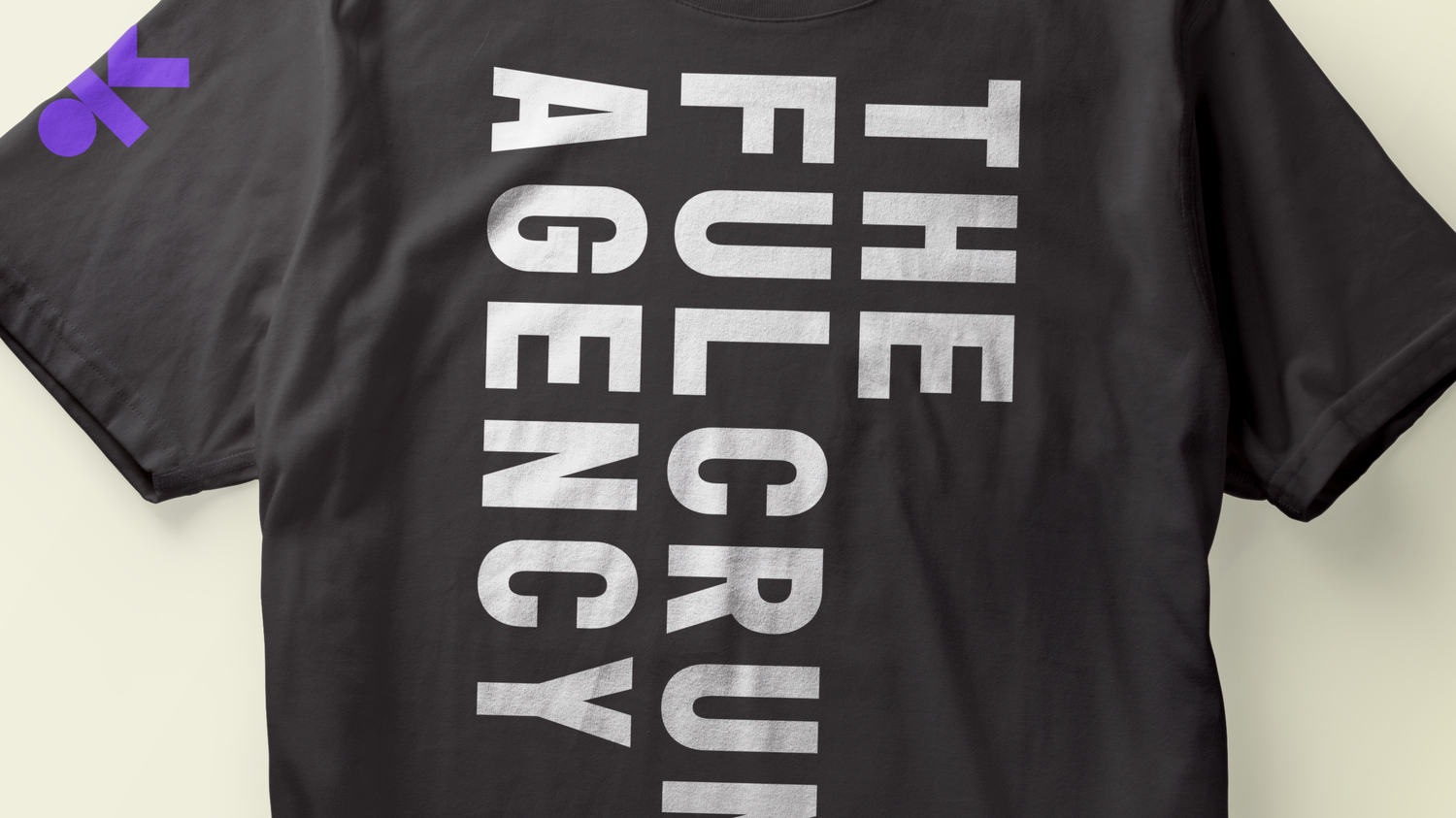
190331 TFA APPLICATIONS
As a going concern, there TheFulcrum.Agency requires branded items to be produced and delivered before the brand is officially ‘launched’.
We’ve always been impressed with American entrepreneurs and particularly tech and design creatives, to whom a key measure of success is embracing failure. There is an old saying in start ups that says if you haven’t been bankrupt twice you haven’t been trying hard enough.
This is really the opposite of a lot of firms we know in Australia, and probably of us at CODA – the fear of being seen as a failure, of changing tack, of downsizing, of down-grading, going backwards. These are all seen as some kind of diminution of practice, and there is a genuine fear of what the perception of this will be to the outside world. This fear of change, this conservatism is somewhat at odds with our perception of architecture and design practice as innovative, and of designers as optimists and change-agents.
The start up community is particularly instructive here – with the idea of the “pivot” replacing the notion of “failure” – this opens up all kinds of possibility, and re-frames an approach to business and to life.
TheFulcrum.Agency
should be an organisation that embraces (and actually chases) risk, is open to genuine change, and importantly doesn’t have a goal of being around In 20 years….we should be open to pivoting now, and again (and maybe again…)
Its important to credibly demonstrate the research work the Agency has done and is doing…both applied and pure research…
Some thoughts on how we might tackle the case studies section on the website:
Our work:
Case Studies:
Our work should always be described in terms of what we leveraged out of the project, and describe the challenge and upside that can be demonstrated. This is a pretty standard approach, but we should try to get a distillation of that into one paragraph…
We should describe as many of the connections that we used to make the project work – collaborators, clients, authorities, stakeholders etc
This could be a kind of matrix or map? A side bar list?
Each project study should be graphically rich, perhaps with “upside figures” and highlights
Ie: Broome North 24% reduction in household energy bills
There should be links outside of our website to the elements we talk about – like an article in WIRED etc, whereby the hyperlinks are underlined, so the way we talk about our work is always referential to others.
Call out sections – client testimonials, quotes or project highlights that don’t come from us.
Comments or elements of a jury awards report, or from the clients own website etc could be used here..
2. Area of Influence:
These might describe the areas of influence, rather than say project sectors (like education etc, which as secondary tags) – these areas could include:
Local Engagement
Citizenship
Education
– not as a sector, but as a process – ie: the project developed an educational model, or was interacted with through an educational model
Agency / Advocacy
– the process allowed users to advocate for a better outcome, assisted in designing a strategy or process for that effect
Policy
– effective changes and influence that utilised policy settings, or guidelines, or others to get the outcome sought by all…
Unity
– assisted to unify a community around a common goal?
Conversation
– generated conversation, or publication, or conference
Knowledge
– research outcome, ability to add to an existing body of knowledge…
etc
3. Contact:
There should be a contact person listed for each project – not who did it necessarily, but if you want something like this – whom should I contact? Either Emma’s, Nick or myself…but hopefully could be EB, or Heather?
4. More:
Should we have a downloadable PDF tear sheet?
Can someone who interacts with us build a ‘lightbox’?
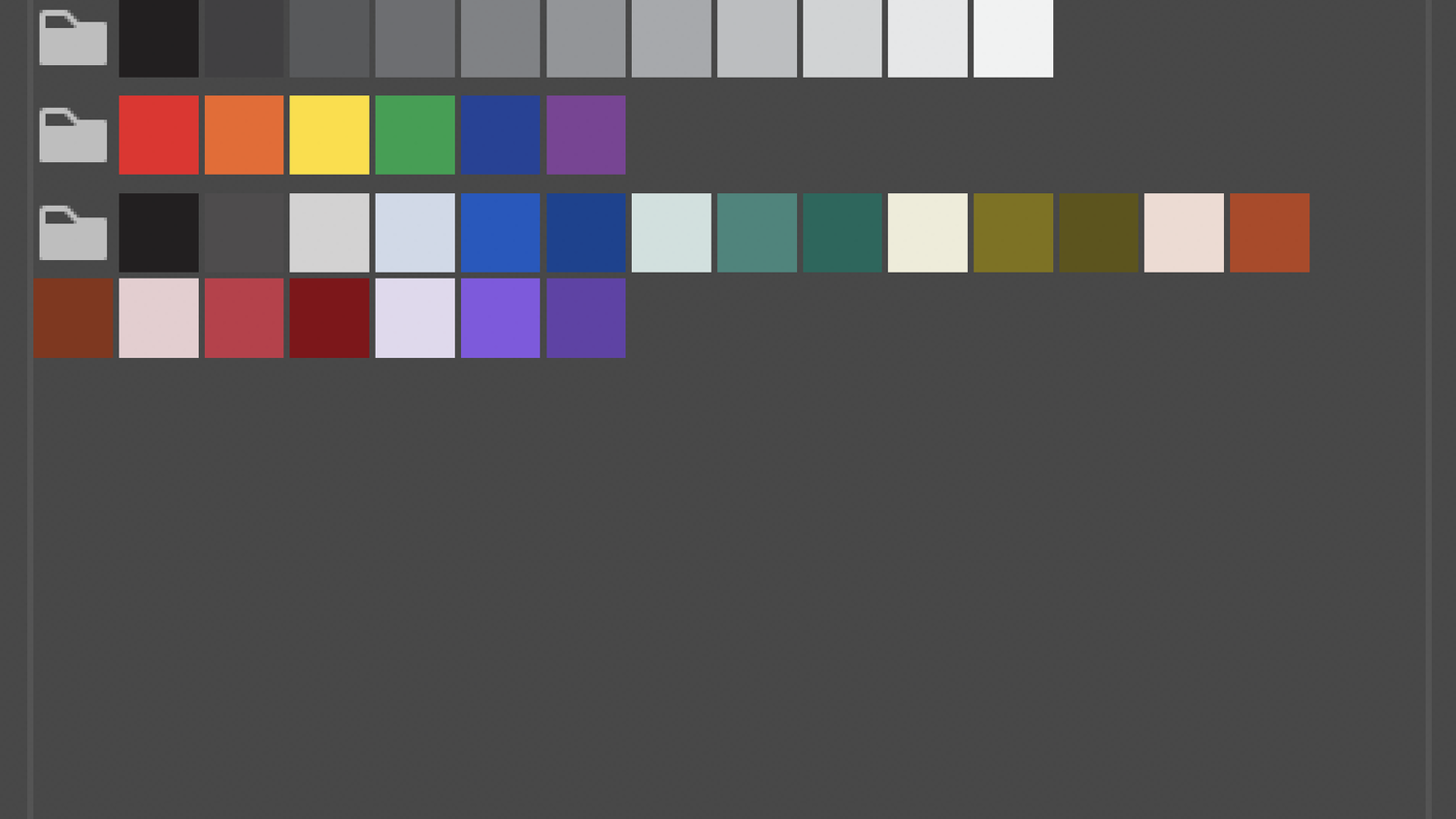
Starting with a burnt orange that is reminiscent of Australia’s desert dirt, we built out a palette of complementary and adjacent hues. Our starting point led to a group of colours that are dusty and earthy – they somehow have an Australian landscape quality to them.
As it was felt to be a path too well-trodden and was failing to add anything to the conceptual underpinning of the Agency, the pursuit of a graphic device based on a simplified human form was abandoned.
At its core, TheFulcrum.Agency is about leverage.
190302 FULCRUM CONCEPT WIP-01
The dot is a natural point (pun intended) around which to explore this idea. It is a point of difference (pun intended) in the structure of the Agency’s name, that was itself derived from the search for a serviceable url.
A dot is representative of a point in space but also becomes a fulcrum when a beam is placed on it. It is also the full stop that indicates that a thought is complete. It provides a pause for contemplation. (period)
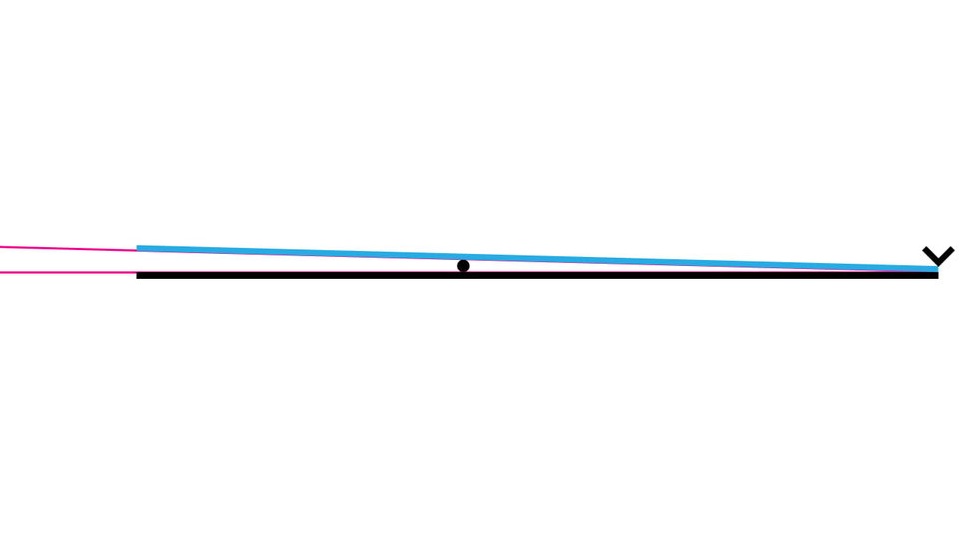
Once a heavier visual weight is given to the words on the short side (in this case, the left) of the lever, a minimal ‘force’ can be applied to the right side to visually illustrate the power of leverage.
In our case the ‘weight’ can be the type ‘TheFulcrum’ or a headline or statement. Something that can be metaphorically heavy is elevated with a minimal application of force.
190302 FULCRUM CONCEPT WIP-16
The device can also be used to illustrate competing forces that need to be kept in balance through the planning and design process. In this case, when the ‘V’ representing downward force is placed in the centre, it becomes a ‘V’ for versus. Here, the magic is that no matter how apparently unbalanced in visual weight, the words are, TheFulcrum.Agency is able to hold them in equilibrium.
Rather than attempt to strip the text of all meaning by setting it in a modernist face, the lead was taken from classic editorial design, a practice that has evolved over a millennium to convey content with a sense of authority. The result is a typographic palette that draws not from the vernacular of architectural studio graphics, but from the credibility and humanity of considered journalism.
190302 FULCRUM CONCEPT WIP-25
Similarly, moving away from the starkness of a black and white colour palette, introducing a limited but varied palette of complementary colours, creates a more accessible and ‘human’ look.
The intent of the TheFulcrum.Agency is an expansive one. It’s there in the name (ie ‘fulcrum’). It is a dedication to leverage evidence-based design-thinking to improve lives. It is the antithesis of style-based or output-focused architecture. It is concerned with the effect rather than purely the form.
This universal idea – the simplest of machines and the fulfilment of human needs, rather than the superficiality and immediacy of style – was a natural starting point for the consideration of the identity for this new enterprise.
If this is to be successful, the Agency must be a business built on content and substance, rather than style or fashion. And its visual identity must communicate this.
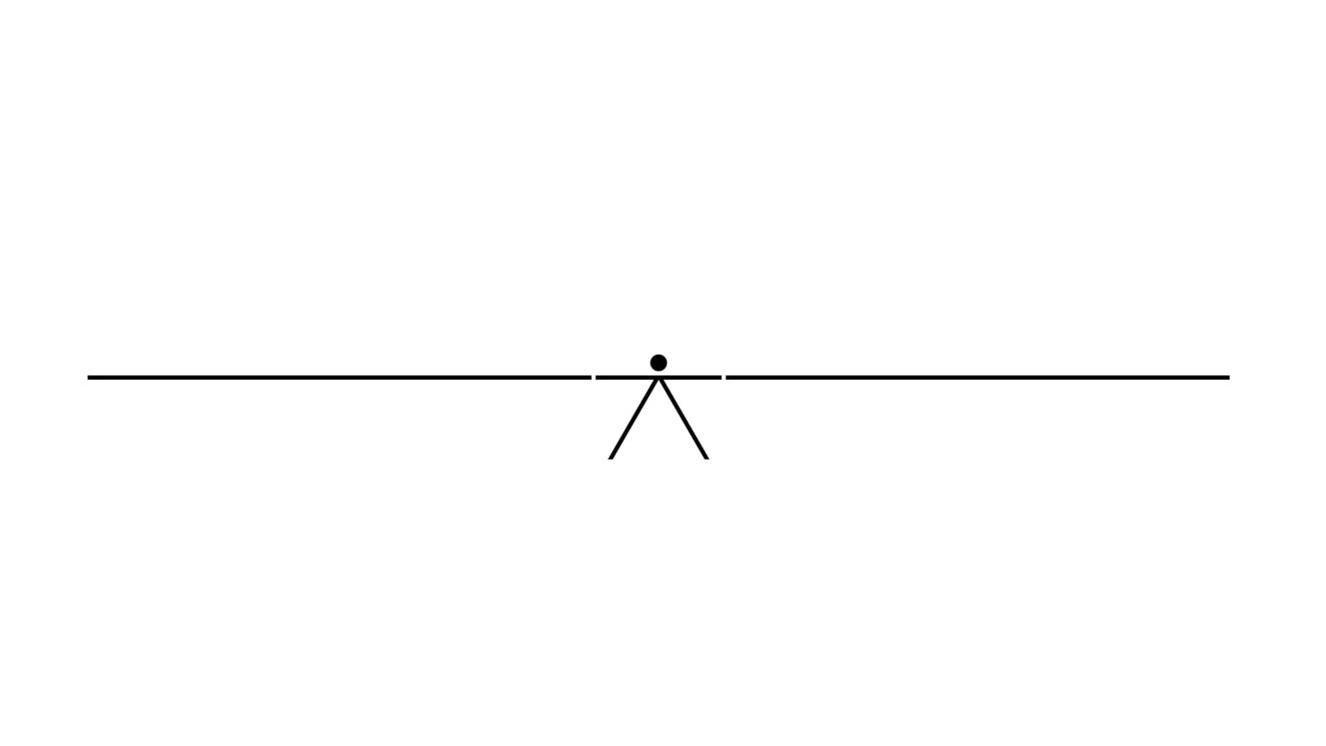
Our first exploration of this idea of universality led us to the most fundamental of graphic images, the representation of the human form and its abstraction into visual language. Through a reductivist method, we created a symbol that is at once the human form but also a diagrammatic representation of a lever system. A circle forming the head (and the dot in TheAgency.com), a line being the beam (and arms), and the fulcrum being represented by an acute angled line (the legs).
Video and Film
The individual elements of this mark could then be used to construct their own visual language: glyphs that are empty vessels waiting to be filled with meaning that is assigned to them (much like the foundation of written language).
The structure can interact with content in the form of headlines or descriptors, creating a look that is driven by the concept and content rather than style. And that all is constructed around, and out from, the dot – the pivot point.
Is it possible to create a brand that is based on unadorned content alone, that rejects the usual emphasis on style over substance? Perhaps.
Unintentionally, though, this route led us to realm that others in our sector had already staked out well. We weren’t comfortable that we could find a minimalist solution incorporating the ‘universal man’ icon that wouldn’t appear to be mimicking these.
Another, unrelated concern, was that we were venturing into a territory that seems to the style du jour for architectural businesses wishing to present an intellectual and theoretical face to the world.
There are whole design blogs dedicated to documenting these minimalist, international style identities. These identities lack differentiation and, in their hunt for a universality, end up somewhere with a complete lack of humanity.