In football, a switch or a pivot is a powerful move. It’s when the predictable movement of play is suddenly interrupted. Often by an act of daring or brilliance by one player.
A sudden change of direction literary opens up time and space for that player and their team. Which creates opportunities.
It’s the best players, the most exciting and celebrated that can create these chances, sometimes, seemingly out of nothing. As if by instinct. They spin, weave or trick the other players. They move in a way that is unexpected. Often breathtaking.
As a player, it takes courage to take a chance like this. There is a high degree of risk. The outcomes are unknown. You can be made to look silly. To be embarrassed. To have the crowd and the opposition ridicule you.
But when you take a risk, when you pivot, you have the chance to create something special.
*Dylan Smith is the Executive Officer and Founder of the
Fremantle Foundation
, a philanthropic organisation that focuses on the potential of local giving. Dylan played AFL football for five years with the North Melbourne Kangaroos and Fremantle Dockers.
The roads, pipes and wires that make up the infrastructure of our towns and cities aren’t often considered to have moral dimension. But, as Dr Liam Grealy investigates, we are, quite literally, building inequality into our urban fabric.
In August 2017, ten inches of rain over four hours led to days of flooding in central New Orleans – from the Seventh Ward to Treméto Mid-City to Lakeview. City officials claimed the pump system was working but that rain outstripped capacity. But subsequent revelations of a power-station control-panel fir e offered a partial explanation for the drainage failure. Three of the five turbine generators that power New Orleans’ 120 pumps were already down for maintenance and with one on fire, just one was left to manage the downpour. Sixteen of the pumps were also down, despite contrary initial reports, for which senior Sewerage and Water Board and Public Works Department staff were quickly asked to resign. A ritual sacking provided a swift and visible response to the more complex infrastructural challenges of managing subterranean “vibrant matter”[1].
Pump Station 2
Situated on drained former swampland, below (a rising) sea level, sinking, and adjacent to the disappearing protective wetlands of the Louisiana Gulf Coast,
living with water
is the perennial challenge of the crescent city. Every storm season, flooding elicits memories of the devastation wreaked by Hurricane Katrina in 2005, when the repeatedly-predicted failure of the US Army Corps of Engineers’
“city of walls”
[2]
– that is, levees, embankments, floodwalls, and other rigid barriers – came to fruition. Technocratic explanations for the levee failure, offered in a progressivist vein to promote further construction, elide the
complexly entangled negligence
of regulatory, maintenance, planning, and disaster recovery regimes. They also discount
historical explanations
for the former and ongoing racialization of infrastructural risks, such as access to high ground, the geography of redlining, federal compensation programs, and insurance determinations bearing on who was able to return post-disaster.
When the 2017 floods arrived, the demography of some of America’s oldest black neighbourhoods had already shifted: social infrastructures had been razed and replaced by foreclosure, eviction, gentrification, and short-term rentals for the tourist economy.
Eviction in the Seventh Ward, New Orleans
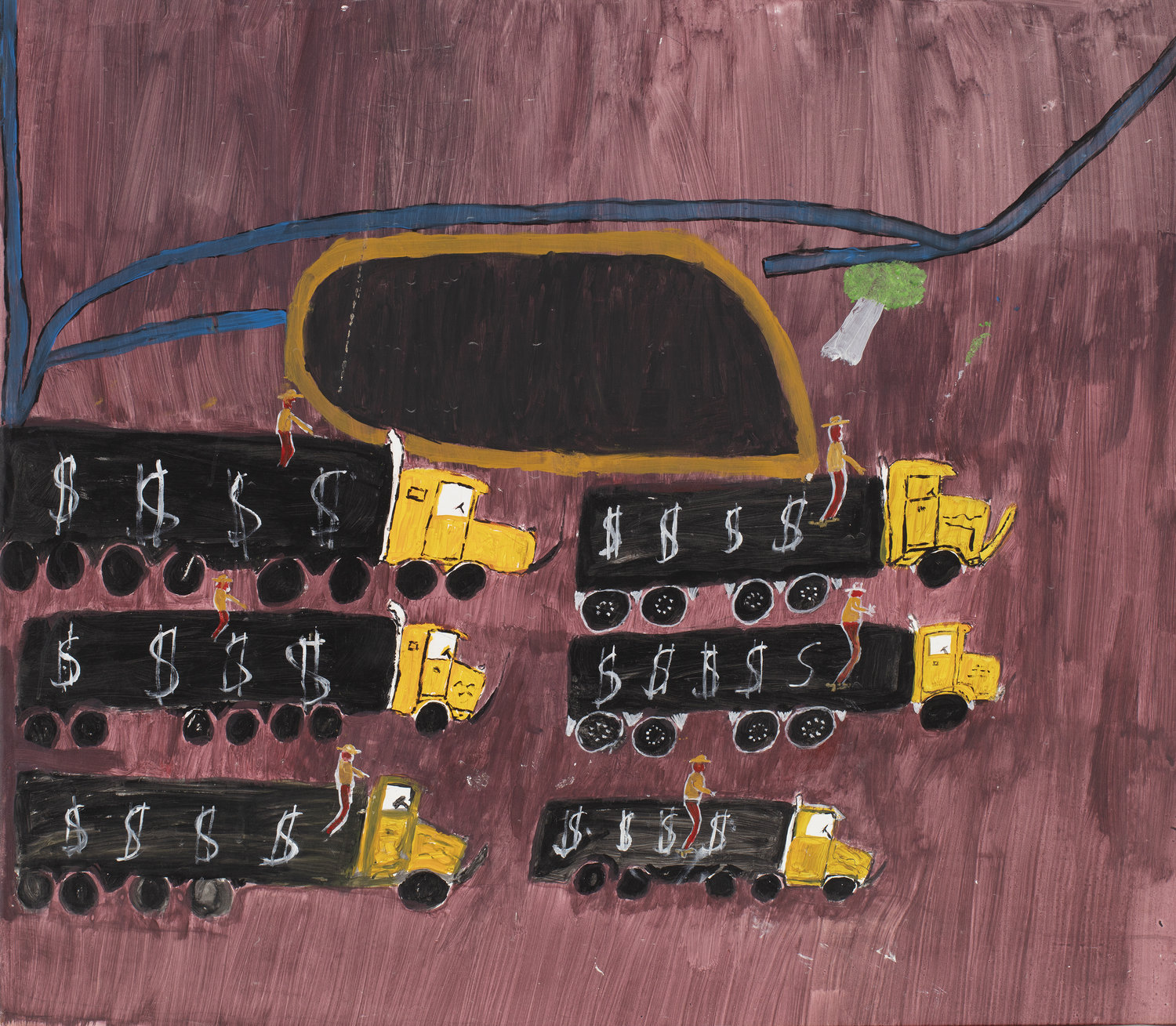
Eight months later, in Australia’s top end, the remote community of Borroloola faced its own man-made hydrological catastrophe. Indigenous residents called on the Northern Territory Department of Health in April 2018 to blood-test community members following water samples revealing elevated levels of lead and manganese in the drinking water supplies of town camps. Glencore’s nearby McArthur River Mine had previously confessed to poisoning cattle and fish via zinc and lead leached from its dumpsite, generating suspicion over its ongoing role in contaminating local water systems. As Jacky Green narrates in Yee-haw, Money Trucks (2017)[3], “They take wealth from our country, leaving behind a huge open cut pit and toxic waste rock pile for us to clean up.”
In this recent instance, the Department of Health and the government-owned Power and Water Corporation suggested the contamination occurred between the bore and the tap, with corroded brass fittings in the camps’ internal reticulation systems a likely cause. The extensively detailed Town Camps Review (2017) had already recommended urgent upgrades to the camps’ water infrastructure. Yet with assessments made without subterranean investigation, and with incomplete historical records, just what’s down there, when it was installed, and who’s responsible for it, remains opaque. It was almost two months before residents in Garawa 1 camp were advised the water was again safe to drink, with the Department of Health noting that “the problem . . . was more complicated than originally thought.” Community members know all too well that having such issues investigated is hard fought, requiring sustained protest and advocacy in the face of multiple pressing issues that demand their attention. In October 2018 a new water treatment plant was opened in Borroloola, however further extensions are required to service housing on the east of the McArthur River, including at Garawa 1 and Garawa 2 camps.
A new water treatment plant, Borroola
“It’s exhausting to create an event out of nothing”, says one of anthropologist Chloe Ahmann’s[4] (2018) Baltimore informants about the difficulty of representing the cumulative effects of infrastructural slow violence. The distribution of both displacement for infrastructural development – think highway and “urban renewal” projects – and risk of harm – think waste dumps, chemical factories, and mine sites – are never demographically equal, but are instead central to the ongoing reenactments of settler-colonialism’s voracious appropriation of territory and capitalism’s serial frontiers of extraction and abandonment. Such geographies of governance are variously conceptualised by Evelyn Araluen as “cartographies of colonisation” (2018; also see 2019[5]), by Stephen Lerner[6] (2010) as “sacrifice zones”, and by Elizabeth Povinelli[7] (2011) as “economies of abandonment”. They are constituted, in part, by the extension (or not) of infrastructures, as “material forms that allow for the possibility of exchange over space” (Larkin 2013)[8]. Of course, the construction, use, and maintenance of infrastructures can also dispossess, degrade, and disconnect. Most of the time, residents at the metaphorical and literal coalface of environmental and financial hazards lack a Hurricane Katrina, or a Northern Territory Intervention, to spectacularly expose the slow-to-accrue cumulative toxicities of infrastructural failure. Even when industrial disasters are major events, such as Union Carbide’s Bhopal disaster in 1984, their effects long outlast the cameras, the aid money, academic interest, and even the attention of community organisers overwhelmed by the demands of acute crises and new looming threats. The ongoing groundwater contamination at Bhopal signals what Nikhil Anand[9] (2015) describes as “the work of ignorance in maintaining state institutions”: proof of harm, the designation of culpability, and eventually redress, first require investigation.
This is where the sidewalk ends, Lower Ninth Ward, New Orleans
Bringing the harms of infrastructural violence to light is always tough political work, and efforts to do so are confronted by reductionist interpretive habits, or cultural clichés. Poor health is explained by dietary and lifestyle choices, or the dilapidated remote community house signifies tenant damage rather than, as the not-for-profit organisation Healthabitat has shown, a lack of routine maintenance and poor initial construction. We need to acknowledge that infrastructure is always in motion, ageing, and trending toward entropy. It is rarely “completed”, instability is its norm, and functionality requires constant attention: tinkering, fix-work, maintenance, replacement, patches, upgrades, and renovation. Such labour requires government resources, and monitoring and accountability systems that recognise the natural decline of infrastructures, rather than simply attributing breakdowns to users. The recent victory for public housing tenants in the Central Australian community of Santa Teresa – awarded compensation for the government’s failure to ensure their homes were maintained to a habitable standard – shows the potential for redress via public litigation, but also the risks associated with asserting basic legal rights (including countersuits, administrative labour, insecure tenancy, and so on).
Most readers of this essay can probably still take potable and plentiful tap water largely for granted. As many writers have conceived of infrastructure in general – that it becomes visible when it breaks down – so too are our expectations made apparent through disruption: an occasional boil water alert, for example. With a scarce commodity literally on tap, we can forget the already quotidian everyday realities of many global cities – Cape Town, Mumbai, and São Paulo among them – variously characterised by water’s undersupply, privatisation, and rationing. This while future-focused fantasies of being overwhelmed by water and of water’s disappearance have become increasingly central to speculative dystopias in popular culture: of flooded worlds, desert wastelands, and “water knives”[10]. We should also direct our imaginations to how the right to water might be guaranteed under conditions of increasing scarcity. What political work is required to ensure the redistribution of this natural wealth from wasteful industries that benefit a small minority to serve the basic needs of everyone? Such imaginative work must contend with fantasies of water’s infinity facilitated through techno-fixes, such as proliferating desalination plants, and the tendencies of such “solutions” to mortgage the future on behalf of contemporary lifestyles.
Sinkage on O’Keefe Street, New Orleans
All strategies for sustainable futures struggle with the sinking mess of the present. As at Borroloola, the reticulated infrastructure delivering drinking water to New Orleans’ residents has also exhibited levels of lead beyond safe drinking standards. 65-80 per cent of city pipes are almost two centuries old. Shortly before the 2017 floods, the New Orleans Office of the Inspector General found that residents could be exposed to lead by construction projects shaking the metal loose from old pipes. This construction includes a 135mile Federal Emergency Management Agency funded water-line replacement project, which promised to remove the problem it is shaking loose; this in a context where the city admits it doesn’t know the locations of all the existing lead service lines. Given this material was once the industry standard, such ignorance isn’t surprising, but nonetheless requires further government intervention. Thus the legacy of yesterday’s infrastructural promise is today’s public health hazard. Importantly, and despite the identified dangers of the pipes to residents’ drinking water, the Sewerage and Water Board of New Orleans is only replacing waterlines on public property.
If lead is leaching from and flowing through the pipes, how might we respond to the fact that the state doesn’t know what’s down below or determines that its responsibility extends only to the edges of public land? How might water bind us in ways that thinking about broken infrastructure in our own backyards and elsewhere does not? Writing about Flint, Michigan, anthropologist Catherine Fennell (2016) [11] notes the discursive similarities between the claims “We are all Flint” and “All lives matter”. In practice, such statements convey “the kind of risks that a far-flung group of citizens can recognize as shared, and thus worthy of collective concern and action, and those that will, despite their ubiquity, seem isolated events that will never break the surface of widespread attention.” Where the contamination of municipal pipes is liable to produce “hydraulic publics” (Anand 2017) [12] through citizen science initiatives demanding government responses, in contrast, the failure of housing to also support healthy living practices has been more difficult to articulate and engender such collective demands and actions around. Compared with pipes that leach lead, the inability to access housing, (let alone secure tenancy in affordable housing that supports tenants’ positive health outcomes) is more likely to be explained by individual shortcoming.
In the United States especially, the shift from public housing to the curtailed state provision of vouchers for housing in the private market has also effected a privatisation of responsibility for infrastructural failure. This is evident in the logic of pipe replacements in New Orleans: householders, or in what is now a city of majority renters, landlords, are responsible for replacing pipes from the curb to the kitchen. The privatisation of infrastructural provision and failure, or in Ara Wilson’s (2016)[13]phrase, the “unbundling” of public infrastructure under neoliberalism, exacerbates the contemporary “concrete divide”[14] between the infrastructural haves and have-nots. Often presuming models of home-owner tenants, building science recommendations for healthy homes are typically quiet on the means renters might use to improve their water or their indoor air quality without risking eviction by punitive landlords. Put differently, while affordable housing advocacy might prioritise the issue of domestic infrastructure’s effects on tenants’ health, on behalf of establishing minimum healthy housing standards, building scientists and hygienists must also become advocates of tenants’ rights.
As Fennell writes, “while ‘we’ might all be at risk of ingesting toxins, some of us can spit back the lead soup that leaches from ‘our’ pipes, even as others must swallow the lead dust that flakes off ‘our’ walls.” This is the challenge of infrastructural inequalities: who can spit back what? How can we conceive and respond to problems that are shared, but never evenly? And how do infrastructures themselves give rise to particular kinds of publics and specific potentials for collective action?
Open Your Eyes at the F. Edward Hebert Defence Complex, New Orleans
A version of this essay was originally presented to open the Infrastructural Inequalities public program at Artspace in October 2018 – a collaboration which is ongoing between the Housing for Health Incubator and Snack Syndicate. That event pulled together artists, activists, academics, and other professionals, because facing the challenges of infrastructural inequalities requires responses that are equally creative, collective, critical, and technical. As Sara Ahmed[15] writes, “It takes conscious willed and willful effort not to reproduce an inheritance”, and any work against social reproduction requires a broad coalition, locally organised and institutionally disparate, flexible to internal difference and critique, and open to ongoing reorientation. In the contexts described above, community-led planning and local organising around water monitoring and against further extraction is working towards ensuring the ongoing security of communities in the face of flooding and contamination. As citizens and as allies, we might reflect on how we can contribute to an “infrastructure of dissent”[16], which is a social, intimate infrastructure, and which like concrete can also be “built, material, and lasting”[17].
[1]Bennett, Jane. 2009. Vibrant matter: A political ecology of things. Durham & London: Duke University Press.
[2]Caldeira, Teresa P. R. 2000. City of walls: Crime, segregation, and citizenship in São Paulo. Berkeley: University of California Press.
[4]Ahmann, Chloe. 2018. “It’s exhausting to create an event out of nothing”: Slow violence and the manipulation of time. Cultural Anthropology. 33(1): 142-171.
[5]Quoted in Spring, Joel and Munro, Lorna. 2018. Survival Guide. Radio Skid Row. Accessed: https://soundcloud.com/radio-skid-row/sets/survival-guide; Araluen, Evelyn. 2019. To outlive a home: Poetics of a crumbling domestic. Cordite Poetry Review. 1 February.
[6]Lerner, Stephen. 2010. Sacrifice zones: The front lines of toxic chemical exposure. Cambridge, MA: The MIT Press.
[7]Povinelli, Elizabeth. 2011. Economies of abandonment: Social belonging and endurance in late liberalism. Durham and London: Duke University Press.
[8]Larkin, Brian. 2013. The politics and poetics of infrastructure. Annual Review of Anthropology. 42: 327-343.
[9]Anand, Nikhil. 2015. Leaky states: Water audits, ignorance, and the politics of infrastructure. Public Culture. 27(2): 305-330.
[10]Bacigalupi, Paolo. 2015. The Water Knife. Vintage Books: New York.
[11]Fennell, Catherine. 2016. Are we all Flint? Limn. (7): https://limn.it/articles/are-we-all-flint/
[12]Anand, Nikhil. 2017. Hydraulic city. Durham and London: Duke University Press.
[13]Wilson, Ara. 2016. The infrastructure of intimacy. Signs: Journal of women in culture and society. 41(2): 247-280.
[14]Gandy, Matthew. 2004. Rethinking urban metabolism: Water, space and the modern city. City. 8(3): 363-379.
[15]Ahmed, Sara. 2014. White men. feministkilljoys. 4 November.
[16]Alan Sears quoted in Brett, Matthew. 2015. Building an infrastructure of dissent. New Socialist. 17 February.
[17]Cowen, Deborah. 2017. Infrastructures of empire and resistance. https://www.versobooks.com/blogs/3067-infrastructures-of-empire-and-resistance
We were delighted to work with our friends and creative partners,
Block Branding
, on the recasting of our new practice. Block is responsible for our branding but also, more critically, helping us to filter through our sometimes tangential threads around what it means to be an architect.
Arriving at our new identity and journal has been a fantastic, truly collaborative journey. Here’s an excerpt from a press release that Block distributed last week celebrating the work that they did for us…
“It wasn’t a simple brief,” says Tanya Sim, Co-Founder and Director at Block. “Emma and Kieran wanted to build a new model for an architecture practice, but didn’t know what shape it might take. They are defined by an evidence-based approach to architecture so we thought: ‘Why not bring this transparency to the branding?’ Most brands come into existence from nowhere – this seemed like the perfect opportunity to shed light on the thinking that goes into launching a new brand or business. “
Visually, TheFulcrum.Agency’s identity is based on a fulcrum and a beam, which together create a lever: the simplest of machines capable of lifting large loads with minimal effort. The symbolism is direct, illustrating TheFulcrum.Agency’s ability to leverage enormous change by utilizing the right architectural levers. The dot in TheFulcrum.Agency’s name becomes the pivot point, or fulcrum.
Mark Braddock, Creative Director at Block, says: “TheFulcrum.Agency is a business built on content and substance so we wondered if it was possible to create a brand that rejects the usual emphasis on style and fashion. Yet by self-consciously avoiding style, we risked creating yet another minimal identity in the style du joir for architectural businesses wishing to present an intellectual, theoretical face to the world.”
“Instead, we took inspiration from classic editorial design, a practice that has evolved over a millennium to convey content with a sense of authority. At its core, TheFulcrum.Agency is about leverage, so the new identity creates a natural point around which to explore this idea.”
Every branding decision, every wrong turn or deadend, are carefully documented on TheFulcrum.Agency’s website to show how Williamson and Wong’s conversations around architecture have guided the branding. Typography is inspired by classic editorial design, while the colour palette began with a dusty burnt orange, from which a palette of complementary, earthy hues emerged that is distinctly Australian.
More than an architecture practice, TheFulcrum.Agency aspires to be a platform for conversation. Block hatched the idea of TheFulcrum.Agency as content creator and curator, creating ‘The Journal of TheFulcrum.Agency’ to give context to everything the agency stands for. The first issue, ‘Pivot’, celebrates agility and resilience, echoing Williamson and Wong’s own pivot in launching a new practice together.
We are delighted that our Reflect Reconciliation Action Plan has been endorsed by
Reconciliation Australia
.
The Fulcrum Agency acknowledges that Aboriginal peoples are the Traditional Custodians of the lands on which we live and work, and that the many nations that occupied the Australian continent have never ceded sovereignty of their country. For us reconciliation is nuanced, contingent and a central driver in all that we do.
We will share our Reflect journey with you as it unfolds over the coming twelve months.
We were chuffed to see this review in Domain of a presentation that we gave at the Housing Futures conference in Melbourne last week. Thanks to journalist Jenny Brown for picking up on this important story.
“The slowest of the art forms, and one that generally starts with considering local context, community connections and subtle elements like site lines, is spun into a whole new dimension when architecture needs to consider the world’s oldest living culture, clan, inter-family and moiety relationships, and the ancient insider knowledge of songlines.
In the Groote Eylandt part of East Arnhem Land, and in an Australian-first project where traditional owners rather than a government agency have directly employed an architecture firm to deliver “culturally empowered housing”, Perth practice TheFulcrum Agency has been learning a great deal about “the ability to work slowly”.
To a wide-ranging architectural forum Housing Futures, convened in Melbourne last Friday by Architecture Media, Fulcrum Agency principal Kieran Wong explained that with all the cultural constraints of the project commissioned by the Anindilyakwa Housing Aboriginal Land Council (AHAC), he saw “working slowly as the great opportunity of the project”.
Engaging in years of meetings in which members of 14 local clan groups had explained why the prescribed housing solutions of the past had failed, and all the changes and adaptations that would actually maintain wellbeing and necessary traditions, Wong said what was being asked for was “very different to any masterplan the [NT] government had on file”.
“We don’t need to invent anything. What we need to do is what works; to do it properly and not to rush it,” Wong said.”
Indigenous housing projects, he said, had the tendency “of burning architects out in repeating cycles of failure”.
Instead of doing more of the same, the Groote Eylandt projects are modelling what happens when the directions come straight from traditional owners and the ultimate occupants like Gregson Lalara, founding chair of the Anindilyakwa Housing Co-operative and, therefore, Wong’s boss.
To the audience of mainly capital city architects, Lalara outlined cultural behaviours that were not only different to those of settler Australia, “but different to other Indigenous cultures in Australia”.
He said the new generation housing needed to be properly mindful “of different privacy structures” that could govern inter-action between neighbours and even members of the same family who occupied a single house.
At times and for reasons of correct (social or ritual) moiety relationships, various members cannot share what would be normally be common spaces such as bathrooms.
On the old standard-issue housing model, this has led to hot-climate houses being shrouded in shade cloth or tarpaulin screening – both within a single structure and to ensure that outward viewpoints towards neighboring houses were not inappropriate.
Even where there is a sea view, or an excellent potential for cross-breeze ventilation, conventional design can very clumsily contravene tradition. “Houses can also be facing the wrong way, or towards the wrong part of the country,” Wong said. “And this has led to all sorts of strange enclosures happening.”
With the current housing projects still under construction, and with a five to 10-year delivery schedule, the emphasis has been on “making the houses incredibly elastic because of the way occupancy patterns can change over time”.
“In the life of a house, events – say through marriage – can change family groupings quite dramatically.
“These are not Western nuclear families and the houses need to have multiple entry and exit points so ‘poisonous cousins’ and in-laws don’t encounter each other.”
The screening devices that will continue to be a big part of making a house flexible must therefore have adaptable fixing points that don’t, at the same time, impede healthy ventilation. For this, gable roof-lines are proving useful. “We need simple formats that can be flipped,” Wong said.
Because of the belief in nocturnal sorcery, Lalara explained the need for certain outdoor areas to be floodlit.
The myriad subtle differences necessary in the designing and delivering of housing that will be successful for the resident communities has, says Wong, “been an amazingly engaging project in which we’ve sat down and talked properly”.
Taking the directions from the local communities has been “a milestone”, he says. “To hand back decision-making to the people of Groote has been a process of listening and trying to understand.”
The Fulcrum.Agency is proud to be a founding signatory on a declaration acknowledging the twin crisis of climate breakdown and biodiversity loss as the most serious issue of our time.
Architects Declare was launched in the UK in May 2019 and has quickly gathered momentum on a global scale. As signatories, The Fulcrum.Agency commits to the following eleven actions:
Raise awareness of the climate and biodiversity emergencies and the urgent need for action amongst our clients and supply change.
Advocate for faster change in our industry towards regenerative design practices and a higher Governmental funding priority to support this.
Establish climate and biodiversity mitigation principles as the key measure of our industry’s success: demonstration through awards, prizes and listings.
Share knowledge and research to that end on an open source basis.
Evaluate all new projects against the aspiration to contribute positively to mitigating climate breakdown, and encourage our clients to adopt this approach.
Upgrade existing buildings for extended use as a more carbon efficient alternative to demolition and new build whenever there is a viable choice.
Include life cycle costing, whole life carbon modelling and post occupancy evaluation as part of our basic scope of work, to reduce both embodied and operational resource use.
Adopt more regenerative design principles in our studios, with the aim of designing architecture and urbanism that goes beyond the standard of net zero carbon in use.
Collaborate with engineers, contractors and clients to further reduce construction waste.
Accelerate the shift to low embodied carbon materials in all our work.
Minimise wasteful use of resources in architecture and urban planning, both in quantum and in detail.
Importantly for us as a practice, the Australian declaration aims to achieve these actions by meaningfully addressing the interdependent and reciprocal relationship between our land and its Indigenous people.
We congratulate each founding signatory for taking this bold step – ARM, Alec Tzannes, Bates Smart, Breathe Architecture, Brit Anderson, BVN, Circa Morris Nunn, Clare Design, Design 5, DWP, FJMT, The Fulcrum.Agency, Glenn Murcott, Greenaway Architects, Gregory Burgess Architects, Hassell, Iredale Pedersen Hook, JCB, John Wardle Architects, Ken Maher, Kerstin Thompson Architects, Koning Eizenberg, Liminal, Partners Hill, Peter Elliot Architecture, Peter Stutchbury, Rick Leplastrier, Six Degrees, Taylor and Hinds, TKDA, Troppo and Woods Bagot.
If you’re an architect, we encourage you to make your own declaration here:
ARCHITECTS DECLARE.
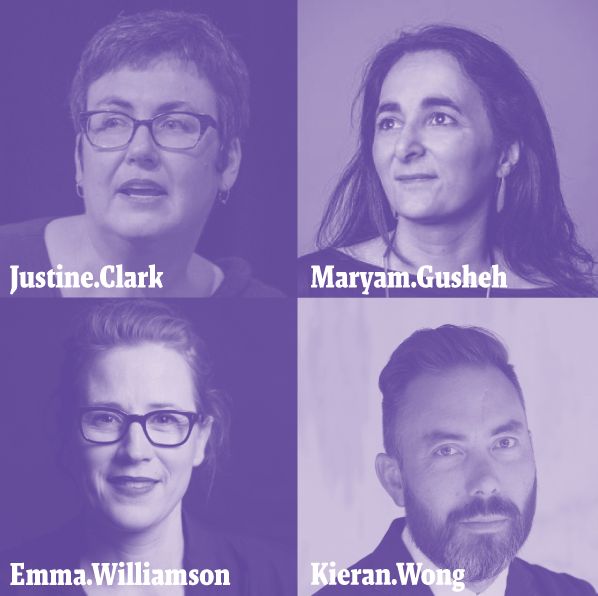
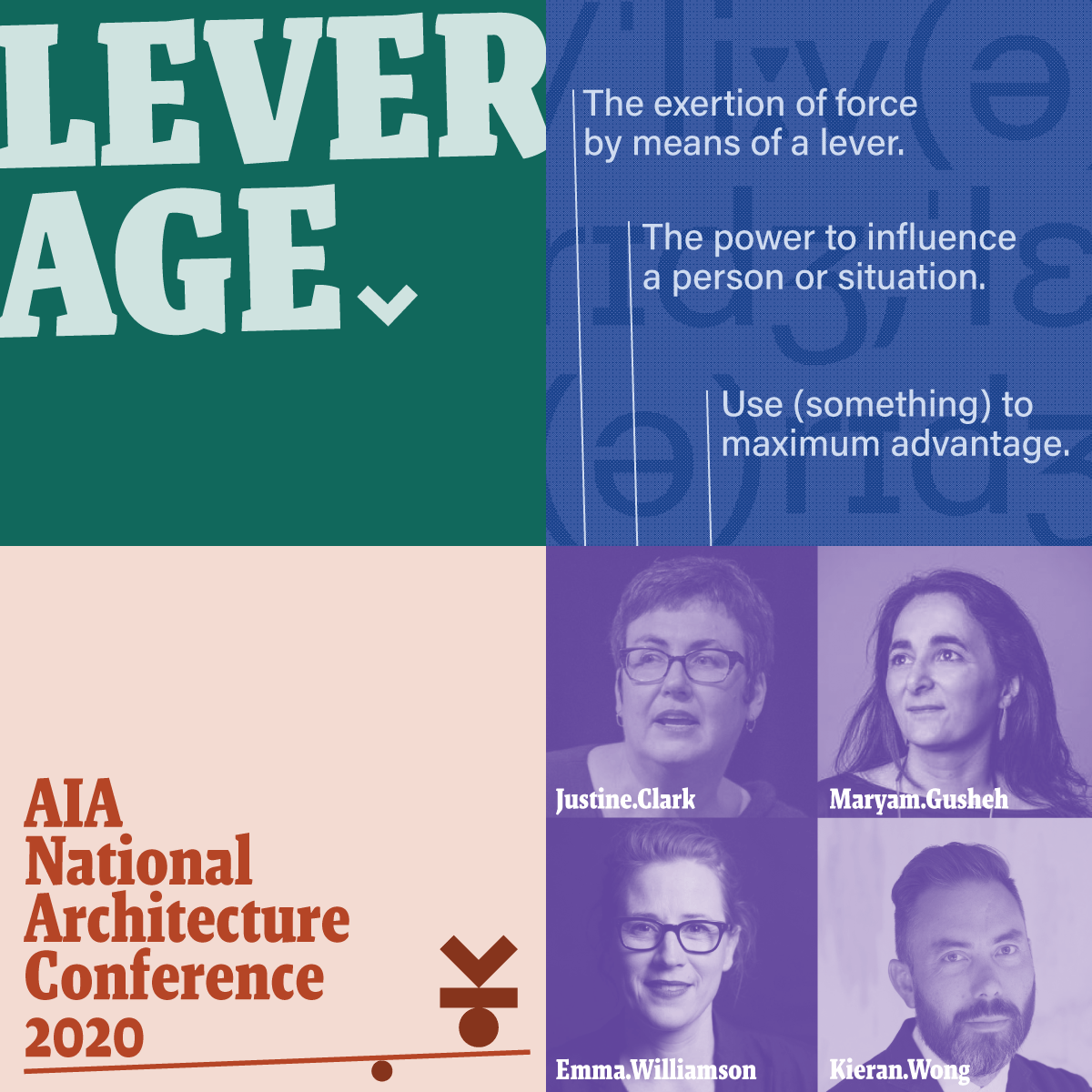
Justine Clark, Maryam Gusheh, Emma Williamson and Kieran Wong will be creative directors of the 2020 National Architecture Conference that will take “Leverage” as its theme.
“The role of the architect and architectural knowledge in contemporary society is shifting from a service provider to new roles that have the potential for transformative influence,” said creative directors Justine Clark, Maryam Gusheh, Emma Williamson and Kieran Wong. “This fluidity is hallmark of contemporary culture as rigid boundaries are increasingly blurred and challenged. Architecture appears uniquely positioned to extend its reach and amplify its impact. This is the ripple effect, the ability for architectural thinking to leverage positive change.
Where do we find our leverage, as individuals, as practices or organisations, as a profession? How can we exploit our contemporary professional circumstance, training and knowledge to instigate positive change well beyond our disciplinary remit? How can architectural wit and intelligence, agility and diligence, cheekiness and humour, restraint and flamboyance, ethics and goodwill maximise (social, environmental, economic) impact and advantage? How can we play with and agitate the rules to sustain our culture while we embrace new associations? What are the levers, large and small, at our disposal? How do we find them and how far do they need to be moved to make a difference?”
The conference will be organized around four streams: Policy and Politics (leverage through advice, strategy and negotiation), People and Partnerships (leverage through discourse, argument and education), Practice and Projects (leverage trough speculation, process and production), Publishing and Polemics (leverage through discourse, argument and education).
The creative team represents “intersecting fields of research, advocacy, agency, practice, production and teaching.”
Justine Clark is former editor of Architecture Australia and co-founder and director of Parlour: Women, Equity, Architecture. Maryam Gusheh is associate professor and deputy director of architecture at Monash University. Emma Williamson and Kieran Wong cofounded The Fulcrum Agency in 2018. The pair were previously directors of Cox Architecture and CODA Studio. Williamson is currently chair of the Design Advisory Committee for the City of Canning in Perth. Wong is also immediate past national president of the Association of Consulting Architects.
The 2020 National Architecture Conference will take place in Perth from 7 to 9 May 2020.
* This article was first published in ArchitectureAU on 2 July 2019.
There was much excitement last week over NT Chief Minister, Michael Gunner’s visit to Groote Eylandt to sign the first three Implementation Plans that will give Aboriginal people greater control over their own affairs in relation to law and rehabilitation, economic development and housing.
We’re thrilled to announce that our two Principals, Emma Williamson and Kieran Wong, along with academics, activists and writers, Justine Clark and Maryam Gusheh, have been appointed as the Creative Team behind next year’s AIA National Architecture Conference!
We hope you’ll join us in Perth next year for LEVERAGE.
Thank you to Ingrid for the amazing Welcome to Country, I too pay my deep respects to the owners of this land, the sovereign Nyungar nations, and the Whadjuk people, and thank them for the gracious hospitality on this country.
Whadjuk Nyungar have managed this coast for tens of thousands of years, caring for country through cultural ceremonies such as song, dance and use of fire. We feel privileged to work on such country, and honour the ongoing legacy of the Nyungar nation to our shared future.
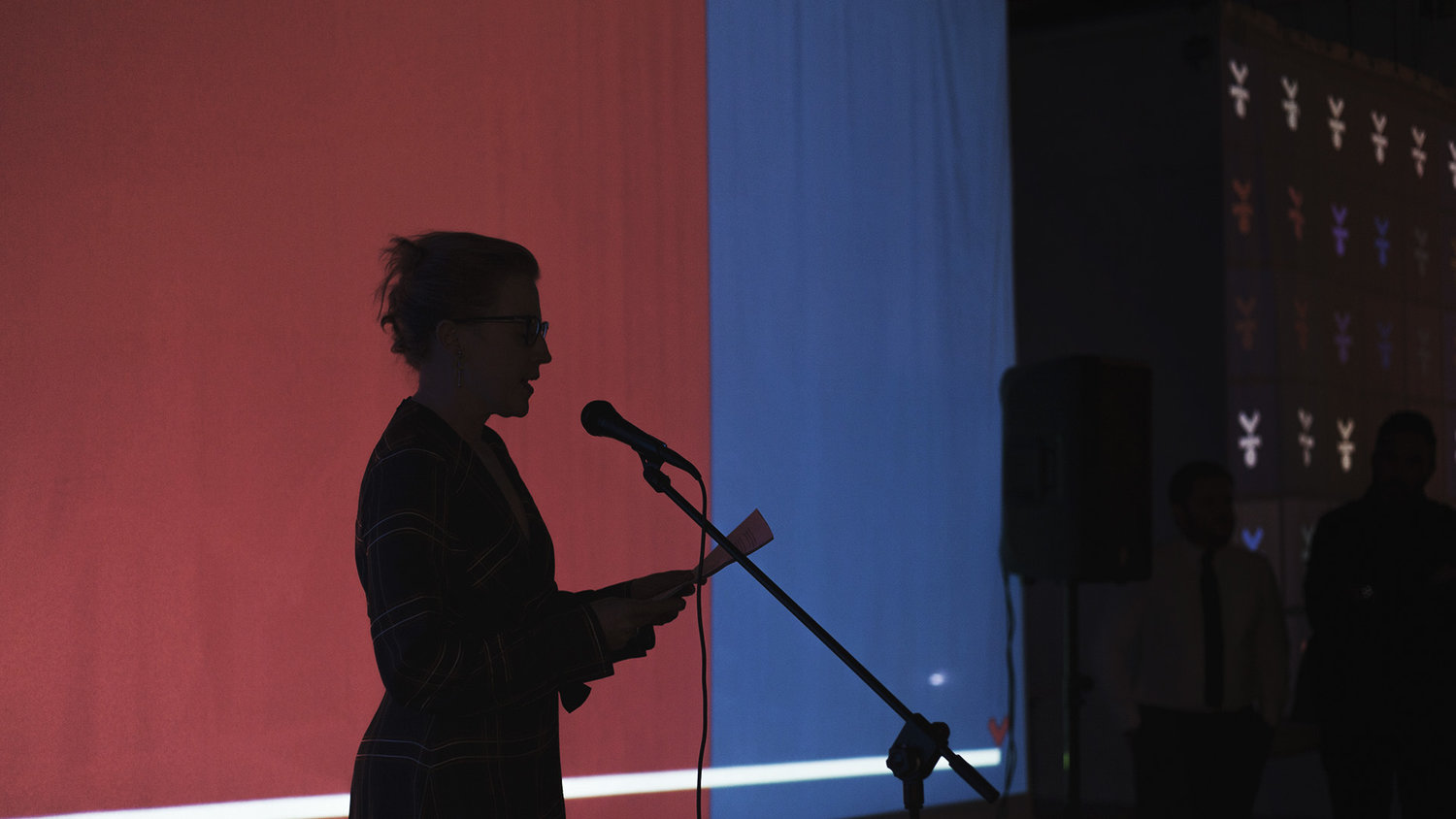
Many thanks to you, Cameron for coming to support us in the launch of our new adventure and for supporting us in your previous role as Editor In Chief of the Architecture Media. We feel so grateful that you would come all this way to see us on this new journey.
So, I thought I might say a few things about TheFulcrum.Agency …
We are made up of many of the band members from CODA and come from more than two decades in practice – and we also have a couple of new players in the line-up.
We continue to work with:
Nick Juniper as Associate Principal
Emma Brain as Head of Communications
Heather MacRae as a newly minted Associate
Sarah Besly as long-standing Associate
Akira Monaghan, Architect
We have worked together with these fabulous people for between five and 10 years and they have all been instrumental to us pushing forward bravely into uncharted waters – and helping us pivot when we realised the seas were too rough.
And we have some new band members:
Brad Wetherall, Graduate Architect
Claire White, Architect, and, most recently been joined by
Michael Gay as a Senior Architect
Despite the seemingly unsettling naming of our practice as an agency, I can confirm we are still architects.
But before I go forward and too far down the line of saying who we are I want to go back a couple of steps because a lot has happened to us over the last few years on the work front…
A few years ago, Kieran and I started to talk often about our mid-life crisis.
Being a year older I started mine first. I was hit by the fact that I was fast approaching the mid-point of my working life and I didn’t want to fall into the second half without giving it some serious consideration.
I was relieved when Kieran started his own mid-life crisis and joined me in this angsty and tormenting journey as we took a long hard look at what we had achieved, what we wanted to achieve, where we felt our passions lay and what we thought we were good at.
As mid-life crisis go, I actually think it went quite well. We bought a vintage car to restore and decided to celebrate the achievements of our work in a big 20-year anniversary party for CODA.
Although Kieran and I co-founded CODA we came to feel more like custodians of it and in order to continue its growth trajectory we decided that we needed to find a partner, so we hit the dating scene.
After testing the water for a bit, we jumped into bed with one practice and decided to get hitched … And then in no time at all we got divorced!!! … All the while remaining actually married to one another (another positive outcome at the end of the mid-life crisis).
The chance to recast ourselves anew has been liberating to say the least. We have had a deep cleanse. If anyone has read or seen Marie Kondo we have sought to spark joy, consolidating the things that we feel passionate about into this new practice. It has been a unique opportunity to consider what we want our next half of working lives, and our practice to look like.
At CODA we used to talk about being useful, being generous, being joyful and being stealthy. Our practice was driven by these tactics, and underpinned by values around social justice, equity, inclusion and progressive approaches to our profession.
These values remain constant, and have helped to propel us forward, and framed our decisions.
These values have reminded us of our appetite for information and knowledge, our deep interest in other people’s stories and our desire to use architectural design thinking to unpack problems, and to expand them in order to find solutions that meets the aspirations and needs of the communities we serve.
Our new practice has given us the rare and privileged opportunity to recast the way we want to live our work-life, to be agile and engaged as a smaller, nimbler, expert and enquiring collective.
So, if we continue to consider these practice moves as milestones in our relationship status tonight is surely a renewal of our vows – and an opportunity to make a declaration in front of you all about our hopes for our future and to reaffirm our values and our love of the importance of design thinking.
Emma Williamson and Kieran Wong launch TheFulcrum.Agency
Like any wedding our audience is made up of people who are very special to us.
You are the village of family, of friends, of colleagues, peers, clients and collaborators who have helped to support and shape us over the years. We would like to thank you all for your support of us and your collective intellect and wisdom that has helped to spur us on.
So here we go:
Kieran
We will work using a clear lens of social justice, to seek balance between the inevitable tensions of the contemporary world, and our ancient past.
Emma
We will maintain our values of generosity, usefulness, joyfulness and stealth
Kieran
We will collaborate openly and genuinely, within our practice, with other practices, with our clients and our peers. We do this because we believe in the powerful and potent outcomes that can be achieved when we meet challenges with an open mind and open heart.
Emma
We will look for ways of being generous in the way we work together, with others and for others. We look for ways of finding generosity in all of our projects and ensuring that they serve the communities in which they are located.
Kieran
We will continue to work for equity in the profession, to seek new models of practice, and be open to change and renewal.
Emma
We will work hard to ensure the work we do is enjoyable, by ourselves, the people working on it and the people for whom it is intended.
Kieran
We will seek out people’s stories, celebrating diversity and adjacency, and always striving to serve with impact and purpose the wide range of communities who choose to work with us.
Before I wrap up there is one final thing and another important dimension to this launch.. (and another quick story!)
Before we had even come up with a name for our new venture, or Kieran had had a chance to try his hand at prototyping business cards … we called on our dear friends Mark and Tanya who have been leading the way at Block Branding.
They are responsible for our branding but also (and critically) for helping us to filter through our sometimes tangential threads around what we want to be to help us arrive at the idea of publishing a journal.
Having worked on our first ‘smoke and mirrors’ campaign 15 years ago when we had no real built work to speak of to this new practice identity has been a fantastic journey and a relief to have some content to contribute! They are true collaborators and we really cannot thank them enough.
In a very short space of time along with Mark and Tanya, and Emma Brain we have worked to pull together this first edition of our biannual journal in which we ponder – and ask other to ponder – the idea of the word PIVOT. This means different things to different people as you will see.
I can say quite truthfully, that making a big career change and moving to the outer limits of your comfort zone at a time when you have competing responsibilities (children / mortgage / aging parents) is not for the faint hearted. I must say, however, that I have found the experience strangely refreshing.
This has certainly been our very big pivot.
The journal has reminded us and made us very grateful to the support of our community. We came late to a very clear idea of exploring a single word with each issue. At VERY short notice and without hesitation all of the contributors agreed to be part of this and trusted that we would deliver on our promise of producing something that we can all be proud of. I would like to thank them all for their efforts but also for giving me the sense that you trust us to deliver on our passion to bring people together.
We are looking forward to unpacking and sharing more words and more stories in coming issues.