Our friends at Parlour have shared videos from the Wellbeing of Architecture Symposium, which took place in Melbourne last May. We’re sharing them with you because our co-founder and now WA Government Architect, Emma Williamson was a keynote speaker.
The Symposium supported the Wellbeing of Architects research project, a three-year study, led by Naomi Stead, into how workplace cultures and professional identity affect wellbeing in architecture. The Fulcrum Agency was a Research Partner in this study.
Emma was invited to offer a provocation on the link between ‘contracts, procurement and wellbeing’ and (no surprise to anyone who knows her) she had some pithy comments to make! Emma spoke honestly about the motivations for shifting from a practice of 20+ staff (and occasionally ‘paying wages with our mortgage when contracts were put on hold’) to creating The Fulcrum Agency, a small, agile practice ‘committed to a client type rather than a building type.’
She covered a lot of ground in five minutes, and if you’re running a practice, or considering starting a practice, or working with us at The Fulcrum Agency, we encourage you to watch the video here. Skip through to 18:42 if you just want to watch Emma.
Last week, we were chuffed to receive the SA & WA Social Enterprise Pioneer Award!
As a Social Enterprise, we redistribute 50% of profits towards charitable initiatives that align with our purpose, and consider how our efforts contribute to a fairer and more sustainable world. Being a Social Enterprise is not always easy but it does provide a framework for measuring the impact of our investments (financial, time, energy et al).
We’ll let you know how we go in the national awards in a few weeks!
Earlier in the year we applied for a substantial grant through the Northern Territory Aboriginal Investment Corporation to design and construct an on-Country classroom at Boomerang Bore. And good news – our grant application, delivered on behalf of the
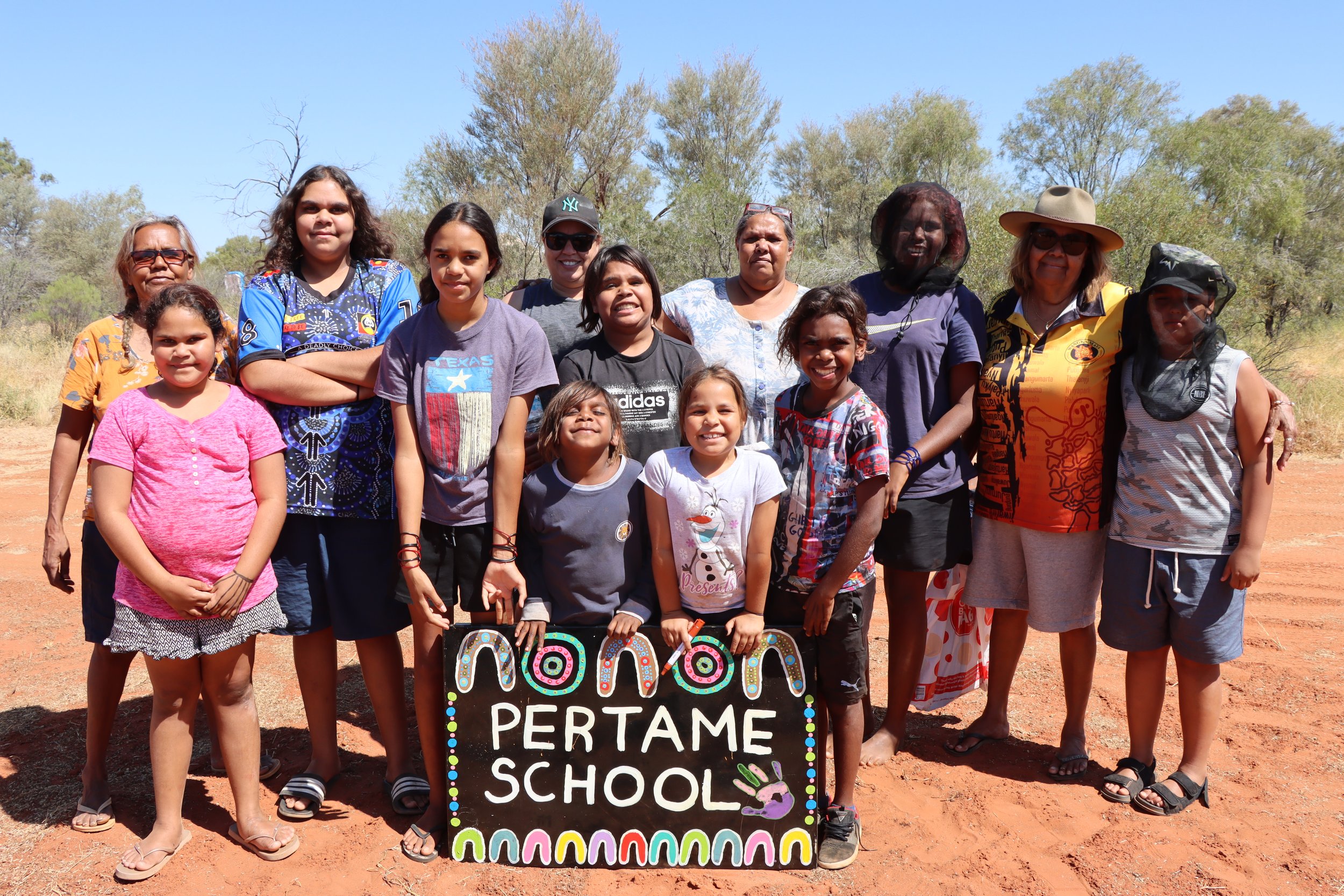
Pertame School
, was successful! The new facility has been a long-held dream for Pertame Elders and will enhance their thriving language revival program.
It is my dream to teach my children, grandchildren and great-grandchildren our language and show our culture to them so they can think and talk in Pertame.
Christobel Swan, Pertame Matriach
The on-Country classroom and adjacent camping facilities will provide a permanent home for the Pertame language on the land that the Country came from. The hub would provide an immersive experience, enabling children to look out into Country and see and experience the words being spoken.
English is a foreign language. Pertame language is our language. It’s our identity, it’s who we are, it’s where we come from, it’s our family. We have to instill in the children a love of their language, a love of their family, their culture and therefore a love of themselves. Kathy Swan-Bradshaw, Pertame Elder
Congratulations to Vanessa Farrelly and the Pertame community for introducing us to this excellent project. We can’t wait to get more involved!
Regional Development Minister Don Punch has announced $2.9 million funding to repurpose the former aged care facility in Warmun into workers accommodation, helping deliver affordable housing options for the remote Indigenous community in the East Kimberley.
The facility, which is owned by Warmun Community, was built in 2014 as part of the reconstruction efforts following a devastating flood event. However, it has never become fully operational due to challenges securing an operator and increasing Federal regulatory requirements for aged care facilities.
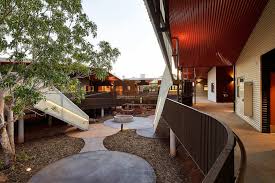
We are incredibly proud to be working alongside the community at Warmun on this project – their perseverance to bring this incredible building (designed by
Finn Pedersen
and Iredale Pedersen Hook) back to life is inspiring.
The Fulcrum Agency is delighted to share the Guides to Wellbeing in Architecture Practice, an output of the Wellbeing of Architects research project, which we have proudly supported since its inception.
“The Guides address five interrelated areas that impact wellbeing at work, as identified through the
Wellbeing of Architects research project
. Together, they seek to support healthier workplaces and work environments. This is crucial to the future of architecture as a viable, attractive and fulfilling career, a sustainable, robust profession, and for realising the benefit that architecture services can bring to communities.
These Guides are for everyone, at every career stage. They are not just for those experiencing challenges or poor mental wellbeing. People currently flourishing might have ups and downs in future, or have colleagues and friends who need support, or workplaces that could be improved.”
You can find out more about the Guides and download them
here.
Everyone has some agency to make improvements, in some arena – whether large or small.
The National Indigenous Times has published an opinion piece by TFA’s Kieran Wong and Jamukurnu-Yapalikurnu Aboriginal Corporation’s Tony McRae on the critical work we have been doing to secure a safe, healthy and prosperous future for Martu communities in the Western Desert. Martu people know what is needed to build a successful life and now it’s time for government to listen to their plan.
Martu people living in remote communities in the Western Desert have set out a new vision for climate-appropriate housing and community infrastructure.
Climate change doesn’t affect every part of Australia equally. Remote communities suffer more extreme heat and storms than anywhere else.
As rising temperatures put even more stress on remote communities, extreme weather will force people out of homes that are too hot, leading to overcrowding when other family members take them in.
Having languished in poor and increasingly overheated housing, Martu are taking matters into their own hands. Working with their land council, Jamukurnu-Yapalikurnu Aboriginal Corporation (JYAC), have developed their own plans for housing and community infrastructure.
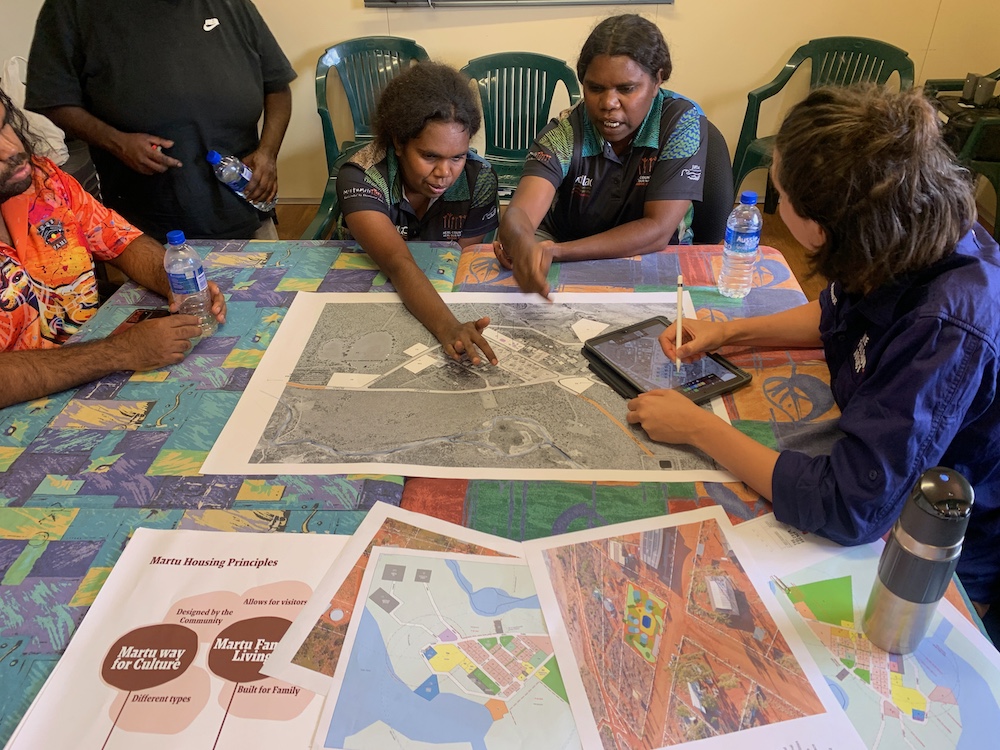
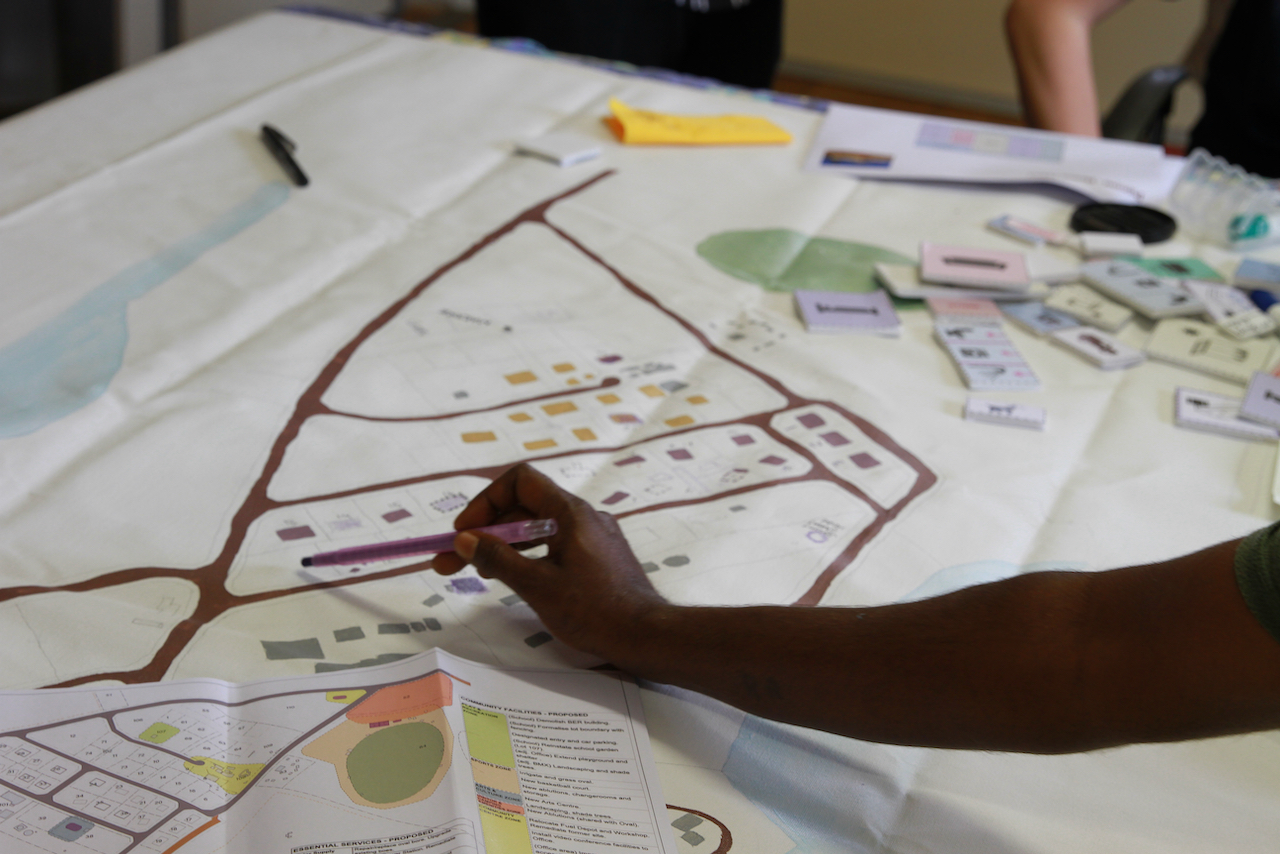
The Martu Community Co-Design Process – a partnership between Martu, JYAC and The Fulcrum Agency funded by the WA Government – determined a realistic plan for sustainable, culturally appropriate housing that will accommodate future growth.
Communities talked for several years about their histories and ambitions for the future, and the result is a holistic review of the three on-country Martu communities of Parnngurr, Punmu and Kunawarritji.
This process kept Martu people at the centre of all design and decision-making, and provided an exchange of knowledge between the community and technical experts. At all times, the process is guided by the spirit of ngurra (country).
The co-design process allowed the community to lead. When we have the opportunity for ownership, we take it by the hand and nurture it. Communities need to get to a state where they are liveable and where families can grow. That’s the most important thing.
The co-design process allowed the community to lead. When we have the opportunity for ownership, we take it by the hand and nurture it. Communities need to get to a state where they are liveable and where families can grow. That’s the most important thing.
For Martu, all aspects of ngurra are connected, and boundaries between the public and private realms are porous. For instance, if you ask someone about their house, they will often respond with a story about their yard or the street, and how their home interacts with other people, the landscape or climate.
Past attempts to improve housing have been narrow and short-term responses. New houses are delivered without proper engagement or family decision-making. Planned maintenance, critically necessary in this harsh environment, has not been carried out in a systemic and sustained way.
For example, positioning for optimal solar performance would mean designing new houses that face north to capture airflow and natural light. While this is true in most urban settings, it can cause problems in communities where cultural protocol determines how you occupy space. Applying general standards without community engagement can result in poor outcomes for culture, with unwanted or taboo views towards ngurra or neighbours.
Any new housing and community plan needs to address these mistakes. It is not simply about materials, orientation or speed of delivery – they must have regard for culture, family and community sustainability.
Additionally, community-based repair and maintenance programs ensure that money spent in communities stays in communities, improving economic sustainability.
The design work is now complete, and Martu and JYAC are now in negotiation with the WA Government to fund the next stage of this project, which is the construction of quality housing on ngurra with Martu long-term house titles and community-based maintenance teams.
It is possible to avoid the merry-go-round mistakes of the past. Martu have a fully detailed plan to rebuild Martu communities and respond to climate change. Will the government listen?
Tony McRae, Jamukurnu-Yapalikurnu Aboriginal Corporation CEO
Kieran Wong, The Fulcrum Agency, Co-Founder and Partner
The Wellbeing of Architects symposium_slider 1080_2 title
The Wellbeing of Architects symposium aims to drive positive change, helping to create a healthier, more sustainable future for the architecture community.
TFA is a proud Research Partner on this important project.
The Wellbeing of Architects [education + practice] symposium marks the conclusion of a comprehensive research project,
The Wellbeing of Architects: Culture, Identity and Practice
(2020-2024). This event, held over two days, presents the study’s findings and – more importantly – proposes actionable recommendations for addressing the mental health and wellbeing issues prevalent in the architecture community.
Day one
focuses on architectural education, exploring methods to improve the wellbeing of students and educators. It will feature insights from teachers and student leaders, aiming to identify effective practices and cultures that foster mental wellbeing – in the studio and beyond.
Day two
delves into architectural practice, addressing issues such as workload management, service valuation, and the promotion of a thriving culture. The symposium will provide practical advice for practitioners of all sizes and sectors, considering the broader construction industry context and the role of peak bodies in driving change.
The event will also launch the
Guides to Wellbeing in Practice
, a set of research-informed guides aimed discussion and action towards transformative change. Speakers include researchers, industry leaders, and innovative educators and practitioners, offering attendees new insights, tools, and resources to lead efforts in enhancing mental wellbeing within the architectural community.
We’ve had a long-time love of the
Fremantle Foundation
, in particular their Impact 100 campaign, which invites 100 donors to give $1000, resulting in a pool of $100,000. Community-based organisations have the chance to pitch for this money, often resulting in a life-changing grant for people doing great things in our town. We always cry on voting night and wish we could give the money to everyone who applies.
Our $1000 comes from The Fulcrum Fund, where we invest a percentage of all income to support community-led projects that enhance quality of life, enable cultural safety and practice, and address systematic injustice. As an office, we debate how we spend the $$ in our Fund, but the Impact 100 campaign remains top of the list every year.
This has been a round-about way of telling you that if you can, and you are interested and are perhaps local to the Walyalup area, you might be interested in becoming an Impact 100 donor too. Go
here
to learn more about what’s involved.
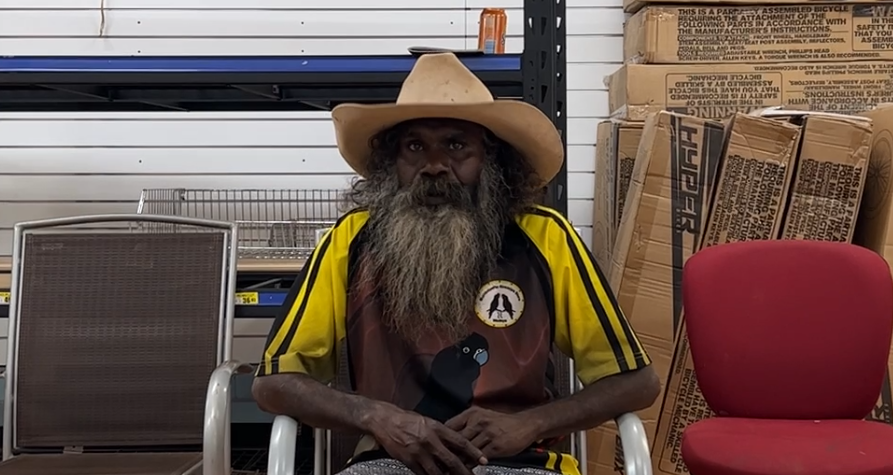
This is Stephen Bunduck, a Kardu Diminin man and generous participant in a series of visioning workshops in Wadeye, always in his big hat.
Here he describes the family and clan groups that make up the community, a complex overlay to our re-imagining of how the built environment might work.
He is speaking Murrinhpatha, a language described as ‘polysynthetic’ and with a ‘free word order’. We’re no linguists, and so we’re not going to begin to try and describe what this means. But we will point you to an article in the Scientific American journal that reveals how fascinating Murrinhpatha is, unique even within the context of Australian Aboriginal languages.
The community resisted the attempts at assimilation imposed by Catholic missionaries. In the article, the researcher asks an Elder, ‘how it was that despite the cruelty of the missions and the punishment by the nuns, her people still spoke Murrinhpatha. “We just used to whisper,” the woman replied.’
Murrinhpatha continues to thrive as a language and is widely spoken in community and given equal attention in school as English. Here’s
a link
to the journal article if you’d like to learn more; we promise it’s an interesting read!
We are delighted that our work has been included as a case study in a
research paper
developed by
Hassell
and the
Green Building Council of Australia
. The paper defines Social Value and describes its relationship to the built environment in Australia, using local and international examples. The authors plan for it to be shared far and wide through the government and design industry.
On page 22, the report profiles our Social Return on Design Investment (SRODI) Tool, which we developed to measure the social impact of projects delivered in First Nations communities. We’ve tested it amongst our clients on Groote Eylandt and are confident of its value. You can watch a short video about our process
here
.
TFA Principal,
Nick Juniper
is a qualified social impact assessment practitioner. If you think we can add value to your community, don’t hesitate to get in touch!
I encourage and challenge you that as you get learnings from this paper, push it out into government, push it out into other sectors and to your suppliers. The more people who are considering measuring social value means better outcomes for everyone.– Anders Uechtritz, Principal at Social Ventures Australia