• Indigenizing Practice: Patronage and Peril

    Indigenizing Practice: Patronage and Peril

    This article by TF.A Principal, Andrew Broffman, was first published in the Jan/Feb 2021 edition of Architecture Australia and is the second in a series of discussions on Indigenizing architectural practice in Australia. Sarah Lynn Rees invited Andrew to respond to the theme of unbuilt work by exploring projects that are never constructed not because they are speculative or utopian, but because their Indigenous association is met with complex barriers that are often impossible to overcome.

    Architecture is as much about the flow of capital as it is about design. “Follow the money” used to be whispered by cops chasing gangsters. It is now on the lips of architects pursuing their next commission. For public infrastructure, the decisions made about project location and scope are invariably political. While patronage and pork-barrelling have long been accepted features of the political landscape, the bipartisan spoils of political largesse creates its own inequities. The circulation of capital and its trickle to Indigenous communities operates according to yet a different set of rules.

    When one considers “unbuilt” projects, there is often a wistful regard for their visionary qualities. Untethered to gravity, these schemes challenge the imagination and provoke debate. Think Piranesi, Archigram, Hejduk and early Hadid. But “unbuilt” has an unsavoury side as well, where racism and the limits of distributive justice are laid bare. For Indigenous communities in Australia, many projects remain unbuilt, not because of their critical eye or utopian promise, but for more prosaic reasons: inadequate funding allowances, opaque grant requirements, lengthy contract negotiations, complex governance preconditions and onerous reporting constraints

    Patronage exposed

    Unlike Claude Rains’s character Captain Renault in Casablanca , we are no longer “shocked, shocked to find that gambling is going on in here.” The so-called “sports rorts” scandal that momentarily engulfed the federal Coalition just before the 2019 election, or the 2020 Crown Casino inquiry into money laundering, or the ongoing New South Wales saga regarding questionable grant approvals for local council projects in Coalition-held seats, are all reminders of the collusive nature of politics and the built environment.

    For Indigenous organizations that rely on grants for capital works, the “house rules” are far more demanding. Corporate registration and governance compliance are strictly enforced. It can take months to gain government agreements before a ministerial sign-off occurs. Acquittals impose onerous reporting regimes on grant recipients. (1)

    And the servitude expected of Indigenous organizations, as they “beg” for what should be normal government business to foster civil society, reminds us that the rules for marginalized Australians – particularly Indigenous Australians – are always different.

    During my time working on building projects with Indigenous communities in central Australia, I witnessed the arbitrary operation of the grant system and its effect on childcare centres, art and culture projects, food stores and community centres, all of which failed to materialize for reasons unrelated to the quality or buildabilty of their designs. In one project, a community store’s funding was contingent on the removal of soft drinks from the store’s shelves. In another, a women’s organization had its design of a memorial to victims of domestic violence ignored by a government infrastructure manager who believed he could deliver the project more quickly with his own scheme.

    I have seen government, distrustful of an Indigenous community group’s ability to manage its finances, insist on third-party grant auspicing arrangements before funding would be approved. On a fully developed childcare project, created through a strong community engagement and design process, the building was shelved by government managers in favour of more expedient, “ready-made” transportables. For these projects, “unbuilt’ was not about visionary propositions, critique and provocation; it was about the barriers that First Nations communities confront to get things built – barriers that the broader community does not have to endure.

    Indigenous Advancement Strategy

    The typical avenue for the funding of building projects in remote Indigenous communities in Australia is through the Commonwealth’s Indigenous Advancement Strategy. In 2014, this Liberal–National Coalition (under prime minister Tony Abbott) diverted some 150 programs into five funding streams, including the Remote Australia Strategies Programme, under which capital works are supported. Urban and regional Indigenous community projects are funded under various state-based programs.

    In 2015, within the first year of the Indigenous Advancement Strategy’s operation, it was found that “less than half of the successful applicants for the first round of the new federal Indigenous Affairs funding scheme were Aboriginal organisations.” (2)

    The federal government’s 2019–2020 budget includes a $5.2 billion allocation over four years for projects and proposals that fall into its various streams. The program’s funding application process involves a range of complex requirements that are outlined in the Indigenous Advancement Strategy Grant Guidelines , a 56-page document that covers the broad parameters of the program and its eligibility.

    Applications are assessed through processes that require repetitive negotiations between the grant recipients and local bureaucrats, who must then negotiate with their Canberra counterparts before the minister potentially signs off. Successful applicants might breathe a sigh of relief upon approval, were it not for the equally difficult and lengthy process of formalizing the agreement, which itself can take up to a year. During this time, building prices continue to rise and the project’s scope must therefore be reduced to stay within the grant amount. A reduced scope then becomes cause for a variation to the funding agreement, which can lead to further delays. Communities begin to lose faith in the grant approvals process when it is prolonged for seemingly arbitrary reasons, reducing their willingness to engage in further conversations around the development of their projects.

    Aboriginals Benefit Account

    Another funding source for building projects in the Northern Territory is the Aboriginals Benefit Account (ABA). The ABA distributes funds from the royalties of mining on Aboriginal lands for projects in Aboriginal communities in the territory.  Although grants are assessed by a committee made up largely of First Nations representatives, including members nominated by each of the four Northern Territory Land Councils, it is the Commonwealth that continues to exercise “more control over the purse strings and functions of the ABA in the Northern Territory.” (3)

    Eligibility for an ABA grant requires registration under the Corporations (Aboriginal and Torres Strait Islander) Act 2006 or the Corporations Act 2001 , and grants are typically capped at $250,000. Applications exceeding this amount are permitted but require a more detailed Business Plan and/or a Project Management Plan. Rules of the grant program are covered in a 22-page Beneficial Grant Guidelines booklet, a 15-page Grant Funding Application Kit and the 23-page Head Agreement for Indigenous Grants (the same funding agreement under the Indigenous Advancement Strategy). Consider this in contrast to how grants have been distributed in New South Wales, for example, where one local council received $90 million under the Stronger Communities Fund and was asked to apply for the amount only after they had received it. (4)

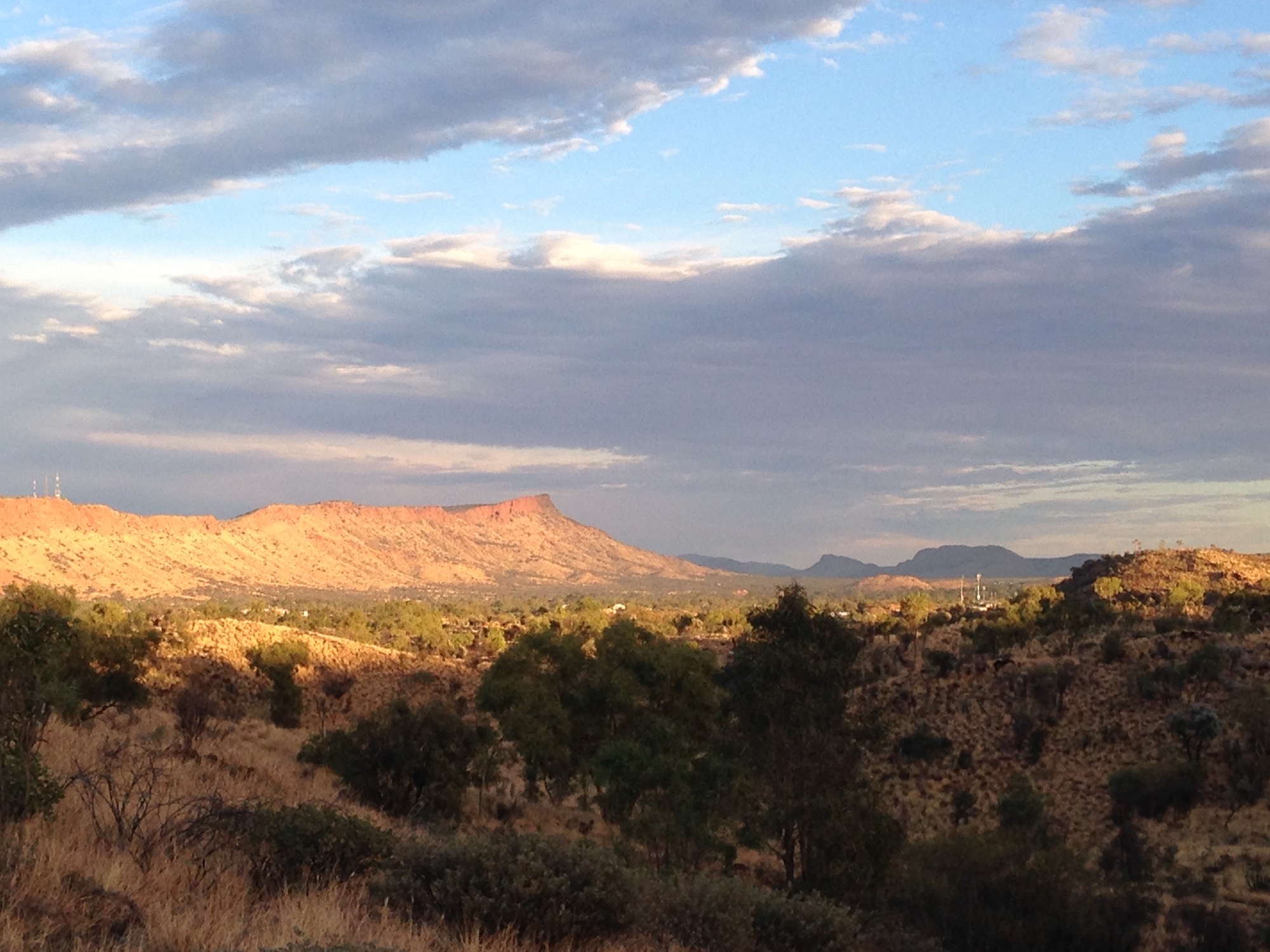
    The site recommended for the (as yet unbuilt) National Aboriginal Art Gallery was the Desert Park precinct of Mparntwe (Alice Springs), at the foot of the ranges rising to Alhekulyele (Mount Gillen).
    Image: Andrew Broffman

    National Aboriginal and Torres Strait Islander Art Museum: a case study in the still unbuilt

    For an architect, there are few more exciting public building commissions than a cultural facility. Cultural projects can galvanize communities and garner the creative imagination of the many participants to result in places that celebrate cultural diversity. Art and culture centres can foster community cohesiveness and reinvigorate cities and regional towns. They can also be vexed and plagued by missteps and indecision that ultimately prevent the work from being built.

    In August 2016, the Northern Territory Labor Party won government on a range of commitments, including a $50 million pledge to build an “iconic National Aboriginal Art Gallery” in Alice Springs. With great promise, an Initial Scoping Steering Committee was established in early 2017 comprised of Indigenous and non-Indigenous experts in the arts industry, including co-chairs Philip Watkins, chief executive officer of the locally based Desart, and Hetti Perkins, the former curator of Aboriginal and Torres Strait Islander art at the Art Gallery of New South Wales – both with local family ties to Arrernte Country. Also part of the committee was senior Alyawarre man Michael Liddle; respected arts administrator Michael Lynch; and co-chief executive officer of the Museum of Old and New Art in Hobart, Mark Wilsdon. In November 2017, the committee released its recommendations, including comprehensive consultation with Traditional Owners, strong First Nations representation throughout the development and running of the museum, and a proposed location on the outskirts of town. (5)

    Largely ignoring the recommendations of the Steering Committee, the Northern Territory government has pushed ahead with its own plans to build the facility, not in the “spectacular natural setting of the Desert Park precinct of Mparntwe,” as recommended, but instead in the town centre. The original vision to celebrate and promote Indigenous art and culture, though still proclaimed, has been subsumed by an agenda of business revitalization for the CBD. So focused has the Northern Territory government been on a CBD site that it has threatened compulsory acquisition of a nearby council-owned sports oval; the Alice Springs Town Council and some senior Custodians have been less enthusiastic.

    Suggested alternative proposals include a further Northern Territory government offer to pay for a new council chamber if council agrees to vacate its site for the new gallery. The proposed move would then require further investment in a new sports facility to replace the premises given over to the relocated council. These sleights of hand have been dizzying. Though a new committee has been established, with significant local and national First Nations representation and arts expertise, it remains to be seen whether the project will ever be constructed. (6)

    Conclusion

    The barriers that First Nations communities face in getting projects built are myriad, and made more evident when considered against the whimsical nature of mainstream political manoeuvring. A lack of trust by governments in the ability of Indigenous organizations to exercise good governance and manage finances responsibly; the assumption that consultation and engagement can be ignored without consequence; and the ceaseless paperwork burdens placed upon communities with limited resources all conspire against the fair distribution of investment in First Nations communities. Unbuilt? Sadly and unfairly, never built.

    References

    1. Mark Moran, Serious Whitefella Stuff (Melbourne: Melbourne University Press, 2016).
    2. Anna Henderson, “Majority of grants from Indigenous Advancement Strategy first round given to non-Aboriginal groups,” ABC News, 5 May 2015,

    abc.net.au/news/2015-05-05/majority-of-indigenous-grants-go-to-non-aboriginal-organisations/6444534 (accessed 2 November 2020).

    1. David P. Pollack, “The political economy of the Aboriginals Benefit Account: Relevance of the 1985 Altman review 30 years on,” in Will Saunders (ed.), Engaging Indigenous economy: Debating diverse approaches , edited by Will Sanders (Canberra: ANU Press, 2016),

    press-files.anu.edu.au/downloads/press/p344543/pdf/ch181.pdf (accessed 2 November 2020).

    1. Anne Davies, “More than 95% of $252m NSW grant scheme went to councils in Coalition seats, Greens say,” The Guardian , 23 October 2020.

    theguardian.com/australia-news/2020/oct/23/more-than-95-of-252m-nsw-grant-scheme-went-to-councils-in-coalition-seats-greens-say (accessed 2 November 2020).

    1. Hetti Perkins and Philip Watkins, National Aboriginal and Torres Strait Islander Art Museum: Initial Steering Scoping Committee Report to the Northern Territory Government , November 2017, artstrail.nt.gov.au/__data/assets/pdf_file/0011/492662/steering-committee-report.pdf (accessed 2 November 2020).
    2. For a chronology of events and analysis, see “National Indigenous art gallery,” Alice Springs News , alicespringsnews.com.au/keywords/national-indigenous-art-gallery (accessed 2 November 2020).
  • Pete Stone on Leverage

    Pete Stone on Leverage
    Pete Stone
    Selfie, 2020

    I have learnt to always look for and never underestimate the good will in others.We all just want a chance to show it.

    In each issue of our journal, we ask a handful of people to reflect on our chosen theme (and provide a selfie of themselves!). This is Pete Stone, Creative Producer at the City of Melville, on Leverage:

    A sense of belonging to a living collaboration and genuine attachment to a project beats all. Details can be worked out; attitudes need to be cared for.

  • IWD 2021: what to say?

    IWD 2021: what to say?

    We’ve been humming and hawing over what to say about International Women’s Day. We feel enraged by the hideous events plaguing Canberra and are sort of annoyed that IWD has to exist at all.

    The only positive thing we feel like we can contribute to the conversation today is these portraits taken by Bo Wong of the intelligent, modest, insightful women we have worked with over many years on Groote Eylandt.

    We’ll use today as an opportunity to acknowledge the wisdom and to say thank you to Colleen Mamarika, Cherelle Wurrawilya, Melissa Cooper and Elaine Mamarika.

    These women are helping to shape their communities into places of opportunity and optimism. Collectively, they have taught us so much about this country and how to operate as an ally to our First Nations people.

  • Gathering Hunters

    Gathering Hunters

    Words by Meri Fatin / Illustration by Giullana Alarkon / Photos by Daniel Grant

    The Last Great Hunt are an ensemble of outrageously talented Western Australian theatre makers, responsible for creating some of the most thought-provoking new work in recent years. Their radical approach is visible on stage and in their company structure.

    As part of Leverage, issue 03 of our journal, Meri Fatin spoke with Jeffrey Jay Fowler and Sian Roberts in a conversation that encompasses friendship, funding and the re-thinking of live theatre to find opportunity in a post-pandemic world.

    Meri Fatin [00:00:33]

    I want to start by talking about the formation of The Last Great Hunt, particularly because it happened at a time where there was a gap to fill in the Perth theatre landscape. Perhaps you could tell a bit of that story, Jeffrey.

    Jeffrey Jay Fowler [00:00:58]

    2013, I had just come back to Perth. Katt Osborne was running the Duck House Theatre Company and together we looked across the landscape at who was getting funding and what we were doing to get funding. Tim Watts was part of Weeping Spoon. I had Mythophobic. Chris Isaacs, Arielle Gray and Adriane Daff were working independently. We were all applying for grants and putting in a lot of effort trying to justify what we wanted to do artistically. Katt said if we all formed one “supergroup” (laughs) so to speak, we might get the attention of funding bodies. If we share our clout, we might make a big enough impact.

    Meri Fatin [00:02:00]

    What did you weigh up as being the pros and cons of doing that?

    Jeffrey Jay Fowler [00:02:04]

    I had nothing to lose by joining the company. There was no agreement that we couldn’t undertake work outside. I had just started at Black Swan and was exhausted from writing my own grants. I’m not particularly good at writing grants, it’s not in my skillset; I think I was frustrated with having to justify myself knowing that you write a grant and it goes to a panel of people you never find out about. You get very little feedback and you need to prove your idea before you’ve created the show.

    So our idea was that if our reputations combined could get us annual funding we could reverse things. And that, I think, has been the very basis of what has made us different as a company. Also, we are six very different artists who can collaborate well with each other and with guest artists. That’s obviously part of the success of the company. I do believe it’s a model where we get an idea and work straight away while the idea is hot –  rather than getting an idea, writing a grant, waiting nine months to find out if you were successful. By that time, you might not want to make that show anymore.

    Meri Fatin [00:03:33]

    I’m really interested in hearing how you worked out how the company would function.

    Jeffrey Jay Fowler [00:04:44]

    For me, the formative moment was a meeting at Katt’s house, in the shed, sitting around trying to pick a name for the company. It took a really long time and we kept having meetings – it was very hard to come to a conclusion. And then the first project we ever worked on was a nightmare. All of us at once tried to work on a project before we had really finessed how we should collaborate. It was all in with no clear leader. We tried to look at Joseph Campbell’s The Hero’s Journey and create a play. It was exhausting and we hadn’t worked ourselves out yet. But I think the great thing is we scrunched it up, threw it in the bin and said – okay, next project! It wasn’t a bad idea to create a group, we just burnt the first pancake.

    Lé Nør is at its heart an ensemble romantic comedy... reminiscent of the sort of film you find late at night on SBS, a heavily subtitled cult favourite made in the Eighties with a Phil Collins heavy soundtrack.- Pelican Magazine, 2019
    Lé Nør

    Meri Fatin [00:05:56]

    In the beginning The Hunters actually capitalized on your individual successes by performing some of the work that had already been developed.

    Jeffrey Jay Fowler [00:06:04]

    We did. So, shows like Alvin Sputnik, It’s Dark Outside, Minnie and Mona Play Dead, probably a few others.

    Siân Roberts [00:06:13]

    Bruce.

    Jeffrey Jay Fowler [00:06:16]

    Bruce. These were all actually created before the (formation of the) company. Alvin Sputnik and It’s Dark Outside had pretty great touring records. So at the moment that we became a company there were already a few shows to bring in and those shows toured and were a big part of the early life of the company.

    Meri Fatin [00:06:41]

    When did you join Siân?

    Siân Roberts [00:06:43]

    I joined in 2015, so it’s my five-year anniversary. It’s my longest ever job. I think it was my longest ever job at two years to be fair! I remember everyone was applying for the same big grant. It was after Deckchair Theatre had gone under, where I was the marketing manager. I remember The Last Great Hunt got that grant and that was the first time that everyone was like “oh, here we go”. I just thought they were so clever to pool resources. It was so smart to form a company. Then I went out of the arts sector into the not for profit sector and I kept seeing their shows, and watching their donor campaigns. I always thought the shows were very clever, you know, socially conscious, funny – you could (see) the intelligence behind the shows. And then I saw this job advertised as General Manager for The Last Great Hunt and I thought, ‘imagine if I got that job!’ My dream job – and I nearly didn’t apply for it. Jeffrey was on my interview panel.

    Jeffrey Jay Fowler [00:09:09]

    I was! I remember exactly where we were sitting and the sun on your face (both laugh) that fateful day.

    Meri Fatin [00:09:20]

    Since you were on that interview panel, what were you looking for when one of your original members who was really the linchpin needed to be replaced. What was important to you at the time?

    Jeffrey Jay Fowler [00:09:34]

    Katt is an artist as well as a fantastic manager but the plan had always been that once we could afford it, we would hire a General Manager and let Katt be an artist like the rest of us. We wanted someone that would go on this crazy adventure with us because the company felt clear to us but was very hard to explain to outsiders. How we worked was kind of unusual. We had a lot of people saying that the model wouldn’t work. We had a lot of people saying it’s a bad idea to have no artistic director, that there would be interpersonal conflict. We wanted someone that could come and accept the deal. I think it was quite hard for Siân at the beginning. It’s like dealing with a company where your artistic director is a Hydra. We wanted someone that would go on that journey with us but would also help build the company and have a vision for it. And you know Siân, and a lot of other wonderful people that have worked for us, have endured an incredibly difficult job. There’s a huge amount of work to manage and produce the amount of shows that we create, debut and tour. I mean some years have just been mental, all around the world, and so we wanted someone that we felt we could grow with and negotiate with and be inspired by. We were looking for a lot. We actually ask a huge amount of Siân.

    Finding the words to describeLé Nøris a very difficult task, it just needs to be seen to comprehend. I was left in awe, and I keep finding things to dwell on the more I think about it.This cannot be missed to all lovers of film and theatre, or just anyone looking to have their mind blown.   - Out in Perth, 2019
    Lé Nør

    Meri Fatin [00:11:27]

    And Siân, when you got a sense of what the job would actually entail, how did you feel about it?

    Siân Roberts [00:11:39]

    I remember looking at the specs and it was, you know, basically you have to do everything, you have to have your own phone, your own computer, and we’ll pay you almost nothing. Kind of crazy, but I remember saying to you Jeffrey, it’s going to be a steep learning curve, but I reckon I can do it. It’s been the biggest challenge of my career and it’s still challenging every day. But I think that’s what keeps me interested and it’s why I’m still doing it. Those seven artists. Yeah. At first, they didn’t trust me, and I had to spend a lot of time… I knew it was a long game to show that I had the right intentions, that I could see the art, that I wasn’t trying to take control, that I didn’t want the limelight for myself. I understood the creative process and I understood the business side. And then I spent a lot of time helping the board understand the creative side and helping the creatives understand the governance side. We did a lot of strategic planning work at the beginning and we lost a few board members along the way.

    Jeffrey Jay Fowler [00:13:41]

    It was becoming a much bigger commitment for them and a different company. We wanted a more active board that would really help us. We have plans to become a much bigger company than we are now.

    Siân Roberts [00:13:57]

    Jeffrey’s right, a lot of people told us that it wouldn’t work. A lot.

    Meri Fatin [00:14:03]

    People whose opinion you respected?

    Jeffrey Jay Fowler [00:14:08]

    Yeah, I’d say so…

    Siân Roberts [00:14:10]

    Yeah, I think so.

    Jeffrey Jay Fowler [00:14:13]

    You know that tone of voice and that lean forward… “Are there rifts? How’s it going? It must be tricky.” They really wanted to see the cracks in the walls. People were sceptical because they’d had bad experiences of “rule by committee” and didn’t believe it could work.

    Siân Roberts [00:14:45]

    I was on board from the beginning. I was already kind of a fangirl and so I believed in it. I really did. I believed in the work and I believed in the artists… so why can’t we do it our way? There’s a lot of companies that went under and there were all these other companies that weren’t working the old way. We had nothing to lose by trying a different way.

    I came on board in October 2015 and Katt had put in all the work to get that three-year funding. I think she was still doing my handover when we found out that we had that funding and it was a huge celebration. A lot of people did tell us that it wouldn’t work, but it has. It takes longer to make decisions but there’s trust and I think the thing about The Hunters is that they’re all friends. They’re close friends, and have been for years. Some of them are going out with each other. Some of them have lived together as flatmates, some of them were students together. So, there’s a long history that we want to continue. And really the art is what it’s about. And I think that’s why we make it work.

    Meri Fatin [00:17:01]

    Do you think the audiences have come to sense and be attracted to the cohesion between the artists as well? Have you ever thought about that?

    Jeffrey Jay Fowler [00:17:32]

    I’ve thought about it. I don’t know. I think that our audiences come from all different places and angles and all different levels of knowledge about art. We certainly do have fans. That’s a thing. And then we have people that might see a few shows and not really have the full context. I’m sure some people enjoy it. I think on those big collaborative shows like Le Nör, part of the meta narrative and the enjoyment of it is knowing that that’s everyone in the company working altogether. I think that is thrilling for people. Sometimes you talk to people about the company and they’ll have seen a few of the shows and it’s a real light bulb moment for them in conversation when I’ll explain there’s six of us and we work in all different configurations. They’re like “Oh that’s why I saw New Owner and Fag/Stag and was like whoa! This is a kid’s company who do puppetry. No wait. This is a very adult company.” They understand it when you explain the company a bit more. Our art doesn’t have one genre, doesn’t have one brand. We don’t have any rules about the aesthetic of the company, and I think that can disarm people until they “get” the ensemble.

    Meri Fatin [00:19:14]

    Can we reminisce about Le Nör for a little while?

    Jeffrey Jay Fowler [00:19:22]

    Sure! Let’s!

    Meri Fatin [00:19:23]

    Was it meant to have another season this year?

    Siân Roberts [00:19:26]

    Not this year. No. It’s been a different show to sell because (while) we do have quite a big touring history, that history is with less expensive shows. It’s a one hander. Le Nör is ten people and a big set. It’s a different market — it’s a festival show. It had two Helpmann nominations including Best New Australian Work, which is amazing. Who knows what would have happened but we’re looking to do some redevelopment of it next year if some funding comes through. It lends itself to live streaming because of the video elements so we want to do some work on it to see how we can do that. Tour it without physically touring.

    Meri Fatin [00:20:45]

    My recollection of it was the edge of your seat excitement through the whole thing. It was one of the most fantastic things I’ve ever seen and part of it was just noting the extreme “hecticness”” of what was going on for every single person on stage!

    Jeffrey Jay Fowler [00:21:05]

    Speaking a make-believe language and lighting the show, then acting in it, swapping costumes, moving set pieces, operating the camera… it went very fast as a performer. It was 90 minutes long and it would begin and then you’d blink twice, and you’d be doing the final scene in a helicopter covered in water with your wig off, with some strange metallic fabric wrapped around you. There was not a moment that any single person was not busy

    Meri Fatin [00:21:41]

    What’s the feeling when Le Nör is finished and you know you’ve delivered a really spectacular performance? What was the energy like?

    Jeffrey Jay Fowler [00:21:52]

    It was incredibly satisfying. Incredibly fun just to be on stage doing silly things with people that you really like. The process was (laughs) nightmarish and full of thinking “this can’t work” and feeling like the roof was caving in, which can happen in any company, in any production. The nervousness of putting a show up is intense, but after that first show we realised oh we can run this… audiences get it, they’re like, ‘it was the freshest breeze I’ve ever felt.’ And then the season just went so quickly. You’ve worked on something so hard — it was years of work culminating in a two-week season.

    Siân Roberts [00:22:48]

    And years of fundraising.

    Jeffrey Jay Fowler [00:22:50]

    Yeah of course!

    Siân Roberts [00:22:52]

    I remember when we were in Edinburgh in 2017, we were having meetings with people over there to fund it and to commission it.

    Jeffrey Jay Fowler [00:23:04]

    People keep dangling carrots and then taking them away.

    Siân Roberts [00:23:07]

    It was probably the most stressful project that I’ve worked on up until the one that I’m working on now.

    Set on the fictional island nation of Solset where water is rationed and rain seldom falls - the story tells a compelling tale of a group of misfits who share an apartment complex, and their lives become entwined in numerous ways. The looming threats of climate change brings an urgent tension to the tale...As a seamless piece of cinema plays out on the screen, actors and technicians are scurrying around the stage to make sure everyone is hitting their mark at dangerously precise intervals.- Perth Now, 2019
    Lé Nør

    It’s a real light bulb moment for them in conversation when I’ll explain there’s six of us and we work in all different configurations.

    Meri Fatin [00:23:19]

    In the context of everything that The Last Great Hunt has ever produced, how would you describe Le Nör? You said it was the most stressful thing you’ve ever worked on….

    Siân Roberts [00:23:29]

    Stressful but also gratifying because the thing about this company is that the way that we’re set up to fund creative development, you’re setting these creative minds free to do whatever they feel, whatever they want. And I don’t like to say no. People can do their stuff and if we see it could be something then we start bringing people in to have a look and that’s what happened with Le Nör.

    Meri Fatin [00:24:09]

    Did it feel risky in the early process where you started to understand what it was going to be?

    Siân Roberts [00:24:16]

    It always feels risky. We find it hard even bringing people on board to some of the projects because they say they can’t do that job because they’ve never done it before. And we say we’ve never done it before either. So, it’s more often about the attitude of the people that are coming on board saying I don’t know how to do it but let’s find out!

    Meri Fatin [00:24:43]

    You’ve got to be mentally free enough to join in with something like that.

    Siân Roberts [00:24:47]

    Yes, and have an open mind and be excited by things. When the going gets tough you’ve got to have some passion to fall back on. There was a point in Le Nör where we had unconfirmed funding and I had to make the call to go ahead with a development period that was going to be very expensive – basically using company reserves – just hoping that the other money would come through. And luckily it did. But what Jeffrey’s referring to is that the process was under funded and didn’t have enough time. Premiering at Perth Festival with no previews (to Jeffrey) do you remember the first night was the opening night with the press there as well? I remember sitting there… my heart… as the producer you can’t do anything but keep your fingers crossed and hope that all goes fine. Two days before I’d seen a dress run and all the tech had failed, and it all needed to be rewired! Oh my God.

    Meri Fatin [00:26:18]

    That’s an expressive sigh Jeffrey….

    Jeffrey Jay Fowler [00:26:21]

    You have a nightmare as an actor that one day you’ll forget a line, or the show will fall apart and then it happens. And the show is Le Nör, and the show just stops for 20 minutes and the tech is broken, and no one knows what’s gone wrong and people are on ladders and house lights are on and you stand there and go, “this is it. This is the actor’s nightmare.” The whole show, which is put together with sticky tape sometimes literally has broken. What happens now? Do we just send this audience home? I think it happened on the second night and you just sit in it for 20 minutes and then the show goes on again and the lights go down and you’re back into performing and you think OK what? Where were we up to? What am I doing? What costume am I wearing? OK here we go. And then it got to the end and the audience just gave the biggest round of applause ever. Le Nör was like facing your nightmare of being unprepared as an actor and realizing everything’s okay at the end and actually people kind of love it even more. They were so on our side.

    It’s okay for theatre to not be perfect. And I think when you’re doing something so ambitious people embrace the faults in the work.

    Filmmaking is at the forefront as you watch a faux foreign movie filmed live on stage, complete with behind the scenes cinematic techniques and surtitles for the invented hybrid language, with ancient Germanic origins spoken by all actors.The Last Great Hunt already has a reputation for engaging and innovative works and Lé Nør only confirms the team is a theatrical force to be reckoned with.- Artshub.com.au, 2019
    Lé Nør

    Siân Roberts [00:28:16]

    When I first joined, we were doing Blue Room shows where you make it up to the last minute and you test it. Now we’re doing Perth Festival shows. We’ve got a new commission for this coming Perth Festival. They saw what we could achieve with Le Nör and now they’ve given us more space and more time and more resources because they understand that that process needs time. And we’ve developed our artistic process over the last five years. I think we’ve improved it a lot. You don’t want to be too formulaic about things but trying, before we premiere work or before we program it, to have an open showing where we bring in outside eyes and get some feedback and then leave ourselves enough time to make changes. Then have a break and then do another development period rather than making it right up to the last minute.

    Jeffrey Jay Fowler [00:29:24]

    Showings aren’t just for us and for the work, they’re also for our followers who’ve become really involved in the works and want to see them at all different stages of development. By the time our audiences are seeing our work, the people close to us are really championing it and they know the journey we’ve been on to create it. I think that’s a really important part of our brand and our company and the experience we have as artists and the experience we offer to audience members who get close enough.

    Meri Fatin [00:30:24]

    What does The Last Great Hunt’s strategy involve in terms of your focus on community and inclusion and creating a space for West Australian artists to remain and work in Western Australia?

    Siân Roberts [00:30:56]

    This year when all of our work stopped, we realized that while we weren’t employing seventy people anymore, we could employ ten. We saw our friends lose all of their work; we saw Black Lives Matter stuff and we were able to have a hard look at ourselves and what we’re doing. I think everyone had an existential crisis in the arts. What are we doing? Are we actually making a difference? Why ARE we doing this? And so, we’ve taken our strategic plan and we’ve turned it into a whole bunch of plans and strategies for employing independent artists, providing emerging artists a pathway to paid work, including more people in our development periods. Up until recently, we could only really pay for those six artists to develop work, so if anyone wanted to work with an external person, we maybe had one or two weeks-worth of funding. So, we’re working now to increase that funding and reach new audiences. We’re waiting on a bunch of grants to hopefully come in and if they do Jeffrey will be leading an emerging artist program where we will be deliberately finding people who are coming into the arts through different ways like WAAPA, but (also) other community areas….

    Jeffrey Jay Fowler [00:32:51]

    Even making space for people that have really missed out on WAAPA or not realized they wanted to be in the arts till they were thirty or a bit lost. It’s a weekly meet up to help people develop their skills and build pathways to try and increase diversity in the industry and also to enrich our company by changing what we do and seeing what we can learn from other people. The next chapter has to be about us sharing. I’m thirty-four and we rode the last wave of really healthy funding. The year that I turned twenty-six was the year that the twenty-five and under category disappeared from the Department of Culture and the Arts. Then the year I turned thirty was the year that the Australia Council got rid of their thirty and under category. So, it was like we are riding a wave with the world collapsing behind us. The funding opportunities that were available to us before the Last Great Hunt have evaporated and now I see fantastically talented young people coming out of the Bachelor of Performing Arts having nowhere near the amount of grants or money available to them that we did at that time. And also, you look at someone who might stand on the outside of the industry and watch some Last Great Hunt shows and think, “wow I wish I could do that! Oh, it’s impossible” and walk away because we’re in a world that tells you that you have to do everything in your 20s or you can’t do it at all. Bizarrely. We want to provide an opportunity and a place for those people. We were so lucky. We were so lucky to be in Perth, it was smart to stay in Perth. We’re so lucky to get the grants we’ve got – the first time and then the second time. You know I often look at my life and just think this is just bizarre. Bizarre and so good.

    Think early Eighties film clip, overlapping images, multiple perspectives viewed simultaneously - as if you were watching a film and watching its cast and crew creating the film at the same time.Throughout the production, director Tim Watts intrudes and comments on proceedings, sometimes seen by the characters, sometimes unobserved - part narrator, part psychopomp. If he ever turn up at one of your parties, run for the hills. The highest local hill you can find.- Artshub.com.au, 2019
    Lé Nør

    Meri Fatin [00:34:54]

    You talked about how the touring program had been really hectic but is the strategy to take The Last Great Hunt out of Perth even more?

    Siân Roberts [00:35:18]

    International touring has been what we’ve done from the beginning and arguably the touring work has funded a lot of other stuff. About forty per cent of our income is from touring. Touring and also having commissions for work. It’s really hard to say. I’ve heard some advice the other day that said we shouldn’t be touring internationally till after 2021.

    Jeffrey Jay Fowler [00:35:54]

    That’s even a conversation among the artists. Should we still be touring? Is it environmentally friendly to be flying our shows around the world? One of the ideas for the next development of Bad Baby Jean is a show that can be made live but digitally and served fresh to the Internet. Is this a format that we want to pursue more? Because actually there is something environmentally wrong about flying all around the world to perform shows live in a world that is so digitised.

    So how can we find that sense of creativity and connection and audience and togetherness maybe without getting on a plane?

    Siân Roberts [00:36:32]

    Saying that, touring employs a lot of artists. B and C casts go on tour for us with our work. We’ve got multiple casts for multiple shows and then they’ll tour while the creators stay back in Perth and make something else. So, it does employ a lot of people, tech people, tour managers. I don’t know. I think we probably will be getting back to the US when we can. I think that will continue to happen, but I think we will have other offerings as well. The changes that we’re starting to make are not just about air travel but also accessibility. There’re so many good things that have come out of the digital work. It’s a lot of stuff we were thinking about already, but the pandemic has given us the time to really delve into it a bit more deeply. And, that’s one of the reasons we’re re-strategizing. We were looking at our vision and mission the other day and it says something like “make work and take it around the world” and we thought is that it? Or is it just about connecting with audiences wherever they are? What IS live theater?

    Meri Fatin [00:40:37]

    You talked about people in the arts having a kind of existential crisis over what COVID 19 has represented for all of us but if any group of creative people are going to come up with some kind of yet unimagined future it’s probably The Last Great Hunt. Thank you both so much.

  • Gemma Hohnen on Leverage

    Gemma Hohnen on Leverage
    Selfie, Gemma Hohnen

    In each issue of our journal, we ask a handful of people to reflect on our chosen theme (and provide a selfie of themselves!). This is architecture consultant and climate activist, Gemma Hohnen, on Leverage:

    Leverage is situational, tactical and organic; there is uncertainty in the outcome. At its best leverage is that point used to shift outcomes for the better. Architectural skills can be applied across multiple fields and in a time when it has been challenging to find traditional practice work that is the right fit, it has made sense to explore other avenues, paths of lesser resistance built upon interests beyond designing an excellent building with a great team. Voluntary work is the perfect way to build upon and develop your skills beyond what an office might offer, meet new people in related fields and form alliances.

    My agenda has become clearer and within my means I am looking for opportunities to use my skills to push the message of the climate emergency.Sometimes leverage is the simple act of asking.

  • Alan Pigram reflects on his summer internship

    Alan Pigram reflects on his summer internship

    I would first like to acknowledge the Whadjuk Noongar people as the traditional custodians of the land I am writing this on. As a Yawuru man, I extend my respects to the elders, past, present and emerging and thank them for their unwavering connection to the land.

    Another successful internship with The Fulcrum Agency done and dusted. Prior to this summer internship, I was able to spend four-weeks over winter with the team which meant I could slide straight back into work. Literally, I was being briefed on a project in the first 10 minutes of my first day. That’s how an internship should be!

    Over the course of the summer, I was able to cover a lot more ground than the winter period. I got the chance to use my skills of illustration and graphic design to communicate projects and compile reports and even had the opportunity to assist in the design of a small renovation project. I have tried new things, sharpened existing skills and learned valuable lessons.

    Even though my chosen field of study lies within graphic design, architecture is a constant source of inspiration for me. An architect’s ability to design beautiful and meaningful spaces is an artform of great measure and having the opportunity to see a firm in action beckons admiration. Not only is the work inspirational but the innate values that the team exert has inevitably had a lasting impression on myself. These values I will carry throughout my career as a creative.

    Self Portrait, 2020

    I am so grateful to be a part of a generation of Indigenous disruptors, game changers and unrelenting overachievers. To be able to embark on this journey with interns across Australia fills my heart with such pride as an Indigenous person.

    I’d like to acknowledge the CareerTrackers program, and my advisor Melissa, for their tremendous work in placing Indigenous students in meaningful internships. Through the CareerTrackers program, the face of corporate Australia will change, I truly believe that.

    This reflection upon myself, my experience and my surroundings encourages the opportunity to really appreciate the time I’ve spent with The Fulcrum Agency. I have thoroughly enjoyed every second of my internship. Design plays such a pivotal role in the way messages are perceived and I want to leverage my skills to spark change and create lasting experiences for people. I’d like to thank the team for their support, hospitality, wisdom and guidance during my time here. In Yawuru language, mabu liyan means ‘a place of good spirit’ and to me, The Fulcrum Agency is mabu liyan for sure.

    + Alan Pigram is a second year Graphic Design student at Curtin University and he came to us through our involvement with the CareerTrackers Indigenous internship program. We have loved every minute of having Alan in our studio; he has made a huge contribution to the way in which we communicate our work to the communities with whom we work. With Alan’s love of music, art and a good laugh, he fit perfectly into the ways of our studio. He even braved his own ‘Tuesday Lunch’ – making a delicious satay noodle salad for us all. We’re looking forward to him returning soon.

  • Kieran Wong in conversation with Alan Ricks

    Kieran Wong in conversation with Alan Ricks
    Founding Principal, MASS Design Group
    Alan Ricks

    Kieran Wong’s interview with Alan Ricks is full of the sort of sharp observations that make you want to pull out a journal and write them down for later. Ricks is a Founding Principal at Boston-based MASS Design Group, a not-for-profit architectural studio with a radical approach to practice and projects.

    The interview is the first in a series curated in lieu of the 2020 National Architecture Conference.

    We did a study of how others were doing socially impactful work, and we tried to figure out how to hack the system.

  • Dr Garnett Hall on Leverage

    Dr Garnett Hall on Leverage

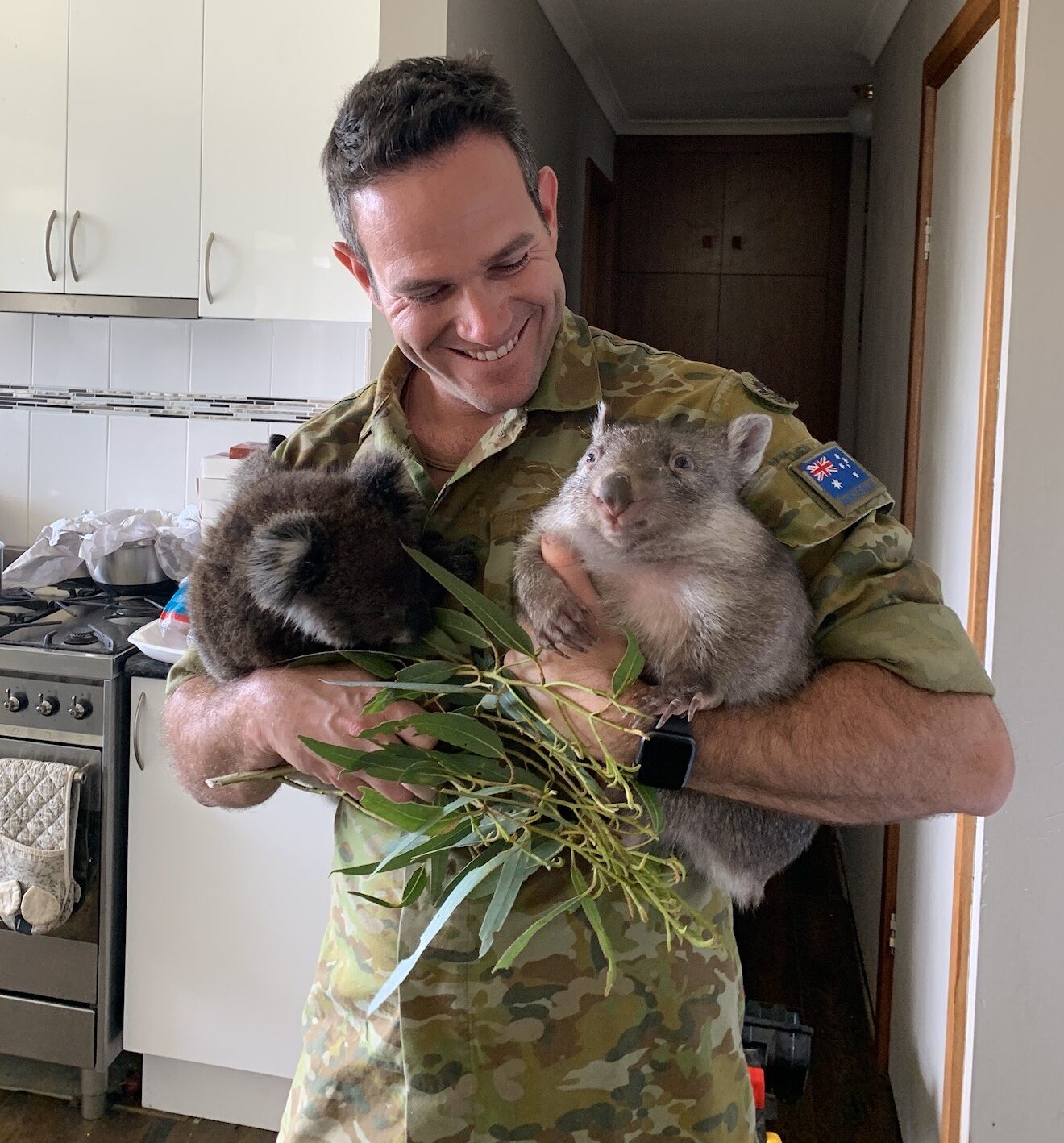
    In each issue of our journal, we ask a handful of people to reflect on our theme. This is veterinarian, Dr Garnett Hall, on Leverage:

    I am a bit of an optimist with a perpetual desire to achieve better outcomes for our planet, our community and my family. However, I am also enough of a realist to understand that humans are only equipped with a finite amount of strength, skill, and energy – thus creating a personal disparity between ‘lofty goals’ and ‘actual ability’.

    The concept of leverage is important to me because it describes the achievement of disproportionate outcomes from a finite amount of possible effort.

    It is more than simply finding the most ‘bang for your buck’, it is about applying your effort cleverly and using the social, political and physical environment to your advantage to achieve things that might otherwise be impossible.

    The concept can even be applied to improve situations outside of our typical sphere of influence. These opportunities can be unexpected and fleeting, so always be prepared to jump in!

    Dr Garnett Hall is a Perth veterinarian, innovator and entrepreneur. He is the owner of Fremantle Animal Hospital and is leading the development of implantable animal biosensors through his biotechnology start-up. He continues to apply his veterinary skills in the Army Reserve, where he provides care for our military working dogs and participates in veterinary humanitarian assistance missions in Australia and overseas. He was deployed to Kangaroo Island in response to last year’s devastating bushfires and has ‘leveraged’ the world-wide exposure from this experience to highlight the challenges facing our native animals and promote more sustainable climate practices.

  • Co-Design.Counter-Mapping

    Co-Design.Counter-Mapping

    In an article first published in Leverage, TF.A’s Andrew Broffman and Kieran Wong grapple with the shortcomings of current community engagement practices and suggest an alternative approach using the principles of critical cartography.

    There is a lot spoken of ‘co-design’ processes and the importance of ensuring that community has a voice in projects, processes and systems that ultimately affect communities in myriad ways – ‘ nothing about us, without us ‘ has become an important mantra. As architects and designers, we have also promoted the notion of community voice in the development of infrastructure. But have we done enough to create genuine dialogue – a conversation between two parties where each gain understanding and insight?

    Co-design processes now take many forms, from game-play, collective writing onto ‘sticky notes’, or via the use of Play-Doh to allow people to express their creativity and describe their imagined futures. These techniques are decidedly optimistic – imagining a brighter horizon, one with a new skate park, or a new drug and alcohol program, or an upgraded community centre. The projects are motivated by the perceived need to repair, fix or regenerate something in community.

    But is this optimism a fantasy?

    Crucial and foundational decisions are often made well in advance of the first piece of modelling clay being warmed in the hands of an eager participant.

    These ‘upstream’ decisions could include the building location, its functional requirements, operational model and program governance. And if/when a formal process of community consultation and co-design occurs, the ability of participants to genuinely be involved and to make meaningful and knowledgeable decisions is effectively constrained.

    What motivates funders and governments to implement a co-design process? Is it to simply refine and gain support for their own design and infrastructure formulations? The choice to even have such processes is often made without community involvement, and the design of the process done in such a way as to limit the opportunities, instead ‘focusing’ the attention of the audience on a defined set of questions and parameters.

    Focusing on the ‘issues that matter’ to governments limits the possibilities for dialogue with community. Key community members are invited to participate in co-design workshops or ‘charrettes’ with limited preparation, resources or tools. The co-design framework has already been established to support the requirements of the funders or facilitators, but does little to promote community agency.

    Think again of the game pieces, the plasticine models, and the post-it notes that are collated and simplified, until a ‘consensus’ is built  by moving away from the complex, overlapping and messy contradictions of real life towards an agreed and unified statement or vison depicted with pleasing arrows, bubbles and colours signifying future possibility.

    In this scenario the role of the facilitator is to ensure that ‘deliverables’ are achieved by meeting’s end. The words, scribbles, notes, complex and sometime ambiguous notions are all ‘distilled’ and ‘synthesised’ into a series of readily re-workable ideas, vague enough to ensure that any changes that will be required due to technical limitations or further design development will still be able to play back against the ‘co-designed community narrative’, creating the illusion that the voices of the community are embedded within the design.

    These methods can be fun and engaging, but they rely on culturally specific signs and symbols to encourage participation. These tools – an ill fit when language difference and lived experience are considered – are designed to suit limited time frames and according to pre-arranged agendas. What they lack, above all, is uncertainty, ambiguity, inclusivity and possibility.

    Co-design, then, has become shorthand for gaining support for processes and projects that ultimately limit the scope of interaction and outcome. It is hard to imagine a co-design workshop where the decision was made to abandon the project, or to proceed without the original proponent.

    We might liken this to a modern car engine where the owner and driver is only able to add water to the wipers and (perhaps) check the oil level. Everything else is shrouded in smooth grey plastic, obscured from view, unable to be understood or repaired except by technicians and experts.

    Infrastructure Literacy

    How can we reimagine this process, one in which outcomes are not pre-determined, where the parties meet on equal footing, and in which the messiness of life is embraced?

    As designers we have facilitated co-design processes that have sometimes failed to capture the complexities of people’s lives. Until recently we have been using the term ‘infrastructure literacy’ to try and describe better processes of engagement. But this, too, may be wanting. It suggests an ‘us’ and ‘them’ dynamic in which the designers dispense knowledge while community merely receives. What we wish to describe, instead, is a two-way learning process that aims to support community agency and expand the thinking of technical experts with local knowledge of people and place.

    This requires a new shared language to discuss infrastructure, one that vibrates between the technical and lived experience, but is neither one nor the other. Infrastructure literacy, described thus, might be this new language, and like any new language the aim is not necessarily fluency but rather communication and understanding. Critically, infrastructure literacy should enable co-design to be transparent, reciprocal and utilise tools and speech that are both familiar and imaginative to all participants.

    EJ Holden which belonged to series creator Francis Jurpurrula Kelly
    Production still: Bush Mechanics

    Co-design in this sense is more closely aligned to bush mechanics – getting stuff done with the tools at hand, but with a level of preparedness, invention, and a willingness to re-configure to the situation at hand.

    A screwdriver, for example, might be used as a ground anchor for a ratchet strap to compress a coil spring. Francis Jupurrurla Kelly’s popular television series ‘Bush Mechanics’ took fans on a wild ride through bush ingenuity, using limited tools, re-purposed to ensure that the car kept moving and the band made it to the gig on time

    Underpinning this ingenuity was the knowledge of how the car worked –the ‘bush mechanics’ knew what they could adapt and cut away while still allowing the car to drive. Without this literacy (the foundations of mechanical knowledge), adaptation to the problem at hand could have been a fool’s undertaking. How can we expect participants in infrastructure co-design workshops to make decisions, or have meaningful inputs on matters if they are not aware of the impacts of their cuts and modifications?

    Rather than limiting co-design by a misguided notion that participants are not technically minded, the opportunity exists through ‘infrastructure literacy’ to generate a discussion over discovered compromises, celebrating the mess and blurriness of spaces and places containing real lives and lived changes, with facilitators having to adapt, learn new languages, rethink their expertise and widen their lens.

    This letting go and opening up to other modes of seeing the world around us is extraordinarily difficult for professional designers to do. We have been trained to see, write, draw and talk in a confident, though limited manner; taught through school, university and workplaces as if it is the ‘right, logical and objective’ process.

    And yet, there are other ways. Most recently we have started to explore the opportunities of ‘infrastructure literacy’ through what has come to be known as Critical Cartography or Counter Mapping.

    Critical Cartography

    As architects we are known for making buildings, yet when we talk about our work it is often the effects our buildings have (or we hope they have) that we lean on. We often conflate the building project with the community or client objective – strengthening family and community connections, or getting kids through school, or eliminating domestic violence, or fostering personal and collective well-being, or promoting political engagement, ending racism, creating livelihoods, or celebrating cultural diversity. These are challenging goals that do not so easily inhabit a building.

    It is difficult for urban designers, architects, and landscape architects to imagine their efforts leading to anything other than a liveable city, an iconic building or a sublime landscape. We hope, of course, that these objects are invested with the aspirations of cohesive, engaged, productive and inclusive communities. But the impacts of the built environment are only revealed over time and across generations. We are an impatient bunch who want to see results now, so we look instead to measures such as ‘fit for purpose’ as a way of assessing our efforts. But this term, with its basis in consumer protection, is also deficient if we believe the built environment is more than something to be consumed

    The value of design is not found solely in the objects that comprise the built environment, but in the very techniques we use to create it. How we shape, for example, the processes of community engagement and their relevance to community members may have the more lasting impacts on city shaping, building making, and landscape creationCritical Cartography (variously referred to as Counter-Mapping, Radical, or Alternative Cartography, and Community Mapping ) has developed over recent decades as a provocative response to traditional methodologies used to understand human geography. Critical Cartography starts with the notion that mapping as both a process and physical (or digital) outcome is not value-free.

    It is instead a political act, an exercise of the power and agency of those who ‘make the map’, who are empowered to choose what to look at and what to ignore.

    Think of gerrymandering in the United States as an extreme example of power exerted on, and through map making. Or zoning maps that limit development to specific building types and sizes and fail to imagine alternative, fluid and more dynamic uses. By recognising this bias and by shifting agency from the ‘expert’ to the community, the more subtle contours of human geography are more fully revealed, and the progressive potential of mapping unlocked. Perhaps in this process we can come closer to engaging with Country, in a meaningful and complete manner.

    Mapping Infrastructure Literacy

    Critical cartography has developed creative alliances with arts practice, and it is at the intersection of surveying and art that a methodology of community engagement for designers of the built environment may emerge.

    ‘Position Doubtful’ is the metaphor artist and author Kim Mahood uses in her memoir of the same name to describe how white Australians have historically negotiated their way through remote Australia. Mahood’s book is a considered meditation on her own experience as an artist and a writer whose work is intimately woven with the lives of Aboriginal Australians living in the Western Desert. Her memoir’s subtitle, ‘mapping landscapes and memories’ foreshadows her integration of cartography and story-telling thorough art as a means of reaching a shared understanding of Country.

    ‘Position Doubtful’ is also a fitting description for how designers might approach community collaborations around the built environment. It suggests a posture of humility and a willingness to entertain uncertainty over clarity, accepting that one’s own position may be mis-placed, thereby making room for the place of others. From a position of doubt, Mahood suggests, a deeper understanding of Country and the connections between land, people, ecology and culture is possible.

    Image by Kim Mahood in collaboration with UDLA
    Cross-cultural map of UWA’s Crawley Campus

    For the designer, the plan and map are fundamental tools for organising information. They are essential resources for establishing the principles of design thinking, and are therefore a natural place to explore engagement methodologies. The map typically delimits an area defined as the ‘site’. Once identified, the site is then analysed for solar access, prevailing winds, transportation links, pedestrian connections, environmental corridors, recreational nodes, development zones, heritage, and so forth. These elements are then inscribed on the map, establishing the constraints of design. The designer then exploits the gaps within these constraints to arrive at a design response. Within this analytical and linear process, there is a conceit of objectivity and rationality that lends veracity to the design, which itself assumes a truthful and logical relationship to the site analysis that has come before. The loop is neatly closed.

    In working with communities, however, these maps and plans when used as tools of community engagement often fail to resonate with the lived experience of the community members themselves. This is partly due to the content of the map with its circles and arrows, dashed lines and shadings whose meanings are clear to the designer but often opaque to the community whose lives may be obscured by the technical overlay. Critical cartography suggests that embedded in the map’s folds and lines are competing agendas and geographies of power. A mapping of built heritage, for example, will describe the histories of some, but fail to acknowledge the lives of others whose stories may be hidden by a building’s ruins

    Another reason these engagement tools may fail to recognise the diversity of community interest is in the techniques that are used to ostensibly elicit public participation. Shannon Mattern, in her critical review of community engagement methods used by Google subsidiary Skywalk Labs in their Smart City project in Toronto, argues that ‘Participation is now deployed as part of a public performance wherein the aesthetics of collaboration signify democratic process, without always providing the real thing’ (Mattern, 2020).

    Mattern describes the kinds of ‘maps, models and games,’ noted above that are used to evoke community feedback, but she questions their efficacy. She points, instead, to critical cartography as a way of framing co-design and community collaboration, citing, for example, Rhiannon Firth’s work in a South London community. Firth’s examination of the community centre’s map archive uncovered a rich collection of maps that she classified as geopolitical maps, collective walks and radical history trails, art maps, practical maps and immanent utopias, affective cartographies, and affinity maps . These maps describe resistance movements, fossil fuel supply chains, working class oral histories, locations of edible plants, alternative tourist destinations, and maps of friendships. ‘Critical cartography,’ Firth suggests, ‘thus provides alternatives to disembodied, abstract practices of dominant geographic knowledge through the perspective of embodied experience’ (Firth, 2014).

    The practice of community mapping through the technique of, for example, ‘Transect Walks’ addresses this question of power and knowledge in planning and infrastructure development. A transect map is developed by literally walking through a community (sometimes over several hours, or even days) with a range of community members and technical experts, each observing, commenting and recording on the map the infrastructure issues facing a community.

    These maps, like Firth’s community centre archive, are grounded in community knowledge, and offer clues to an engagement model that combines mapping with art. As Firth notes elsewhere, ‘maps need not be drawn on paper, nor need they be two-dimensional. Indigenous practices show possibilities for mapping such as textile pattern weaving, orally narrated storytelling and mythological maps, or maps that communicate using notches in sticks’ (Firth, 2015).

    The Art of Co-Design

    In 2011 a group of CSIRO scientists, artists and Mulan community members came together at Paruku (Lake Gregory) in Walmajarri Country on the edge of the Great Sandy Desert to collaborate across scientific and cultural knowledge of Country. IMAGE The record of that experience, Desert Lake , describes the challenges and successes of working collaboratively to map a shared understanding of place. Among those present was Kim Mahood who noted a key challenge: ‘We needed a means of recording both kinds of knowledge that didn’t compromise either. The template of a painted topographic map provided common ground, and could be read easily by both Aboriginal people and kartiya’ (Morton, 2013).

    Conversations about the ecology of Paruku and its embedded cultural knowledge occurred over a map that was painted at a large scale on canvas by Walmajarri people, with enough accuracy to satisfy CSIRO’s scientific requirements while allowing for significant places and stories to be inscribed as well.

    Like the bush mechanic, the critical cartographer can adapt, remake, and re-use fragments of existing maps in creative and collaborative ways that tell stories of people and Country. These maps comfortably contain, side by side, technical detail and cultural knowledge, heritage and future possibility.

    There is an optimism to the urban designer, the architect and the landscape architect that is compelling. We seek to fix and to change, and our work is located in both the here and now and in the future. There is a utopian element to critical cartography as well, and what we have called ‘infrastructure literacy’. Kim Mahood reminds us, however, that, ‘what drives me is not a desire to help, to fix or change, but to understand something about my country’ (Mahood, 2016). As design professionals, if we were to simply start with an understanding of place, the more ambitious changes may follow.

    • Crampton, Jeremy, and John Krygier. 1. “An Introduction to Critical Cartography”. ACME: An International Journal for Critical Geographies 4 (1), 11-33. ( https://www.acme-journal.org/index.php/acme/article/view/723 )

    • Firth, Rhiannon, “Critical Cartography,” The Occupied Times , April 23 2015.

      Critical Cartography

    • Firth, Rhiannon, “Critical cartography as anarchist pedagogy? Ideas for praxis inspired by the 56a infoshop map archive,” in Interface: a journal for and about social movements , Volume 6 (1): 156 – 184, May 2014.

    • Mahood, Kim, Position Doubtful: mapping landscapes and memories , Scribe Publications, Victoria, 2016.

    • Mahood, Kim, “Why The Martu Don’t Need A Map,” in We Don’t Need A Map , exhibition catalogue, Fremantle Arts Centre, 2013

    • Mattern, Shannon, “Post-It Note City,” in Places Journal, February 2020. ( https://placesjournal.org/article/post-it-note-city )

    • Morton, Steve et al, Desert Lake: Art, Science and Stories from Paruku , CSIRO, 2013.

  • Who made leverage?

    Who made leverage?

    1724, ‘action of a lever’; use (something) to maximum advantage.

    If this definition is anything to go by, then this third edition of our journal is the embodiment of leverage. A few months ago (in the midst of the pandemic) we looked to at our address book and used it to maximum advantage. Once again, we have been amazed by the generosity of our contributors – colleagues, friends and people we’ve admired from afar – and the intelligence that they have applied to our theme.

    * Huge thanks to Tyrown Waigana aka Crawlin’ Crocodile for taking our headshots and turning them into the cutest illustrations ever.