• Embedding Social Value in our Built Environment

    Embedding Social Value in our Built Environment

    By Nick Juniper and Emma Williamson

    Last year, we began researching new and innovative ways that organisations around the world were assessing built environment projects that address complex social issues.

    Women’s Property Initiatives (WPI) in Melbourne deliver inspiring work housing approximately 200 women and children. They use a financial model that allows each tenant to pay no more than 30% of their income in rent. By capping the rent in this way tenants can manage their income beyond survival to include broader opportunities such as study.

    Although the WPI team could see their approach was working they did not have tangible metrics to prove their case. So, in 2014, WPI commissioned a Social Return on Investment (SROI) evaluation to quantify the impact of their work using the framework set out by Social Value UK (more on what this means later!).

    The results were startling; data revealed that the social situation in most households had improved and that there was less reliance on other forms of Government support (justice, public housing and health). Most of the social value was found in an improvement to emotional wellbeing. Women reported feeling safer and more independent. Children’s lives were improved through increased stability and more positive home lives. In financial terms, the evaluation found that for every dollar invested, $11.07 of social value was created.

    Creating a framework to measure impact has continued to gain traction, particularly in the social services. By taking a broader view we can see how programmes can have multiple impacts on education, health and employment in a way that has not previously been visible.  This creates strong arguments for funding allocation and extends our view into long term returns.

    Given the immense financial impact of built environment and capital works projects it is surprising that this method of assessment has not been adopted.

    NT Chief Minister, Michael Gunner andAnindilyakwa Land Council chairman Mr Wurramarrba shake hands over the Groote Archipelago Local Decision Making Agreement.

    In 2018, two years after beginning our work on Groote Eylandt, the Anindilyakwa Housing Aboriginal Corporation (AHAC) was established in response to the Northern Territory Government’s Local Decision Making Agreement. This new agreement created a pathway for the community to lead decisions around the delivery of new housing and community infrastructure across the archipelago.

    Community-led design has always been a central tenet of the way we work; on Groote it was our job to ensure that the subdivisions and houses were designed with input from the people who live there. In a typical client/architect relationship this might not seem radical – but in the context of remote Indigenous housing this was a major shift forward.

    As the project developed, we became increasingly curious about the impact of this type of process on the people involved. What community benefit comes from being so deeply involved in the design process? How does an individual respond to being invited to contribute their ideas and opinions? We started to research ways that we could measure these impacts.

    Nick Juniper in conversation with members of the Housing Reference Group and future tenants in Umbakumba, NT

    As architects, we are well trained to consider the economic and environmental impacts of our work. Project feasibility and business case studies set the economic parameters for a project and most architects incorporate green building standards in their work. The measurement of social impact rarely forms part of the metric to determine project success.

    Over the past year we have been developing methods to communicate the benefit that good design has had on the individuals and communities with whom we’ve been working.

    It’s tricky work – the links between social outcomes, financial spend and the built environment are not immediately obvious. We’ve pressed on and now see an opportunity to expand what is meant by the term ‘value for money’ to include ‘benefit to society’ or ‘social value’.

    Let’s unpack what this means. Social Value International (SVI) defines social value as the quantification of the importance that people place on the changes they experience in their lives. 1 It can be given a financial value and is measured through a process of consultation, analysis and evaluation. SVI have developed a Social Return on Investment (SROI) methodology that can be used to measure the social, economic and environmental outcomes of a project, whilst recognising that value will be very different to different people in different situations and cultures. 2

    At TF.A, we have developed our own suite of tools and metrics to measure the impact of design work. To determine Design Value, we need to translate the intangible aspects of a design outcome – for instance, the way a building or place makes you feel – into an established financial value. Social Return on Design Investment is a system that quantifies the impact of good design and communicates change through a combination of stories and numbers. This is not typically the space of architects and so we are working with a social research consultant to design questionnaires that will enable us to quantify the value of design outcomes in a way that is both accurate and verifiable.

    In 2012, the Social Value Act was introduced in the UK (by a Conservative Government no less!), requiring a consideration of social benefit to form part of the procurement process for public projects. Now, almost a decade later, the Royal Institute of British Architects (RIBA) has developed a ‘toolkit’ for the effective evidencing and measurement of the social value outcomes of good design. Here in Australia, the absence of legislation has meant that the measurement of social value has been easy to gloss over. Government investment tends to be tied to electoral cycles, with short-term outcomes prioritised over long-term impact.

    The general consensus is that it’s going to take years for our economy to recover from the effects of COVID-19. It is too simplistic to think that the solution to our current crisis is a rapid-fire injection of stimulus into the construction industry. We believe that our Government’s current tactic represents a missed opportunity to reframe public spending for the better.

    What we need instead is an approach that places impact on people at the forefront of public spending.

    The pandemic crisis has highlighted the latent inequity in our economy. The sudden shift of workers from casual to essential has shone a light on our dependence on people whose work is typically undervalued. The crisis has also highlighted the plight of people and families living pay cheque to pay cheque, the difficulty in accessing social security and inadequate access to affordable housing. These are the issues that need to be addressed as we work towards rebuilding our economy.

    It is imperative to broaden the way we measure the success of a project within the built environment. Social Value must be given equal weight to financial and environmental impact if we are to ever address the underlying inequities within society. By including this in our metrics, we can have one eye on community and one on the individual, ensuring that money spent now will serve us well in the future.

    This is where the real value of design lies.

    References

    1. https://socialvalueint.org/social-value/what-is-social-value/
    2. “The Guide to Social Return on Investment 2015” – The SROI Network (2015)

    Useful Reading

    “Maximise your Impact – A guide for Social Entrepreneurs” Social Value UK (2017)

    ‘Applying Social Return on Investment (SROI) to the built environment’ Kelly J. Watson & Tim Whitley (2017)
  • Celebrating NAIDOC 2020

    Celebrating NAIDOC 2020

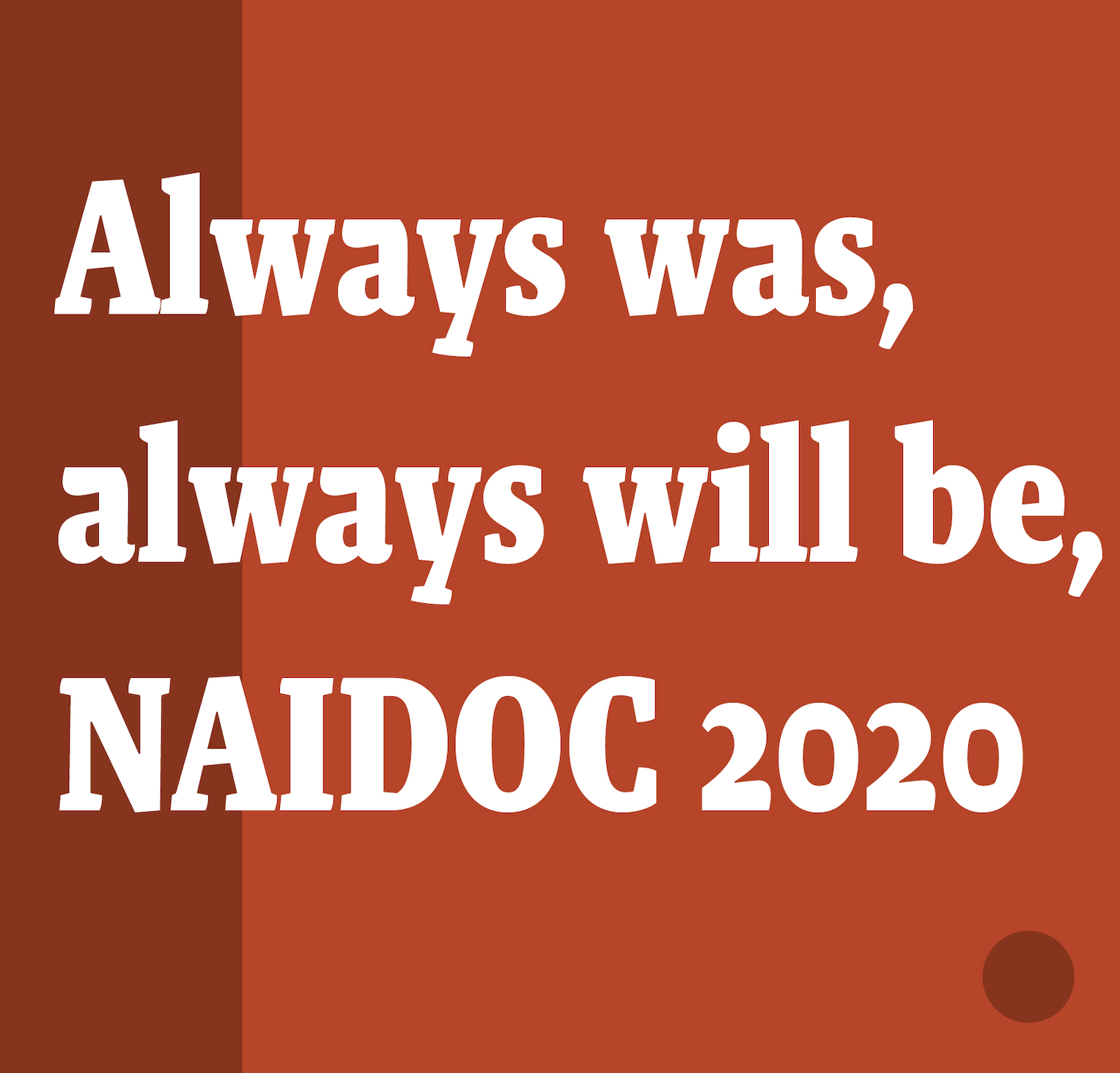
    We love and throw our support behind the theme of this year’s NAIDOC week!

    Our practice operates through a prism of truth-telling, restitution and reconciliation. We don’t just talk these words, we try our best to embody them in the way we practice. COVID has limited our usual NAIDOC celebrations and instead we have thrown ourselves into a week of online listening and learning. Thanks to the National Indigenous Centre of Excellence, Parlour and COX for hosting some fantastic and provocative podcasts over the course of the week.

    On a side note, we are chuffed with our connection to this year’s NAIDOC poster designer, Tyrown Waigana (aka Crawlin’ Crocodile ).

    Tyrown has turned our headshots into the world’s cutest cartoon illustrations. We can’t wait to share them with you soon!

    NAIDOC week poster 2020
  • Kieran Wong appointed to the Board of Shelter WA

    Kieran Wong appointed to the Board of Shelter WA

    TF.A Partner, Kieran Wong, has been appointed to the Board of Shelter WA , a peak body that advocates for social and affordable housing and an end to homelessness. Shelter WA is overseen by a coalition of people with diverse experience who are united in their commitment to improving the lives of vulnerable West Australians. Kieran’s motivation for joining the Board is found in his enduring commitment to ‘be useful’.

    IMG_0640_SM

    I am always on the lookout for ways to leverage my design skills for social impact. I’ve long been interested in housing models, housing typologies and the often-strange systems that conspire to exclude or limit a person’s ability to access safe, secure and quality housing. It has always struck me that in a place like WA there can be such challenges to ensuring everyone has a place to call home. I hope that through Shelter WA, I can assist to amplify the voices of those in the sector to provide equity, choice and availability of housing for all.

  • ARC Grant Success

    ARC Grant Success

    TF.A is delighted to be a Project Partner in an important new study of remote community infrastructure.

    Congratulations to Tess Lea, Associate Professor at the University of Sydney and recipient of an Australian Research Council grant to study the infrastructural requirements that support Indigenous residents to stay on country.

    The project will produce four case studies capturing community resilience efforts in northern and central Australia, and will include a study of the work we have done on Groote Eylandt.

    This study will continue the great work of the Housing for Health Incubator and will provide an enhanced understanding of infrastructural issues and climate readiness in remote communities as well as improved policy strategies for Indigenous corporations, NGOs, and Government.

    We will share more as the project progresses.

  • Babakiueria: must watch now!

    Babakiueria: must watch now!

    How had we not seen Babakiueria, a short satirical film that flips the story of colonisation in this country? Made in 1986, the film examines the customs of white natives from the perspective of the black colonisers. What starts off as funny, quickly becomes a distressing indictment of the impact of colonisation on our First Nations people.

    Nick was introduced to the film at the Danjoo Koorliny Co-Design Masterclass, held last week as part of UWA’s Social Impact Festival. Led by Noongar Elders, Noel Nannup, Carol Innes, Colleen Hayward and Richard Walley, the theme for the day centred on ‘dahni’ – a Noongar word for deep listening – the essential starting point for meaningful engagement and authentic co-design.

    Nick says it was an emotional day, one that he was privileged to join. Everyone was seated in a huge yarning circle and everyone was given a chance to share stories and thoughts.

    We recommend laying off Schitt’s Creek for the night and watch this instead: https://www.youtube.com/watch?v=NqcFg4z6EYY

  • TF.A founders interviewed for Brickwork’s new podcast

    TF.A founders interviewed for Brickwork’s new podcast

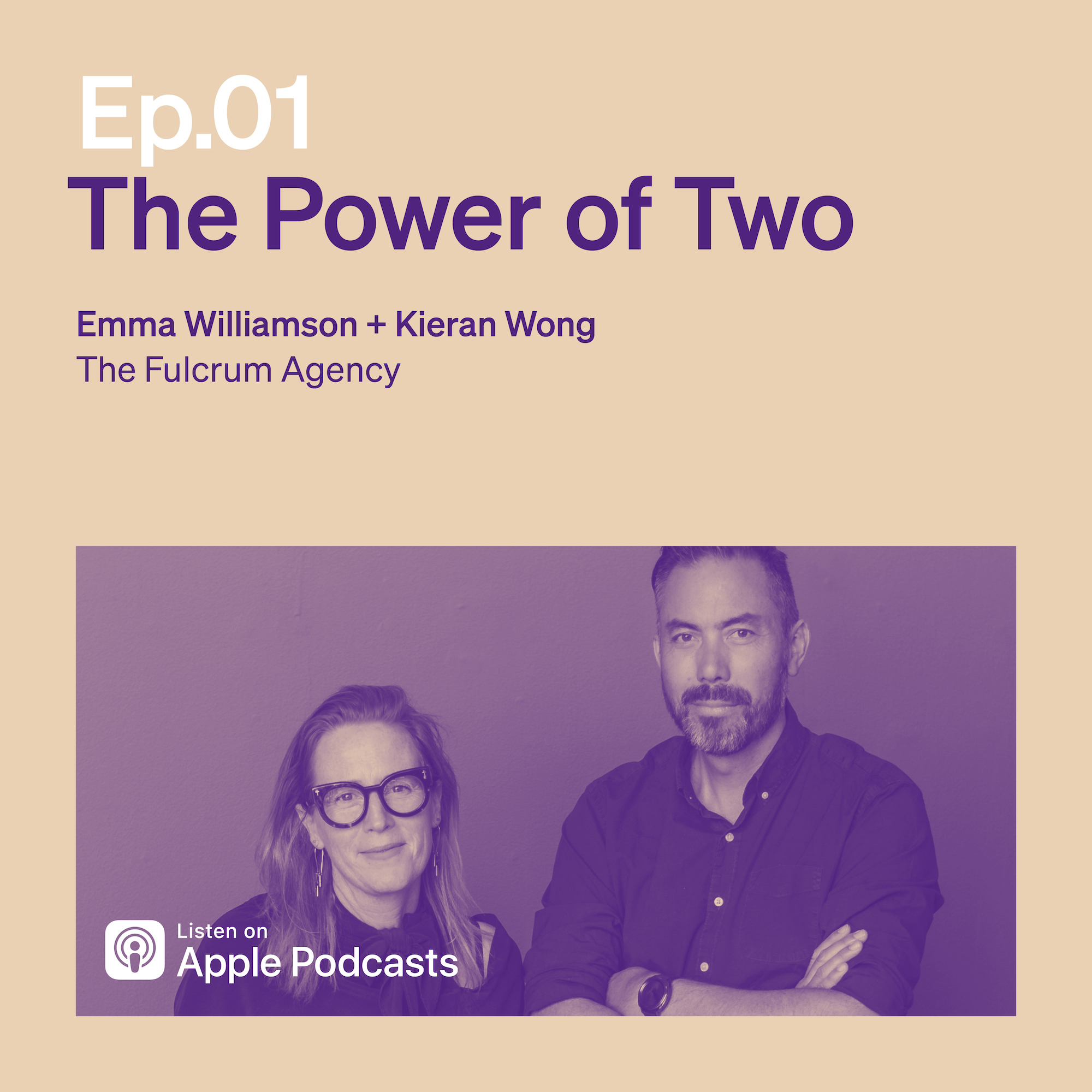
    TF.A Founders, Emma Williamson and Kieran Wong, are chuffed to be the first participants in Brickwork’s new The Power of Two podcast series.

    The inimitable Tim Ross , led a thoughtful and funny conversation that covered everything from their first date to how they got to where they are today.

    You can listen here: https://podcasts.apple.com/au/podcast/brickworks-building-products/id1274849640

  • FCC Podcast: Culture and Diversity in Our Workplace and Communities

    FCC Podcast: Culture and Diversity in Our Workplace and Communities

    “Cities are the built stories of the victor.”

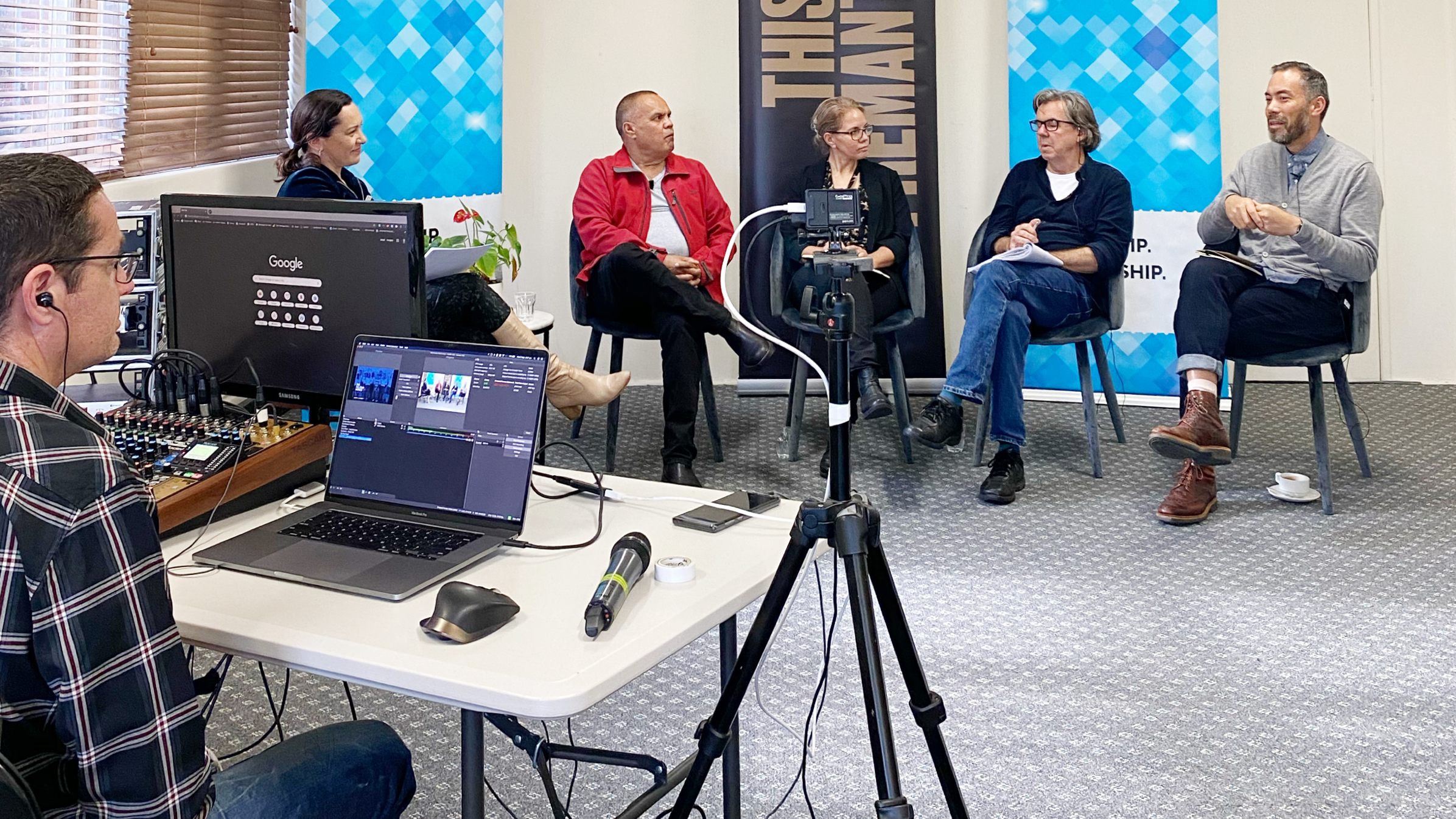
    Always a truthteller; this is how Kieran began his contribution to the Fremantle Chamber of Commerce’s recent panel discussion on culture and diversity in our workplace and communities.

    Joining him were Tony Shaw from Indigenous Services Australia, Tui Raven from Reconciliation WA and Tim Muirhead from CSD Network Services.

    Listen to a recording of the thought provoking discussion here .

  • The launch of Radical Incrementalism

    The launch of Radical Incrementalism
    Kieran Wong, Partner at TF.A and Ron Bradfield Jnr

    Last Thursday we kicked of a series of lunches that we’ve (somewhat provocatively) titled Radical Incrementalism.

    We can’t tell you who was in the room, but we can tell you that the delightful Ron Bradfield (Jnr) from Yarns R Us is joined us to spark the conversation!

    The lunches are borne out of our desire to delve into real, intelligent, and future focussed dialogue around the issues that matter to us, to our guests and the communities they serve.

  • Welcome Alan Pigram!

    Welcome Alan Pigram!

    Last month we proudly began our involvement with CareerTrackers , a national partnership program placing Indigenous students in paid internship positions.

    Their website says this: ‘employers take note: CareerTrackers Alumni represent a generation of Indigenous professionals who will change the landscape – not only of corporate Australia but of the wider Australian society.’ Based on our recent experience, this couldn’t be closer to the truth.

    We have been delighted to welcome Alan Pigram to our studio. Alan is a first-year Curtin University student, studying graphic design. We quickly recognised his skill in drawing and put him to task creating a series of digital illustrations that explain some of the work we have been doing in the Northern Territory.

    We’ll share some of Alan’s work in the coming weeks, but in the meantime, this is his reflection on his month with us.

    Self Portrait, 2020

    I am a proud Yawuru man from the beautiful coastal town of Broome. Growing up in Broome, with five older siblings, I spent a lot of my time around the ocean and camping in remote areas.

    I’ve spent the last few years in Perth working and studying and am currently undergoing a degree majoring in graphic design at Curtin University. I enjoy the outdoors, the arts, sport and am very passionate about music.

    And just like that, I have found myself at the end of my 4-week winter internship at The Fulcrum Agency. This time has been beneficial in a multitude of ways. Not only have I been able to find myself some paid work as a student, I’ve also had the experience of working alongside some inspiring people doing inspiring work.

    My time at Fulcrum has been invaluable as a first-year graphic design student. Finding my footing as a designer has been difficult and trying to stand out in a sea of talent is a real struggle but having this experience has been two steps in the right direction.

    Seeing architectural plans, hearing conversations, watching problems being solved, all in a real-world workplace, these are things they don’t teach in the classroom. Working around architects has given me different perspectives on handling design problems and the importance of communication. During my time here, I’ve been involved in the GAHP and SRODI projects and I’m proud of the work I have produced.

    With the help of CareerTrackers, and my advisor Melissa, I had the opportunity most students seldom encounter. One of my first conversations with Melissa talked about my niche goal of working for a small, boutique design firm, preferably in Fremantle. Ask and you shall receive, I guess.

    I am eternally thankful to the whole team for their hospitality, knowledge, and the experience I’ve gained. I have found myself, after only four weeks, being more curious and conscious of how my contributions to design can affect others. Looking forward to finishing the semester ahead so I can return for summer!