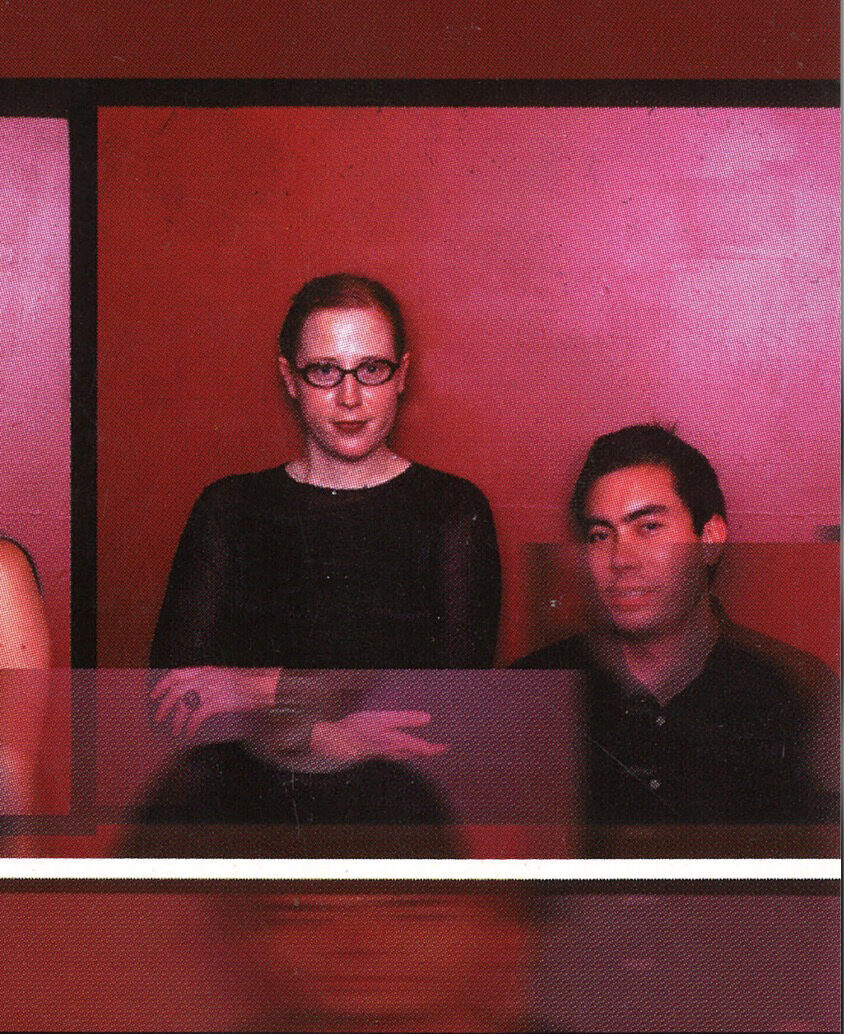
We decided we would not call ourselves a practice and instead call ourselves an agency – leaving ourselves open to be understood as built environment experts and problem solvers, but not necessarily architects.
TF.A Partner and Co-Founder, Emma Williamson, was recently guest speaker at the Association of Consulting Architecture’s Business of Design Lunch in Adelaide.
Emma’s presentation took the audience through the strategies she and co-founder Kieran Wong have used in building and rebuilding their business over the last 25 years.
If you’ve ever wondered how we got to where we are at TF.A,
this article
might provide the answers!
NAIDOC week starts today, and this year’s theme – Heal Country – feels particularly relevant to the work we do at Fulcrum.
As an agency working in the built environment, we spend a lot of time thinking about First Nations’ notions of Country. It is so radically different to the Western idea of the same word. We spotted this quote by the late ethnographer Deborah Bird on The Conversation* this morning and it helped to make sense of the difference:
Country is not a generalised or undifferentiated type of place, such as one might indicate with terms like ‘spending a day in the country’ or ‘going up the country’.Rather, Country is a living entity with a yesterday, today and tomorrow, with a consciousness, and a will toward life.
We join with all of you in celebrating the culture, wisdom and achievements of our First Nations people this NAIDOC week.
* ‘Although we didn’t produce these problems, we suffer them’: 3 ways you can help in NAIDOC’s call to Heal Country’ by Bhiamie Williamson
https://bit.ly/3wfOmEs
Paul foraging in the Mary Aiken in the Fitzroy Crossing region.
Fervor describe themselves as a ‘culinary experience’, committed to raising the profile of native ingredients whilst building community and cultural knowledge in WA’s regions. Founder, Paul Iskov, takes us on a photographic journey trough their exquisite and unique dining experiences.
After travelling across the world working in some of the world’s best restaurants, many of whom were using produce native to their regions, I started wondering why there wasn’t more Australian produce used in restaurants here. Surely there had to be something other than lemon myrtle and pepperberry. I returned home at the end of 2012, inspired. I found many ingredients that I’d never heard of or tasted. More importantly, I discovered this incredible culture that goes hand-in-hand with the food.
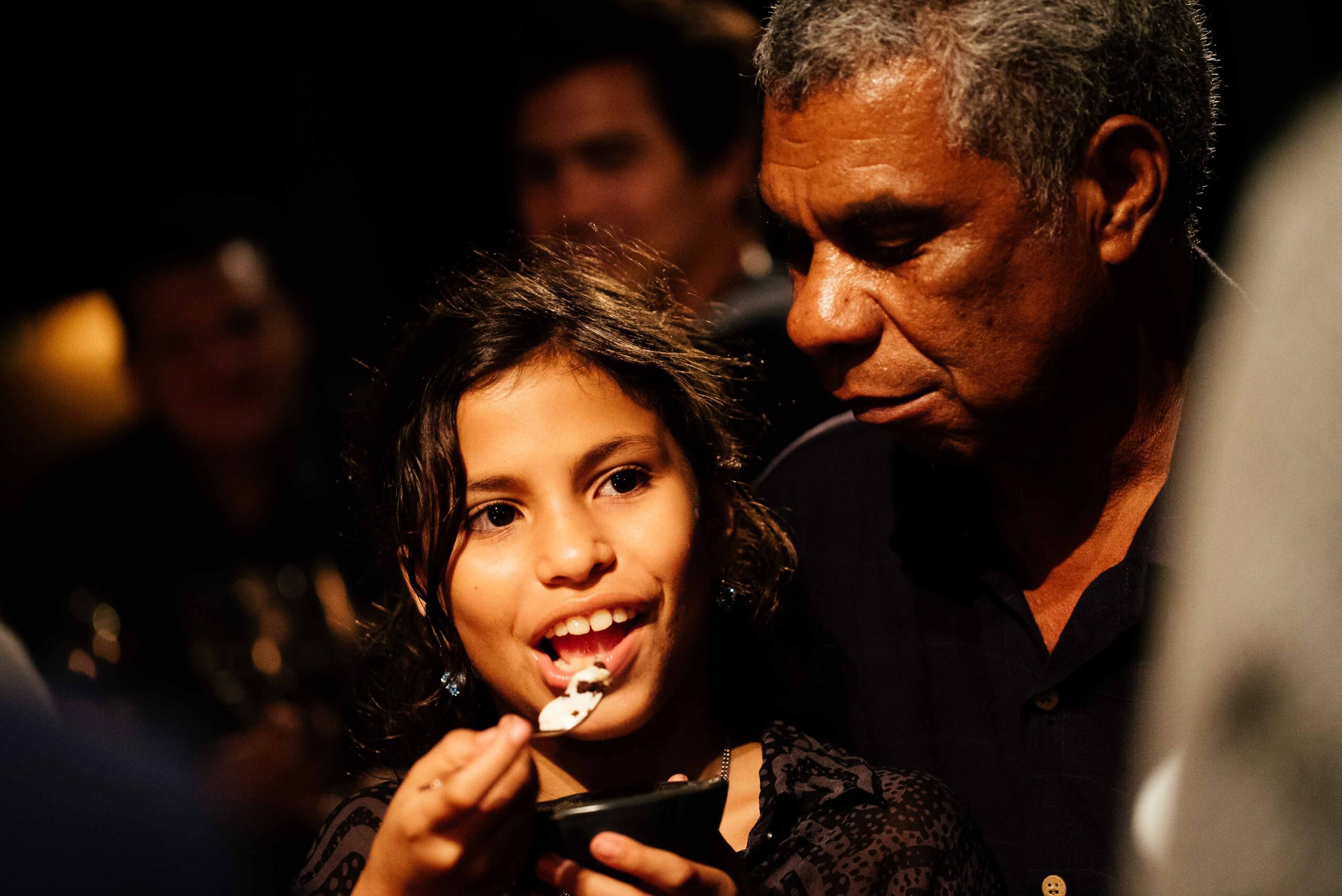
One of our good friends, Neville Poelina and his daughter Angelina sitting down for dinner after taking us foraging ro collect produce around Broome.
In March 2013, our very first event was held, and Fervor was established as a roaming restaurant to explore, learn and share what we have discovered with others. Some guests travel from afar and some guests are from five minutes down the road. Foodies, farmers and families are all part of the diverse group that join us at each dinner.
When we first started out, we had an old Tritan ute, which we were told wouldn’t go very far. It kept going for years, even after we upgraded it! Today we have Trev the Truck who takes us where we need to be.
Paul’s Macadamia with Youlk
Prep/Cook
40 mins
Serves
4 as a starter
Ingredients
400g macadamia nuts
250ml filtered water
1 tsp lemon myrtle oil
1 small youlk* or white radish
500ml grape seed or vegetable oil for frying
2 bunches sea celery (or parsley)
4 tsp lemon myrtle emulsion
Youlk, also known as Ravensthorpe radish, is an edible bushfood root. Naturally occurring, you can find it growing across Ravensthorpe, Newdegate and Jerramumgup in Western Australia.
Method
1 Preheat oven to 180C
2 Chop 50g of the macadamia nuts and roast in the oven at 180C for 6-8 minutes or until just golden brown. Set aside.
3 In a food processor, pulse 200g of the macadamia nuts until they’re the consistency of couscous. Don’t over puree or the nuts will turn to paste. Set aside.
4 Using a jug blender, process 120g of the macadamia nuts with the water for 2 minutes to form a macadamia nut milk.
5 Strain macadamia nut milk through muslin cloth or into a bowl or pot. Add the lemon myrtle oil. Set aside.
6 On a mandolin, carefully shave the remaining macadamia nuts into paper thin slices. Set aside.
7 Shave youlk into paper thin slices on a mandolin and set aside.
8 In a medium pot, heat oil to 200C.
9 Cut celery into 10cm long stalks and fry. Remember to stand back or cover the pot – oil will spit when sea celery goes into the pot because of the water content. Once it has stopped bubbling, remove from oil and place on paper towel to drain.
To serve: Place 1 tsp of lemon myrtle emulsion onto each plate. Cover with a quarter of the macadamia nut couscous. Add 1tbsp of roasted macadamia nuts. Now add the shaved youlk and shaved macadamia nuts. Place sea celery stalks on top.
In each issue of our journal, we ask a handful of people we admire to reflect on our chosen theme. This is Pippa Hurst, Chair at DesignFreo and Senior Communications Advisor at Lindy Johnson Creative, on Leverage:
Leverage is putting weight behind something to make a change, using minimum effort for maximum effect.
For me it means asking how I can most effectively use the skills and connections I have to make a difference.
That was the impetus for
DesignFreo
. I love design, I love my town and I care about its future. How do we harness design to make the place we live better, now and for those that will come after us? I leveraged my connections to seek out like-minded local designers and creative industry professionals and we’ve come together to make design more visible and accessible. I see my role as connecting people to amplify impact.
The more people leaning on the spade, the greater the leverage. And when we all lean in together at the same time to achieve a common goal, we leverage the power of community. It’s a double-leverage.
*Completely coincidentally, I came across Donella Meadows essay
Leverage Points: Places to Intervene in a System
, which describes the most and least effective types of interventions in a system (of any kind). Enlightening – Google it!
This article by TF.A Principal, Andrew Broffman, was first published in the Jan/Feb 2021 edition of Architecture Australia and is the second in a series of discussions on Indigenizing architectural practice in Australia. Sarah Lynn Rees invited Andrew to respond to the theme of unbuilt work by exploring projects that are never constructed not because they are speculative or utopian, but because their Indigenous association is met with complex barriers that are often impossible to overcome.
Architecture is as much about the flow of capital as it is about design. “Follow the money” used to be whispered by cops chasing gangsters. It is now on the lips of architects pursuing their next commission. For public infrastructure, the decisions made about project location and scope are invariably political. While patronage and pork-barrelling have long been accepted features of the political landscape, the bipartisan spoils of political largesse creates its own inequities. The circulation of capital and its trickle to Indigenous communities operates according to yet a different set of rules.
When one considers “unbuilt” projects, there is often a wistful regard for their visionary qualities. Untethered to gravity, these schemes challenge the imagination and provoke debate. Think Piranesi, Archigram, Hejduk and early Hadid. But “unbuilt” has an unsavoury side as well, where racism and the limits of distributive justice are laid bare. For Indigenous communities in Australia, many projects remain unbuilt, not because of their critical eye or utopian promise, but for more prosaic reasons: inadequate funding allowances, opaque grant requirements, lengthy contract negotiations, complex governance preconditions and onerous reporting constraints
Patronage exposed
Unlike Claude Rains’s character Captain Renault in
Casablanca
, we are no longer “shocked, shocked to find that gambling is going on in here.” The so-called “sports rorts” scandal that momentarily engulfed the federal Coalition just before the 2019 election, or the 2020 Crown Casino inquiry into money laundering, or the ongoing New South Wales saga regarding questionable grant approvals for local council projects in Coalition-held seats, are all reminders of the collusive nature of politics and the built environment.
For Indigenous organizations that rely on grants for capital works, the “house rules” are far more demanding. Corporate registration and governance compliance are strictly enforced. It can take months to gain government agreements before a ministerial sign-off occurs. Acquittals impose onerous reporting regimes on grant recipients.
(1)
And the servitude expected of Indigenous organizations, as they “beg” for what should be normal government business to foster civil society, reminds us that the rules for marginalized Australians – particularly Indigenous Australians – are always different.
During my time working on building projects with Indigenous communities in central Australia, I witnessed the arbitrary operation of the grant system and its effect on childcare centres, art and culture projects, food stores and community centres, all of which failed to materialize for reasons unrelated to the quality or buildabilty of their designs. In one project, a community store’s funding was contingent on the removal of soft drinks from the store’s shelves. In another, a women’s organization had its design of a memorial to victims of domestic violence ignored by a government infrastructure manager who believed he could deliver the project more quickly with his own scheme.
I have seen government, distrustful of an Indigenous community group’s ability to manage its finances, insist on third-party grant auspicing arrangements before funding would be approved. On a fully developed childcare project, created through a strong community engagement and design process, the building was shelved by government managers in favour of more expedient, “ready-made” transportables. For these projects, “unbuilt’ was not about visionary propositions, critique and provocation; it was about the barriers that First Nations communities confront to get things built – barriers that the broader community does not have to endure.
Indigenous Advancement Strategy
The typical avenue for the funding of building projects in remote Indigenous communities in Australia is through the Commonwealth’s Indigenous Advancement Strategy. In 2014, this Liberal–National Coalition (under prime minister Tony Abbott) diverted some 150 programs into five funding streams, including the Remote Australia Strategies Programme, under which capital works are supported. Urban and regional Indigenous community projects are funded under various state-based programs.
In 2015, within the first year of the Indigenous Advancement Strategy’s operation, it was found that “less than half of the successful applicants for the first round of the new federal Indigenous Affairs funding scheme were Aboriginal organisations.”
(2)
The federal government’s 2019–2020 budget includes a $5.2 billion allocation over four years for projects and proposals that fall into its various streams. The program’s funding application process involves a range of complex requirements that are outlined in the
Indigenous Advancement Strategy Grant Guidelines
, a 56-page document that covers the broad parameters of the program and its eligibility.
Applications are assessed through processes that require repetitive negotiations between the grant recipients and local bureaucrats, who must then negotiate with their Canberra counterparts before the minister potentially signs off. Successful applicants might breathe a sigh of relief upon approval, were it not for the equally difficult and lengthy process of formalizing the agreement, which itself can take up to a year. During this time, building prices continue to rise and the project’s scope must therefore be reduced to stay within the grant amount. A reduced scope then becomes cause for a variation to the funding agreement, which can lead to further delays. Communities begin to lose faith in the grant approvals process when it is prolonged for seemingly arbitrary reasons, reducing their willingness to engage in further conversations around the development of their projects.
Aboriginals Benefit Account
Another funding source for building projects in the Northern Territory is the Aboriginals Benefit Account (ABA). The ABA distributes funds from the royalties of mining on Aboriginal lands for projects in Aboriginal communities in the territory. Although grants are assessed by a committee made up largely of First Nations representatives, including members nominated by each of the four Northern Territory Land Councils, it is the Commonwealth that continues to exercise “more control over the purse strings and functions of the ABA in the Northern Territory.”
(3)
Eligibility for an ABA grant requires registration under the
Corporations (Aboriginal and Torres Strait Islander) Act 2006
or the
Corporations Act 2001
, and grants are typically capped at $250,000. Applications exceeding this amount are permitted but require a more detailed Business Plan and/or a Project Management Plan. Rules of the grant program are covered in a 22-page
Beneficial Grant Guidelines
booklet, a 15-page
Grant Funding Application Kit
and the 23-page
Head Agreement for Indigenous Grants
(the same funding agreement under the Indigenous Advancement Strategy). Consider this in contrast to how grants have been distributed in New South Wales, for example, where one local council received $90 million under the Stronger Communities Fund and was asked to apply for the amount only after they had received it.
(4)
Image: Andrew Broffman
National Aboriginal and Torres Strait Islander Art Museum: a case study in the still unbuilt
For an architect, there are few more exciting public building commissions than a cultural facility. Cultural projects can galvanize communities and garner the creative imagination of the many participants to result in places that celebrate cultural diversity. Art and culture centres can foster community cohesiveness and reinvigorate cities and regional towns. They can also be vexed and plagued by missteps and indecision that ultimately prevent the work from being built.
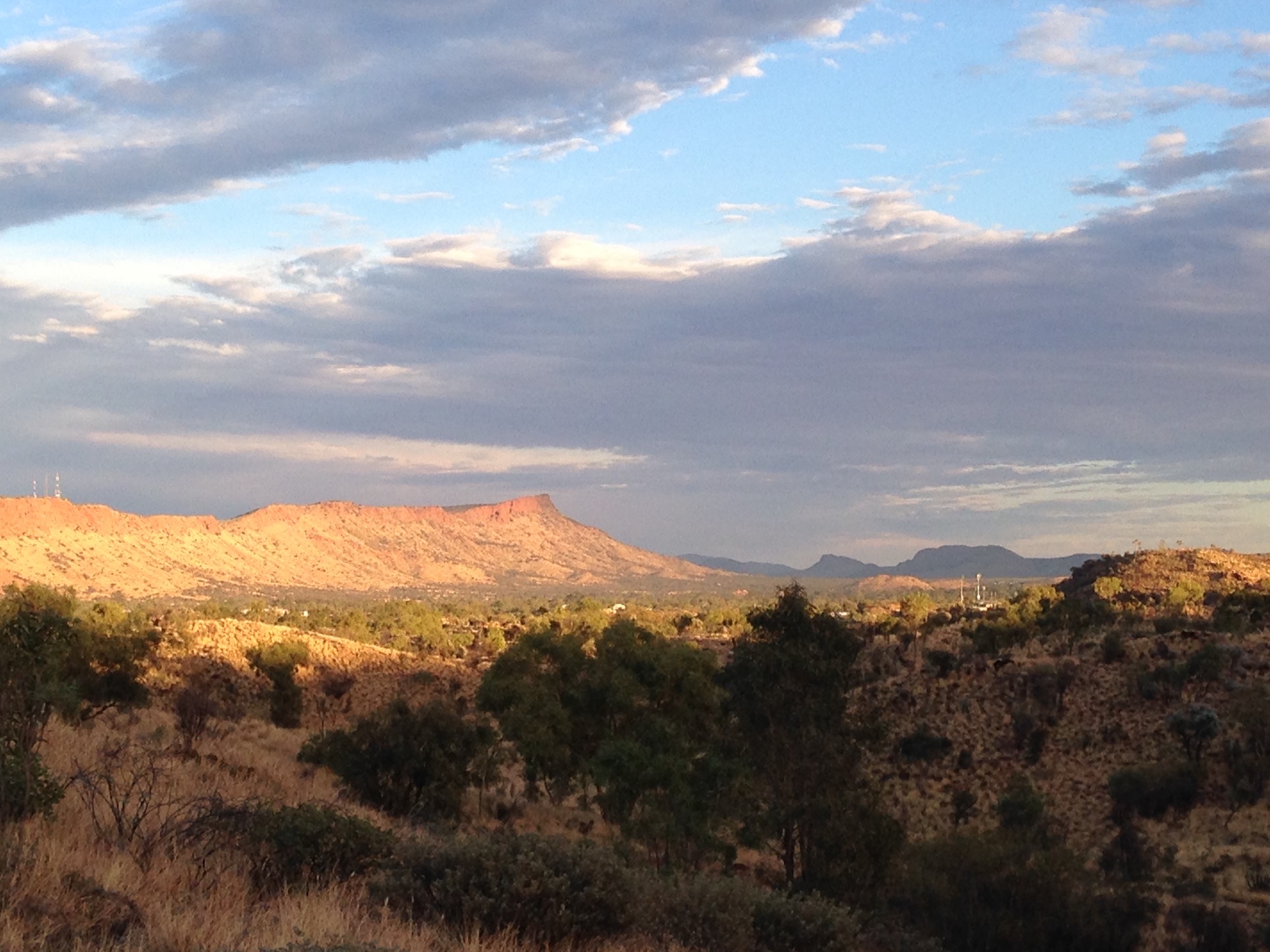
In August 2016, the Northern Territory Labor Party won government on a range of commitments, including a $50 million pledge to build an “iconic National Aboriginal Art Gallery” in Alice Springs. With great promise, an Initial Scoping Steering Committee was established in early 2017 comprised of Indigenous and non-Indigenous experts in the arts industry, including co-chairs Philip Watkins, chief executive officer of the locally based Desart, and Hetti Perkins, the former curator of Aboriginal and Torres Strait Islander art at the Art Gallery of New South Wales – both with local family ties to Arrernte Country. Also part of the committee was senior Alyawarre man Michael Liddle; respected arts administrator Michael Lynch; and co-chief executive officer of the Museum of Old and New Art in Hobart, Mark Wilsdon. In November 2017, the committee released its recommendations, including comprehensive consultation with Traditional Owners, strong First Nations representation throughout the development and running of the museum, and a proposed location on the outskirts of town.
(5)
Largely ignoring the recommendations of the Steering Committee, the Northern Territory government has pushed ahead with its own plans to build the facility, not in the “spectacular natural setting of the Desert Park precinct of Mparntwe,” as recommended, but instead in the town centre. The original vision to celebrate and promote Indigenous art and culture, though still proclaimed, has been subsumed by an agenda of business revitalization for the CBD. So focused has the Northern Territory government been on a CBD site that it has threatened compulsory acquisition of a nearby council-owned sports oval; the Alice Springs Town Council and some senior Custodians have been less enthusiastic.
Suggested alternative proposals include a further Northern Territory government offer to pay for a new council chamber if council agrees to vacate its site for the new gallery. The proposed move would then require further investment in a new sports facility to replace the premises given over to the relocated council. These sleights of hand have been dizzying. Though a new committee has been established, with significant local and national First Nations representation and arts expertise, it remains to be seen whether the project will ever be constructed.
(6)
Conclusion
The barriers that First Nations communities face in getting projects built are myriad, and made more evident when considered against the whimsical nature of mainstream political manoeuvring. A lack of trust by governments in the ability of Indigenous organizations to exercise good governance and manage finances responsibly; the assumption that consultation and engagement can be ignored without consequence; and the ceaseless paperwork burdens placed upon communities with limited resources all conspire against the fair distribution of investment in First Nations communities. Unbuilt? Sadly and unfairly, never built.
References
Mark Moran,
Serious Whitefella Stuff
(Melbourne: Melbourne University Press, 2016).
Anna Henderson, “Majority of grants from Indigenous Advancement Strategy first round given to non-Aboriginal groups,” ABC News, 5 May 2015,
David P. Pollack, “The political economy of the Aboriginals Benefit Account: Relevance of the 1985 Altman review 30 years on,” in Will Saunders (ed.),
Engaging Indigenous economy: Debating diverse approaches
, edited by Will Sanders (Canberra: ANU Press, 2016),
We’ve been humming and hawing over what to say about International Women’s Day. We feel enraged by the hideous events plaguing Canberra and are sort of annoyed that IWD has to exist at all.
The only positive thing we feel like we can contribute to the conversation today is these portraits taken by Bo Wong of the intelligent, modest, insightful women we have worked with over many years on Groote Eylandt.
We’ll use today as an opportunity to acknowledge the wisdom and to say thank you to Colleen Mamarika, Cherelle Wurrawilya, Melissa Cooper and Elaine Mamarika.
These women are helping to shape their communities into places of opportunity and optimism. Collectively, they have taught us so much about this country and how to operate as an ally to our First Nations people.
In each issue of our journal, we ask a handful of people to reflect on our chosen theme (and provide a selfie of themselves!). This is architecture consultant and climate activist, Gemma Hohnen, on Leverage:
Leverage is situational, tactical and organic; there is uncertainty in the outcome. At its best leverage is that point used to shift outcomes for the better. Architectural skills can be applied across multiple fields and in a time when it has been challenging to find traditional practice work that is the right fit, it has made sense to explore other avenues, paths of lesser resistance built upon interests beyond designing an excellent building with a great team. Voluntary work is the perfect way to build upon and develop your skills beyond what an office might offer, meet new people in related fields and form alliances.
My agenda has become clearer and within my means I am looking for opportunities to use my skills to push the message of the climate emergency.Sometimes leverage is the simple act of asking.
I would first like to acknowledge the Whadjuk Noongar people as the traditional custodians of the land I am writing this on. As a Yawuru man, I extend my respects to the elders, past, present and emerging and thank them for their unwavering connection to the land.
Another successful internship with The Fulcrum Agency done and dusted. Prior to this summer internship, I was able to spend four-weeks over winter with the team which meant I could slide straight back into work. Literally, I was being briefed on a project in the first 10 minutes of my first day. That’s how an internship should be!
Over the course of the summer, I was able to cover a lot more ground than the winter period. I got the chance to use my skills of illustration and graphic design to communicate projects and compile reports and even had the opportunity to assist in the design of a small renovation project. I have tried new things, sharpened existing skills and learned valuable lessons.
Even though my chosen field of study lies within graphic design, architecture is a constant source of inspiration for me. An architect’s ability to design beautiful and meaningful spaces is an artform of great measure and having the opportunity to see a firm in action beckons admiration. Not only is the work inspirational but the innate values that the team exert has inevitably had a lasting impression on myself. These values I will carry throughout my career as a creative.
Self Portrait, 2020
I am so grateful to be a part of a generation of Indigenous disruptors, game changers and unrelenting overachievers. To be able to embark on this journey with interns across Australia fills my heart with such pride as an Indigenous person.
I’d like to acknowledge the CareerTrackers program, and my advisor Melissa, for their tremendous work in placing Indigenous students in meaningful internships. Through the CareerTrackers program, the face of corporate Australia will change, I truly believe that.
This reflection upon myself, my experience and my surroundings encourages the opportunity to really appreciate the time I’ve spent with The Fulcrum Agency. I have thoroughly enjoyed every second of my internship. Design plays such a pivotal role in the way messages are perceived and I want to leverage my skills to spark change and create lasting experiences for people. I’d like to thank the team for their support, hospitality, wisdom and guidance during my time here. In Yawuru language,
mabu liyan
means ‘a place of good spirit’ and to me, The Fulcrum Agency is
mabu liyan
for sure.
+ Alan Pigram is a second year Graphic Design student at Curtin University and he came to us through our involvement with the
CareerTrackers
Indigenous internship program. We have loved every minute of having Alan in our studio; he has made a huge contribution to the way in which we communicate our work to the communities with whom we work. With Alan’s love of music, art and a good laugh, he fit perfectly into the ways of our studio. He even braved his own ‘Tuesday Lunch’ – making a delicious satay noodle salad for us all. We’re looking forward to him returning soon.
Kieran Wong’s
interview
with Alan Ricks is full of the sort of sharp observations that make you want to pull out a journal and write them down for later. Ricks is a Founding Principal at Boston-based MASS Design Group, a not-for-profit architectural studio with a radical approach to practice and projects.
The interview is the first in a
series
curated in lieu of the 2020 National Architecture Conference.
We did a study of how others were doing socially impactful work, and we tried to figure out how to hack the system.
Congratulations to TF.A Principal, Nick Juniper, who has been invited to join Social Impact Measurement Network Australia’s WA Committee.
Nick is passionate about the potential of good design to make a positive impact on the communities with whom we work. He has
written widely on the topic
, and argues for the need to broaden the way we measure the success of built environment projects.
He has studied the principles of social impact assessment and has been awarded Level 1 Associate Practitioner status by Social Ventures International.
Find out more about the purpose and activities of SIMNA
here
.