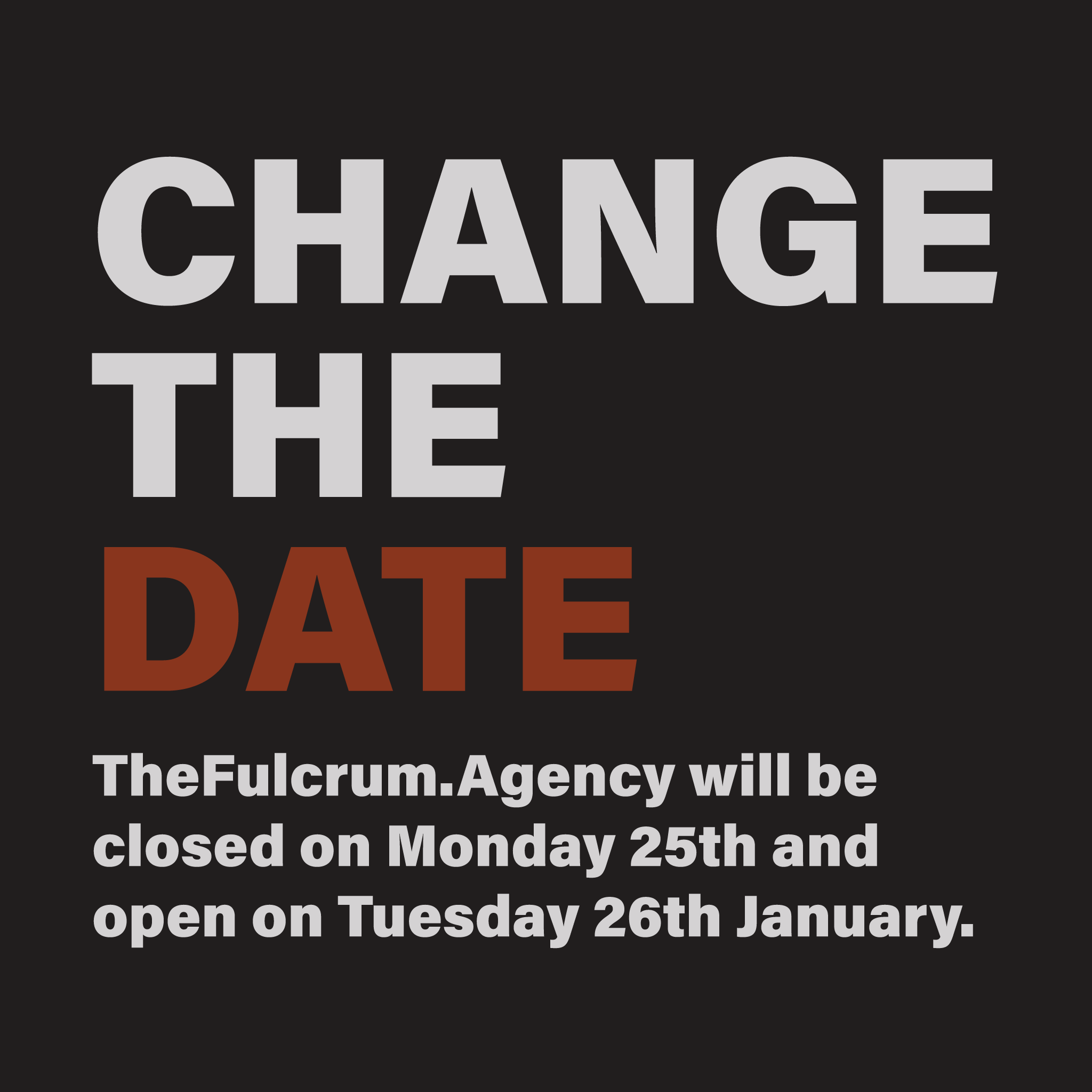
As an office we have decided to remain open on Tuesday 26
th
January as a reflection of our view that the date of Australia Day must change.
It’s incredible to think that it’s been five years since that first One Day concert in Fremantle, which seeded in our minds the need for a more truthful acknowledgment of our nationhood.
The recently released, ‘
2021 State of Reconciliation in Australia Report
’ argues that Australia needs to shift to a braver position on issues affecting Aboriginal and Torres Strait Islander peoples.
In her forward, Shelley Reys AO, CEO at Arrilla Indigenous Consulting, writes:
‘bravery… will be our change agent. Now is the time to take a deeply personal journey and have the uncomfortable conversations. And we need to extend those conversations to those within our sphere of influence, both professionally and personally.’
Something for us all to contemplate over the BBQ this weekend.
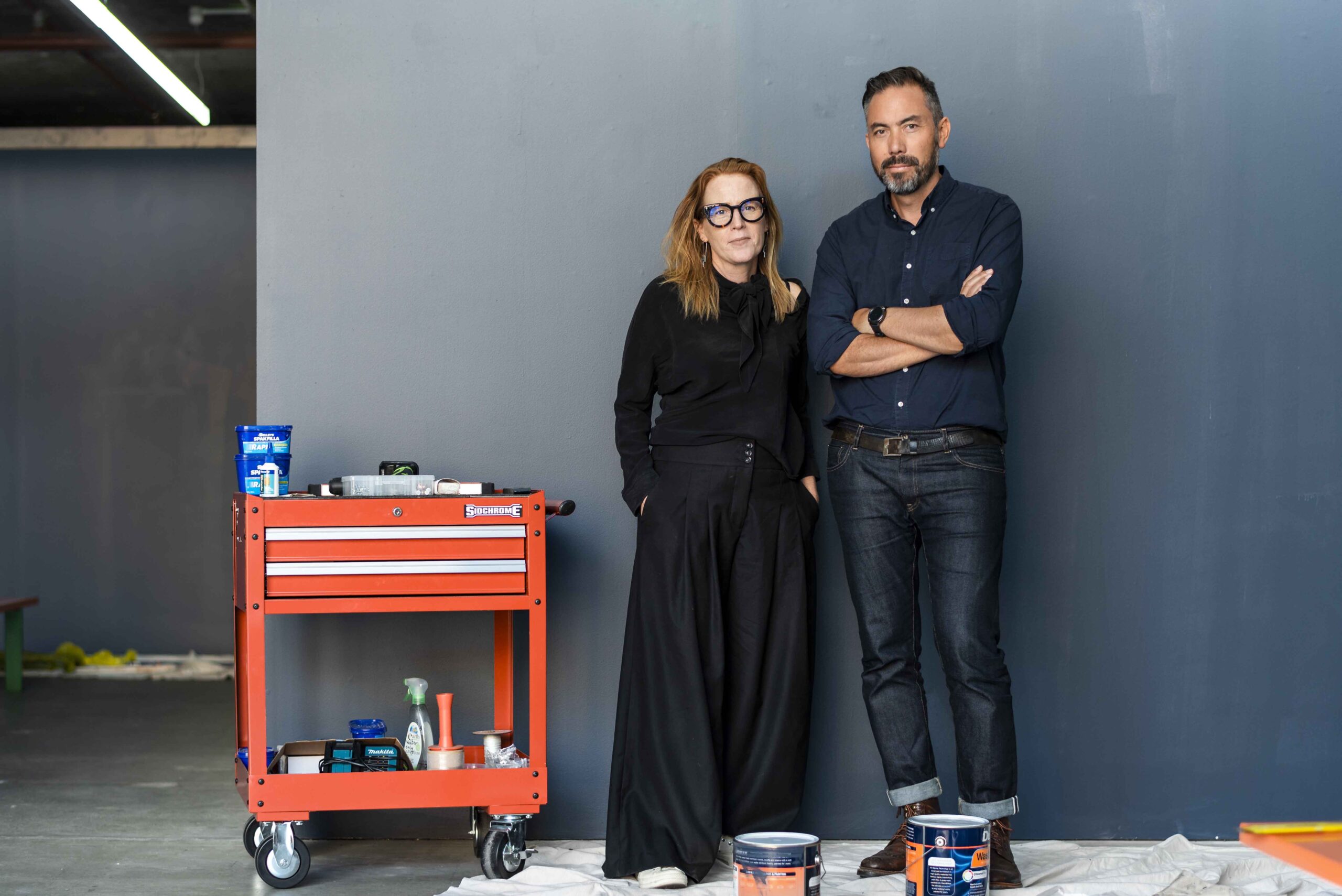
In each issue of our journal, we ask a handful of people for a selfie and to reflect on our theme. This is TF.A Architect, Akira Monaghan’s thoughts on the word ‘leverage’:
“My kids have a bath every day. The bath is in good working condition. The water is safe for drinking. The tap does not leak, and the wastewater is quickly drained away through working plumbing into a functioning sewerage system. Plumbing issues can be seen to and fixed on the same day.
Leverage brings to my mind the possibility of a process where a small input can have an output which is comparatively greater.
In the context of bathing children, the input is a working tap, bath and drain. The output is the prevention of serious chronic illnesses, the likes of which are typically seen in conditions of poverty in underdeveloped countries.
Unacceptably, we do find these preventable illnesses here, in remote communities where Aboriginal children develop conditions like rheumatic heart disease.
The
No Survey without Fix
methodology is just one example of leveraging whereby housing inspections with same day repairs generate improved health outcomes.’
Associate Professor Tess Lea and Dr Liam Grealy head up Housing for Health, a University of Sydney-based research incubator that seeks to revitalise Indigenous health and housing policy. Housing for Health uses a multi-disciplinary approach to address the vast inequity in infrastructure that persists in our remote and regional Indigenous communities.
We are thrilled to be partnering with them on the ‘Staying on Country: Infrastructural Needs for Remote Community Viability’ project, alongside Nganampa Health Council, Aboriginal Housing NT and the Central Land Council. We will share more about this project as it unfolds over the next couple of years.
In the meantime, we encourage anyone curious to learn more about the work of Housing for Health to read their
2020 Wrap Up
, a concise overview of the breadth of issues they tackle.
This opinion piece by TFA Partner and Shelter WA Chair, Kieran Wong, was published in The West Australian on Tuesday, 29 December 2020.
It has been quite a year. Amid increased uncertainty, added stress and unfamiliar constraints, we have seen a growing sense of community and compassion, despite our enforced separation.
One thing we have all understood more clearly is the importance of home. During lockdown, it was all we had, our horizons limited to four walls and a roof. More recently, we’ve seen returning loved ones able to get home after months of absence, and how much it means to come home to WA.
Sleeping in a Park
But in recent months we have also seen what it’s like for people, here in WA, who don’t have a home to go to. In this newspaper, week after week, we have met men, women and children who don’t have the basic foundation of a stable, secure home to safely raise their family. We’ve heard their stories and we’ve seen the impact on their lives and the community.
In August we met Maria, who spent the entire pandemic sleeping in a park in central Perth with her family, including two pregnant daughters. Maria told us that she felt let down and abandoned, as though the duty of care this State owes all its citizens did not extend to her
We heard from Charmaine, just as figures showed that more than 40 people have died on Perth streets this year. Charmaine lost her partner to suicide last year, and spoke powerfully about the impact of that loss on her, and how she was struggling to keep going herself.
Meanwhile, Anselm was camped out on the steps of WA Parliament.
The People’s House
After months camped at tent city, the sprawling homeless camp in the Perth CBD, Anselm took his tent to the people’s house to demand housing for his people.
His bold and moving sermon on the steps sounded an irresistible call for action, and shortly afterwards it was rewarded with the news that supported, temporary accommodation was coming for tent city — though not until next year.
Tent City in Perth’s CBD
Behind the foreground of people living in tents in Perth this year, we have witnessed the unfolding catastrophe of families unable to keep their children safe because they don’t have homes. The horrific tragedy of eleven-year-old Annaliesse taking her own life while her family was homeless led to an outpouring of sadness and outrage that culminated with an open letter from dozens of eminent West Australians demanding immediate action from the Premier to address WA’s Aboriginal housing crisis.
WA’s Housing Crisis
But homelessness is not just an issue that affects Aboriginal people, though it often hits them first and hardest. WA’s housing crisis affects the whole community, and in the new year that truth is set to really hit home.
There are currently 15,000 families on the waitlist for social housing in WA. When the moratoriums on increases in rent and evictions end in March, thousands more people face losing their homes.
In a climate where the rental vacancy rate is less than one per cent, the lowest in decades, the private rental market is no refuge for desperate renters.
Housing Insecurity
Queues for existing listings could match the queues we saw outside Centrelink last March, except this time there will be no JobKeeper and JobSeeker will be reduced.
WA has managed the pandemic well, but homelessness is a continuing crisis. With housing insecurity on the rise for thousands of WA families, many may wonder what the new year will bring.
In 2021 we need WA’s housing and homelessness crisis to be treated with the same resolve and common sense WA displayed this year during the pandemic.
Housing is a Vaccine
WA needs a minimum of 2500 new social houses every year of the next government.
Housing is a vaccine against the spread of chronic social ills. It keeps our jails and hospitals clear for those who really need to be there and allows people to reintegrate back into society safely. It keeps families together, keeping kids safe and out of the system and in school. It protects against suicide and a self-harm contagion that has reached epidemic levels on our streets. It prevents outbreaks of violence that impact us all.
In the same way that a COVID-19 vaccine will unlock the world to us once more, a real commitment to social and affordable housing will unlock a home for every West Australian family.
This year we have learnt the hard way the importance of home. Next year we need to ensure that every West Australian family has somewhere safe to call home.
It’s not hard, it’s not complicated, and it’s the most effective way to protect our most vulnerable and keep the whole WA community safe.
Circus WA is a Fremantle institution, based in a big top on the CBD’s fringe.
Giac Patroni is an emerging cinematographer with an interest in ideas around identity, memory, time and mortality.
Leverage
is a film that reveals the exceptionalism of both performer and filmmaker and was commissioned by TheFulcrum.Agency as part of issue 02 of our journal:
Giac Patroni on Leverage
For me, leverage is about using what you have to maximum effect. Whether it is the physical action of a lever or a more abstract concept used in an interpersonal context. Leverage implies motion, change and to a certain extent, conflict. All things exist in a constant state of flux, leveraging and reacting off one and other. Leverage relies on this relationship and explores how entities interact with one other to achieve harmony.
Whilst leverage can take many forms, physical leverage is the most visually interesting in a project like this. The raw physicality and effort required by two or more people highlights the impressiveness of their abilities and by extension the phenomenum of leverage. In contemplating this project it was important for the act of leverage to be the main focal point of the film. I chose to have a locked off camera and let the action be the main kinetic aspect of the piece.
In this project I wanted to explore the relationship between people and their environment as well as the physical relationship between people.
Leverage – a word we’ve been playing with since starting TheFulcrum.Agency.
For us, the word is inextricably linked to who we are and how we practice. Finding the point of leverage (aka the fulcrum) and creating impact through conscious action is at the heart of how we contribute to projects. We have thrown ourselves headfirst into this pursuit. Incredibly, it has been two years since we set out on this journey. Where last year was about new beginnings, this year was (supposed to be) about hitting our stride…
2020 has been about new beginnings on new beginnings and the need to think once again about how to leverage… Finding relevance in a pandemic has been a humbling experience.
We offered our services
to remote communities that needed help to prepare for the possible spread of the disease. We helped design simple posters about hand washing (in Language) to a suite of guides that combined the inputs of many skilled minds who banded behind this initiative. We saw first-hand the capacity for architects and designers to collaborate and leverage our skills.
We set up our Sydney studio on March 1
st
(great timing!) with Andrew Broffman at the helm and since then have had to find new ways to work and
connect
across the continent. Through our early and brief period of lockdown we found that the geographical barrier of distance could be negated, and we truly became a single office, working collectively. We have continued this way.
Image: Lewis Catalano
On our minds were
our role as co-directors
of the National Architecture Conference, which we had titled Leverage and was due to be held in Perth in May. Sadly, like a lot of things, it will not be going ahead due to the unforgiving circumstances thrown our way in 2020. Although it’s disappointing not to deliver, we did get a lot out of the process. We connected with so many great speakers and now have the opportunity to publish some interviews with them in Architecture Australia over the next 12 months.
Interestingly, despite its challenges, 2020 has brought us some good. In the last twelve months we’ve discovered that there are always opportunities to explore new ways of working, new ways to meet people and build relationships and find that amazing fulcrum, where our skills can leverage the best outcomes and impacts for the communities we serve.
TF.A gave us a rare opportunity to start a business with purpose and a platform to use our skills to amplify impact.
All things considered, we finish this year with a healthy dose of optimism about the next, and we wish you all the very best for the holiday season and a bright new beginning in 2021.
‘We believe that architectural wit and intelligence, agility and diligence, cheekiness and humour, restraint and flamboyance, ethics and goodwill can all be deployed to maximize advantage… we wanted to explore the untapped opportunities for impact and to examine how practices are already finding ways to create progressive change well beyond the convention of our discipline.’
In the latest edition of
Architecture AU
, Emma Williamson, Kieran Wong Maryam Gusheh and Justine Clark launch a series of discussions on the idea of ‘leverage’. These discussions are in lieu of the face-to-face interviews they had planned as creative directors of the 2020 National Architecture Conference.
We were delighted to attend last night’s official opening of
Boola Bardip
, Western Australia’s New Museum.
For six years, we have held the role of
State Adviser: Architecture
on this project and have been involved in everything from the writing of the design brief through to its development on site. We’ve loved this role and the opportunity it has brought to work with a diverse team of collaborators – from the State Government, museum staff, the design architects, OMA and Hassell and a broad section of the West Australian community.
A very special mention must go to our own Sarah Besly, who for many years has been based at a site office in the city and has worked tirelessly as Project Lead. As many of you reading will relate, it’s an awesome feeling to see a structure and space that you know so well be finished and full of life.
We also congratulate the curators for creating a balanced view of our history through the program of exhibitions. We look forward to watching Boola Bardip fill an important place in the lives of West Australians for many decades to come.
Radical Incrementalism is our 2020 Lunch + Conversation series, which we established to mitigate the isolation of COVID, and as a new way to spark imagination, connection and exchange. The conversations took place in person where possible and also on Zoom, with only ever a handful of people involved.
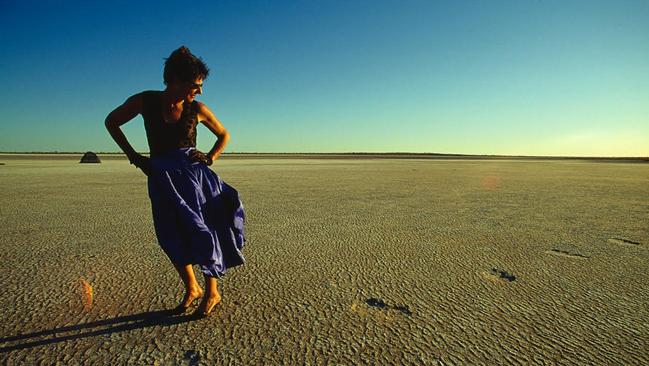
Kim in the Tanami Desert via The Australian newspaper
For our final virtual ‘lunch’ we were joined by artist and writer Kim Mahood to discuss her work on Martu Country with Walmajarri people, and to share ideas around ‘critical cartography’ and ‘counter mapping’. Joining us for the chat were architects Sarah Lynn Rees, a Palawa woman from north-east Tasmania, and Louis Mokak a Djugun man from West Kimberley; as well as Diana Snape from the office of the Government Architect New South Wales.
The lunch offered an engaging hour of conversation that ranged across art, mapping, agency, and procurement, and how to effectively weave technical information with cultural knowledge using the map as a means to establish ‘what’s there’ before further work can be done. The hour quickly disappeared with so much to consider. A delightful way of connecting with others, sharing thoughts, and interrogating architectural practice and approaches to community engagement.
Last year, we began researching new and innovative ways that organisations around the world were assessing built environment projects that address complex social issues.
Women’s Property Initiatives
(WPI) in Melbourne deliver inspiring work housing approximately 200 women and children. They use a financial model that allows each tenant to pay no more than 30% of their income in rent. By capping the rent in this way tenants can manage their income beyond survival to include broader opportunities such as study.
Although the WPI team could see their approach was working they did not have tangible metrics to prove their case. So, in 2014, WPI commissioned a Social Return on Investment (SROI) evaluation to quantify the impact of their work using the framework set out by Social Value UK (more on what this means later!).
The results were startling; data revealed that the social situation in most households had improved and that there was less reliance on other forms of Government support (justice, public housing and health). Most of the social value was found in an improvement to emotional wellbeing. Women reported feeling safer and more independent. Children’s lives were improved through increased stability and more positive home lives. In financial terms, the evaluation found that for every dollar invested, $11.07 of social value was created.
Creating a framework to measure impact has continued to gain traction, particularly in the social services. By taking a broader view we can see how programmes can have multiple impacts on education, health and employment in a way that has not previously been visible. This creates strong arguments for funding allocation and extends our view into long term returns.
Given the immense financial impact of built environment and capital works projects it is surprising that this method of assessment has not been adopted.
NT Chief Minister, Michael Gunner andAnindilyakwa Land Council chairman Mr Wurramarrba shake hands over the Groote Archipelago Local Decision Making Agreement.
In 2018, two years after beginning our work on
Groote Eylandt,
the Anindilyakwa Housing Aboriginal Corporation (AHAC) was established in response to the Northern Territory Government’s Local Decision Making Agreement. This new agreement created a pathway for the community to lead decisions around the delivery of new housing and community infrastructure across the archipelago.
Community-led design has always been a central tenet of the way we work; on Groote it was our job to ensure that the subdivisions and houses were designed with input from the people who live there. In a typical client/architect relationship this might not seem radical – but in the context of remote Indigenous housing this was a major shift forward.
As the project developed, we became increasingly curious about the impact of this type of process on the people involved. What community benefit comes from being so deeply involved in the design process? How does an individual respond to being invited to contribute their ideas and opinions? We started to research ways that we could measure these impacts.
Nick Juniper in conversation with members of the Housing Reference Group and future tenants in Umbakumba, NT
As architects, we are well trained to consider the economic and environmental impacts of our work. Project feasibility and business case studies set the economic parameters for a project and most architects incorporate green building standards in their work. The measurement of social impact rarely forms part of the metric to determine project success.
Over the past year we have been developing methods to communicate the benefit that good design has had on the individuals and communities with whom we’ve been working.
It’s tricky work – the links between social outcomes, financial spend and the built environment are not immediately obvious. We’ve pressed on and now see an opportunity to expand what is meant by the term ‘value for money’ to include ‘benefit to society’ or ‘social value’.
Let’s unpack what this means. Social Value International (SVI) defines social value as the quantification of the importance that people place on the changes they experience in their lives.
1
It can be given a financial value and is measured through a process of consultation, analysis and evaluation. SVI have developed a Social Return on Investment (SROI) methodology that can be used to measure the social, economic and environmental outcomes of a project, whilst recognising that value will be very different to different people in different situations and cultures.
2
At TF.A, we have developed our own suite of tools and metrics to measure the impact of design work. To determine Design Value, we need to translate the intangible aspects of a design outcome – for instance, the way a building or place makes you feel – into an established financial value. Social Return on Design Investment is a system that quantifies the impact of good design and communicates change through a combination of stories and numbers. This is not typically the space of architects and so we are working with a social research consultant to design questionnaires that will enable us to quantify the value of design outcomes in a way that is both accurate and verifiable.
In 2012, the Social Value Act was introduced in the UK (by a Conservative Government no less!), requiring a consideration of social benefit to form part of the procurement process for public projects. Now, almost a decade later, the Royal Institute of British Architects (RIBA) has developed a ‘toolkit’ for the effective evidencing and measurement of the social value outcomes of good design. Here in Australia, the absence of legislation has meant that the measurement of social value has been easy to gloss over. Government investment tends to be tied to electoral cycles, with short-term outcomes prioritised over long-term impact.
The general consensus is that it’s going to take years for our economy to recover from the effects of COVID-19. It is too simplistic to think that the solution to our current crisis is a rapid-fire injection of stimulus into the construction industry. We believe that our Government’s current tactic represents a missed opportunity to reframe public spending for the better.
What we need instead is an approach that places impact on people at the forefront of public spending.
The pandemic crisis has highlighted the latent inequity in our economy. The sudden shift of workers from casual to essential has shone a light on our dependence on people whose work is typically undervalued. The crisis has also highlighted the plight of people and families living pay cheque to pay cheque, the difficulty in accessing social security and inadequate access to affordable housing. These are the issues that need to be addressed as we work towards rebuilding our economy.
It is imperative to broaden the way we measure the success of a project within the built environment. Social Value must be given equal weight to financial and environmental impact if we are to ever address the underlying inequities within society. By including this in our metrics, we can have one eye on community and one on the individual, ensuring that money spent now will serve us well in the future.