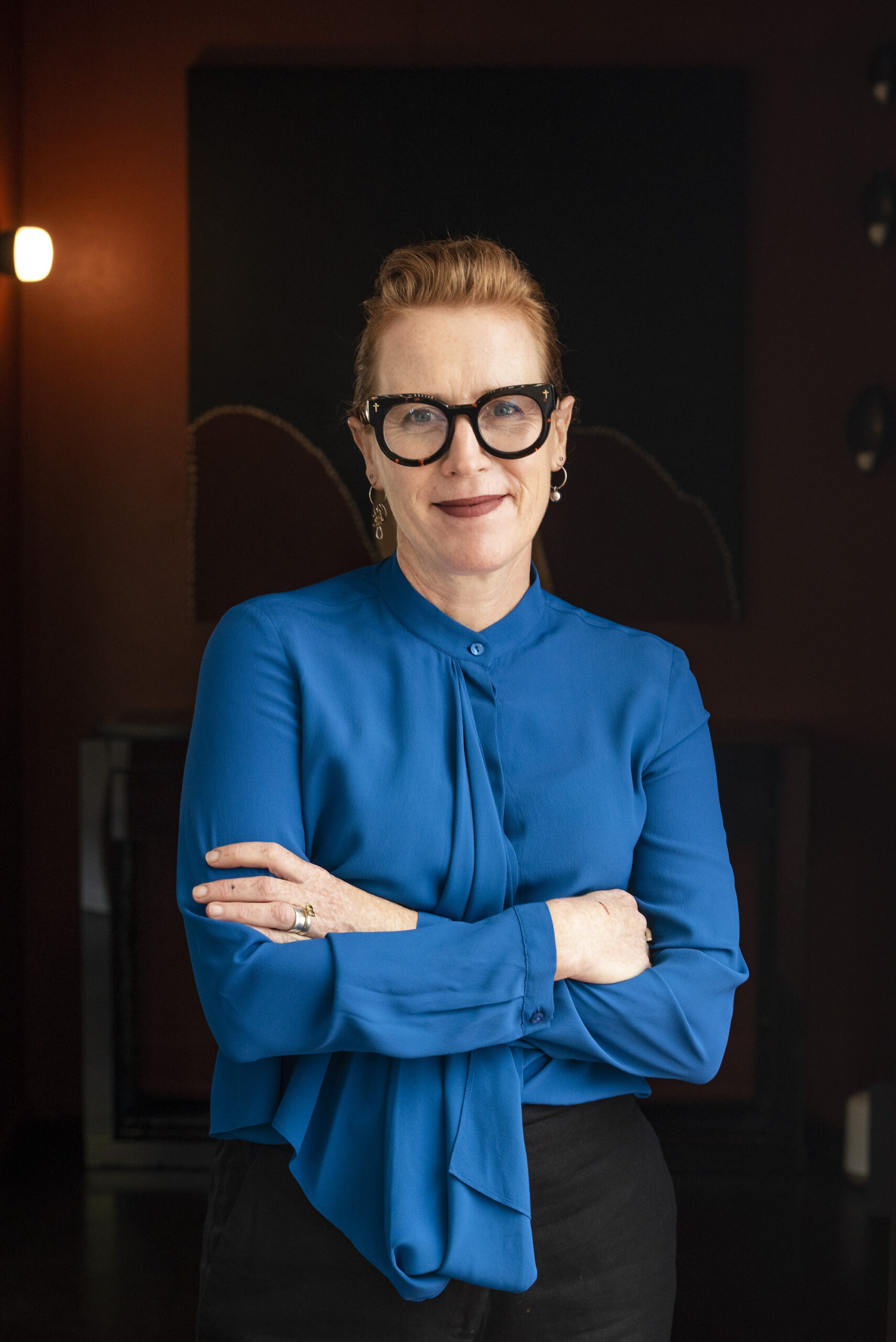
TheFulcrum.Agency Partner and Co-Founder, Emma Williamson has been named a Fellow of the Australian Institute of Architects in recognition of her contribution to the profession beyond architectural practice.
Emma’s work is driven by her belief in the potential of design to improve everyday experience. Above all, she is committed to expanding design-related conversation beyond the architecture profession, and to breaking down barriers for others to contribute ideas. She uses practice as a platform for contributing to social and political discourse.
Emma has always been motivated to address inequity in practice, particularly regarding the ability of women to maintain meaningful careers in architecture. In 2014, she was appointed the Chair of the Australian Institute of Architects Gender Equity Committee and continues to advocate for workplace conditions that enable women to balance work and family life.
In 2018, Emma founded TheFulcrum.Agency, a creative consultancy that leverages community and social outcomes through evidence-based design thinking, advocacy and research. TF.A is a Social Enterprise, Certified B Corp and one of the few architecture practices in Australia to have an endorsed Innovate Reconciliation Action Plan.
In addition to her work in practice, Emma is a recognised for skills in project critique. She is a member of both the Western Australian and South Australian State Design Review Panels, as well as Chair of various local government Design Review Panels. After many years as an academic, Emma still lectures occasionally through her role as Adjunct Senior Research Fellow at Monash University.
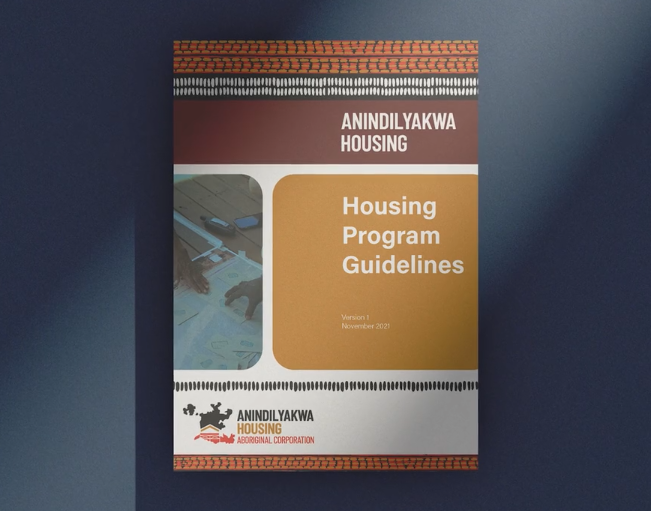
The Anindilyakwa Housing Aboriginal Corporation (AHAC) Housing Programme Handbook is the culmination of many years spent working in collaboration with AHAC and the local Anindilyakwa community.
In this short video, Heather MacRae describes how the Handbook enables the community to make decisions and deliver their own built environment projects.
Our friends at
JYAC
(formally the Western Desert Lands Aboriginal Corporation) have asked us to share the following EOI. We have been working the Martu communities to ensure that the camps are comfortable and equipped for these events.
The latest edition of Architecture Australia includes ‘Indigenizing Practice: Architecture and cultural consultants’, an interview between
Georgia Birks
, TFA’s
Kieran Wong
and
Troy Casey
and
Christopher Bassi
from Indigenous-owned business,
Blaklash Creative
.
Together, TFA and Blaklash have been working on several projects with the aim of leveraging community and social outcomes. Kieran and Troy describe it as an arranged marriage that worked!
The interview is well-worth reading by anyone looking to embed notions of Country in their work:
https://bit.ly/3sPov7B
We’ve scrapped our planned #IWD post because this news report is too important not to share. In an
ABC podcast
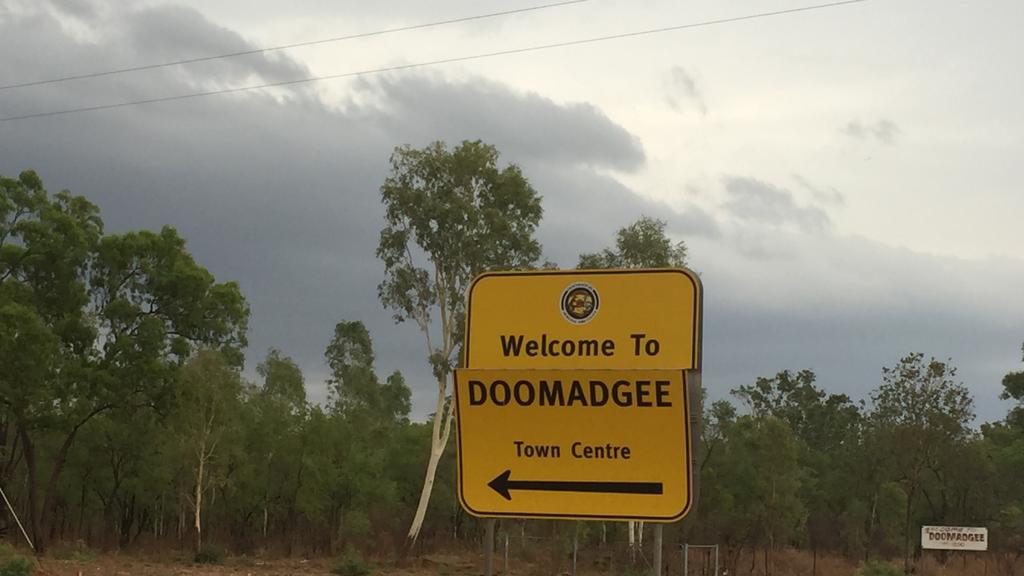
, Louise Milligan outlines the situation in Doomadgee, a remote community in QLD where Aboriginal women and young girls are dying from a disease eradicated in white populations many decades ago.
Our work often provides respite from the intensity of global events, but it also heightens our awareness of situations of gross inequity and racism. Our interest is also piqued by the link between health outcomes and the state of housing in our remote communities. This podcast won’t take up more than 15 minutes of your time. Thanks to Akira Monaghan for sharing it with us this morning.
Campbell Walker has been drawing comics since he was a kid, and now uses his home-grown skills to deliver hilarious insights into Australian subcultures through his label Struthless.
My favourite thing to draw is a comic that connects to someone, and my favourite way to connect to someone is to give them insight into their life.
I usually get my insights from things that my friends and family are saying and doing. This sample size has fortunately been representative of a wider audience. For example, if I see that my mum is constantly talking to me about how much she wants to be a grandma, I assume that this must be happening to other people. Then I draw a comic about it, and people feel like they’re not alone
This approach becomes especially handy when the subject matter is quite dark. For example, I’ve made work about PTSD, depression, abuse, trauma, and suicide, and when people see themselves in those pieces, I hope that the resonance comes with relief: it’s not just me. Even if it’s just for a split second while someone is scrolling on their phone… I like at least thinking that I might be able to give someone a nicer feeling of connection
Don’t get me wrong, I don’t think I’m out here changing the world – but for a small group of people, maybe I can make the world not feel as cooked.
A lot of the comics chosen here are about community. A lot of the Venn diagrams are about cross-sections of our world coming together, with the bizarre overlaps they share. I like the idea that motorbike midlife crisis guys, toddlers, and drama kids would all be related because they’re all so different. And I like that they might have the same flaw (which is my biggest flaw): they really want attention.
Subjects I like are families, trends, and the internet. Specifically, I love that with social media, we’ve all become our own brand managers.
We were to an extent before (through fashion, vocabulary, where we lived, what we did, and who we hung out with), but this has been turbo-charged through social media. Now we can tell the world exactly who we want to be, which makes for a tangible representation of the age-old gap: who you are vs. how you’d like to be perceived. I like drawing this gap.
I’d like to be perceived as good, clever, and funny – but I know that I’m only scratching the surface of these attributes on a good day. Mostly I’m lazy, moody, and avoidant. If I have this gap, I assume a lot of other people do too, and I hope that this shines through in my work.
Ultimately, I love the people around me. I love my community and I also love the communities that I’m not a part of. I try to reflect on the things I see and make people feel good. Hopefully, I do it in a way that pokes harmless fun and not in a way that causes insecurities (but I know I miss this mark regularly). My aim is that people have a laugh, see themselves, and appreciate the absurd context that is our culture.
I’ve since added a new focus to my work: trying to articulate what’s going on in our heads. Obviously, this goal is pretty audacious, but my theory is that our heads and thought processes can’t be that different. If something passes my focus group of one, it’ll translate to a wider audience. From this lens, I’ve recently written and illustrated my first book ‘Your Head is a Houseboat’. The book is a journey into your brain, told through the metaphor of a ridiculously jam-packed houseboat, with a nice forward by psychologist Cass Dunn. The book is a guide to mental clarity, with illustrated explanations of brain functions, and journaling exercises. It comes out this October and has been called “the most important and accessible mental health book in a generation” by Osher Gunsberg… no pressure!
*Many a True Word was first published in Commune, issue o3 of our journal. Copies can be purchased through
TheFulcrum.Press
and all proceeds are directed to
The Fulcrum Fund
, a charitable fund that we established to support projects in First Nations communities.
In our work and personal lives we are committed to doing what we can to build a reconciled Australia, where Aboriginal and Torres Strait Islander cultures are foundational to our national identity and embraced by our institutions.
This is the sixth year that we have decided to work on the 26th January – a small but genuine reflection of our desire for a more truthful acknowledgement of our nationhood.
We wish you and your family the very best for the festive season and year ahead.
In place of Christmas gifts, we have donated to two initiatives that we feel passionate about:
The safeSISTAS program at
Fremantle PCYC
supports and empowers girls in the Fremantle community who come from homes of disadvantage, poverty, domestic violence, trauma and incarceration.
Two Good Co.
, a Sydney-based catering company that provides meals and employment opportunities to domestic violence survivors and people experiencing financial hardship.
Our studio will be closed from Thursday 23rd December, re-opening Monday 10th January.
We hope you enjoy a restful break, and we look forward to re-connecting in the new year.
Current fiscal policies have lead to a chronic, and worsening, housing crisis. Here, TheFulcrum.Agency’s Kieran Wong argues that it’s time for radical new ideas that could allow ‘the market’ to heal itself.
It’s been over a decade since the release of the book
The Spirit Level: Why More Equal Societies Always Do Better
by Richard Wilkinson and Kate Pickett. In that time, the gap between the rich and poor in the developed world has grown wider. Despite the rhetoric of post-Third Wave social democrats, the grotesque disparities of the top 1% and everyone else seem to continue unabated. COVID-19 has only made it worse.
Why does inequality matter?
The language of inequality has started to change, with leaders like Boris Johnson now talking about ‘levelling up’ rather than ‘trickling down’ – but the underlying premises, systems and biases of neo-liberal economic management persist. The stellar trajectory of billionaires such as Bezos and Branson into space serve as direct metaphors for the rocketing differences between the rich and poor. And being poor is less uncommon than you think. In 2020, a study determined that 1 in 8 people (or 13.6%) in Australia were living below the poverty line – that’s over 3 million Australians (including 774,000 children under 15) below the median cost of living.
“The rich may fear the type of violence that characterizes highly unequal societies, but they are more likely to build bigger walls around their gated communities than raise the red flag of egalitarianism in response. It is the hard work of everyday politics – from community organizing to political education – that will bring about more equal societies.”
wrote Simon Black in the Canadian Dimension.
I am doubtful that we can wait in Australia for ‘everyday politics’ to make the changes necessary to really address the issues of inequality and disadvantage. Both major parties have walked off hand in hand from the battlefield for progressive tax policy. Disinformation and distrust characterise the relationships we now have with media, authority, and the rules of law. Meanwhile, governments are doing all they can to silence charitable organisations and welfare advocacy groups through legal and contractual means.
We know that access to safe, affordable, and permanent housing is a key determinant in social mobility, it drives economic productivity, improves health and education outcomes, and can break the cycle of disadvantage. Yet in Australia, the cost of housing is the biggest burden faced by the lowest quintile of income earners, whilst the highest have had their relative costs of housing reduced, thanks to record low-interest rates, ever increasing house prices and a regressive taxation system.
The Housing Challenge
Last year I accepted the role as Chair of Shelter WA, the peak body for an effective housing system and ending homelessness in WA. I started on the Board with what I thought was an understanding of both the drivers of, and some solutions to, housing inequities. The truth is I didn’t have much of either. It is not until you combine a working understanding of the cold, hard statistics with the lived experience of individuals, that you can start to grasp the effects that housing precariousness is having on our society, not just on those who cannot find shelter.
Over the past year, I have heard powerful testimony from our most vulnerable citizens and many facing housing stress for the first time in their lives. Working families who cannot find a rental home, people left behind in the COVID-19 pandemic – an ever-widening gulf between those with and those without in our society. This gulf is seen in many comparative statistics – mortgage stress, housing arrears, rental demand and demand for frontline services.
Across Australia, we have seen waves of housing booms making housing tenure precarious for many in the rental and private housing markets. The net effects of our taxation system, land delivery models, erosions of tenancy rights and the casualisation of labour is driving the gap between those who owned property before 2004 and those who came too late to the party.
Successive governments have failed to match supply with the demand for social and affordable housing.
Applications to public housing waitlists are increasing month by month. At the time of writing, around 30,000 West Australians are on it. Rental vacancies are at a historic low, with areas such as the regions at levels below 1%. The drivers are complex and intertwined but what is clear is that successive governments have failed to match supply with the demand for social and affordable housing. Despite a massive increase in demand and an ever-growing inequality gap in Western Australia, we have less public housing stock today than we did in 2016.
Of course, there is a simple political equation underpinning this. There are more people (voters) who own homes than those in the rental market or in public housing. As the often-primary mode of wealth creation, housing asset prices are fiercely protected by homeowners, and any move to make the housing system fairer, or more balanced, to open up affordable options, or change models of delivery is met by instant and vehement opposition. Governments do not have the political capital (or appetite) to consider a future without inequality.
And there is a philosophical belief underpinning this too – a belief in ‘the market’ as a system that is efficient, objective and can create greater outcomes through innovation. The market is often used a shield to describe why (or why not) certain opportunities may be possible. We are starting to see the pushing back of neo-liberalism ignited by Thatcher and Reagan and adopted here in Australia, but the power of its grasp means our institutions are still beholden to the notion of governments role being one to reduce red tape and let ‘the market’ get on with it. In the language of the market then, I wonder if it is possible to financialise and incentivise investment in affordable and social housing. Can we look to other invented markets that have done the same with other wicked problems?
What even is a market?
Markets are dynamic and challenging to pin down. Markets are not necessarily efficient or productive; they can be opaque, and often as a result of their complexity, can elude regulators from scrutiny. They can be seen as games played by people with a penchant for bending rules and betting on futures. From the entrepreneurial mind of Greek philosopher Thales betting on the future olive crop, to the Dutch futures market designed to hedge against losses from global shipping during the 1600’s, trading against a future event that is linked to tangle asset, underpinned the logic of futures trading until the 1980’s. I added a comma to the last part of the sentence but I’m not sure if it’s correct.
After the floodgates of financialization were opened in the mid 1980’s, some markets, such as futures trading, have become spectacularly decoupled from the tangible commodities that they were devised to hedge against. Like the wild daydreams of a ten-year-old boy, markets have emerged limited only by the imagination of the inventors, and at a speed that often eludes oversight. Futures markets trade (or bet) on changes to the weather, or the cost of shipping or other more bizarre possibilities. The ‘Policy Analysis Market’ was originally proposed by the US Defence Department to trade futures contracts based on political events or changes in the Middle East. “T
he theory was that the investment value of a futures contract on a particular political event reflected the probability that the event would actually occur – for example, the outcome of polls or elections. Some US officials claimed, however, that such offerings would encourage speculation on events such as coups d’état and terrorist events”
.
Although the market never made it to fruition, similar forms of political futures markets were proposed. After the Global Financial Crisis, US President Obama introduced a
“sweeping overhaul of the United States financial regulatory system, a transformation on a scale not seen since the reforms that followed the Great Depression”.
The resultant legislation (the Dodd-Frank Bill) sought to stabilise markets, protect consumers, and it also banned all futures trading based on events such as assassinations and terrorism.
So, could this wildly inventive market mechanism be used to address inequality? Perhaps our other shared societal challenge – the climate crisis – could provide a clue. For many decades the extent of the climate crisis failed to gain traction with politicians and policymakers using communication based on environmental science, economic logic, and social impact. Governments have sought to address the emergency through ‘market mechanisms’. A market was invented in response – carbon trading.
Hot Air?
Established as a result of the 1997 Kyoto Protocol, carbon emissions trading has had its successes and failures. Designed to limit carbon emissions (agreed to be driving global warming) market systems sought to offset high carbon emitters with innovative forms of emission reduction or carbon sequestration. Despite their rhetoric of ‘open markets’, governments have applied a political lens to regulations around emission trading, including the US withdrawal from Kyoto in 2001, and the changing nature of target settings for emissions to reach ‘net zero’. But for around fifteen years since 2000, the financialization of the carbon market created opportunities, leveraged funds for investment projects and delivered a mixed bag of results across the world. Importantly it imagined a financial market to address a human challenge and drive investment in assets and processes aligned to that goal.
What can we take from this as an idea to address inequality, or perhaps an element of its underpinning – housing? To develop a tradeable market, you need a system of measurement (ideally with a compelling counterfactual – i.e. if we don’t do something, this is what will happen) and you need agreements on targets to drive trading value.
Market inequality?
There are standardised measures, such as the Gini Coefficient, that track income distribution as a measure of inequality in society. More granular measures are taking form in the emerging system of Social Impact Measurement that seek to make a case for the long-term impacts of projects beyond their start-up and operational costs.
In the UK, measuring and reporting on social impact is now an essential component of taxpayer-funded projects, with business cases required to evaluate the long-term impacts of government’s capital expenditure. In Australia, this idea is gaining traction amongst funders who are now able to evaluate their investment in social services programs. The notions of a Social Return on Investment (SROI) require funders and developers to consider broader attributions of societal change through their projects. Measuring social impact is rapidly becoming better understood, more organised and more widely accepted as a method for determining project success. Accounting practices and consulting forms are expanding to meet the demand for such measures
Social Impact Bonds are another example of investment vehicle that can provide private financing into the social services sector. Investment is rewarded through evaluation of particular social metrics (such as lowering rates of imprisonments, or restoration of children to families) with the reduction in government costs in justice health education, etc used to provide financial returns to investors. Examples such as this have existed in Australia for almost a decade now. But Social Impact Bonds are long-term investment vehicles, reliant on stable government policy to ensure programs can be evaluated accurately. What is needed to address the housing crisis in Australia must deliver faster outcomes and be less prone to government policy mood—swings.
The response to the housing crisis must be able to deliver faster outcomes and be less prone to government policy mood-swings.
Credit where credits due
With secure housing becoming more precarious and the challenge of affordable housing now impacting the working poor, there has never been a more urgent time to address the crisis (sound familiar?). Delivering a mechanism that seeks to rebalance social inequality over the longer term through immediate investments in the drivers of disadvantage is critical. We must investigate models that can deliver responses at scale, that are market-led and that are lightly regulated by government to allow for agility, delivery, and value for money.
It could be possible to develop a Social Inequality (SI) Credit system – applied to a range of projects from infrastructure to financial products, to ‘offset’ outcomes that are currently driving the foundations of inequality. An example might be an infrastructure development project that includes residential accommodation, with developers required to provide through inclusionary zoning targets, a minimum number of these social and affordable housing projects?. If not fully incorporated into the development, a SI credit system could be utilised to offset this and aggregate housing funds to deliver projects at scale through other community housing providers.
Independent investment funds, such as a Social Housing Subsidy Fund, that seek to address the yield gap in rental costs and development costs for social housing could be the receivers of such offset credits, creating value for community housing providers to invest in the delivery of housing. Government-funded infrastructure would need to be evaluated for its social impact (using SROI) and could provide another form of offset funding, or seek credits, depending on its social impact and effectiveness in addressing inequality.
Governments have typically struggled to make the link between the burgeoning health costs of its citizens, and the supply of healthy, safe, and affordable housing. Despite decades of evidence that housing can reduce the costs on the health system, increase productivity and reduce inequality, governments seem caught in a market failure of their own making. Using SI Credits in the private market could correct this self-inflicted failure of bureaucracy by achieving societal impact through a range of market mechanisms, driven by ambitious targets to a net-zero inequality future.
An unequal Australia is to the detriment of us all, but as Simon Black noted, it will not be upturned by the wealthy (or political elite) through obligation or community spirit. A market that seeks to reduce inequality into the future should be part of the conversation. To recycle (pardon the pun) a line from the climate crisis – ‘if not for us, for our children and their children to follow’. A market designed and scaled to reduce inequality and deliver a more just world – imagine that future.
For me, a commune is an intentional community with shared values, resources, knowledge and responsibilities.
In each issue of our journal, we ask a handful of people to reflect on our chosen theme (and provide a selfie of themselves!). This is photographer, friend and Kieran’s sister, Bo Wong on commune:
When I was 16, I left Fremantle to live on a commune near Walpole. I ate a lot of lentils and magic mushrooms, so despite being an idealist with the values of self-sufficiency, I couldn’t offer the other elements that a successful commune needs – the resources, knowledge or responsibility.
My husband grew up on a commune in NSW and we met on a forest blockade in Tasmania in 2001. Blockades are essentially travelling communes that sprouted up all over Australia in the late 90’s and early 00’s. Living together without electricity or sanitation in every state of Australia, I got to know myself and others, really well. We navigated de-escalation strategies, rope tying, children, painting, politics and poo together. In hindsight, it set me up pretty darn well for my current commune, family life.
Copies of Commune are available for purchase via
TheFulcrum.Press
. Revenue generated through journal sales will be distributed to First Nations community projects through
TheFulcrum.Fund
.