There was much excitement last week over NT Chief Minister, Michael Gunner’s visit to Groote Eylandt to sign the first three Implementation Plans that will give Aboriginal people greater control over their own affairs in relation to law and rehabilitation, economic development and housing.
There are two ways to think of a pivot: both as a verb – an act; a change in direction – and a noun; a shaft (yes, or fulcrum) around which something spins.
I prefer the noun as a way of describing my own path through architecture because, what might seem to be abrupt leaps from practice (Public Works cadet, Lahz Nimmo, JPW, Hassell); to policy (advising a South Australia premier on design, planning and development); to regulation (policing professional standards from the Registrar’s seat); and now planning law (as a Commissioner of the Land and Environment Court), has felt more like regular oscillations around a fixation with the profession’s relationship with the external forces that give it shape.
But the initial push in to this different orbit was a mid-week phone call one morning in Adelaide in 2010 that went something like “It’s Wendy from the Premier’s office – will you take a call from the Premier?”. 24 hours later I’d resigned from Hassell and been appointed as a Commissioner. And while I haven’t returned to design practice since, everything that’s followed has been what we know as ‘strategic design’ at some level.
* Tim Horton is the current Commissioner, Land & Environment Court of NSW. His musings on the word Pivot appeared in issue 00 of The Fulcrum Agency’s journal.
Relic is the first in a series of images by Bo Wong and Rose Megirian, celebrating the creatives who are compelled to experiment, explore and pivot in their creative process, unbound by a particular medium.
Anchored by the central themes of their own unique practice, each artist exemplifies agility and defiance in their fearless explorations.
Relic
was first published in PIVOT, issue 001 of The Fulcrum Agency’s journal.
We’ve observed a cross-current at play in contemporary creative industries, a boundarylessness that does not identify with a particular medium or definitions and is instead, more interested in the intersections of design thinking and contemporary ‘making’ practice.
We are exploring this exciting boundary shift, along with the rise of traditionally feminine craft in the art of design landscapes through Relic, a series of images celebrating creatives who we feel reflect this crossover of craft, design and art in Western Australia right now.
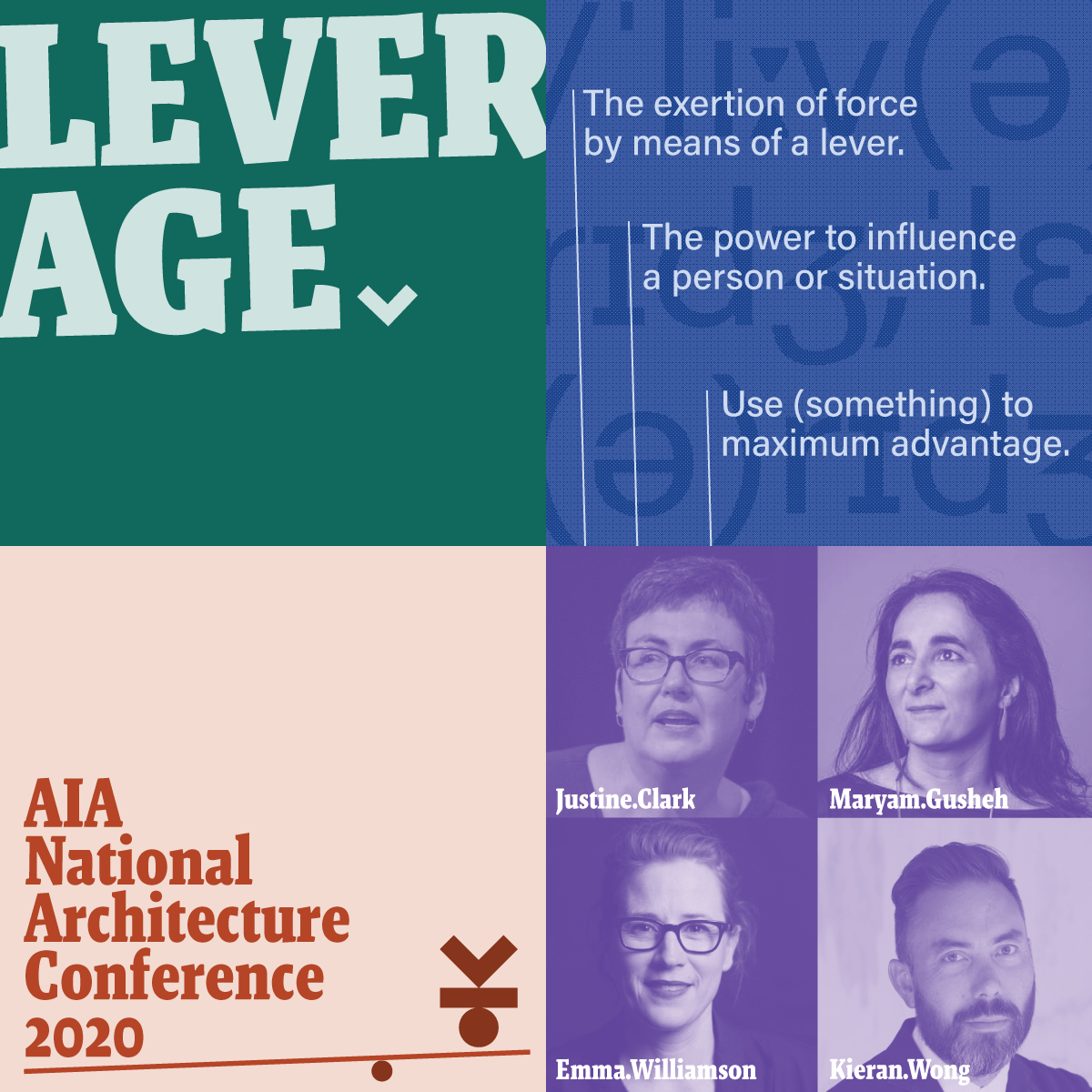
We’re thrilled to announce that our two Principals, Emma Williamson and Kieran Wong, along with academics, activists and writers, Justine Clark and Maryam Gusheh, have been appointed as the Creative Team behind next year’s AIA National Architecture Conference!
We hope you’ll join us in Perth next year for LEVERAGE.
Politics, bureaucracy and a misguided push for innovation inhibit empowerment and reconciliation in Indigenous communities. In this article, first published in Architecture Australia and then Pivot, TheFulcrum.Agency co-founder, Kieran Wong, explores the ‘seagull effect’ and the failings inherent in the procurement process for essential work in remote communities.
Just over ten years ago, at the height of the resources boom in Western Australia, CODA studio co-founder Emma Williamson and I started to work regionally and remotely across Western Australia. Our work focused on two areas – small community and health projects and the development of state government-sponsored design guides and handbooks. These handbooks aimed to identify and retain the character of townships, settlements and outstations in the face of the overwhelming onslaught of development that resulted from the resources boom. Through this work we began relationships with Indigenous organizations and communities, working collaboratively to deliver projects ranging from land subdivision to community buildings, offices and health clinics.
Since then we have worked with four different Indigenous communities in Queensland, Western Australia and the Northern Territory, each within two kilometres of a major tourism destination.[1] Incredibly, these “one-mile” communities are without access to running scheme water, sewerage treatment or reliable power. These conditions are the remnants and reserves of institutionalized racism that survive today.
Each community is adjacent to homes and tourist resorts in which visitors pay top dollar for a holiday “on Country” without realizing their nearest neighbours are living without basic amenity.
These communities are living in the Fourth World, a term coined by Canadian First Nations leader George Manuel in 1974 to describe Indigenous peoples who live in First World nations but are excluded and marginalized from mainstream advantage and opportunity.[2] We tread a challenging tightrope as First World consultants, working and walking alongside our clients in the Fourth.[3] This walk is more like a dance between two ways of seeing the world. The tensions and opportunities inherent in this dance have created much of the meaning our work has sought to explore. These challenges take many forms as our growing awareness and understanding of working in remote and regional Indigenous communities deepens.
I am not a seagull…
Working in communities post-native title determination, often with leaders who are key to maintaining ceremonial and sacred life, is a distinct challenge for us westernized middle-class professionals. How can we relate to the vast array of cultural and familial obligations, nationhoods, resettlement patterns, stolen generations and collective and intergenerational trauma? The paradox is one of striving to do good through a model of “community development” when we are labelled “seagulls”: white beings that fly in, make a lot of noise, shit on everything and fly away again. The contradiction of maintaining an anti-racist position while working within regimes, systems and procurement models that can only be considered colonising is exhausting to motivation. As author Kim Mahood has articulated it, “…the most highly skilled and scrupulous people are hollowed out by the effects of this contradiction.”[4]
Keeping clients alive
The reality of the unacceptable health gap between Indigenous and non-Indigenous Australians is keenly felt when working with communities that can have an average life expectancy as low as 52.[5] Not so many years ago I had the privilege of working with an articulate leader and traditional owner my own age. His untimely death at the age of 42 was tragic and profound. It created a leadership void, ongoing trauma in the community and significant disruptions to the delivery of his organization’s project. Our current work in the Groote Archipelago in the Northern Territory is punctuated with constant “sorry business” (social practices that follow the death of a community member) and the elastic responses required as relatives arrive and houses, cars and boats are vacated to await the smoking ceremony that helps spirits to be sung out and onwards.
The challenges of innovation
We have read dozens of auditor’s reports arguing (with eye-glazing similarity) that Indigenous projects, programs and partnerships have resulted in suboptimal outcomes because of poor design, delivery and review processes. Reports that assert recommendations to (yet again) improve local consultation, improve coordination between agencies, innovate in design and innovate in delivery. This innovate / neglect / crisis / rebuild / neglect cycle, which characterizes much housing policy and funding for Indigenous communities, is a key challenge. It is the flawed model that architects and health professionals seeking to improve the most basic of requirements for living, a healthy house, encounter again and again.[6] We must stop innovating through novelty as this supports a system that is essentially designed for failure.[7] Instead we must continue to advocatefor evidence-based models of quality design and delivery and robust maintenance practices, as championed through the work of Health Habitat, Tangentyere Design and many others.
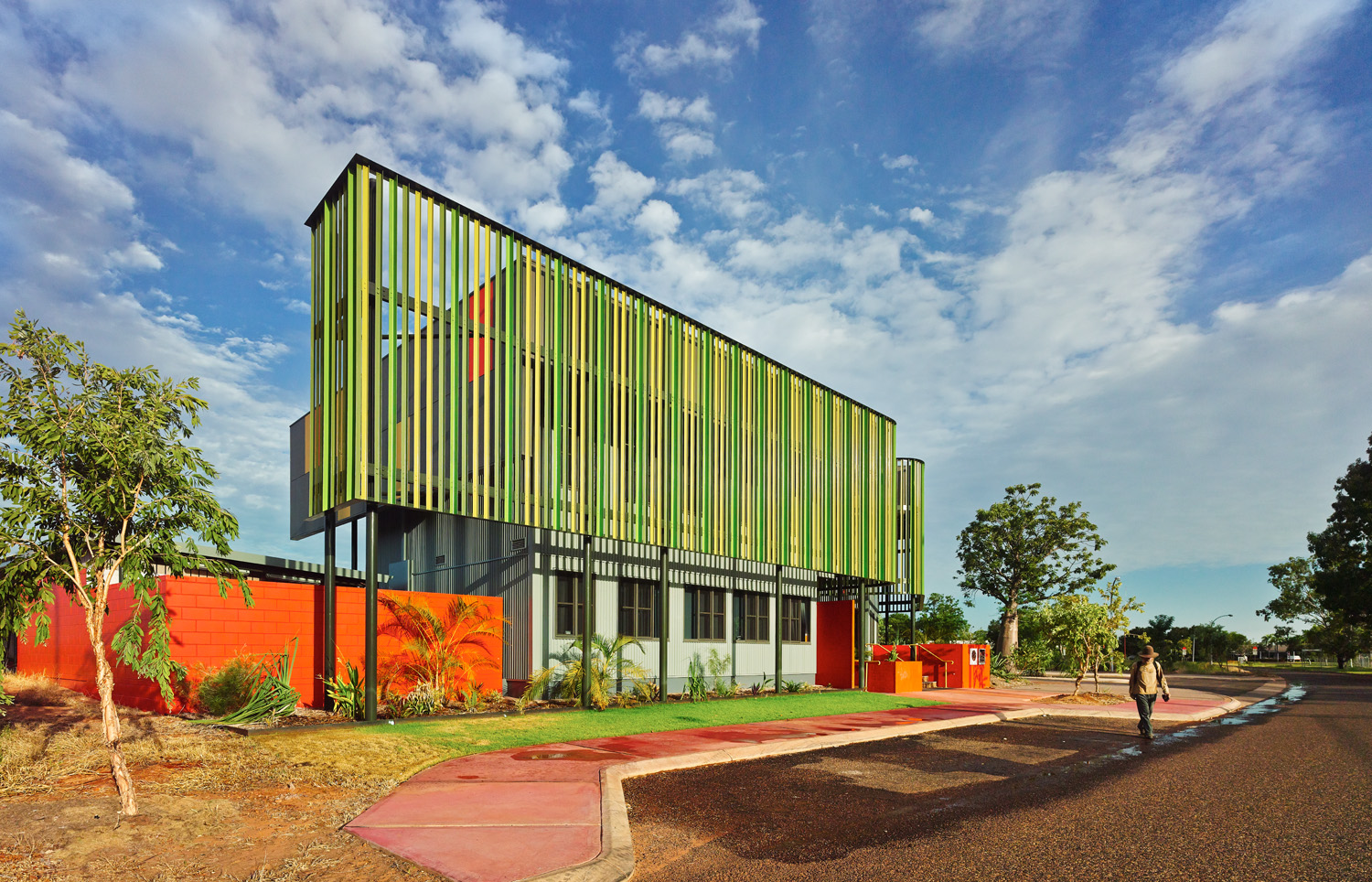
MG/GT Administration Building
Of politics
These challenges are, at their heart, political. The rhetoric of “better design practices for healthy housing” slips easily off the tongues of politicians, but can so easily disappear in the complex and exhausting chains of middle-management tasked to deliver it.[8] Working within a political system designed to support and feed an ever-burgeoning bureaucracy places emphasis on the new, the quick and the initial cost, and diminishes the value of life cycles, incremental and evolutionary improvement and community-led feedback loops.
Of land, right?
In our work with the Quandamooka community onMinjerribah (North Stradbroke Island, Queensland) we’ve experienced the effects of recent native title determinations and the striking political strength of traditional owners, who have been bruised and pilloried by “locals” during the process. Native title and land title tension between third-generation holiday-makers and a culture built over millennia simply adds to the generational trauma. Rather than building bridges between community members, it can result in fractured opportunities to work together across boundary lines of freehold and reserve lands.
… and ‘action’!
One of the greatest challenges lies in procurement processes that are predicated on the rhetoric of the right “action” words, yet fail to deliver meaningful change or actual outcomes. The neoliberal development patterns, project management processes and de-risked delivery models espoused by governments and private consulting firms must be reimagined. Time and again we have seen Indigenous organizations struggle with “corporate knowledge” and the never-ending bureaucratic processes designed to “build capacity.”[9] We need a model that is the right fit culturally and commercially, and one that can be led by Indigenous communities.
It may be difficult to imagine this alternative model, given that the Uluru Statement from the Heart’s most basic proposition of a Makarrata Commission[10] can be neither understood nor supported by our government. For us, this is emphatic evidence that current systems are not geared to facilitate and celebrate Indigenous organizations, native title holders and owners of culture, story and country.
This is one of the reasons we seek to work directly with traditional owner groups, post-native title determination, on their own country and on their own projects. Unfortunately, though, this work is not always on their own terms. Why not? Because the strings tied to funding, land release and the “economic transition strategy” require the use of standardized bureaucratic processes and conventional project management and milestones. Government briefs set targets and outcomes that can be identified within electoral cycles. It is impossible to resist the colonising effects of these kinds of procurement processes.
Karratha Central Healthcare
What then of the future, the possibility inherent in community as more and more post-native title determination communities are recognized, formed, re-formed, imagined and projected?
Is there another way forward that doesn’t solely use the “rational,” Westernized economic development model to empower communities?
We are optimists – our work is always imagined in a (brighter) future. We imagine Australia as a Fourth World in which this is not a pejorative term denoting marginalization, disempowerment and despair, but rather one describing, as the Uluru Statement from the Heart states, “a fuller expression of our nationhood.” It is a country of empowerment and reconciliation, truthful and open to Indigenous voices. Getting there will require political maturity, genuine reconciliation and a collective re-casting and reimagining of the post-colonial, neoliberal malaise that got us here in the first place.
We dream of this place. Where our country, continuous narratives and human relationships intersect to create a new way – our Fourth World teaching us to walk together and transform the First.
[1]Goompi, Minjerribah, Queensland; Broome, West Kimberley, Western Australia; Kununurra, East Kimberley, Western Australia; and Malkala, Groote Eylandt, Northern Territory.
[2]George Manuel’s The Fourth Worldis a searing indictment of the mistreatment of marginalized Indigenous and state-less peoples around the world. This powerful work, by the leader of the National Indian Brotherhood (predecessor of the Assembly of First Nations) in Canada, laid the intellectual foundations for the establishment of the World Council of Indigenous Peoples in 1975. Manuel and his Indigenous colleagues from countries around the world brought a radically different perspective to international politics, one based on the shared experience of colonization, the often brutal suppression of Indigenous cultures and a passionate determination to assert control over their future.
[3]See also Nicolas Rothwell, Our Fourth World, The Australian, 30 May 2009, theaustralian.com.au/news/inquirer/our-fourth-world/news-story/5e9e55ddcafc0194a2933c92a5212651 (accessed 24 October 2018)
[4]Kim Mahood, White Stigma, The Monthly, August 2015, themonthly.com.au/issue/2015/august/1438351200/kim-mahood/white-stigma (accessed 24 October 2018).
[5]ABS data in 2014 revealed that people living in very remote parts of the Northern Territory were only expected to live until 52.2 years of age, while people living in remote areas had life expectancy of 62.6 years of age. The life expectancy for very remote Territorians was more than 10 years behind the Australian average of 63.9.Jill Poulsen, ABS stats show that life expectancy in Territory years behind rest of Australia, NT News, 17 November 2014, ntnews.com.au/news/northern-territory/abs-stats-show-that-life-expectancy-in-territory-years-behind-rest-of-australia/news-story/e5cc22869faf11ea9cadf989e620b6f4 (accessed 24 October 2018)
[6]See figure 9 in Tess Lea and Paul Pholeros, This is Not a Pipe: The Treacheries of Indigenous Housing, Public Culture22, March 2010. researchgate.net/publication/249879335_This_Is_Not_a_Pipe_The_Treacheries_of_Indigenous_Housing (accessed 24 October 2018)
[7]Kieran Wong, We need to stop innovating in Indigenous housing and get on with Closing the Gap, The Conversation website, 31 May 2018, theconversation.com/we-need-to-stop-innovating-in-indigenous-housing-and-get-on-with-closing-the-gap-96266(accessed 24 October 2018)
[8]Commonwealth of Australia, Department of the Prime Minister and Cabinet, Remote Housing Review: A review of the National Partnership Agreement on Remote Indigenous Housing and the Remote Housing Strategy (2008-2018), pmc.gov.au/sites/default/files/publications/review-of-remote-housing.pdf. See “Part 4.5: Over the course of the Strategy many lessons were learned (or re-learned)”
[9]These challenges and the self-fulfilling process is eloquently outlined by Tess Lea in Bureaucrats and Bleeding Hearts: Indigenous Health in Northern Australia, UNSW Press, August 2008.
[10]Uluru Statement from the Heart, presented at the First Nations National Constitutional Convention, May 2017. referendumcouncil.org.au/sites/default/files/2017-05/Uluru_Statement_From_The_Heart_0.pdf
Thank you to Ingrid for the amazing Welcome to Country, I too pay my deep respects to the owners of this land, the sovereign Nyungar nations, and the Whadjuk people, and thank them for the gracious hospitality on this country.
Whadjuk Nyungar have managed this coast for tens of thousands of years, caring for country through cultural ceremonies such as song, dance and use of fire. We feel privileged to work on such country, and honour the ongoing legacy of the Nyungar nation to our shared future.
Many thanks to you, Cameron for coming to support us in the launch of our new adventure and for supporting us in your previous role as Editor In Chief of the Architecture Media. We feel so grateful that you would come all this way to see us on this new journey.
So, I thought I might say a few things about TheFulcrum.Agency …
We are made up of many of the band members from CODA and come from more than two decades in practice – and we also have a couple of new players in the line-up.
We continue to work with:
Nick Juniper as Associate Principal
Emma Brain as Head of Communications
Heather MacRae as a newly minted Associate
Sarah Besly as long-standing Associate
Akira Monaghan, Architect
We have worked together with these fabulous people for between five and 10 years and they have all been instrumental to us pushing forward bravely into uncharted waters – and helping us pivot when we realised the seas were too rough.
And we have some new band members:
Brad Wetherall, Graduate Architect
Claire White, Architect, and, most recently been joined by
Michael Gay as a Senior Architect
Despite the seemingly unsettling naming of our practice as an agency, I can confirm we are still architects.
But before I go forward and too far down the line of saying who we are I want to go back a couple of steps because a lot has happened to us over the last few years on the work front…
A few years ago, Kieran and I started to talk often about our mid-life crisis.
Being a year older I started mine first. I was hit by the fact that I was fast approaching the mid-point of my working life and I didn’t want to fall into the second half without giving it some serious consideration.
I was relieved when Kieran started his own mid-life crisis and joined me in this angsty and tormenting journey as we took a long hard look at what we had achieved, what we wanted to achieve, where we felt our passions lay and what we thought we were good at.
As mid-life crisis go, I actually think it went quite well. We bought a vintage car to restore and decided to celebrate the achievements of our work in a big 20-year anniversary party for CODA.
Although Kieran and I co-founded CODA we came to feel more like custodians of it and in order to continue its growth trajectory we decided that we needed to find a partner, so we hit the dating scene.
After testing the water for a bit, we jumped into bed with one practice and decided to get hitched … And then in no time at all we got divorced!!! … All the while remaining actually married to one another (another positive outcome at the end of the mid-life crisis).
The chance to recast ourselves anew has been liberating to say the least. We have had a deep cleanse. If anyone has read or seen Marie Kondo we have sought to spark joy, consolidating the things that we feel passionate about into this new practice. It has been a unique opportunity to consider what we want our next half of working lives, and our practice to look like.
At CODA we used to talk about being useful, being generous, being joyful and being stealthy. Our practice was driven by these tactics, and underpinned by values around social justice, equity, inclusion and progressive approaches to our profession.
These values remain constant, and have helped to propel us forward, and framed our decisions.
These values have reminded us of our appetite for information and knowledge, our deep interest in other people’s stories and our desire to use architectural design thinking to unpack problems, and to expand them in order to find solutions that meets the aspirations and needs of the communities we serve.
Our new practice has given us the rare and privileged opportunity to recast the way we want to live our work-life, to be agile and engaged as a smaller, nimbler, expert and enquiring collective.
So, if we continue to consider these practice moves as milestones in our relationship status tonight is surely a renewal of our vows – and an opportunity to make a declaration in front of you all about our hopes for our future and to reaffirm our values and our love of the importance of design thinking.
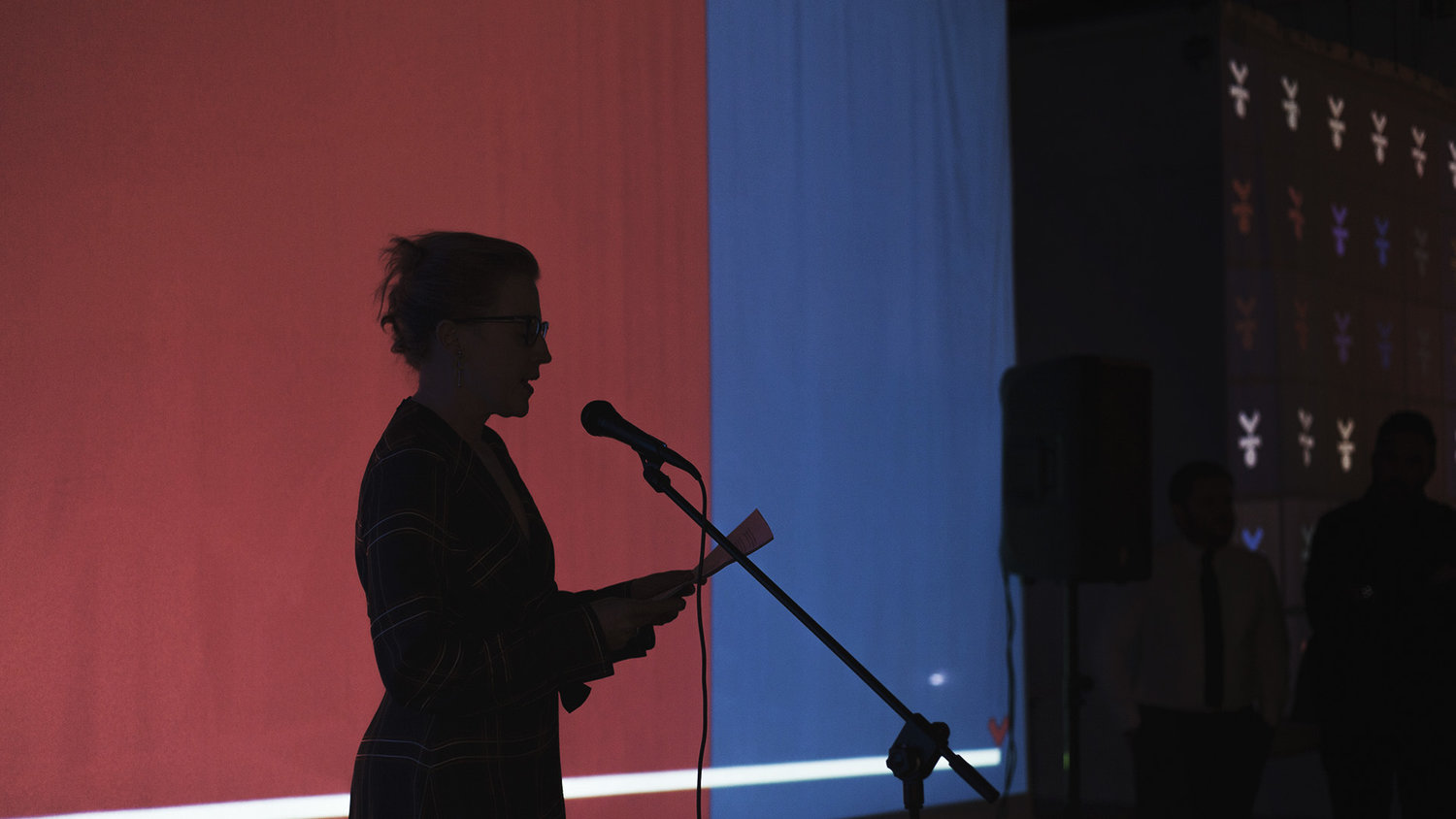
Emma Williamson and Kieran Wong launch TheFulcrum.Agency
Like any wedding our audience is made up of people who are very special to us.
You are the village of family, of friends, of colleagues, peers, clients and collaborators who have helped to support and shape us over the years. We would like to thank you all for your support of us and your collective intellect and wisdom that has helped to spur us on.
So here we go:
Kieran
We will work using a clear lens of social justice, to seek balance between the inevitable tensions of the contemporary world, and our ancient past.
Emma
We will maintain our values of generosity, usefulness, joyfulness and stealth
Kieran
We will collaborate openly and genuinely, within our practice, with other practices, with our clients and our peers. We do this because we believe in the powerful and potent outcomes that can be achieved when we meet challenges with an open mind and open heart.
Emma
We will look for ways of being generous in the way we work together, with others and for others. We look for ways of finding generosity in all of our projects and ensuring that they serve the communities in which they are located.
Kieran
We will continue to work for equity in the profession, to seek new models of practice, and be open to change and renewal.
Emma
We will work hard to ensure the work we do is enjoyable, by ourselves, the people working on it and the people for whom it is intended.
Kieran
We will seek out people’s stories, celebrating diversity and adjacency, and always striving to serve with impact and purpose the wide range of communities who choose to work with us.
Before I wrap up there is one final thing and another important dimension to this launch.. (and another quick story!)
Before we had even come up with a name for our new venture, or Kieran had had a chance to try his hand at prototyping business cards … we called on our dear friends Mark and Tanya who have been leading the way at Block Branding.
They are responsible for our branding but also (and critically) for helping us to filter through our sometimes tangential threads around what we want to be to help us arrive at the idea of publishing a journal.
Having worked on our first ‘smoke and mirrors’ campaign 15 years ago when we had no real built work to speak of to this new practice identity has been a fantastic journey and a relief to have some content to contribute! They are true collaborators and we really cannot thank them enough.
In a very short space of time along with Mark and Tanya, and Emma Brain we have worked to pull together this first edition of our biannual journal in which we ponder – and ask other to ponder – the idea of the word PIVOT. This means different things to different people as you will see.
I can say quite truthfully, that making a big career change and moving to the outer limits of your comfort zone at a time when you have competing responsibilities (children / mortgage / aging parents) is not for the faint hearted. I must say, however, that I have found the experience strangely refreshing.
This has certainly been our very big pivot.
The journal has reminded us and made us very grateful to the support of our community. We came late to a very clear idea of exploring a single word with each issue. At VERY short notice and without hesitation all of the contributors agreed to be part of this and trusted that we would deliver on our promise of producing something that we can all be proud of. I would like to thank them all for their efforts but also for giving me the sense that you trust us to deliver on our passion to bring people together.
We are looking forward to unpacking and sharing more words and more stories in coming issues.
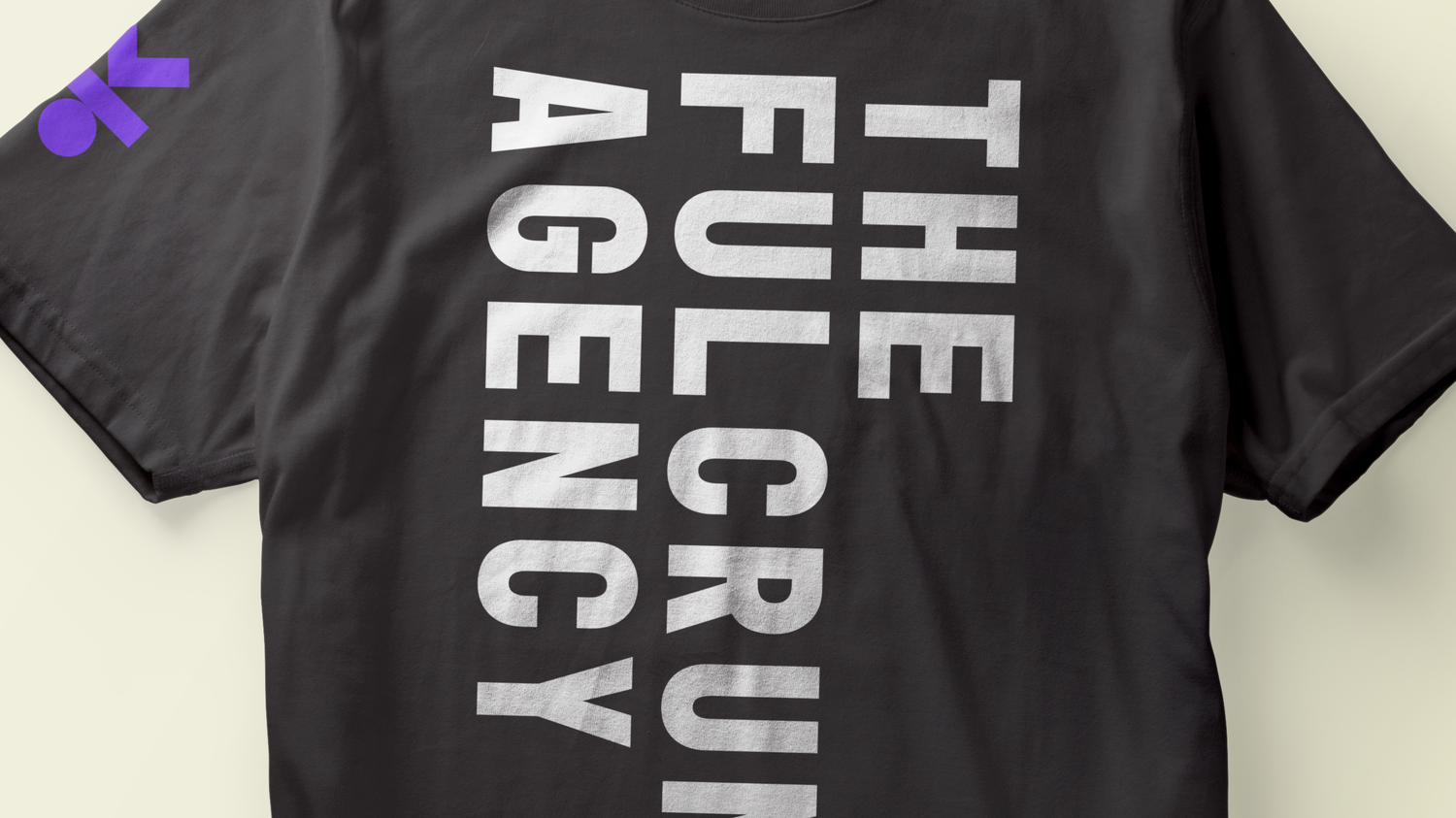
Things have taken a bit of a turn with the development of TheFulcrum.Agency brand. As we thought about the launch and how we wanted to present ourselves to the world, it became increasingly apparent that the usual ‘website with pretty pictures of projects’ approach really didn’t make a lot of sense for a practise that’s not only concerned with the built outcome, but with an evidence-based approach to all it does.
PIVOT PAGINATION V32
With this in mind, it became clear that we needed to find a format that could give context to the aims of TheFulcrum.Agency. We wanted something that would have value beyond a marketing launch – and so was hatched the idea of TheFulcrum.Agency as content creator and curator. What if you could hold all that the Agency stood for in your hands – what would that look like?
190331 PIVOT 7×9 LAYOUT 2 WIP40
And so we have been scrambling over the last few weeks to answer that question and bring it to life. The result? TheFulcrum.Agency’s very own Journal, the first issue of which will be entitled ‘Pivot’ and deal with issues of ‘changing direction’ in the personal and professional realms, the artistic and the academic , the theoretical and the built.
190331 PIVOT 7×9 LAYOUT 2 WIP33
So, four weeks from idea to launch for a 80 page magazine. Sure, we can to do that.
Branding case studies tend to be written at the end of the project. They traditionally present the process as a beautifully considered linear one – the reality though is usually quite different. Immediate needs and priorities have to be accommodated. It’s rare that you have the opportunity to wait for a scheme to be completely resolved before certain applications have to go into production. This provides the opportunity to test and develop the concept while applying it to real-world situations.
190331 TFA APPLICATIONS
As a going concern, there TheFulcrum.Agency requires branded items to be produced and delivered before the brand is officially ‘launched’.
We’ve always been impressed with American entrepreneurs and particularly tech and design creatives, to whom a key measure of success is embracing failure. There is an old saying in start ups that says if you haven’t been bankrupt twice you haven’t been trying hard enough.
This is really the opposite of a lot of firms we know in Australia, and probably of us at CODA – the fear of being seen as a failure, of changing tack, of downsizing, of down-grading, going backwards. These are all seen as some kind of diminution of practice, and there is a genuine fear of what the perception of this will be to the outside world. This fear of change, this conservatism is somewhat at odds with our perception of architecture and design practice as innovative, and of designers as optimists and change-agents.
The start up community is particularly instructive here – with the idea of the “pivot” replacing the notion of “failure” – this opens up all kinds of possibility, and re-frames an approach to business and to life.
TheFulcrum.Agency
should be an organisation that embraces (and actually chases) risk, is open to genuine change, and importantly doesn’t have a goal of being around In 20 years….we should be open to pivoting now, and again (and maybe again…)
Its important to credibly demonstrate the research work the Agency has done and is doing…both applied and pure research…
Some thoughts on how we might tackle the case studies section on the website:
Our work:
Case Studies:
Our work should always be described in terms of what we leveraged out of the project, and describe the challenge and upside that can be demonstrated. This is a pretty standard approach, but we should try to get a distillation of that into one paragraph…
We should describe as many of the connections that we used to make the project work – collaborators, clients, authorities, stakeholders etc
This could be a kind of matrix or map? A side bar list?
Each project study should be graphically rich, perhaps with “upside figures” and highlights
Ie: Broome North 24% reduction in household energy bills
There should be links outside of our website to the elements we talk about – like an article in WIRED etc, whereby the hyperlinks are underlined, so the way we talk about our work is always referential to others.
Call out sections – client testimonials, quotes or project highlights that don’t come from us.
Comments or elements of a jury awards report, or from the clients own website etc could be used here..
2. Area of Influence:
These might describe the areas of influence, rather than say project sectors (like education etc, which as secondary tags) – these areas could include:
Local Engagement
Citizenship
Education
– not as a sector, but as a process – ie: the project developed an educational model, or was interacted with through an educational model
Agency / Advocacy
– the process allowed users to advocate for a better outcome, assisted in designing a strategy or process for that effect
Policy
– effective changes and influence that utilised policy settings, or guidelines, or others to get the outcome sought by all…
Unity
– assisted to unify a community around a common goal?
Conversation
– generated conversation, or publication, or conference
Knowledge
– research outcome, ability to add to an existing body of knowledge…
etc
3. Contact:
There should be a contact person listed for each project – not who did it necessarily, but if you want something like this – whom should I contact? Either Emma’s, Nick or myself…but hopefully could be EB, or Heather?
4. More:
Should we have a downloadable PDF tear sheet?
Can someone who interacts with us build a ‘lightbox’?