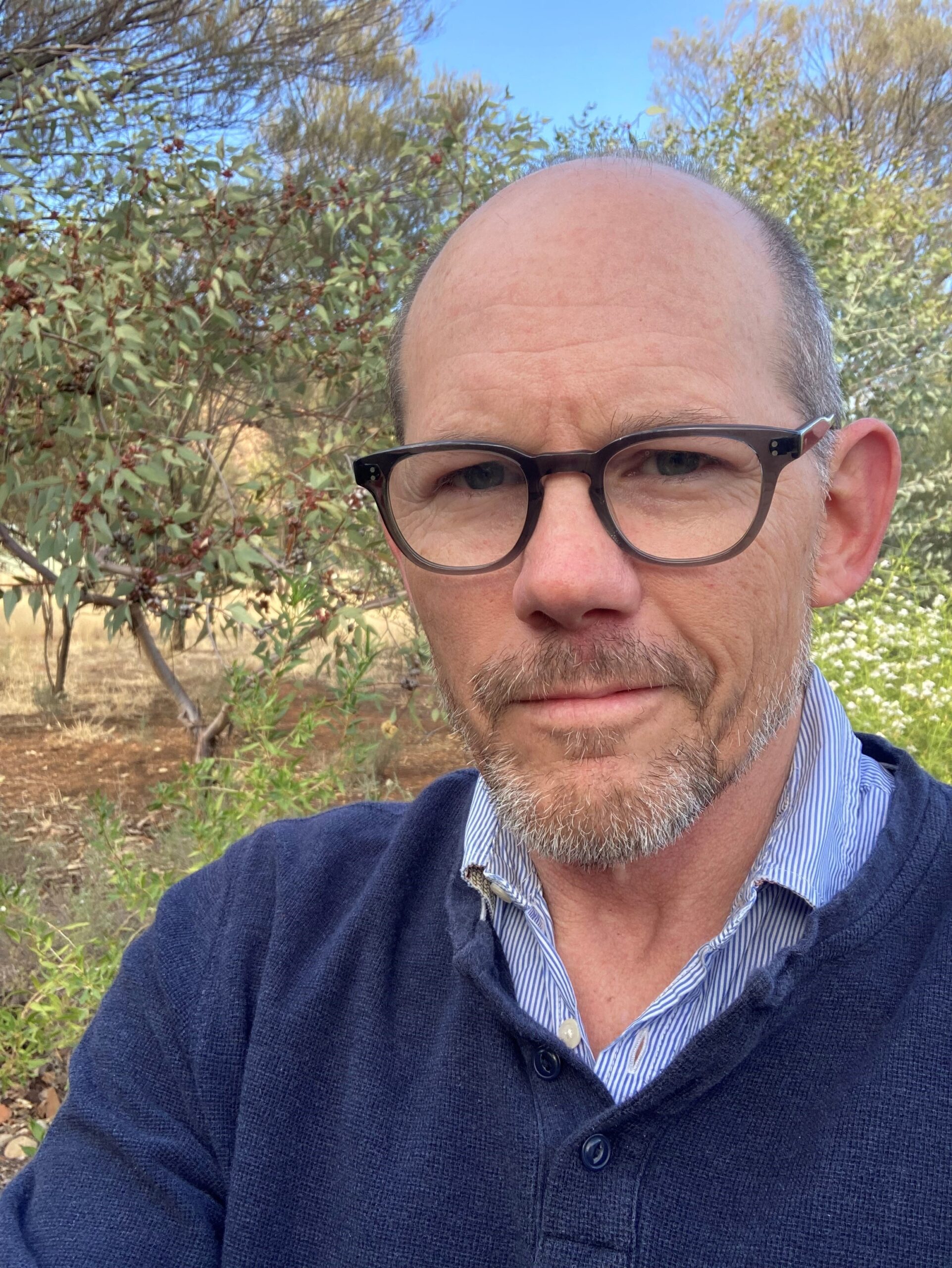
Our Sydney-based Principal, Andrew Broffman wrote this beautiful reflection for our journal Equity:
“There is a quietude on desert Country that permits stillness. It is a place where the busyness of life folds into the marks of geological history and creation. Here, human endeavour would seem to follow the cycles of time that govern the movement of the night sky, or the dry salt lakes that whisper of rains that have come and gone.
Yet we do much to shape this Country. We desperately cut the earth and scrape the soil. We choke the sky with a fine dust. We push water further from our reach. And the wealth that attaches to this extractive business is extraordinary.
At the same time, on the same Country, children sleep in broken houses while their parents squeeze the last few dollars of credit to keep the ceiling fans whirring against the summer heat.
On desert Country equity would describe a balance: an expansive horizon where we are not the shapers but the shaped.”
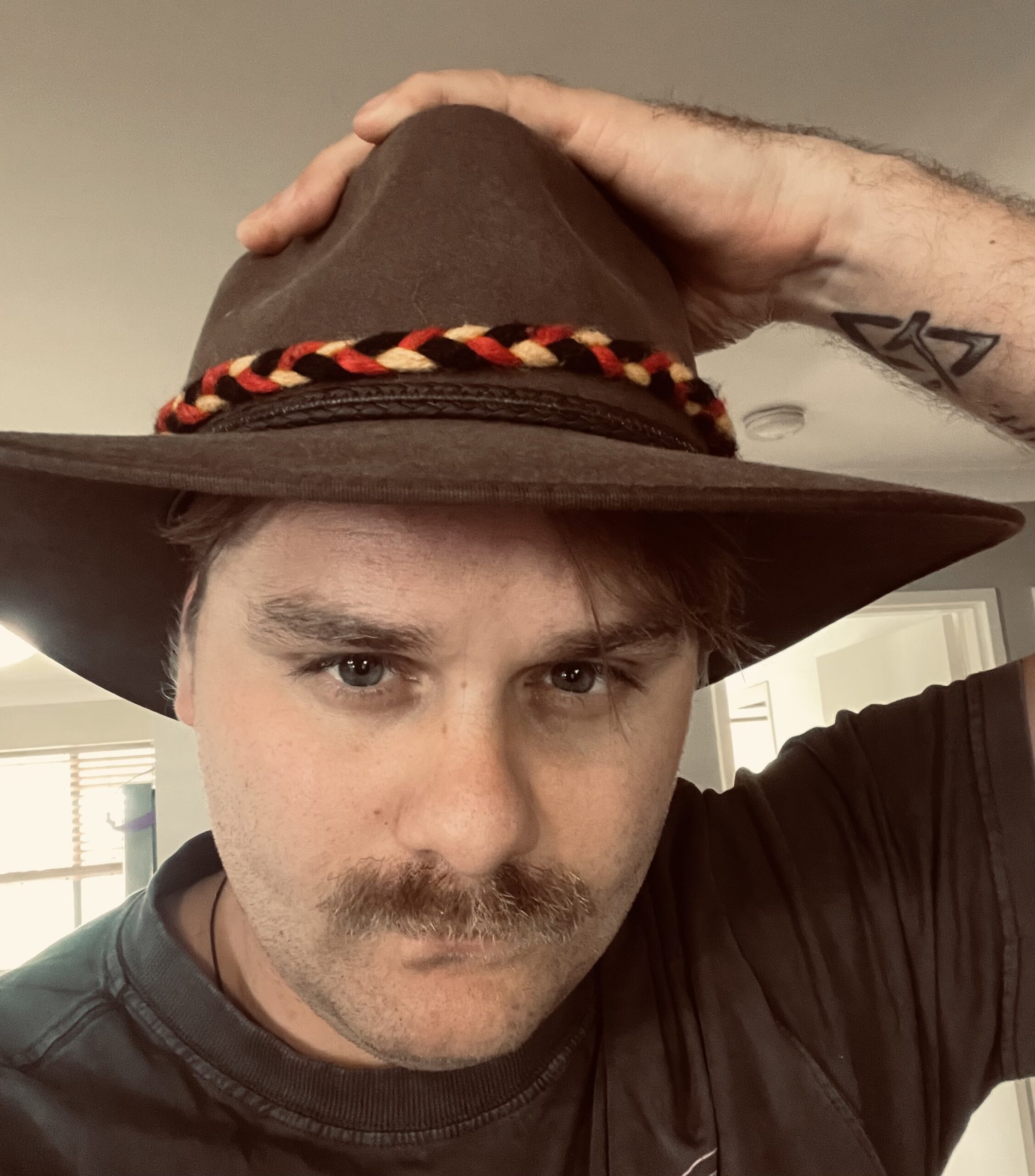
Zac James is a Wongi, Yamatji and Murri man, actor and theatre maker. This is his eloquent take on Equity*:
Equitable change, it’s a mouth full.
For a very long time, theatre has been the place to share stories, to stage our issues. To shed a light on the grim underbelly pinning our collective societies and, for a long time, there has been a drive for equality within that space. Equality without equity however lead to tokenistic gestures and unsafe spaces for more vulnerable minorities.
Zac James
For Aboriginal people, for myself, as a proud Aboriginal man, theatre of the 21st Century has been a mixture of trauma, dispossession and caricatures of our beings.
For Aboriginal people, for myself, as a proud Aboriginal man, theatre of the 21
st
Century has been a mixture of trauma, dispossession and caricatures of our beings. Oftentimes written by people that were not even First Nations. Yet there is change, a slow ripple that is growing into a chasm. A gaping hole that is being filled with our voices, full bodied, proud and triumphant.
Equity is making the space for people to tell their stories the way they are intended to be. To empower and enrich our families, our friends, the people we’re born to create art for. This change is power and it’s a welcome one.
* Zac’s words were first published in our fifth journal, Equity. 100% of all revenue generated through journal sales will be distributed to First Nations community projects through TheFulcrum.Fund. Copies can be purchased
here
.
Like many West Australians, we laughed hysterically at Premier McGowan’s ‘there’s nothing unlawful about going for a run and having a kebab’ comment. It provided a moment of collective joy during a period of grim lockdowns and fear. Textile artist, Emma Buswell, loved it so much she turned the iconic moment into a jumper, building on her portfolio of knitwear as social commentary. In Equity*, Emma shifts her attention to the infamous $11.99 lettuce of 2022, turning the motif into a wearable artwork and apocalyptic short story…
* Copies of Equity are available for purchase through
TheFulcrum.Press
, the content publishing arm of TheFulcrum.Agency. 100% of all revenue generated through journal sales will be distributed to First Nations community projects through
TheFulcrum.Fund
.
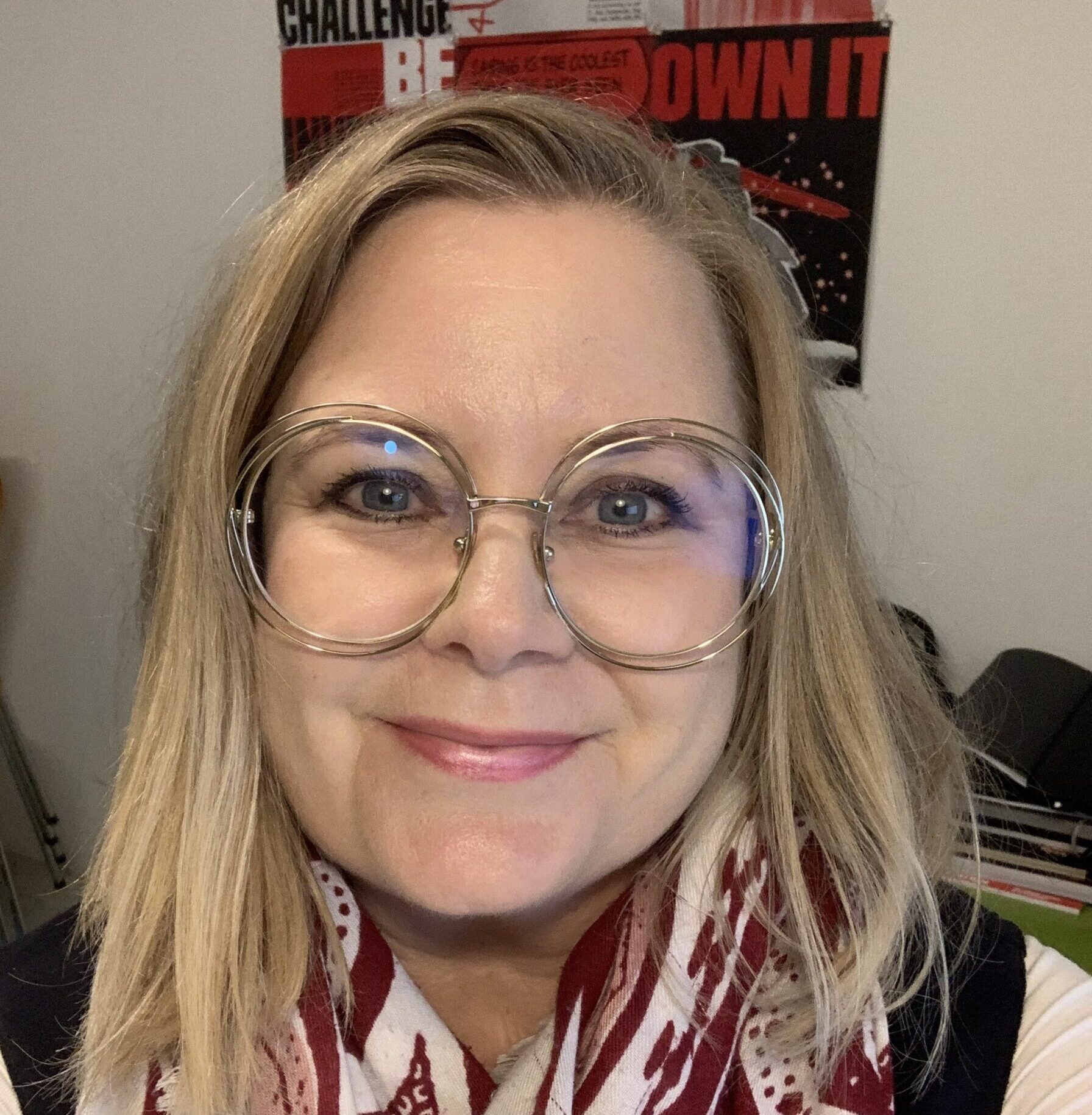
Stephen is the Principal at Highgate Primary School, located in Perth’s inner north. This is his thoughts on Equity*:
In my school there are over 900 students. The students represent 70 nationalities, there are 54 different languages spoken, we have two women’s shelters in our catchment area, and we have about 80 students who attend our Intensive English Centre. We have millionaires through to families living in cars. Lots of room for inequities. That is why notions of equity take up lots of my time and thoughts.
Does the kid who has just enrolled, escaping from domestic violence, and living temporarily in the refuge cause me some equity thoughts? You bet.
Does the child who just arrived in Perth, who can’t speak more than three words of English, currently enrolling in our Intensive English Centre cause me some
equity
thoughts? You bet.
Does the student whose school attendance has dropped below 40% due to family dynamics cause me some
equity
thoughts? You bet.
I have concerns about
equity
for nearly every student and family. Life is messy. You do you. Let me do me. That at least feels fair and equitable.
* This piece was first published in our fifth journal, Equity. 100% of all revenue generated through journal sales will be distributed to First Nations community projects through TheFulcrum.Fund. Copies can be purchased
here
.
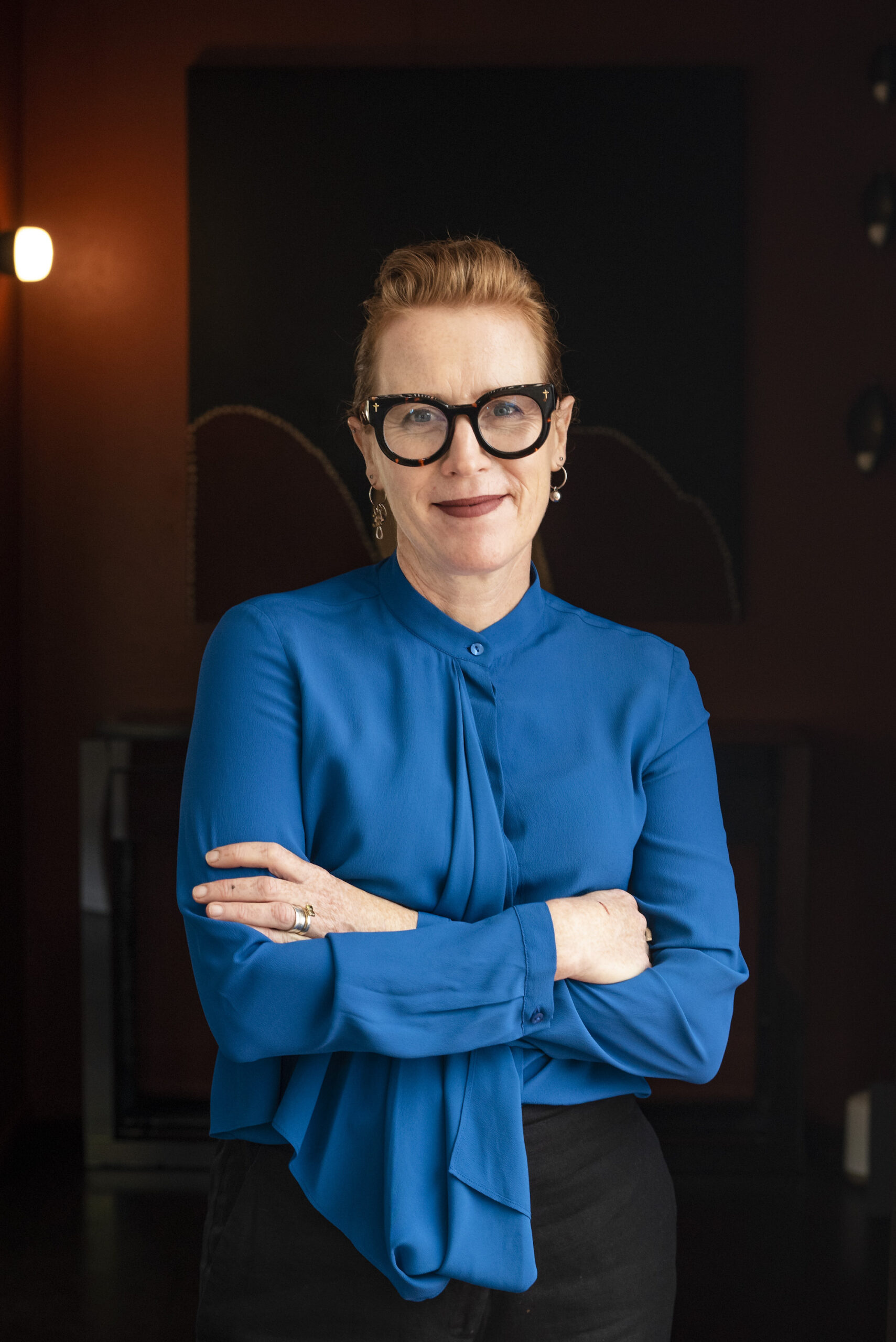
Natalie Jenkins is CEO at Block Branding and a champion of the arts in Western Australia. We were delighted when she said yes to our request for her thoughts on equity. This is what she had to say…
‘I think equity is a challenging lens to look through unless you’ve experienced inequity. To remind myself of what it means, I reflect on the cartoon showing the difference between equality and equity, where people of different heights are looking over a fence.
Giving them the same size boxes to stand on just gives the tallest one even more advantage over the others, whereas different size boxes – and only for those that need it, ensures they all get to the same level.
It illustrates that different measures are needed to ensure equity for everyone – it’s not about treating everyone the same and I’m comfortable with that.
Equity has a very different meaning in business/financial terms and I find it interesting to compare that definition to what equity means to me. It seems worlds apart, however in financial terms it reflects value and therefore, equity is valuable. That works for me.’
Natalie’s thoughts were first published in our fifth journal, Equity. 100% of all revenue generated through journal sales will be distributed to First Nations community projects through TheFulcrum.Fund. Copies can be purchased
here
.
Located in Victoria’s third most populous city, Nightingale Ballarat seeks to turn regional living on its head. Amelia Borg explores what happens when one of Melbourne’s most successful ethical developers brings their sustainable model to town.
Through innovative developments touted to address sustainability and housing affordability, Nightingale has gained an almost cult-like following within the Melbourne housing and architectural community. The Nightingale model was conceived to address a housing system that its founders saw as “inequitable, environmentally unsustainable and eroding the community it was meant to serve.
[1]
” The model promotes a triple bottom line approach to all developments prioritising financial, environmental, and socially sustainable outcomes. The founders had a vision for a new housing system; “It was about building homes, not real estate as a commodity. It was about fostering community to combat rising social isolation and designing buildings that positively tackled the issues of climate change rather than adding to the problem.”
[2]
Since its inception in 2007, the model and organisation have changed forms several times; however, these founding principles have remained, along with the motivation to remove what is seen as the exorbitant profit margins applied by developers. Homes are sold at cost price, with a 2.5% margin for Nightingale operations and access to purchasing apartments through a ballot system.
Response to the projects has been extraordinary, echoing a widespread hunger for new models of housing development. There is continuous popularity with potential homeowners while several Nightingale projects have received industry accolades, including National Architecture Awards for Housing and Sustainability. To date, Nightingale has delivered thirteen multi-residential developments, mostly in the inner-city suburbs of Melbourne, with another fifteen either under construction or in development. The model is gradually shifting beyond Melbourne, with soon to be completed projects in Marrickville (NSW), Bowden (SA) and Fremantle (WA). The first regional Nightingale has just been completed in Ballarat and was designed by Breathe Architecture.
This project came about through a desire to address the issue of urban sprawl through the Nightingale lens. Located 113km north-west of Melbourne, the current population of Ballarat is close to 116,000 making it the third largest city in Victoria. The city is undergoing huge growth, with the population projected to rise to 160,000 by 2040
[3]
. Up until now, this growth has been accommodated in newly formed suburbs sitting on winding streets on the outer fringes of the city, where new house and land packages of almost identical appearance are sprouting up on what was once agricultural land. Suburbia is springing up in all directions.
On top of this, the houses that are being built are much larger than they need to be; 65% of the households in Ballarat have a make up of 1-2 people, whilst less than 20% of the dwellings are 2 bedrooms or less
[4]
. This type of development has a significant impact on the environment and continued sprawl has exacerbated the reliance on cars for transportation. In response, the City of Ballarat created a comprehensive strategic plan to increase medium-density housing within the centre of town. The Nightingale project was to act as a test case, building appropriate-sized dwellings in the centre of town, whilst also having the job of changing community attitudes towards apartment living.
As suburban sprawl seems to continue unabated, it is examples such as this that will change attitudes in this type of context and accelerate the production of and access to more quality housing.
Back in the 1900s, the centre of Ballarat was bustling and vibrant. The gold rush began in Ballarat after the discovery of gold in 1851. For a time, Ballarat rivalled Melbourne in terms of wealth and cultural influence and continued its prosperity until the late 19th Century. During this time the city was lively and easily traversed by foot or public transport. At its peak in 1937, the Ballarat tramway network was the largest in Australia outside of a capital city and many people lived and worked in the centre of town
[5]
. Now the city is dominated by cars and the centre is made up of commercial and retail spaces with very few homes.
Located in the city centre, the Nightingale site is close to key amenities including the civic centre, hospital, library and train station. The site used to be a lawn mower factory and the immediate surrounds include low-rise industrial buildings with some residential neighbours to the west. The building responds to its context through generous and thoughtful setbacks. On the east, the frontage matches the height and materiality of a neighbouring heritage brick warehouse. Supersized brick archways punch into the facade providing a rhythmic second skin to the street and activation to the commercial tenancies on the ground floor.
Offering a total of 33 dwellings, the make-up of apartments is predominately two-bedroom. All apartments are organised around a large central void and courtyard, which is surrounded by a ring of open-air walkways. These internal streets not only provide fresh air and cross ventilation to each of the apartments but also act as a place for children to play and residents to encounter one another. Residents share a communal laundry and have access to a communal dining space and veggie garden. In all Nightingale developments, a portion of the apartments is allocated to a community housing provider. Here, five homes were pre-allocated to Housing Choices Australia and were designed with specialist accessibility features.
This building continues Breathes approach in the reduction of materials. Superfluous finishes are done away with, including the removal of all unnecessary plasterboard and other linings, concrete ceilings and floors are exposed, as are fire and hydraulic services. Materials were sourced locally where possible; the bricks came from a recently demolished nearby warehouse and the timber floorboards were also recycled and sourced locally. Local craftsmen were enlisted to make the windows, pre-cast metalwork and joinery.
The building has an impressive list of sustainable features. As with all Nightingale projects the building is carbon neutral in operation and has an 8+ NatHERS rating. All materials have a low embodied energy and toxic glues or adhesives were avoided. The building is 100% electric with the roof hosting a 27.65KW photovoltaic array, it has embedded Green Power and is completely gas free. A CO2 heat pump provides hydronic heating to apartments.
Consultation with the community happened throughout the process to ensure that the design response met the specific needs of a regional context. Apartments are generally larger than the city developments with the addition of separate study spaces. There are no studios, and more 3-bedroom types are offered than what would be in an inner-city context. Whilst most of the inner-city Nightingale developments cut out car parking altogether, in this context that would be a hard sell, so 14 car spaces were built and could be purchased separately to dwellings.
The previous inner-city Nightingales have been most popular with first home buyers looking for a home that is competitively priced to other apartments but offering principles of sustainability as well as a strong community. Interestingly and to the surprise of the project team, the demographic of those purchasing into Ballarat were predominately older couples who were downsizing and didn’t want the responsibility of upkeeping a block of land, as well as older single women who wanted to be part of a community.
This project acts as an exemplar model for medium-density housing in a regional context. It provides a refreshing alternative that champions environmentally sustainable living and the potential to build strong communities through responsible development. As suburban sprawl seems to continue unabated, it is examples such as this that will change attitudes in this type of context and accelerate the production of and access to more quality housing.
* This article was first published in our journal, Equity. Copies of Equity can be purchased at The
Fulcrum Press
, with all proceeds going to projects within First Nations communities.
The Fulcrum Agency is delighted to announce that our Co-Founder, Emma Williamson, has been awarded the
2023 Paula Whitman Leadership in Gender Equity Prize
by the Australian Institute of Architects. This prize acknowledges Emma’s outstanding leadership and contribution to the advancement of gender equity in architectural practice, education, and governance.
As she reflects in the film above, Emma’s career has been a study in two parts: contribution to practice through the founding of CODA Studio and then The Fulcrum Agency, two respected, ethical, and award-winning practices; and through her efforts as inaugural Chair of the AIA National Committee for Gender Equity and her advocacy on issues related to balancing
motherhood and work
, and
progressive business practices
.
At The Fulcrum Agency, we are thrilled for Emma and know her to be a compassionate and encouraging practice leader. She is ambitious and expects us to be the same. Most of us have worked with her for a very long time, which we see as a reflection of the warm, challenging, dynamic culture that she has created. Work/life with Emma is always exciting!
Equity says, ‘I need to treat people differently because of who they are and their history of prejudice and disadvantage’.
Franca Sala Tenna describes herself as a ‘non-lawyer’s lawyer’. She is a director at Equal Opportunity Specialists and perfectly placed to offer this passage on Equity:
‘Equity is different from equality. Equality’s challenge is to treat all people equally – this is already hard to achieve, as the biases of my upbringing prevent me from see everyone the same, and therefore sometimes, treat people less favourably than others.
The work I do in training for workplace behaviours, like discrimination, fits here. But equity goes a lot further than equality. Equity says, ‘I need to treat people differently because of who they are and their history of prejudice and disadvantage’. I’ve realised over the years there are different ways of living out equity. For some people, it is becoming one of ‘them’ – living with them and walking in their struggles. For others, it is advocating for the rights of minority groups – being a voice where they have none.
But for me it is giving money. I’ve realised that my gift in the space of equity is that I am good at making money and unattached to it staying with me. I am passionate about making a difference in the lives of women and children, in the space of health, education and personal safety and so this second half of life, for me, is to give away as much money as possible to these areas. Equity is a verb; to rebalance.’
Copies of Equity can be purchased at
TheFulcrum.Press
, with all revenue going towards project in First Nations communities.
Equity means …. applying a human rights lens to
Everything
… in the hope of removing the systems of inequity and oppression that have persisted for far too long. I’m proud of my Somaliland-Anglo heritage, it is central to shaping my identity, values and beliefs. I’ve experienced racism, micro-aggressions and bigotry; been judged by the colour of my skin and not the content of my character or ability.
A lifetime working in human rights has provided me with a solid foundation to navigate intersecting systems of oppression. I have used my voice to fight for racial justice and feel a rage at the treatment of First Nations people in this country. There is no greater equity issue than standing in solidarity to support the Uluru Statement and Voice to Parliament.
As migrants to this amazing country we must all learn the true ‘his/herstory’ of this nation because healing the past benefit all of us.
* Copies of Equity can be purchased through the
The Fulcrum Press
with all proceeds going towards projects in First Nations communities.
As a signatory to the 2017 Uluru Statement of the Heart, Dr Josie Douglas is deeply invested in its process and petition to the Australian people. In the latest edition of The Fatin Tapes*, Meri Fatin chats with Josie about her drive for social justice and the enormous potential offered by the Voice to Parliament for First Nations people.
Meri Fatin (00:00:00
Josie, it’s interesting timing talking to you in the middle of Reconciliation Week. It seems to mean different things to different people, even in terms of using the word “reconciliation.” What does it mean to you?
Dr Josie Douglas (00:00:42)
It (reconciliation) must start with settling the original grievance of Australia – that sovereignty wasn’t ceded. I want to focus on the Uluru Statement from the Heart and focus on that. Sequencing is very important. The Voice to Parliament is first and foremost, and then cascading from that is Treaty and Truth Telling. And that comes in under the establishment of the Makarrata Commission, which is a Yolngu word that means coming together after a conflict. I really do think that for substantial reconciliation for Australia as a modern nation, it needs to be led by the Commonwealth in settling the original grievance.
Meri Fatin (00:02:30)
On election night the Prime Minister stood up and started his victory speech by saying that he commits to the Uluru Statement from the Heart in full. What did it feel like to hear him say that?
Dr Josie Douglas (00:02:46)
It was pretty extraordinary. I think there were a lot of tears of joy shared around Australia by Aboriginal and non-Aboriginal people. I think there’s real hope but it needs to be delivered.
I was involved in developing the Statement through my work at the Central Land Council. It was an exhilarating process given the state of Aboriginal affairs and the lack of progress in terms of constitutional reform. We had five Prime Ministers, both Coalition and Labor, committing to constitutional reform but who kept kicking that can down the road.
And so now we’ve got a newly elected government, the 47th Parliament, and I think that Aboriginal leadership around Australia is really hoping Labor will deliver on its commitment to implementing the Uluru Statement from the Heart in its entirety.
There were a lot of tears of joy shared around Australia by Aboriginal and non-Aboriginal people. I think there’s real hope but it needs to be delivered.
Meri Fatin (00:06:34)
A friend pointed out to me that the word reconciliation implies that at some point the relationship was one of equals and that they just need to sort things out. And that’s not the truth, which is what you’ve spoken about with sovereignty not being ceded.
Dr Josie Douglas (00:06:57)
Yes, and that’s what the voice to parliament is seeking to address. It’s actually in the statement – I tend to quote it – it’s the powerlessness of our people. Even though in this election we’ve had the highest number of Indigenous people voted into Parliament, we’re still only 3% of the population and so it’s very difficult to influence policies and laws that are being made about Indigenous people.
Of course, we have our peak organizations. But there’s something much more fundamental to Aboriginal and Torres Strait Islander people having a voice and being able to influence the laws and policies that are made by Parliament. Indigenous people are tired of each new government coming into power, coming up with a different policy setting and different legislation for Aboriginal affairs. It feels that we take one step forward, two steps backwards. So, the voice to Parliament is about ensuring that those decisions that impact Indigenous people’s lives are taken out of the realm of politics, out of political ideology, and into the realm of Indigenous people having a say over matters that impact our everyday lives. And that’s whether you’re in a remote community in Central Australia or you’re in a metropolitan urban area. I think Aboriginal and Torres Strait Islander people really want to be able to provide advice to Parliament, not to government. And that distinction is important. Having a substantive amendment to the Constitution will compel Parliament to consult with us.
Josie Douglas and her sister Cass
Meri Fatin (00:10:38
You talk about it as a substantive change to the Constitution, and it’s interesting that Mr. Albanese has committed to the Uluru Statement of the Heart in full. Earlier iterations of what previous governments were willing to propose as a change to the Constitution were watered down versions of the full Uluru Statement. What do you think that interim period is going to be like for Indigenous people as that process begins of convincing people who don’t see a voice to Parliament as something that ought to happen?
Dr Josie Douglas (00:11:31)
I’m much more hopeful when it comes to the Australian people and where they’re at. I think finally government has stepped up to the plate and they’ve caught up to where society is at. What needs to happen between now and if we go to referendum in May 2023? I think it’s important to have an education campaign, so people really understand what the voice to Parliament is about, what the constitutional reform agenda is about, what it means and what it doesn’t mean. I think there’s also a lot of misinformation and misunderstanding within the Indigenous community over exactly what it means.
Meri Fatin (00:14:24)
What’s it been like dealing with the pandemic in Central Australia? How much agency have you had in being able to direct things the way they needed to be directed in your part of the world?
Dr Josie Douglas (00:14:38)
So I’m currently the General Manager for the Health Services Division at the Central Australian Aboriginal Congress, which is the largest Aboriginal community-controlled health provider in the Northern Territory and one of the largest in Australia. We cover the town of Alice Springs as well as five remote clinics. It has been challenging and difficult. We’ve had workforce issues, like there has been around Australia in terms of health professionals and staffing, but I think in terms of being community controlled, we’ve been able to respond quickly to people in need. It’s much more than just ensuring that people are getting their first, second, third, fourth vaccination. It’s the whole wraparound service ensuring that there’s food security, there’s energy security, that people aren’t missing out on benefits because they’re in isolation or they’re a close contact. So, it’s been about looking after the complete person and full complement of their needs as well as their needs in relation to the pandemic. It’s been a real feat and I think it comes back to Congress being able to respond in an agile and flexible way to the needs of community. And in responding to the pandemic as a primary comprehensive health service, we’re also mindful that there’s the health needs of our clients that we need to be managing including chronic disease and childhood immunizations. So, all that business of delivering comprehensive primary health care had to continue in our remote clinics and our town clinics. We had to make changes to how we were operating in early 2022 when there was the outbreak of COVID in Alice Springs. And that meant we had to pull staff back into one central clinic and focus our resources on responding to the pandemic.
Meri Fatin (00:19:27)
I read a news article from early 2022 where you were calling for the ability to put the communities into lockdown for a week. You were being overruled by the government. What happened there?
Dr Josie Douglas (00:19:53)
We wanted government to mandate lockdown for one week only. It was just to buy us time to get the supply in. Our supply was an issue at that time. We weren’t getting on top of the outbreak. It was spreading across town camps, across public housing in Alice Springs. And so the lockdown that Congress was calling for was to buy us time to slow the spread and to ensure that we could get adequate supplies of vaccinations, PPE, masks, you know, really important new medications that are available.
Meri Fatin (00:20:51
And did you succeed in that?
Dr Josie Douglas (00:20:56)
No, Government did not support our calls for a lockdown. So we just had to continue to do the best that we could. And I think Congress’s role in managing the COVID response in Alice Springs and remote clinics was exceptional.
Josie – keen trail runner!
Meri Fatin (00:20:51)
Josie, I’d love to hear a little bit about your story. About your mob and where you grew up and why you ended up doing this work?
Dr Josie Douglas (00:21:51)
Yeah, sure. I’m Darwin born and bred and I’m a Wardaman woman, that’s southwest of Katherine. So Northern Territory, Top End. I have been living in Alice Springs for thirty years. My husband is from Alice Springs, he’s a local Aboriginal fella. I love Alice Springs; it does get a bad rap at times, but it’s got such a strong sense of community. You come to Alice Springs, you hear language being spoken as you walk down the Todd Mall and you know that you’re on Aboriginal country and that you’re surrounded by Aboriginal people. It’s got a real sense of community, you know, Aboriginal and non-Aboriginal people. I like to think that Alice Springs is quite progressive, given the recent result of Marion Scrymgour, an Aboriginal woman winning the seat of Lingiari. You want to know a bit more about me? I’ve got four children and two grandies all Alice Springs born and bred. I suppose I’ve got a strong sense of social justice. Even as a little child, I was seeing things and questioning why? Why is it like that?
Meri Fatin (00:25:00)
Is there a story that springs to mind as an example of that?
Dr Josie Douglas (00:25:04)
I suppose as an Aboriginal kid in the seventies, just being very aware of the difference in how I was living, you know, the house that I grew up in, the extended family that was living in my house compared to some of my school mates. I think there’s a noticing. Noticing that’s an anthropological term, you know, noticing.
And I was I think, just noticing the differences from a very young age and always being curious about people and their stories.
My parents really shaped who I am. My mum Lorraine, was politically active combined with my Dad who had a really strong work ethic. Both growing up with not much but making the best of what they had. And I think my education was fundamental. It was always about ensuring that you got a good education so you could get a good job. Because I think not having a job in my family was like a sin. And that comes also from my Wardaman family – growing up working on cattle stations outside of Katherine and having a very strong work ethic despite the rations they were receiving.
Josie’s Children
Meri Fatin (00:28:43)
So obviously that noticing was felt deeply and it’s apparent across your career too.
Dr Josie Douglas (00:29:29)
What drives me to fight for social justice, both personally and professionally, is the social determinants. It is about housing. It is about access to drinking water. It is about having a better Community Development Program. It is about ensuring that all young people on remote communities are signed up to access the citizen entitlements that they’re entitled to receive and are not dependent on a great grandmother to financially provide for them. It’s all these social determinants of health that I strongly advocated for in my role at the Central Land Council.
Meri Fatin (00:31:23)
All of those components lead to the one outcome of good health and wellbeing.
Dr Josie Douglas (00:31:31)
Yeah, so now I’m at the pointy end of making operational decisions in terms of how health care is delivered. At Congress we have a strong CEO and Chair who are both advocating for policy changes to influence social determinants of health.
Meri Fatin (00:31:57)
I’m really interested in your doctoral research project. It was described in an article that you examined the lives of young Aboriginal adults and the role they fulfill in acquiring and transmitting Indigenous ecological knowledge. Tell me more about that, because this is a critical kind of moment where we’ve realized with human caused climate change, that we need to return to this kind of deeply known ecological knowledge.
Dr Josie Douglas (00:32:59)
Most of my working life has been within the cultural sphere. Whether it’s working at the Central Land Council, for an Aboriginal community-controlled health centre or many years ago at the Institute for Aboriginal Development. I’ve been lucky to be in Alice Springs, working with senior knowledge holders, particularly around language maintenance. People like M.K. Turner and Veronica Dobson, very senior knowledge holders, published authors and women held in high regard within the community for the depth and breadth of their traditional knowledge. So, over many years, I’ve heard the older generation talk passionately about keeping language and culture strong for future generations. And at the same time, the flip side of that is worry and despair that the younger generation weren’t interested in the old ways, that they were only interested in new ways. Senior Aboriginal people feel a moral imperative to pass culture on, which is the foundation to Aboriginal society, the continuity of Aboriginal culture going forward. So young people are seen as the heroes in terms of their role in that, but also the villains in terms of how they were undermining that. My PhD asked, where are the young people’s voices in all of this? It turns out they were missing.
The focus of my PhD was on the social and cultural practices of young Aboriginal people in relation to traditional and Indigenous ecological knowledge. Young people want to learn but my PhD reveals how things have been completely turned on its head in terms of the available time. People need to be out on Country to learn but that is being squeezed into school holidays. It’s not an iterative, daily learning process as it once was. It’s fitting it into a Western calendar. It’s fitting it into the availability of family members and senior family members.
There are genealogical gaps in the demographics of Aboriginal Australia. Families aren’t intact anymore. Generations aren’t intact anymore. So, young people aren’t born with culture, they grow up in the culture of their parents. My PhD unpacks the change the Aboriginal community has experienced over many decades and where young people see themselves in it. Young people want to learn, it’s just that they’ve got less time and less people to learn from. Fortunately, there’s been pragmatic and innovative approaches to the role of institutions in knowledge transfer. The role in Country visits, the role of school programs, the role of organizations like the Central Land Council in facilitating Indigenous ecological knowledge transfer. For instance, at the CLC young people and older people are involved in the ranger program, from a governance level through to doing the physical work on Country.
Meri Fatin (00:38:45)
What did you find was behind the perceived lack of engagement from young people?
Dr Josie Douglas (00:39:07)
It wasn’t about young people pushing it away at all. I think young people were desperate for more engagement, desperate to be doing more and learning more. But there’s so many challenges in the face of that. Young people are very interested in language and being out on Country. Young mums are interested in smoking their newborn babies and participating in different cultural practices. And I think engagement with traditional knowledge comes through in contemporary life, hunting, going out to collect bush foods or bush medicines. Beliefs and practices are still strong, it’s just that in a contemporary context it looks different. And it is different, but I think it’s still foundational to young people’s identities.
Sydney Peace Prize
Meri Fatin (00:41:26)
On the converse of that, you said part of the issue for young people is the fact that there aren’t as many people to teach them culture, there is the burden on senior Aboriginal people in the community and their responsibilities. What’s your observation on that?
Dr Josie Douglas (00:41:48)
I do write about this a lot in my Ph.D. that the responsibility does fall to a few. And that’s because of the mortality rate. It comes down to the life expectancy of Aboriginal men and women. There are genealogical gaps in Aboriginal families and that’s through early deaths. The situation is now that you have one old person in a culture camp or on Country teaching a group of 10 – 15 young people, and that within itself is new. That isn’t the traditional way of learning in terms of practice space, you know, that nexus between practice and belief.
Meri Fatin (00:43:39)
Would that ratio have been more one on one in the past?
Dr Josie Douglas (00:43:46)
One on one, plus you would have had a greater number of peers, of middle age people, of the older generation. You would have had a greater number wrapping around that little person from two, three years old and staying with them as they grew up. Whereas now what’s happened in terms of demographics is that you’ve got many more young people. You know, it’s a pyramid. Smaller numbers up top and more young people at the base. But there’s still peer to peer learning for young people. Some people will have grown up with grandparents and aunties and uncles who are very much going out bush, who are learning and knowledgeable, and they will teach their contemporaries, their peers. But, yeah, there were just many more people for young people to learn from whereas now it looks completely different. A lot fewer old people. The middle-aged generation is also missing and they’re crucial to knowledge transmission as much as the older people are.
Meri Fatin (00:45:25)
The two dates that have been potentially forecast for the referendum, May 27, 2023, and January 27, 2024. In the lead up, what would you really want to underscore in the public conversation?
Dr Josie Douglas (00:46:25)
Well, I think it is education. People need time to fully understand what the Uluru Statement from the Heart is, and what the voice to Parliament is. And to understand that you need a community education campaign at different levels, from the grassroots to corporate Australia.
Meri Fatin (00:49:45)
Thank you so much Josie. It’s been a real pleasure listening to your thoughts.
*Journalist Meri Fatin conducts the main interview in each edition of our journal, and always astounds us with her thoughtful, intelligent and kind approach to these conversations. Copies of Equity can be purchased at The
Fulcrum Press
, with all proceeds going to projects within First Nations communities.