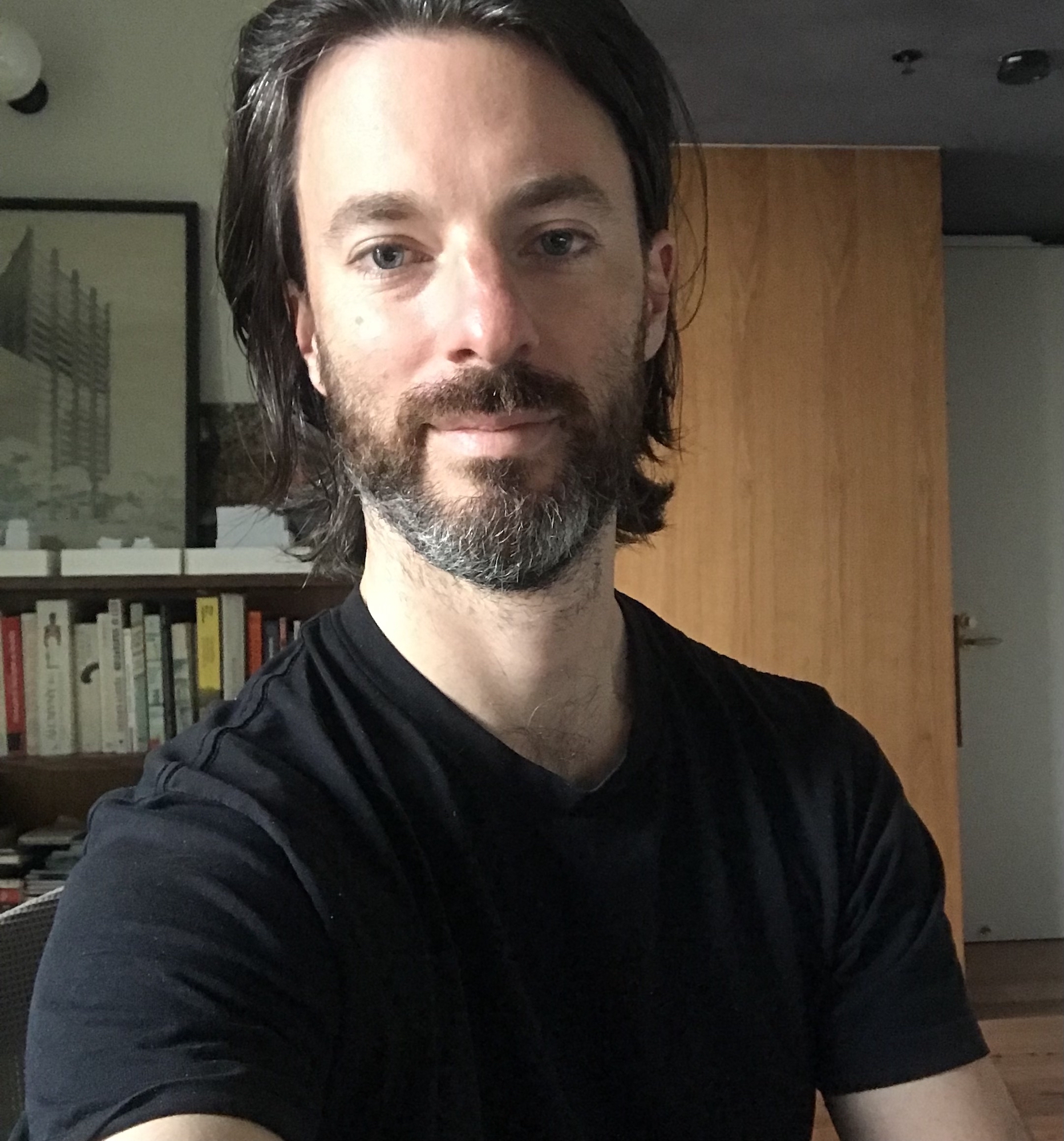
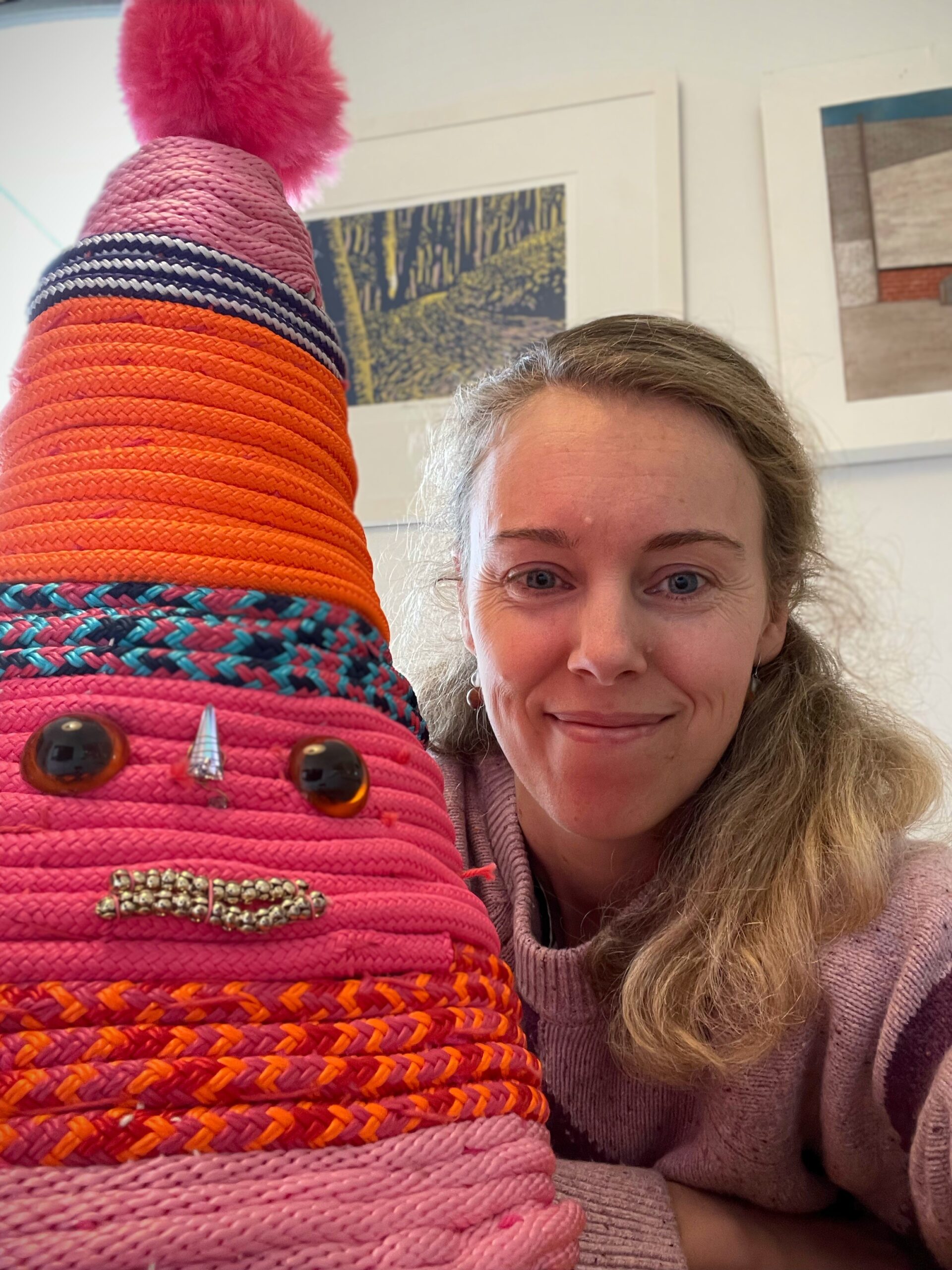
I’m the Burj Khalifa, the tallest building on this earth.
An article in two parts – an essay by Gabrielle Mordy, founder and CEO at Studio A, and a conversation (like no other!) between artist Thom Roberts and The Fulcrum Agency’s Emma Brain
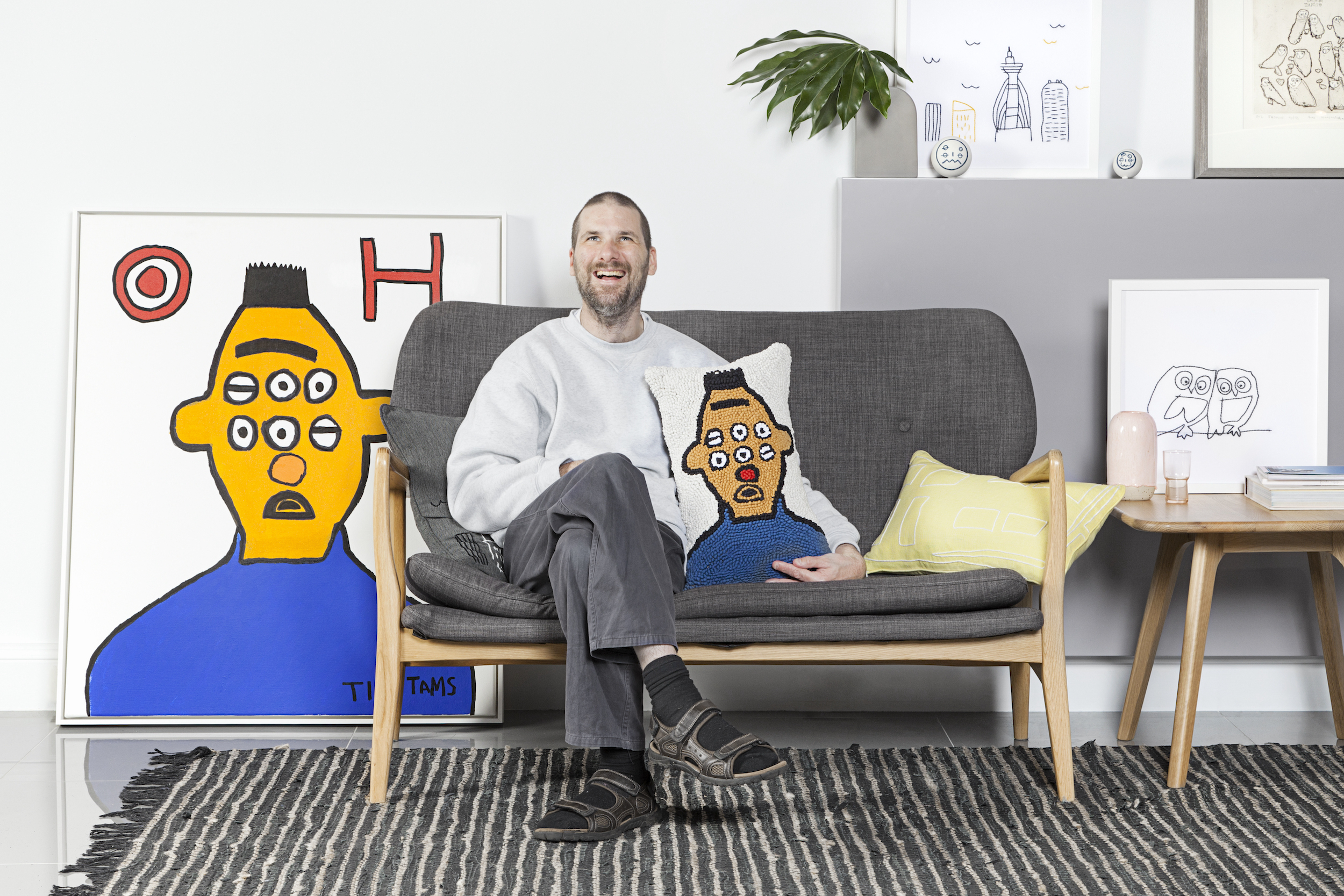
Many years ago now I met a collective of people with intellectual disability who liked making art and clearly had a skill in what they made. I met them in a community art program for people with disability in suburban Sydney. Thom was one of these artists.
I studied visual arts at university and I love the experience of being really absorbed in making artwork. I equally enjoy going to exhibitions and seeing my work on the wall and chatting to other people with similar interests. I like the feeling that I am a skilled and recognised ‘artist’. It is even better when I get paid for it. To me this is the essence of meaningful work. I think this is an experience that lots of Australians can relate to.
It became quickly apparent to me that the people I met at that community program in suburban Sydney did not have the same opportunity that I had (as a university graduate) to exhibit their work and pursue a career as an artist. They were making art, however they had no opportunity to exhibit, earn income, develop their skills nor meet like minded artists.
If you struggle to read or write, send emails, compose a CV and/or travel independently, then it is really hard to pursue a career as an artist. It does not matter how great the art is that you produce. Often, if you have an intellectual disability, you are really locked out of the mainstream art world, and you are locked out of all the personal, social and economic benefits that come with being a part of that world.
In late 2016 I founded a Sydney based company, called Studio A, with my colleague and friend Emma Johnston. Studio A exists to ensure talented artists with intellectual disability can pursue a professional career. We provide a specialist studio space along with the administrative and managerial support our artists need to pursue their dreams.
Thom Roberts is now a Studio A artist. Jump forward to 2022 and Thom’s work has been selected for a second consecutive year as a Finalist in the Archibald Prize at the Art Gallery of NSW. His artwork is in prestigious National collections and he has undertaken international art residencies.
For Thom, professional success means he can purchase whatever he wants at Kmart and can make as many photocopies as he likes at Officeworks. These are the activities Thom values and his earnings mean has the choice to access them. Professional success means that in a social setting when he is enjoying what he terms a ‘juicy beer’, and when someone asks him ‘what do you do?’, Thom can confidently look them in the eyes and say ‘I am an artist’.
Thom Roberts, 2021
Emma: Hi. Nice to meet you. I’m Emma.
Thom: Can I call you Woody Tiger?
Emma: Say it again?
Thom: Woody Tiger.
Emma: Woody Tiger. I like that. That’s one of the better names I’ve been called.
Gabrielle: Can you tell Thom what your other job is? Thom has a passion for buildings. And Thom, was your dad an architect?
Thom: Yes.
Gabrielle: Was Buddy Brown Boy an architect?
Thom: Yes.
Thom Roberts, 2020
Gabrielle: what did you say to Kenny Sylvester the other day? He’s actually Matt Calandra. What did he say across the room to you?
Thom: That we’ve got a sandwich or leftovers. And I say, ‘My jail is Simba. It’s six in the morning, man.’
Gabrielle: Where is it six in the morning?
Thom: I made a bike chart.
Emma: And you’re where?
Thom: Well, according to Kenny Sylvester, his light in artwork is part of my sunrise.
Thom Roberts, 2020
Gabrielle: Who is the judge based off? Was it Gladys?
Thom: Galdys, yes.
Gabrielle: Gladys Berejiklian?
Thom: Yes.
Gabrielle: And, what did you call her? I remember, you called her, ‘Wrinkle’.
Thom: I call her, ‘Mrs. Wrinkle.’
Thom Roberts & Brayden Gifford, 2022
Being in the Archibald makes me happy, smiling and proud. I would love to inspire other people to become a famous artist. I would like to be an artist until I am a very old man.
* This article was first published in our journal, Equity. Copies of Equity can be purchased at The
Fulcrum Press
, with all proceeds going to projects within First Nations communities.
Equity means …. applying a human rights lens to
Everything
… in the hope of removing the systems of inequity and oppression that have persisted for far too long. I’m proud of my Somaliland-Anglo heritage, it is central to shaping my identity, values and beliefs. I’ve experienced racism, micro-aggressions and bigotry; been judged by the colour of my skin and not the content of my character or ability.
A lifetime working in human rights has provided me with a solid foundation to navigate intersecting systems of oppression. I have used my voice to fight for racial justice and feel a rage at the treatment of First Nations people in this country. There is no greater equity issue than standing in solidarity to support the Uluru Statement and Voice to Parliament.
As migrants to this amazing country we must all learn the true ‘his/herstory’ of this nation because healing the past benefit all of us.
* Copies of Equity can be purchased through the
The Fulcrum Press
with all proceeds going towards projects in First Nations communities.
As a signatory to the 2017 Uluru Statement of the Heart, Dr Josie Douglas is deeply invested in its process and petition to the Australian people. In the latest edition of The Fatin Tapes*, Meri Fatin chats with Josie about her drive for social justice and the enormous potential offered by the Voice to Parliament for First Nations people.
Meri Fatin (00:00:00
Josie, it’s interesting timing talking to you in the middle of Reconciliation Week. It seems to mean different things to different people, even in terms of using the word “reconciliation.” What does it mean to you?
Dr Josie Douglas (00:00:42)
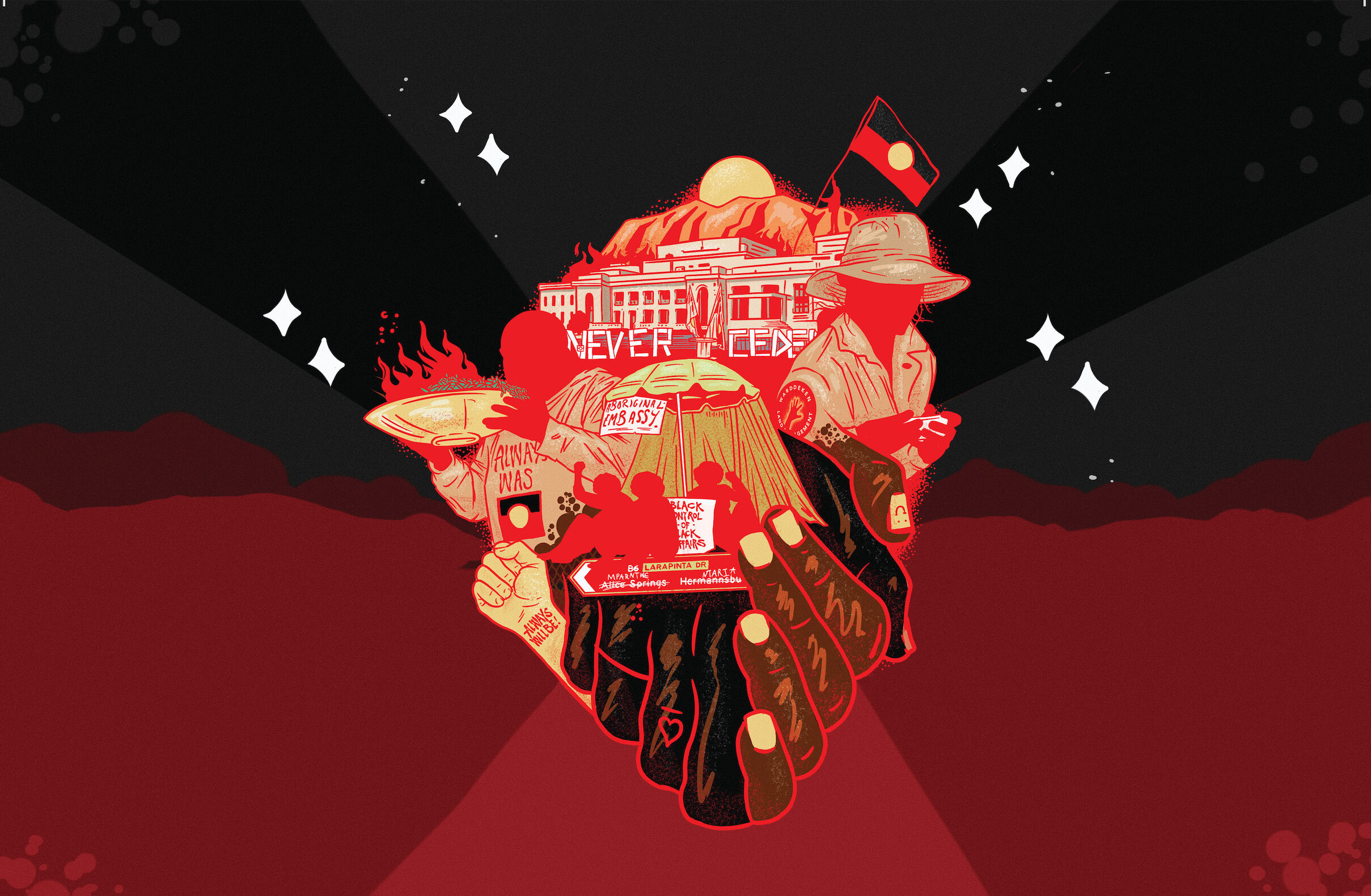
It (reconciliation) must start with settling the original grievance of Australia – that sovereignty wasn’t ceded. I want to focus on the Uluru Statement from the Heart and focus on that. Sequencing is very important. The Voice to Parliament is first and foremost, and then cascading from that is Treaty and Truth Telling. And that comes in under the establishment of the Makarrata Commission, which is a Yolngu word that means coming together after a conflict. I really do think that for substantial reconciliation for Australia as a modern nation, it needs to be led by the Commonwealth in settling the original grievance.
Meri Fatin (00:02:30)
On election night the Prime Minister stood up and started his victory speech by saying that he commits to the Uluru Statement from the Heart in full. What did it feel like to hear him say that?
Dr Josie Douglas (00:02:46)
It was pretty extraordinary. I think there were a lot of tears of joy shared around Australia by Aboriginal and non-Aboriginal people. I think there’s real hope but it needs to be delivered.
I was involved in developing the Statement through my work at the Central Land Council. It was an exhilarating process given the state of Aboriginal affairs and the lack of progress in terms of constitutional reform. We had five Prime Ministers, both Coalition and Labor, committing to constitutional reform but who kept kicking that can down the road.
And so now we’ve got a newly elected government, the 47th Parliament, and I think that Aboriginal leadership around Australia is really hoping Labor will deliver on its commitment to implementing the Uluru Statement from the Heart in its entirety.
There were a lot of tears of joy shared around Australia by Aboriginal and non-Aboriginal people. I think there’s real hope but it needs to be delivered.
Meri Fatin (00:06:34)
A friend pointed out to me that the word reconciliation implies that at some point the relationship was one of equals and that they just need to sort things out. And that’s not the truth, which is what you’ve spoken about with sovereignty not being ceded.
Dr Josie Douglas (00:06:57)
Yes, and that’s what the voice to parliament is seeking to address. It’s actually in the statement – I tend to quote it – it’s the powerlessness of our people. Even though in this election we’ve had the highest number of Indigenous people voted into Parliament, we’re still only 3% of the population and so it’s very difficult to influence policies and laws that are being made about Indigenous people.
Of course, we have our peak organizations. But there’s something much more fundamental to Aboriginal and Torres Strait Islander people having a voice and being able to influence the laws and policies that are made by Parliament. Indigenous people are tired of each new government coming into power, coming up with a different policy setting and different legislation for Aboriginal affairs. It feels that we take one step forward, two steps backwards. So, the voice to Parliament is about ensuring that those decisions that impact Indigenous people’s lives are taken out of the realm of politics, out of political ideology, and into the realm of Indigenous people having a say over matters that impact our everyday lives. And that’s whether you’re in a remote community in Central Australia or you’re in a metropolitan urban area. I think Aboriginal and Torres Strait Islander people really want to be able to provide advice to Parliament, not to government. And that distinction is important. Having a substantive amendment to the Constitution will compel Parliament to consult with us.
Josie Douglas and her sister Cass
Meri Fatin (00:10:38
You talk about it as a substantive change to the Constitution, and it’s interesting that Mr. Albanese has committed to the Uluru Statement of the Heart in full. Earlier iterations of what previous governments were willing to propose as a change to the Constitution were watered down versions of the full Uluru Statement. What do you think that interim period is going to be like for Indigenous people as that process begins of convincing people who don’t see a voice to Parliament as something that ought to happen?
Dr Josie Douglas (00:11:31)
I’m much more hopeful when it comes to the Australian people and where they’re at. I think finally government has stepped up to the plate and they’ve caught up to where society is at. What needs to happen between now and if we go to referendum in May 2023? I think it’s important to have an education campaign, so people really understand what the voice to Parliament is about, what the constitutional reform agenda is about, what it means and what it doesn’t mean. I think there’s also a lot of misinformation and misunderstanding within the Indigenous community over exactly what it means.
Meri Fatin (00:14:24)
What’s it been like dealing with the pandemic in Central Australia? How much agency have you had in being able to direct things the way they needed to be directed in your part of the world?
Dr Josie Douglas (00:14:38)
So I’m currently the General Manager for the Health Services Division at the Central Australian Aboriginal Congress, which is the largest Aboriginal community-controlled health provider in the Northern Territory and one of the largest in Australia. We cover the town of Alice Springs as well as five remote clinics. It has been challenging and difficult. We’ve had workforce issues, like there has been around Australia in terms of health professionals and staffing, but I think in terms of being community controlled, we’ve been able to respond quickly to people in need. It’s much more than just ensuring that people are getting their first, second, third, fourth vaccination. It’s the whole wraparound service ensuring that there’s food security, there’s energy security, that people aren’t missing out on benefits because they’re in isolation or they’re a close contact. So, it’s been about looking after the complete person and full complement of their needs as well as their needs in relation to the pandemic. It’s been a real feat and I think it comes back to Congress being able to respond in an agile and flexible way to the needs of community. And in responding to the pandemic as a primary comprehensive health service, we’re also mindful that there’s the health needs of our clients that we need to be managing including chronic disease and childhood immunizations. So, all that business of delivering comprehensive primary health care had to continue in our remote clinics and our town clinics. We had to make changes to how we were operating in early 2022 when there was the outbreak of COVID in Alice Springs. And that meant we had to pull staff back into one central clinic and focus our resources on responding to the pandemic.
Meri Fatin (00:19:27)
I read a news article from early 2022 where you were calling for the ability to put the communities into lockdown for a week. You were being overruled by the government. What happened there?
Dr Josie Douglas (00:19:53)
We wanted government to mandate lockdown for one week only. It was just to buy us time to get the supply in. Our supply was an issue at that time. We weren’t getting on top of the outbreak. It was spreading across town camps, across public housing in Alice Springs. And so the lockdown that Congress was calling for was to buy us time to slow the spread and to ensure that we could get adequate supplies of vaccinations, PPE, masks, you know, really important new medications that are available.
Meri Fatin (00:20:51
And did you succeed in that?
Dr Josie Douglas (00:20:56)
No, Government did not support our calls for a lockdown. So we just had to continue to do the best that we could. And I think Congress’s role in managing the COVID response in Alice Springs and remote clinics was exceptional.
Josie – keen trail runner!
Meri Fatin (00:20:51)
Josie, I’d love to hear a little bit about your story. About your mob and where you grew up and why you ended up doing this work?
Dr Josie Douglas (00:21:51)
Yeah, sure. I’m Darwin born and bred and I’m a Wardaman woman, that’s southwest of Katherine. So Northern Territory, Top End. I have been living in Alice Springs for thirty years. My husband is from Alice Springs, he’s a local Aboriginal fella. I love Alice Springs; it does get a bad rap at times, but it’s got such a strong sense of community. You come to Alice Springs, you hear language being spoken as you walk down the Todd Mall and you know that you’re on Aboriginal country and that you’re surrounded by Aboriginal people. It’s got a real sense of community, you know, Aboriginal and non-Aboriginal people. I like to think that Alice Springs is quite progressive, given the recent result of Marion Scrymgour, an Aboriginal woman winning the seat of Lingiari. You want to know a bit more about me? I’ve got four children and two grandies all Alice Springs born and bred. I suppose I’ve got a strong sense of social justice. Even as a little child, I was seeing things and questioning why? Why is it like that?
Meri Fatin (00:25:00)
Is there a story that springs to mind as an example of that?
Dr Josie Douglas (00:25:04)
I suppose as an Aboriginal kid in the seventies, just being very aware of the difference in how I was living, you know, the house that I grew up in, the extended family that was living in my house compared to some of my school mates. I think there’s a noticing. Noticing that’s an anthropological term, you know, noticing.
And I was I think, just noticing the differences from a very young age and always being curious about people and their stories.
My parents really shaped who I am. My mum Lorraine, was politically active combined with my Dad who had a really strong work ethic. Both growing up with not much but making the best of what they had. And I think my education was fundamental. It was always about ensuring that you got a good education so you could get a good job. Because I think not having a job in my family was like a sin. And that comes also from my Wardaman family – growing up working on cattle stations outside of Katherine and having a very strong work ethic despite the rations they were receiving.
Josie’s Children
Meri Fatin (00:28:43)
So obviously that noticing was felt deeply and it’s apparent across your career too.
Dr Josie Douglas (00:29:29)
What drives me to fight for social justice, both personally and professionally, is the social determinants. It is about housing. It is about access to drinking water. It is about having a better Community Development Program. It is about ensuring that all young people on remote communities are signed up to access the citizen entitlements that they’re entitled to receive and are not dependent on a great grandmother to financially provide for them. It’s all these social determinants of health that I strongly advocated for in my role at the Central Land Council.
Meri Fatin (00:31:23)
All of those components lead to the one outcome of good health and wellbeing.
Dr Josie Douglas (00:31:31)
Yeah, so now I’m at the pointy end of making operational decisions in terms of how health care is delivered. At Congress we have a strong CEO and Chair who are both advocating for policy changes to influence social determinants of health.
Meri Fatin (00:31:57)
I’m really interested in your doctoral research project. It was described in an article that you examined the lives of young Aboriginal adults and the role they fulfill in acquiring and transmitting Indigenous ecological knowledge. Tell me more about that, because this is a critical kind of moment where we’ve realized with human caused climate change, that we need to return to this kind of deeply known ecological knowledge.
Dr Josie Douglas (00:32:59)
Most of my working life has been within the cultural sphere. Whether it’s working at the Central Land Council, for an Aboriginal community-controlled health centre or many years ago at the Institute for Aboriginal Development. I’ve been lucky to be in Alice Springs, working with senior knowledge holders, particularly around language maintenance. People like M.K. Turner and Veronica Dobson, very senior knowledge holders, published authors and women held in high regard within the community for the depth and breadth of their traditional knowledge. So, over many years, I’ve heard the older generation talk passionately about keeping language and culture strong for future generations. And at the same time, the flip side of that is worry and despair that the younger generation weren’t interested in the old ways, that they were only interested in new ways. Senior Aboriginal people feel a moral imperative to pass culture on, which is the foundation to Aboriginal society, the continuity of Aboriginal culture going forward. So young people are seen as the heroes in terms of their role in that, but also the villains in terms of how they were undermining that. My PhD asked, where are the young people’s voices in all of this? It turns out they were missing.
The focus of my PhD was on the social and cultural practices of young Aboriginal people in relation to traditional and Indigenous ecological knowledge. Young people want to learn but my PhD reveals how things have been completely turned on its head in terms of the available time. People need to be out on Country to learn but that is being squeezed into school holidays. It’s not an iterative, daily learning process as it once was. It’s fitting it into a Western calendar. It’s fitting it into the availability of family members and senior family members.
There are genealogical gaps in the demographics of Aboriginal Australia. Families aren’t intact anymore. Generations aren’t intact anymore. So, young people aren’t born with culture, they grow up in the culture of their parents. My PhD unpacks the change the Aboriginal community has experienced over many decades and where young people see themselves in it. Young people want to learn, it’s just that they’ve got less time and less people to learn from. Fortunately, there’s been pragmatic and innovative approaches to the role of institutions in knowledge transfer. The role in Country visits, the role of school programs, the role of organizations like the Central Land Council in facilitating Indigenous ecological knowledge transfer. For instance, at the CLC young people and older people are involved in the ranger program, from a governance level through to doing the physical work on Country.
Meri Fatin (00:38:45)
What did you find was behind the perceived lack of engagement from young people?
Dr Josie Douglas (00:39:07)
It wasn’t about young people pushing it away at all. I think young people were desperate for more engagement, desperate to be doing more and learning more. But there’s so many challenges in the face of that. Young people are very interested in language and being out on Country. Young mums are interested in smoking their newborn babies and participating in different cultural practices. And I think engagement with traditional knowledge comes through in contemporary life, hunting, going out to collect bush foods or bush medicines. Beliefs and practices are still strong, it’s just that in a contemporary context it looks different. And it is different, but I think it’s still foundational to young people’s identities.
Sydney Peace Prize
Meri Fatin (00:41:26)
On the converse of that, you said part of the issue for young people is the fact that there aren’t as many people to teach them culture, there is the burden on senior Aboriginal people in the community and their responsibilities. What’s your observation on that?
Dr Josie Douglas (00:41:48)
I do write about this a lot in my Ph.D. that the responsibility does fall to a few. And that’s because of the mortality rate. It comes down to the life expectancy of Aboriginal men and women. There are genealogical gaps in Aboriginal families and that’s through early deaths. The situation is now that you have one old person in a culture camp or on Country teaching a group of 10 – 15 young people, and that within itself is new. That isn’t the traditional way of learning in terms of practice space, you know, that nexus between practice and belief.
Meri Fatin (00:43:39)
Would that ratio have been more one on one in the past?
Dr Josie Douglas (00:43:46)
One on one, plus you would have had a greater number of peers, of middle age people, of the older generation. You would have had a greater number wrapping around that little person from two, three years old and staying with them as they grew up. Whereas now what’s happened in terms of demographics is that you’ve got many more young people. You know, it’s a pyramid. Smaller numbers up top and more young people at the base. But there’s still peer to peer learning for young people. Some people will have grown up with grandparents and aunties and uncles who are very much going out bush, who are learning and knowledgeable, and they will teach their contemporaries, their peers. But, yeah, there were just many more people for young people to learn from whereas now it looks completely different. A lot fewer old people. The middle-aged generation is also missing and they’re crucial to knowledge transmission as much as the older people are.
Meri Fatin (00:45:25)
The two dates that have been potentially forecast for the referendum, May 27, 2023, and January 27, 2024. In the lead up, what would you really want to underscore in the public conversation?
Dr Josie Douglas (00:46:25)
Well, I think it is education. People need time to fully understand what the Uluru Statement from the Heart is, and what the voice to Parliament is. And to understand that you need a community education campaign at different levels, from the grassroots to corporate Australia.
Meri Fatin (00:49:45)
Thank you so much Josie. It’s been a real pleasure listening to your thoughts.
*Journalist Meri Fatin conducts the main interview in each edition of our journal, and always astounds us with her thoughtful, intelligent and kind approach to these conversations. Copies of Equity can be purchased at The
Fulcrum Press
, with all proceeds going to projects within First Nations communities.
Ostensibly, I believed I enjoyed equal opportunities in education, social networks, personal growth and professional development. However, over time I realised this was not true.
Growing up in my home country, even while studying at one of the nation’s finest schools, I soon realised I didn’t have the same rights as many of my peers. While gender wasn’t an issue (in an all-girls school), other defining differences like race and religion subjected me to discriminatory quotas and grading criteria. This inequity pervaded into my early career, and it wasn’t until my thirties did I begin to acknowledge the significance of the injustice I faced, because of who I was.
I then made a conscious decision to systematically regain my power and prove my worth. I commanded my heritage, upbringing, education, gender and capability to transcend the prejudice to give me agency, pride, confidence and the right to equity. For others, compromise for inclusion’s sake was the only choice.
For me, equity is the ethical option.
* Copies of Equity can be purchased through the
The Fulcrum Press
with all proceeds going towards projects in First Nations communities.
Someone rightly made the point that our journal had not ever included content from anyone under 30. We didn’t have to look far to find Jemima Williamson Wong, law and sustainability student, climate activist and fledgling Instagram influencer . In Pain it Forward, Jemima asks her Gen Z followers a series of questions about their thoughts and fears for the future.
Equity the act of things being fair and just. Get Z, the Tik Tok generation, wasting too much time online. Money, the disparity between socio-economic levels, stress, luxury.
As a 20-something, I’ve found myself feeling a bit hopeless when it comes to my financial future. No matter how much I try to better my financial situation I worry I will never own my own house aka the predominant marker of success. I’ve also come to realise that these feelings are part of a broader attitude amongst Gen Z – it seems everyone is demoralized when they think about their financial future.
I know that I am privileged. My parents own property, I went to a private school, I’ve had help getting jobs, I was taught how to save and manage my money. I’ve had so many leg-ups and yet I still feel my financial future is bleak – and certainly won’t look anything like my parents. I’m 20 and I’ve already started saving for a house deposit – a house I probably won’t be able to afford for another couple of decades.
It’s an uncomfortable feeling carrying this concern about my own future, and at the same time, facing the boomer narrative that Gen Zs don’t work hard enough and choose smashed avocado on toast over saving for a house.
It’s hardly motivating to live frivolously when your entire news and Instagram feed is about the latest grim housing statistic. Or when every older family member you see lets you know they’ve been feeling worried that you may never be able to afford a home.
Through conversations with friends of a similar age, I noticed that I wasn’t alone in the way I was feeling. Three areas of concern had started to emerge: financial education, housing and wealth redistribution. To learn more, I put the following questions to my followers on Instagram (all 832 – I know, call me an #influencer).
Three areas of concern had started to emerge: financial education, housing and wealth redistribution. To learn more, I put the following questions to my followers on Instagram (all 832 – I know, call me an #influencer).
How do you feel about your financial future?
#worried
I feel like I have to work harder in my youth to be financially set up for uni years
A little worried tbh, I’m entering a pretty competitive area with my degree
Anxious and pessimistic
Feel like the cost of living and the pay rates are so drastically different to what they’ve been
Uncertain – but less worried than I feel like I should be
Not good! Prices for houses, cars, cost of living continue to fluctuate, and inflation is scary!
I reckon prices for things have gone up eg. housing and wages haven’t grown enough. Bit worrying.
Do you think there is financial fairness between generations?
No wayyy
That’s a tough one but no I don’t think there is fairness. Also depends on class
Nope! Unfortunately not
Noooope
Hell no
Lol no – my grandparents paid off the war. My parents nothing. I will pay off the results of Covid
I do not! I think it’s harder for younger generations to feel financially stable.
How do you feel about housing?
I will not have one probs
Worried that I won’t be able to afford one! And I’m in a privileged position which makes me think about those who are in a lower socio-economic bracket than me and those without the option of living with family as I am now
I feel like it is becoming very inaccessible and that scares me
Concerned…
Scared, the average cost of a house compared to the average income is insane. Even paying rent is hard to cover on minimum wage
Worried that I won’t be able to own my own home.
How do you feel about financial education (and how it’s impacted by social media)
Not enough of it! School did jack shit to teach us real life financial situations
Everyone seems to be financially comfortable on social media but it’s not real
We weren’t educated enough in school and e-com makes it look so easy to make money online.
Thoughts on wealth redistribution?
It is pretty important in my opinion. Everyone should be able to afford basic essentials!
I think it is important but it needs to be done right
Universal income ftw [for the win]
It makes me so sad to see the contrast between billionaires and those who have so little.
Any other thoughts?
There’s a lot that’s wrongly attributed to gen z’s work ethic or lack thereof
I think there’s a lack of understanding between generations.
Putting these questions online and reading the responses helped me to organise my own thoughts about this mess….
There is obviously a strong awareness about the inequity between the generations. We know that we will be inheriting trillions of dollars of government debt due to Covid, the climate crisis and all the other ‘unprecedented events’ that we are repeatedly experiencing. This cynical acceptance has fed into our attitude of hopelessness, pessimism, and anxiety about what our financial futures will look like.
It’s hard not to feel annoyed when I look at how older people view my generation as though we don’t work hard enough; if we spent less time on our phones we could get ahead.
I think there are two things at play here. First, there seems to be a lack of understanding about the way that social media has influenced our lives, and how it continues to shape different avenues of wealth creation. Successful influencers are the wealthiest people of our generation and they only got there because they hustled – on their phones.
Secondly, when I look around at my friends, I see a generation of hard-working hustlers. Of people trying to bring in money from multiple streams and yet are only just able to cover the cost of basic essentials.
As Gen Z influencer and media personality, Flex Mami put it: ‘the difficulty of Gen Z is that they have been touted to be these radical change-makers, and it is a lot of pressure for this environment we’ve built up. How do you be a change-maker when you have to pay your rent?
If we accept that the financial gap between generations will never be closed, why then do we continue to work towards the same financial aspirations as the generations before us? Because of this, I am starting to question the pursuit of financial security through property.
If we truly are the generation facing global catastrophe, owning a home and creating a wealth base through property hardly seems like a priority. Instead, would it be more prudent to focus on re-writing our expectations? To balance the need for a house and stability in a world marked by increasing volatility. Would there be more freedom, would we be happier if we could let go of this archaic pursuit of ‘to succeed in life’ you need to own a home and instead create a rental system that could provide stability?
This idea of balancing expectations is something I’ve come to after spending time trying to unpack the complicated mess of expectations, attitudes, reality, and stereotypes that surround housing and financial futures. I still haven’t resolved whether I’m willing to accept that my financial future and property ownership will look vastly different to my parents.
All I can ask from whoever is reading this, is that you take the time to think through my argument in light of your own context. No doubt many of you reading this will own investment properties. What we really need is better tenancy laws that will provide us with security while we get on with trying to fix the mess the generations before have made of the planet.
* Pain it Forward was first published in Equity, Issue 05 of our journal. Copies can be purchased at
The Fulcrum Press,
with all revenue going towards projects in First Nations communities.
** Hear more from Jemima via her Instagram account, @ourclimateconnection.
We’ve wanted to squeeze Andy into our journal for quite some time and in Equity we found the perfect spot! Here’s Andy’s thoughts on the word:
“Equity in common English conjures notions of inclusion and equal opportunity. In the making of cities it can often describe the precise opposite. Equity, in the financial sense, speaks of the command of resources that allows an investor to initiate the making of new city fabric. Equity brings control, ownership and by extension the privilege of agency. Equity investors can assert values, dreams and ethical ambitions, or can simply pursue the extraction and accumulation of private wealth. If we want to set the agenda of our cities in the context of climate and ecological crises we need to carefully reframe the rules which govern this source of investment.”
Copies of Equity can be purchased through the
The Fulcrum Press
with all proceeds going towards projects in First Nations communities. Link in profile.
Akira Monaghan and friend (aka a textile sculpture by Carla Adams)
One of favourite bits of each journal is when we ask our friends and colleagues for their thoughts on our chosen word. This is TF.A’s Akira Monaghan on Equity:
Indulge me while I attempt a connection between ‘equity’ and poo.
A colleague recently had an unfortunate encounter with raw sewerage in his backyard. An inspection opening overflowed in what I visualize to be a type of chocolate fondue fountain, but less fun. The sewerage then flowed into his swimming pool. Not to worry though, it’s too cold to swim, and the poo breach was dealt with swiftly by the authorities, who treated the situation as the biological hazard that it was.
At TFA, we work on housing projects in remote Aboriginal communities. Raw sewerage in yards is commonplace, but unlike Perth, there is no rapid response from the authorities. A blocked septic tank can lead to the failure of health hardware such as toilets, hand basins, and kitchen sinks – thereby seriously inhibiting the ability of people to remain healthy.
I want to see infrastructure equity between urban and remote homes. I mean shit happens, but shit fountains shouldn’t!
* Copies of Equity are available for purchase through TheFulcrum.Press, with 100% of all revenue generated through journal sales distributed to First Nations community projects.
2022 was a pretty great year to attend Garma. It was equal parts electric and emotional. To be under the shade of a large tin roof, in view of the Gulf of Carpenteria, whilst the newly appointed PM outlined the referendum questions that would enshrine the Voice in our Constitution… it felt like a moment of sunshine after a long and challenging winter of silence.
I even got to ask a question on Q&A. According to my family it was career highlight, but in truth it wasn’t the question I had hoped to ask. I submitted two questions but the more pressing one wasn’t selected by the show’s producers. Missing from Garma’s forums and Q&A’s panel was any discussion around the impact of rising temperatures on culture and community and the viability of inhabiting Country across the north and at the centre of Australia.
After failing to get traction in my one shot on national television, I have been testing my concerns in smaller forums. Since returning from Garma, I have been talking with John Singer, Executive Director at Nganampa Health Service on the APY Lands. John has described the way in which cultural practice is changing to deal with the increasing heat; ceremonies and activities are either taking place in the evening, reduced in length, or not being done at all.
If the science holds true and the situation worsens, what is the future of cultural practice on Country that is being irreversibly changed as a result of the warming planet? John noted (with irony) our new Government’s acknowledgement of the impact of the climate crisis on our Pacific Island neighbours, without recognising the crisis that’s occurring in our own country – displacement, forced migration, loss of culture, community and the ability to care for Country. He questioned whether the Government would acknowledge that ‘climate refugees’ exist here in Australia right now
The standard definition of the term ‘refugees’ refers to people fleeing across national borders. People displaced
inside
a nation are generally not considered refugees under international law. If we think of Australia as a place more akin to Europe and made up of numerous nation states, then the movement of people across First Nations borders (with
Nations
being the critical bit) aligns more closely with the UNHCR definition of a refugee. That is, people moving across national borders as “persons displaced in the context of disasters and climate change.”
[i]
We need to acknowledge the multitude of nations that make up the continent we now call Australia, and the real and challenging impact of movement across these nation state lines for Indigenous people.
Human comfort is the result of the right mix of factors, in particular temperature and humidity. A critical measurement is known as the ‘wet bulb temperature’
[ii]
(shown in degrees
Tw
) and indicates the temperature of a thermometer after a wet cloth has passed its surface. With higher levels of humidity, less evaporation occurs to cool the surface. Humans rely on sweating to cool their bodies and wet bulb temperatures of 31.5Tw have been described as the upper limits of human survivability.
[iii]
Several places around the world have recently recorded wet bulb temperatures of above 31.5Tw and this includes two sites in Western Australia and the Northern Territory. So far, these temperatures are unprecedented (and brief in occurrence), but most climate experts predict that wet bulb temperatures above 31.5 will occur in more locations and for longer periods as vulnerable regions are increasingly affected by the climate crisis.
So, what is the link to ‘equity’ here? There are many – the first being the inequitable distribution and impact of the climate crisis on poor and vulnerable populations. Think here of the people without insurance in Lismore or displaced farmers in Pakistan flooded by unprecedented monsoonal rains. Our neighbours in the Pacific Islands are experiencing ongoing inundation and coastal erosion as well as the wildfire ravaged rural populations of Europe. Those with the least are being hit the hardest, and this, of course, includes many First Nations communities around the world.
Migration due to the climate crisis is happening across all populations, with many people in wealthier communities and populations around the world participating in what’s known as a ‘managed retreat’.
[i]
In Australia the search for better climates is often part of a midlife tree or sea-change, made easier by digital connectivity, improved regional infrastructure, the accumulation of wealth as a result of a suite of generous tax incentives focussed on housing.
Our government is acutely aware that many voters view Australia’s housing supply as a wealth creating asset, not as a human right or societal responsibility.
This is especially relevant to First Nations communities, where people have been dispossessed of land, ‘resettled’ into reserves, pushed off Country and had their traditional lands acquired, thereby denying them the means of inter-generational wealth accumulation through land ownership afforded to the settler state.
[i]
There is also vast inequity in infrastructure between Australia’s urban towns and cities and our regional and remote communities. Access to clean drinking water, reliable power, adequate telecommunications, safe roads, and appropriate waste removal varies significantly depending on where you live. The divide between remote communities and mainstream Australia is stark and well documented.
[ii]
And let us also consider the inequity of mobility. The movement of people due to seasonal, cultural, or social reasons, has always been seen as problematic by governments who like to be able to ‘see’ their subjects at a known fixed address. Tying a citizen to a parcel of land (and thus keeping them sedentary) certainly assists. It is interesting to contrast this problematising of mobility in Indigenous populations by the State, and the subsidisation of mobility in wealthier cohorts, such as holiday house owners through taxation systems and infrastructure investment.
So how can we address this lack of equity – and the combined impacts of a warming climate, poor infrastructure, and the requirement for mobility? And, perhaps more importantly, is there even the desire to do so? The sixth Assessment Report by the IPCC
[iii]
suggests that we only have a very small window to reduce our greenhouse gas emissions, and even then, substantial global warming is inevitable. For people already living on the edges of climate survivability, this has dire consequences, and it is not something we have started to meaningfully address.
For many First Nations communities, the predicted effects of rising temperatures do not need to hit the extremes of probability to make a real difference to the already over-stressed health system and individual vulnerabilities. Community infrastructure has been neglected for decades – power outages or disconnections are commonplace, air-conditioning often doesn’t work, insulation is lacking, buildings offer no shade or thermal control – all amplified by the negative impacts of crowding. It is an ecosystem of policy and delivery failure which demands urgent, system wide reform.
In Indigenous Affairs, reform has been a word rolled out across successive governments, Ministers, and bureaucrats. Despite this reformist zeal, genuine action and meaningful change has been glacial in pace. And thus, communities have become adept and skilled in the art of waiting. A large part of this waiting can be seen in the ‘testimony’ of housing adaptations. It is one of the few areas where agency is seen in the built environment in Indigenous communities. Building ‘hacks’ are commonplace, removal of louvres to install cheap wall air-conditioners, the use of tarpaulins, aluminium foil and shade cloth to protect inhabitants from climatic or privacy pressures, or the re-alignment of living/sleeping spatial norms most houses are designed to construct.
Governments have paid little heed to this testimony. While tenant involvement in Indigenous housing design is often recommended, it seldom takes place in practice. Demand for housing continues to outstrip supply, and in rental situations, it can be difficult for tenants to have much of a say about the design features that would improve their everyday living conditions. Each building hack holds clues that would help architects, planners, builders, and policy makers deliver new housing and refurbishments in harmony with tenant needs. Unfortunately, Indigenous tenants instead occupy the space between ‘take what you can get’ and ‘no money for appropriate designs.’
Despite research and community advocates who repeatedly recommend Indigenous-led housing design processes, Indigenous tenants in social housing are usually represented by organisational brokers, and if consulted directly, will be asked questions about their likely household composition/demographic profiles. These ‘briefing sessions’ reduce people’s agency to a function of bedroom and bathroom allocations. Tenancy Agreements forbid tenants from making any structural changes to their housing and design responses fail to address basic needs.
I was trained in the value of passive design – responding to a site’s climate by seeking opportunities for natural ventilation, effective shading to shield summer sun and welcome winter rays and orientation that assists all the above. Air-conditioning was seen as a design failure, an inability to design sensitively to your context, to ‘touch the earth lightly’. One could think of this approach as a kind of ‘thermal moralism’ – design judgments that believe natural systems are inherently better than mechanical (or man-made) ones. Design responses that took advantage of the site’s natural attributes, buildings that ‘breathe’, ensuring its occupants were in harmony with nature were celebrated as exemplars of the architectural discipline – positioning itself against the mindless housing of the mass market, which was closed and shockingly reliant on air-conditioning to maintain thermal comfort.
What is our design response when the temperature outside becomes lethal? Are we positioned as a profession to care about challenges such as cyclical maintenance, crowding and mobility, dust and corrosion that have left so many architect-designed ‘remote houses’ derelict without the ongoing maintenance support that is needed? Architects have ‘declared’ it’s a crisis, but in what ways are we acting?
And what then about the impending challenge of ‘managing the retreat’ of communities away from Country due to human-induced climate warming. Are we ready for the moral, ethical and logistical requirements to move people off Country, far away from their homelands? Again. Are our regional and peri-urban centres ready for this forced migration; places already feeling the squeeze of the housing crisis and impact of tree/sea changers? And how will we, as a nation, grapple with the shame of forced migration due to climate warming – an ideology of neglect – not only of the planet, but of the First Peoples who are disproportionately affected by it? Can governments and agencies adapt quickly enough to support seasonal or continuous mobility without penalty to tenants?
As always, there are pockets of hope. Places where communities are taking control, driving towards their own localised vision of community infrastructure, appropriate housing, responsive and culturally safe policy. There are innumerable advocates pushing for change – from Tangentyere Council delivering cogent arguments against government energy policy, or rental calculations, to practical demonstrations like Norman Frank Jupurrurla’s practical activism against energy poverty and for improving housing standards.
We need a massive investment in housing upgrades to make them thermally effective, to install air-conditioning, to change the system of power supply in community, and support ongoing planned and cyclical maintenance. We need new housing to be built in a way that is mindful of the impending future, to have climate boundaries drawn on maps not by policy makers seeking to simplify the lives of building certifiers, but in an accurate response to the changing climate. We need better tenancy policy to enable mobility, supporting people to move between regional centres and homelands. These are not issues of equality in housing supply for social housing tenants, and the likely comments sections of news sites calling out perceived unfairness for Indigenous peoples “being given two houses”. These are issues of equity, of justice and the re-distribution of the wealth.
This is complex, messy and challenging terrain. We must be open to this conversation, even as we argue for a Voice, for greater community control, for a handing back of land and assets. This must not be done as a way of retuning places devoid of liveability, the creation of a new form of
Terra Nullius
– a land nobody can survive in. John Singer and the countless others calling for a response cannot be left waiting any longer. For tens of thousands of generations, culture and community have not just co-existed, but thrived across this continent, nourishing through intimate connection to Country, ceremony and law. We are facing the very real possibility that this could be lost within the next two. The Uluru Statement called for Australians to walk together. I reckon we need to start running.
Footnotes
Oliver Prince Smith (October 26, 1893 – December 25, 1977) was a
U.S. Marine
four star general and decorated combat veteran of
World War II
and the
Korean War
. He is most noted for commanding the
1st Marine Division
during the first year of the Korean War, and notably during the
Battle of Chosin Reservoir
, where he said
“Retreat, hell! We’re not retreating, we’re just advancing in a different direction.”
[1]
He retired at the rank of four-star general, being advanced in rank for having been specially commended for heroism in combat.
[3] Wet Bulb Temperature: The Temperature of Evaporation
The wet bulb temperature Tw (or tw) or isobaric wet bulb temperature, is the temperature an air parcel would have if adiabatically cooled to saturation at constant pressure by
evaporation of water
into it, all latent heat being supplied by the parcel.
“As we acknowledge our First Peoples, I’d like to acknowledge two truths:
Firstly, that there is no inequality that climate change doesn’t make worse. This includes Indigenous disadvantage, whether it be people in sub-standard remote housing or the people of the Torres Strait dealing with the impacts of climate change on their beautiful island homes that I visited recently.
And secondly, First Nations people must be partners in charting the way forward. I was pleased that my state and territory Energy Minister colleagues agreed with me last week to the development of a First Nations Clean Energy Strategy that will be co-designed with First Nations people.
“
[8]
The IPCC finalized the first part of the Sixth Assessment Report,
Climate Change 2021: The Physical Science Basis, the Working Group I contribution to the Sixth Assessment Report on 6 August 2021 during the
14th Session of Working Group I and 54th Session of the IPCC
.
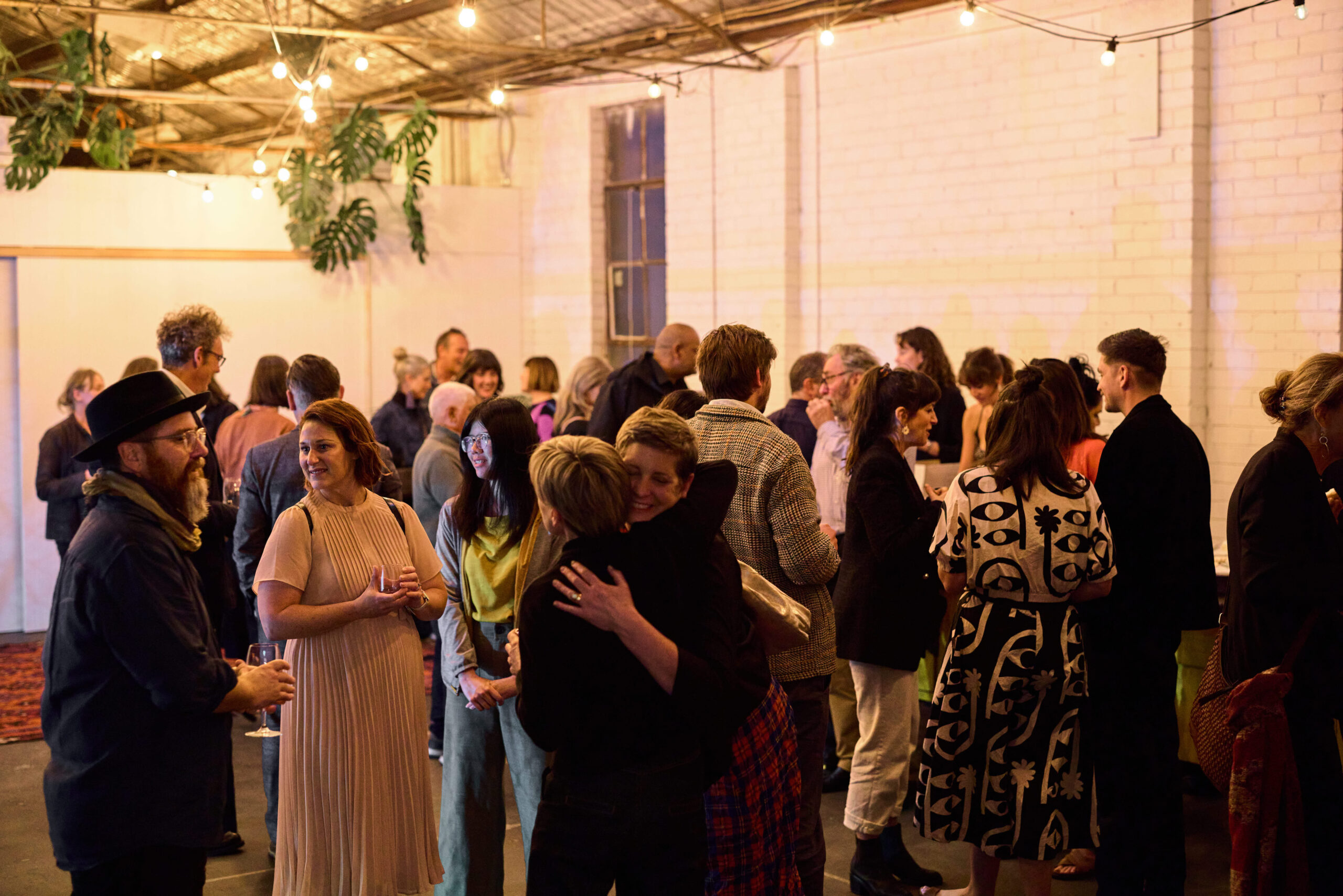
Here’s some images from the launch of our journal, Equity – a special evening with friends, collaborators and clients at Stackwood.
Sandra Harben, a Whadjuk Ballardong Noongar woman, gave the most generous Welcome to Country; while, Kieran spoke about the privilege of working with First Nations people across this land, including Noongar, Martu, Bunuba, Anindilyakwa, Narrunga, Mirruwong, Arrente, Jaru, Kija, Kukatja, Walmajarri, the Gadigal of the Eora Nation, Turbbal, Yuggera, Kuku Yalanji, Ngunnawai and Gooniyandi.
We are incredibly fortunate to work in the places we do, alongside the people we worth with. This privilege is not lost on us as a team; it cements the values of the agency as we seek social justice in the built environment for First Nations communities.
Copies of Equity can be read
online
or are available to purchase
here
, with 100% of revenue going towards projects in First Nations communities.