Ostensibly, I believed I enjoyed equal opportunities in education, social networks, personal growth and professional development. However, over time I realised this was not true.
Growing up in my home country, even while studying at one of the nation’s finest schools, I soon realised I didn’t have the same rights as many of my peers. While gender wasn’t an issue (in an all-girls school), other defining differences like race and religion subjected me to discriminatory quotas and grading criteria. This inequity pervaded into my early career, and it wasn’t until my thirties did I begin to acknowledge the significance of the injustice I faced, because of who I was.
I then made a conscious decision to systematically regain my power and prove my worth. I commanded my heritage, upbringing, education, gender and capability to transcend the prejudice to give me agency, pride, confidence and the right to equity. For others, compromise for inclusion’s sake was the only choice.
For me, equity is the ethical option.
* Copies of Equity can be purchased through the
The Fulcrum Press
with all proceeds going towards projects in First Nations communities.
We feel fortunate that
Rosie Baumann
was willing to share a poem she wrote in response to January 26th. We’re posting it today in the hope that it may impact your experience of tomorrow.
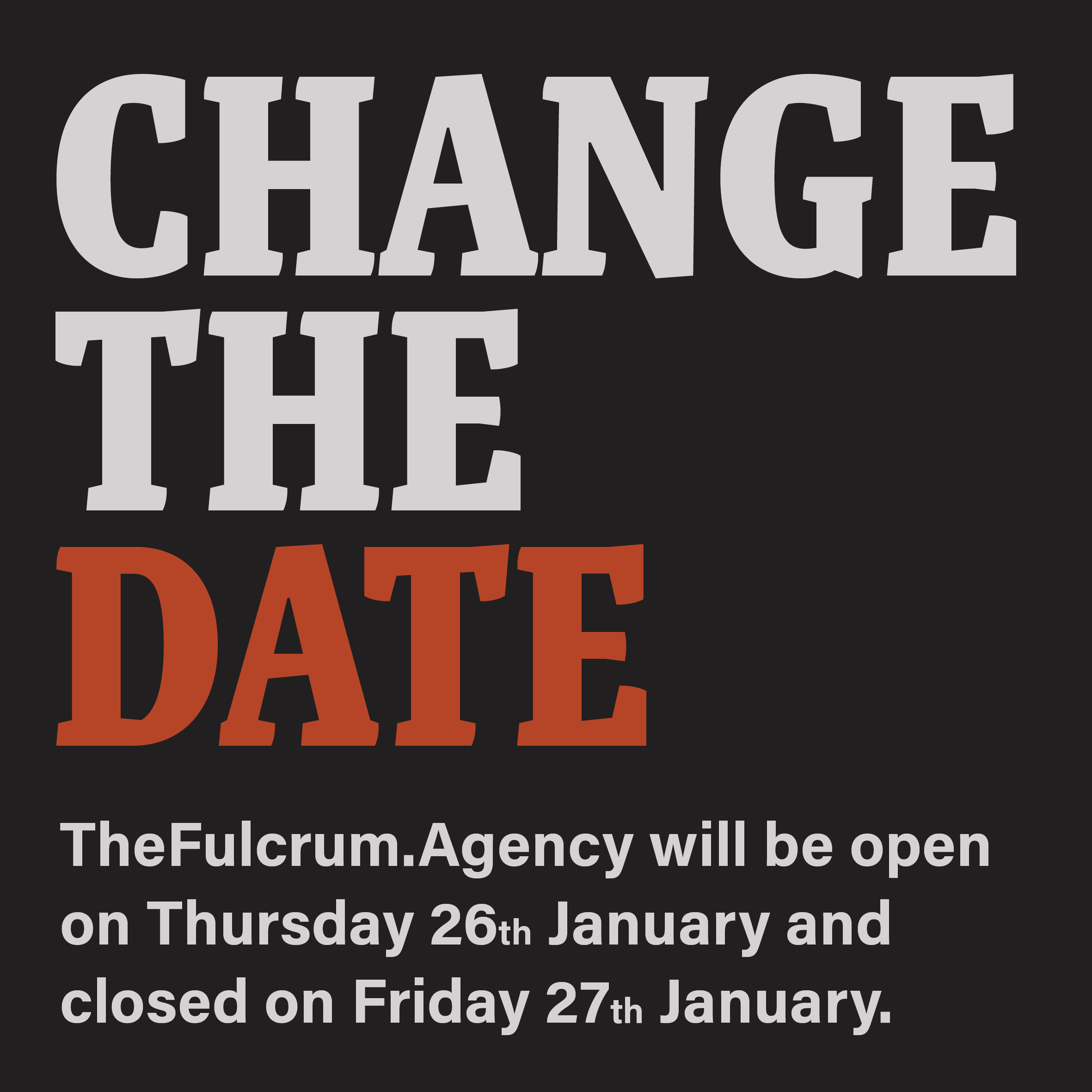
The Fulcrum Agency will be open on Thursday 26th January and closed on Friday 27th January.
2023 will mark the seventh year that we have chosen to work on January 26th. This small gesture reflects our commitment to building a more reconciled Australia, where Aboriginal and Torres Strait Islander cultures are foundational to our national identity.
Someone rightly made the point that our journal had not ever included content from anyone under 30. We didn’t have to look far to find Jemima Williamson Wong, law and sustainability student, climate activist and fledgling Instagram influencer . In Pain it Forward, Jemima asks her Gen Z followers a series of questions about their thoughts and fears for the future.
Equity the act of things being fair and just. Get Z, the Tik Tok generation, wasting too much time online. Money, the disparity between socio-economic levels, stress, luxury.
As a 20-something, I’ve found myself feeling a bit hopeless when it comes to my financial future. No matter how much I try to better my financial situation I worry I will never own my own house aka the predominant marker of success. I’ve also come to realise that these feelings are part of a broader attitude amongst Gen Z – it seems everyone is demoralized when they think about their financial future.
I know that I am privileged. My parents own property, I went to a private school, I’ve had help getting jobs, I was taught how to save and manage my money. I’ve had so many leg-ups and yet I still feel my financial future is bleak – and certainly won’t look anything like my parents. I’m 20 and I’ve already started saving for a house deposit – a house I probably won’t be able to afford for another couple of decades.
It’s an uncomfortable feeling carrying this concern about my own future, and at the same time, facing the boomer narrative that Gen Zs don’t work hard enough and choose smashed avocado on toast over saving for a house.
It’s hardly motivating to live frivolously when your entire news and Instagram feed is about the latest grim housing statistic. Or when every older family member you see lets you know they’ve been feeling worried that you may never be able to afford a home.
Through conversations with friends of a similar age, I noticed that I wasn’t alone in the way I was feeling. Three areas of concern had started to emerge: financial education, housing and wealth redistribution. To learn more, I put the following questions to my followers on Instagram (all 832 – I know, call me an #influencer).
Three areas of concern had started to emerge: financial education, housing and wealth redistribution. To learn more, I put the following questions to my followers on Instagram (all 832 – I know, call me an #influencer).
How do you feel about your financial future?
#worried
I feel like I have to work harder in my youth to be financially set up for uni years
A little worried tbh, I’m entering a pretty competitive area with my degree
Anxious and pessimistic
Feel like the cost of living and the pay rates are so drastically different to what they’ve been
Uncertain – but less worried than I feel like I should be
Not good! Prices for houses, cars, cost of living continue to fluctuate, and inflation is scary!
I reckon prices for things have gone up eg. housing and wages haven’t grown enough. Bit worrying.
Do you think there is financial fairness between generations?
No wayyy
That’s a tough one but no I don’t think there is fairness. Also depends on class
Nope! Unfortunately not
Noooope
Hell no
Lol no – my grandparents paid off the war. My parents nothing. I will pay off the results of Covid
I do not! I think it’s harder for younger generations to feel financially stable.
How do you feel about housing?
I will not have one probs
Worried that I won’t be able to afford one! And I’m in a privileged position which makes me think about those who are in a lower socio-economic bracket than me and those without the option of living with family as I am now
I feel like it is becoming very inaccessible and that scares me
Concerned…
Scared, the average cost of a house compared to the average income is insane. Even paying rent is hard to cover on minimum wage
Worried that I won’t be able to own my own home.
How do you feel about financial education (and how it’s impacted by social media)
Not enough of it! School did jack shit to teach us real life financial situations
Everyone seems to be financially comfortable on social media but it’s not real
We weren’t educated enough in school and e-com makes it look so easy to make money online.
Thoughts on wealth redistribution?
It is pretty important in my opinion. Everyone should be able to afford basic essentials!
I think it is important but it needs to be done right
Universal income ftw [for the win]
It makes me so sad to see the contrast between billionaires and those who have so little.
Any other thoughts?
There’s a lot that’s wrongly attributed to gen z’s work ethic or lack thereof
I think there’s a lack of understanding between generations.
Putting these questions online and reading the responses helped me to organise my own thoughts about this mess….
There is obviously a strong awareness about the inequity between the generations. We know that we will be inheriting trillions of dollars of government debt due to Covid, the climate crisis and all the other ‘unprecedented events’ that we are repeatedly experiencing. This cynical acceptance has fed into our attitude of hopelessness, pessimism, and anxiety about what our financial futures will look like.
It’s hard not to feel annoyed when I look at how older people view my generation as though we don’t work hard enough; if we spent less time on our phones we could get ahead.
I think there are two things at play here. First, there seems to be a lack of understanding about the way that social media has influenced our lives, and how it continues to shape different avenues of wealth creation. Successful influencers are the wealthiest people of our generation and they only got there because they hustled – on their phones.
Secondly, when I look around at my friends, I see a generation of hard-working hustlers. Of people trying to bring in money from multiple streams and yet are only just able to cover the cost of basic essentials.
As Gen Z influencer and media personality, Flex Mami put it: ‘the difficulty of Gen Z is that they have been touted to be these radical change-makers, and it is a lot of pressure for this environment we’ve built up. How do you be a change-maker when you have to pay your rent?
If we accept that the financial gap between generations will never be closed, why then do we continue to work towards the same financial aspirations as the generations before us? Because of this, I am starting to question the pursuit of financial security through property.
If we truly are the generation facing global catastrophe, owning a home and creating a wealth base through property hardly seems like a priority. Instead, would it be more prudent to focus on re-writing our expectations? To balance the need for a house and stability in a world marked by increasing volatility. Would there be more freedom, would we be happier if we could let go of this archaic pursuit of ‘to succeed in life’ you need to own a home and instead create a rental system that could provide stability?
This idea of balancing expectations is something I’ve come to after spending time trying to unpack the complicated mess of expectations, attitudes, reality, and stereotypes that surround housing and financial futures. I still haven’t resolved whether I’m willing to accept that my financial future and property ownership will look vastly different to my parents.
All I can ask from whoever is reading this, is that you take the time to think through my argument in light of your own context. No doubt many of you reading this will own investment properties. What we really need is better tenancy laws that will provide us with security while we get on with trying to fix the mess the generations before have made of the planet.
* Pain it Forward was first published in Equity, Issue 05 of our journal. Copies can be purchased at
The Fulcrum Press,
with all revenue going towards projects in First Nations communities.
** Hear more from Jemima via her Instagram account, @ourclimateconnection.
We’ve wanted to squeeze Andy into our journal for quite some time and in Equity we found the perfect spot! Here’s Andy’s thoughts on the word:
“Equity in common English conjures notions of inclusion and equal opportunity. In the making of cities it can often describe the precise opposite. Equity, in the financial sense, speaks of the command of resources that allows an investor to initiate the making of new city fabric. Equity brings control, ownership and by extension the privilege of agency. Equity investors can assert values, dreams and ethical ambitions, or can simply pursue the extraction and accumulation of private wealth. If we want to set the agenda of our cities in the context of climate and ecological crises we need to carefully reframe the rules which govern this source of investment.”
Copies of Equity can be purchased through the
The Fulcrum Press
with all proceeds going towards projects in First Nations communities. Link in profile.
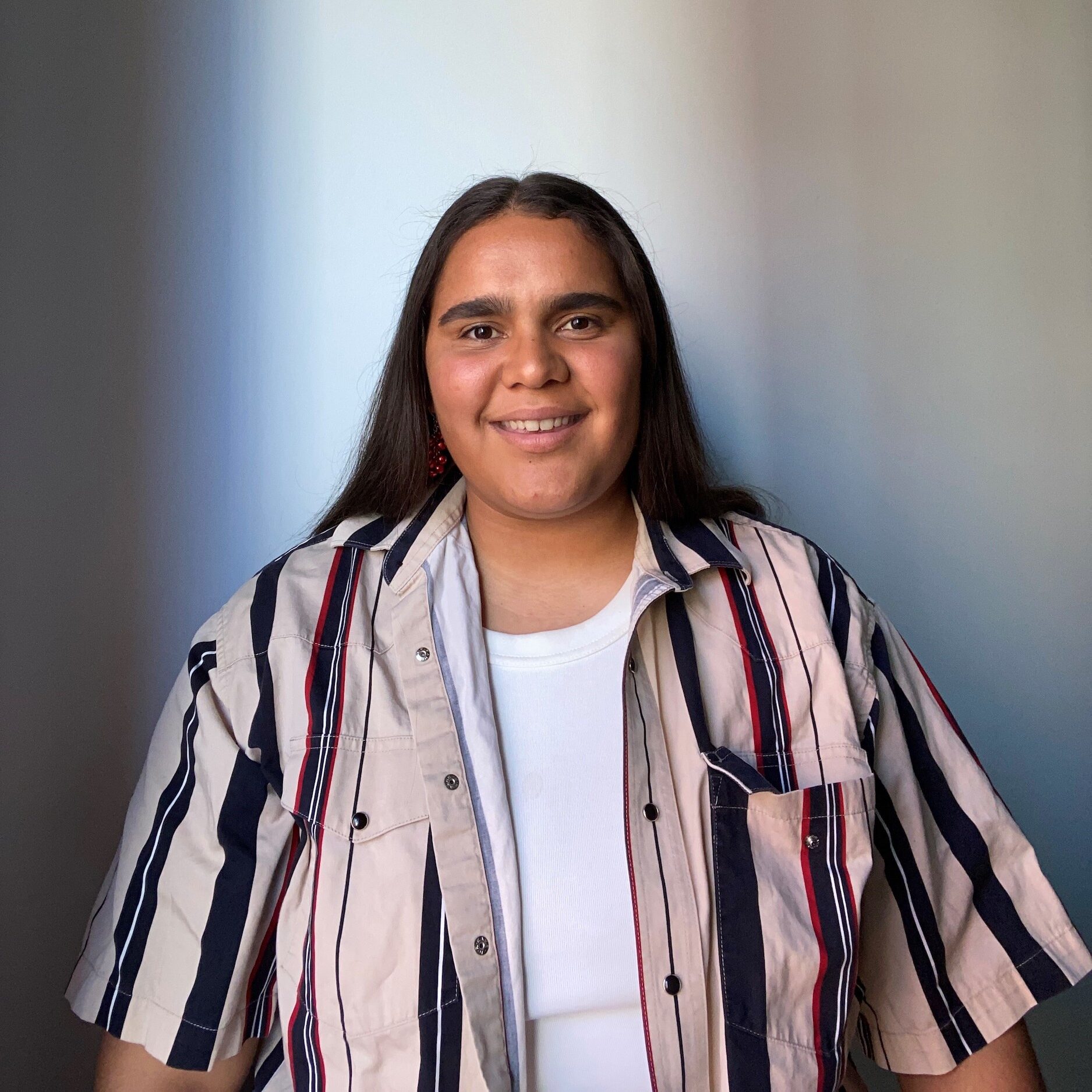
The Fulcrum Agency is delighted to welcome Rosina Baumann to our studio! Based in Sydney, Rosie is a Butchulla woman, final year architecture student at UNSW and joins us as part of our involvement with the CareerTrackers internship program.
These are Rosie’s thoughts on why she wanted to work with us:
My university experience has taught me that my interests and passions span across multiple industries, and through studying a Bachelor of Architectural Studies I have begun to realise that I can use this knowledge to work across multiple industries with a primary focus on the built and the design (I use these terms loosely).
Rosie Baumann
The majority of students who are at the same stage as me in their degrees have jumped into the machines that power the big corporations, that’s their starting point. I wanted the Fulcrum Agency to be my starting point given how I’d like to begin my career once I graduate.
The work that I’d seen produced by the Fulcrum Agency had some very key factors in this decision. Many companies are now working with remote Indigenous communities or at least attempting to, though they’re only doing it now after a background of ignorance. I first noticed the Fulcrum Agency as their work demonstrated growth from this ignorance, they actually worked with and for communities. This is the type of social justice action that I most resonate with. I find that many people want to tackle the big corporations to fight for First Nations rights. These people are doing the work, although I would rather work with the people, than for them. I found that this was a similar attitude appearing in The Fulcrum Agencies’ work and that really secured my decision to gain an internship here.
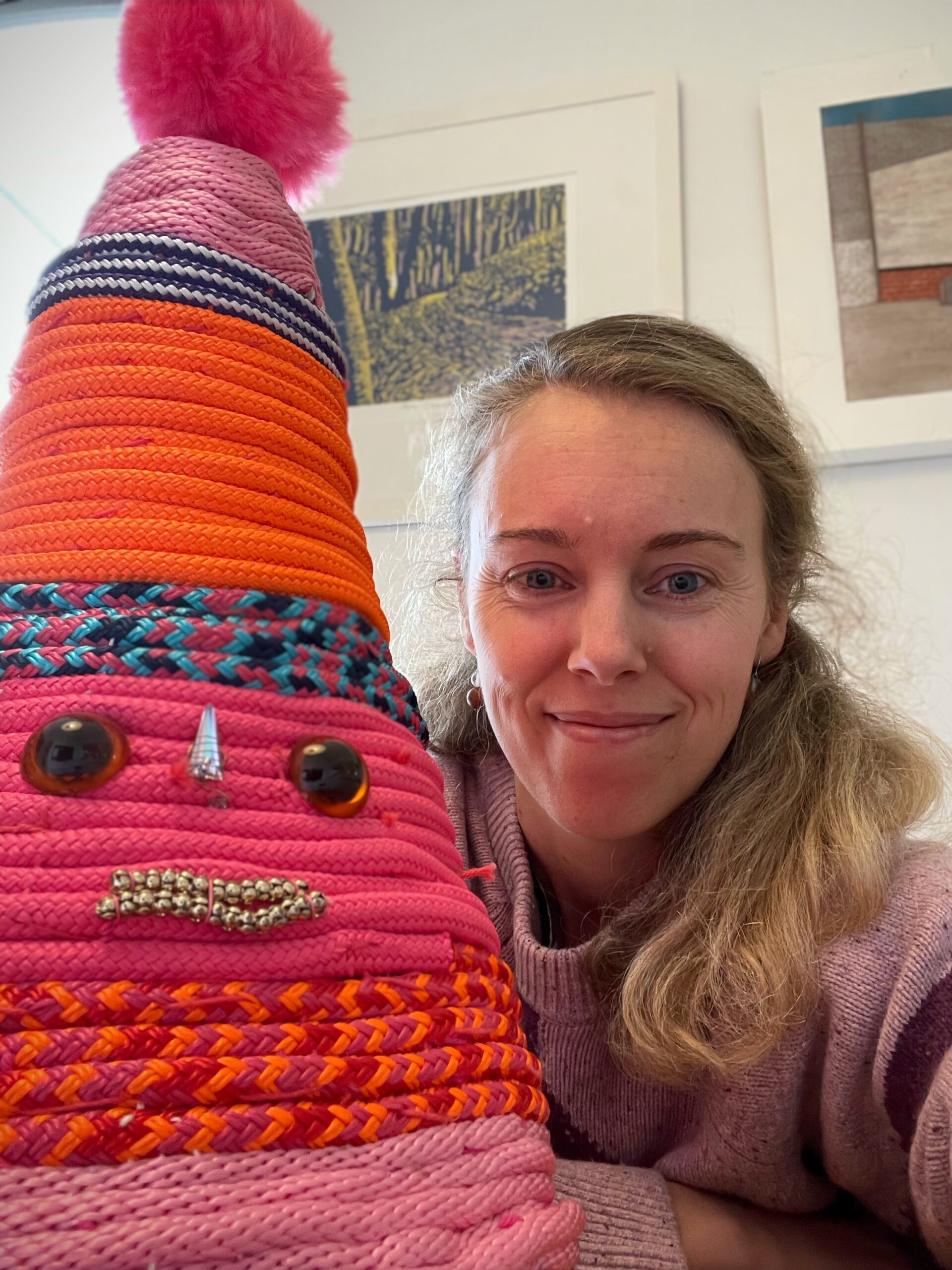
Akira Monaghan and friend (aka a textile sculpture by Carla Adams)
One of favourite bits of each journal is when we ask our friends and colleagues for their thoughts on our chosen word. This is TF.A’s Akira Monaghan on Equity:
Indulge me while I attempt a connection between ‘equity’ and poo.
A colleague recently had an unfortunate encounter with raw sewerage in his backyard. An inspection opening overflowed in what I visualize to be a type of chocolate fondue fountain, but less fun. The sewerage then flowed into his swimming pool. Not to worry though, it’s too cold to swim, and the poo breach was dealt with swiftly by the authorities, who treated the situation as the biological hazard that it was.
At TFA, we work on housing projects in remote Aboriginal communities. Raw sewerage in yards is commonplace, but unlike Perth, there is no rapid response from the authorities. A blocked septic tank can lead to the failure of health hardware such as toilets, hand basins, and kitchen sinks – thereby seriously inhibiting the ability of people to remain healthy.
I want to see infrastructure equity between urban and remote homes. I mean shit happens, but shit fountains shouldn’t!
* Copies of Equity are available for purchase through TheFulcrum.Press, with 100% of all revenue generated through journal sales distributed to First Nations community projects.
2022 was a pretty great year to attend Garma. It was equal parts electric and emotional. To be under the shade of a large tin roof, in view of the Gulf of Carpenteria, whilst the newly appointed PM outlined the referendum questions that would enshrine the Voice in our Constitution… it felt like a moment of sunshine after a long and challenging winter of silence.
I even got to ask a question on Q&A. According to my family it was career highlight, but in truth it wasn’t the question I had hoped to ask. I submitted two questions but the more pressing one wasn’t selected by the show’s producers. Missing from Garma’s forums and Q&A’s panel was any discussion around the impact of rising temperatures on culture and community and the viability of inhabiting Country across the north and at the centre of Australia.
After failing to get traction in my one shot on national television, I have been testing my concerns in smaller forums. Since returning from Garma, I have been talking with John Singer, Executive Director at Nganampa Health Service on the APY Lands. John has described the way in which cultural practice is changing to deal with the increasing heat; ceremonies and activities are either taking place in the evening, reduced in length, or not being done at all.
If the science holds true and the situation worsens, what is the future of cultural practice on Country that is being irreversibly changed as a result of the warming planet? John noted (with irony) our new Government’s acknowledgement of the impact of the climate crisis on our Pacific Island neighbours, without recognising the crisis that’s occurring in our own country – displacement, forced migration, loss of culture, community and the ability to care for Country. He questioned whether the Government would acknowledge that ‘climate refugees’ exist here in Australia right now
The standard definition of the term ‘refugees’ refers to people fleeing across national borders. People displaced
inside
a nation are generally not considered refugees under international law. If we think of Australia as a place more akin to Europe and made up of numerous nation states, then the movement of people across First Nations borders (with
Nations
being the critical bit) aligns more closely with the UNHCR definition of a refugee. That is, people moving across national borders as “persons displaced in the context of disasters and climate change.”
[i]
We need to acknowledge the multitude of nations that make up the continent we now call Australia, and the real and challenging impact of movement across these nation state lines for Indigenous people.
Human comfort is the result of the right mix of factors, in particular temperature and humidity. A critical measurement is known as the ‘wet bulb temperature’
[ii]
(shown in degrees
Tw
) and indicates the temperature of a thermometer after a wet cloth has passed its surface. With higher levels of humidity, less evaporation occurs to cool the surface. Humans rely on sweating to cool their bodies and wet bulb temperatures of 31.5Tw have been described as the upper limits of human survivability.
[iii]
Several places around the world have recently recorded wet bulb temperatures of above 31.5Tw and this includes two sites in Western Australia and the Northern Territory. So far, these temperatures are unprecedented (and brief in occurrence), but most climate experts predict that wet bulb temperatures above 31.5 will occur in more locations and for longer periods as vulnerable regions are increasingly affected by the climate crisis.
So, what is the link to ‘equity’ here? There are many – the first being the inequitable distribution and impact of the climate crisis on poor and vulnerable populations. Think here of the people without insurance in Lismore or displaced farmers in Pakistan flooded by unprecedented monsoonal rains. Our neighbours in the Pacific Islands are experiencing ongoing inundation and coastal erosion as well as the wildfire ravaged rural populations of Europe. Those with the least are being hit the hardest, and this, of course, includes many First Nations communities around the world.
Migration due to the climate crisis is happening across all populations, with many people in wealthier communities and populations around the world participating in what’s known as a ‘managed retreat’.
[i]
In Australia the search for better climates is often part of a midlife tree or sea-change, made easier by digital connectivity, improved regional infrastructure, the accumulation of wealth as a result of a suite of generous tax incentives focussed on housing.
Our government is acutely aware that many voters view Australia’s housing supply as a wealth creating asset, not as a human right or societal responsibility.
This is especially relevant to First Nations communities, where people have been dispossessed of land, ‘resettled’ into reserves, pushed off Country and had their traditional lands acquired, thereby denying them the means of inter-generational wealth accumulation through land ownership afforded to the settler state.
[i]
There is also vast inequity in infrastructure between Australia’s urban towns and cities and our regional and remote communities. Access to clean drinking water, reliable power, adequate telecommunications, safe roads, and appropriate waste removal varies significantly depending on where you live. The divide between remote communities and mainstream Australia is stark and well documented.
[ii]
And let us also consider the inequity of mobility. The movement of people due to seasonal, cultural, or social reasons, has always been seen as problematic by governments who like to be able to ‘see’ their subjects at a known fixed address. Tying a citizen to a parcel of land (and thus keeping them sedentary) certainly assists. It is interesting to contrast this problematising of mobility in Indigenous populations by the State, and the subsidisation of mobility in wealthier cohorts, such as holiday house owners through taxation systems and infrastructure investment.
So how can we address this lack of equity – and the combined impacts of a warming climate, poor infrastructure, and the requirement for mobility? And, perhaps more importantly, is there even the desire to do so? The sixth Assessment Report by the IPCC
[iii]
suggests that we only have a very small window to reduce our greenhouse gas emissions, and even then, substantial global warming is inevitable. For people already living on the edges of climate survivability, this has dire consequences, and it is not something we have started to meaningfully address.
For many First Nations communities, the predicted effects of rising temperatures do not need to hit the extremes of probability to make a real difference to the already over-stressed health system and individual vulnerabilities. Community infrastructure has been neglected for decades – power outages or disconnections are commonplace, air-conditioning often doesn’t work, insulation is lacking, buildings offer no shade or thermal control – all amplified by the negative impacts of crowding. It is an ecosystem of policy and delivery failure which demands urgent, system wide reform.
In Indigenous Affairs, reform has been a word rolled out across successive governments, Ministers, and bureaucrats. Despite this reformist zeal, genuine action and meaningful change has been glacial in pace. And thus, communities have become adept and skilled in the art of waiting. A large part of this waiting can be seen in the ‘testimony’ of housing adaptations. It is one of the few areas where agency is seen in the built environment in Indigenous communities. Building ‘hacks’ are commonplace, removal of louvres to install cheap wall air-conditioners, the use of tarpaulins, aluminium foil and shade cloth to protect inhabitants from climatic or privacy pressures, or the re-alignment of living/sleeping spatial norms most houses are designed to construct.
Governments have paid little heed to this testimony. While tenant involvement in Indigenous housing design is often recommended, it seldom takes place in practice. Demand for housing continues to outstrip supply, and in rental situations, it can be difficult for tenants to have much of a say about the design features that would improve their everyday living conditions. Each building hack holds clues that would help architects, planners, builders, and policy makers deliver new housing and refurbishments in harmony with tenant needs. Unfortunately, Indigenous tenants instead occupy the space between ‘take what you can get’ and ‘no money for appropriate designs.’
Despite research and community advocates who repeatedly recommend Indigenous-led housing design processes, Indigenous tenants in social housing are usually represented by organisational brokers, and if consulted directly, will be asked questions about their likely household composition/demographic profiles. These ‘briefing sessions’ reduce people’s agency to a function of bedroom and bathroom allocations. Tenancy Agreements forbid tenants from making any structural changes to their housing and design responses fail to address basic needs.
I was trained in the value of passive design – responding to a site’s climate by seeking opportunities for natural ventilation, effective shading to shield summer sun and welcome winter rays and orientation that assists all the above. Air-conditioning was seen as a design failure, an inability to design sensitively to your context, to ‘touch the earth lightly’. One could think of this approach as a kind of ‘thermal moralism’ – design judgments that believe natural systems are inherently better than mechanical (or man-made) ones. Design responses that took advantage of the site’s natural attributes, buildings that ‘breathe’, ensuring its occupants were in harmony with nature were celebrated as exemplars of the architectural discipline – positioning itself against the mindless housing of the mass market, which was closed and shockingly reliant on air-conditioning to maintain thermal comfort.
What is our design response when the temperature outside becomes lethal? Are we positioned as a profession to care about challenges such as cyclical maintenance, crowding and mobility, dust and corrosion that have left so many architect-designed ‘remote houses’ derelict without the ongoing maintenance support that is needed? Architects have ‘declared’ it’s a crisis, but in what ways are we acting?
And what then about the impending challenge of ‘managing the retreat’ of communities away from Country due to human-induced climate warming. Are we ready for the moral, ethical and logistical requirements to move people off Country, far away from their homelands? Again. Are our regional and peri-urban centres ready for this forced migration; places already feeling the squeeze of the housing crisis and impact of tree/sea changers? And how will we, as a nation, grapple with the shame of forced migration due to climate warming – an ideology of neglect – not only of the planet, but of the First Peoples who are disproportionately affected by it? Can governments and agencies adapt quickly enough to support seasonal or continuous mobility without penalty to tenants?
As always, there are pockets of hope. Places where communities are taking control, driving towards their own localised vision of community infrastructure, appropriate housing, responsive and culturally safe policy. There are innumerable advocates pushing for change – from Tangentyere Council delivering cogent arguments against government energy policy, or rental calculations, to practical demonstrations like Norman Frank Jupurrurla’s practical activism against energy poverty and for improving housing standards.
We need a massive investment in housing upgrades to make them thermally effective, to install air-conditioning, to change the system of power supply in community, and support ongoing planned and cyclical maintenance. We need new housing to be built in a way that is mindful of the impending future, to have climate boundaries drawn on maps not by policy makers seeking to simplify the lives of building certifiers, but in an accurate response to the changing climate. We need better tenancy policy to enable mobility, supporting people to move between regional centres and homelands. These are not issues of equality in housing supply for social housing tenants, and the likely comments sections of news sites calling out perceived unfairness for Indigenous peoples “being given two houses”. These are issues of equity, of justice and the re-distribution of the wealth.
This is complex, messy and challenging terrain. We must be open to this conversation, even as we argue for a Voice, for greater community control, for a handing back of land and assets. This must not be done as a way of retuning places devoid of liveability, the creation of a new form of
Terra Nullius
– a land nobody can survive in. John Singer and the countless others calling for a response cannot be left waiting any longer. For tens of thousands of generations, culture and community have not just co-existed, but thrived across this continent, nourishing through intimate connection to Country, ceremony and law. We are facing the very real possibility that this could be lost within the next two. The Uluru Statement called for Australians to walk together. I reckon we need to start running.
Footnotes
Oliver Prince Smith (October 26, 1893 – December 25, 1977) was a
U.S. Marine
four star general and decorated combat veteran of
World War II
and the
Korean War
. He is most noted for commanding the
1st Marine Division
during the first year of the Korean War, and notably during the
Battle of Chosin Reservoir
, where he said
“Retreat, hell! We’re not retreating, we’re just advancing in a different direction.”
[1]
He retired at the rank of four-star general, being advanced in rank for having been specially commended for heroism in combat.
[3] Wet Bulb Temperature: The Temperature of Evaporation
The wet bulb temperature Tw (or tw) or isobaric wet bulb temperature, is the temperature an air parcel would have if adiabatically cooled to saturation at constant pressure by
evaporation of water
into it, all latent heat being supplied by the parcel.
“As we acknowledge our First Peoples, I’d like to acknowledge two truths:
Firstly, that there is no inequality that climate change doesn’t make worse. This includes Indigenous disadvantage, whether it be people in sub-standard remote housing or the people of the Torres Strait dealing with the impacts of climate change on their beautiful island homes that I visited recently.
And secondly, First Nations people must be partners in charting the way forward. I was pleased that my state and territory Energy Minister colleagues agreed with me last week to the development of a First Nations Clean Energy Strategy that will be co-designed with First Nations people.
“
[8]
The IPCC finalized the first part of the Sixth Assessment Report,
Climate Change 2021: The Physical Science Basis, the Working Group I contribution to the Sixth Assessment Report on 6 August 2021 during the
14th Session of Working Group I and 54th Session of the IPCC
.
In news just in, the
Eastern Kuku Yalanjiwarra Culture and Tourism Hub
received a commendation the ‘Planning for Country’ commendation at the QLD Planning Excellence Awards! This project was a huge collaboration between ourselves, the Jabalbina Yalanji Aboriginal Corporation, Blaklash Creative, Planz Town Planning, CA Architects and Cox Architecture.
In announcing the award the jury stated, ‘this project features an inclusive and extensive engagement approach with the Eastern Kuku Yalanji people to establish a set of unique design principles. The principles relate to Caring for Country, Language, Unity/Kinship and Markers of Country. The principles have had a significant positive influence on the project and the Judges applaud the approach, which has a high degree of transferability to design projects across Australia.’
Support the new sound in town and come party with us at this summer sundowner event!
We’ve said it before, nobody loves a side hustle as much as the team at TF.A. Our Associate Principal, Nick Juniper is the person behind
Freocast
, a new online community radio station launching in 2023.
Nick and the Freocast team are hosting a shindig at the Naval Store to kick off the summer holidays and raise funds for the station. The event is being held on Saturday 17th December from 5pm onwards. Tix are only $15! Get yours
here
.