The latest edition of Architecture Australia includes ‘Indigenizing Practice: Architecture and cultural consultants’, an interview between
Georgia Birks
, TFA’s
Kieran Wong
and
Troy Casey
and
Christopher Bassi
from Indigenous-owned business,
Blaklash Creative
.
Together, TFA and Blaklash have been working on several projects with the aim of leveraging community and social outcomes. Kieran and Troy describe it as an arranged marriage that worked!
The interview is well-worth reading by anyone looking to embed notions of Country in their work:
https://bit.ly/3sPov7B
Indigenizing Practice

Dave Sharp interviews the two Emmas


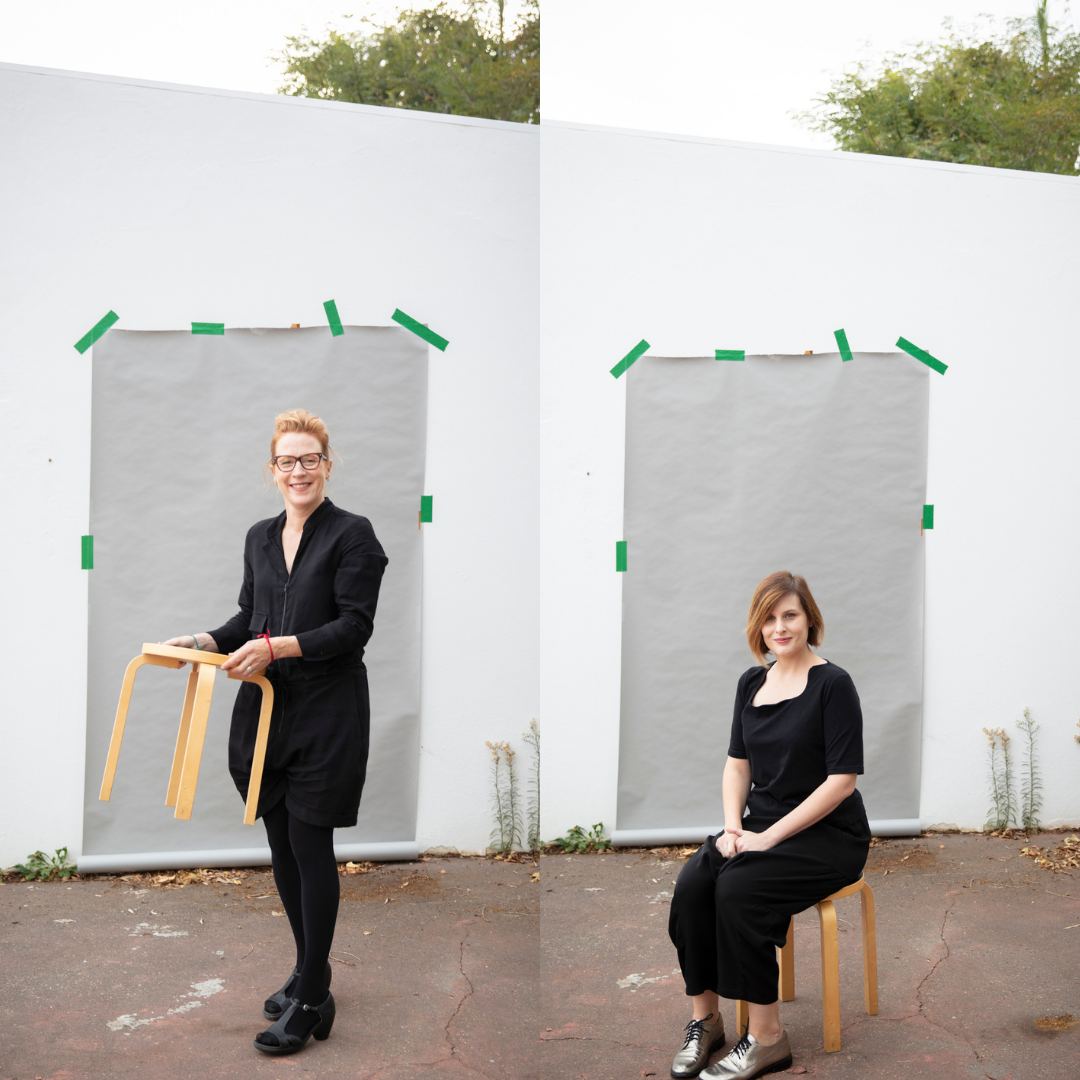
Emma Williamson & Emma Brain The two Emmas (aka Emma Williamson and Emma Brain) had the pleasure and terror of participating in the latest episode of Dave Sharp ‘s ‘The Architecture Firm Marketing Podcast’.
Brad from our agency describes it as a ‘candid and detailed overview of our journey so far’. If you’d like to know more about our business or better understand the things we do, you can listen here: https://lnkd.in/gYcv2Mma
The Architect WA Homes Edition

The latest edition of The Architect includes an article by Kieran Wong that explores his trajectory from a childhood in Willetton to Chair of Shelter WA . The article is both a reflection on his personal values and a clear statement about social and affordable housing in WA: https://lnkd.in/gTpE2pzj
Thanks to Sandy Anghie and the team at the Australian Institute of Architects WA for the invitation to contribute.
Diversity as a disruptor in construction

TF.A Partner, Emma Williamson led a great conversation between Danna Walker and Andy Fergus , who are both passionate about increasing diversity in the architecture and construction sector and finding leverage in roles outside of traditional practice.
The interview touches on many of the topics that we regularly discuss in our studio – building inclusive environments, making impact, the transferability of an architect’s skills – and provides food for thought for those working in the in and outside the profession.
Read the article here .
Housing is a social vaccine

This opinion piece by TFA Partner and Shelter WA Chair, Kieran Wong, was published in The West Australian on Tuesday, 29 December 2020.
It has been quite a year. Amid increased uncertainty, added stress and unfamiliar constraints, we have seen a growing sense of community and compassion, despite our enforced separation.
One thing we have all understood more clearly is the importance of home. During lockdown, it was all we had, our horizons limited to four walls and a roof. More recently, we’ve seen returning loved ones able to get home after months of absence, and how much it means to come home to WA.
Sleeping in a Park
But in recent months we have also seen what it’s like for people, here in WA, who don’t have a home to go to. In this newspaper, week after week, we have met men, women and children who don’t have the basic foundation of a stable, secure home to safely raise their family. We’ve heard their stories and we’ve seen the impact on their lives and the community.
In August we met Maria, who spent the entire pandemic sleeping in a park in central Perth with her family, including two pregnant daughters. Maria told us that she felt let down and abandoned, as though the duty of care this State owes all its citizens did not extend to her
We heard from Charmaine, just as figures showed that more than 40 people have died on Perth streets this year. Charmaine lost her partner to suicide last year, and spoke powerfully about the impact of that loss on her, and how she was struggling to keep going herself.
Meanwhile, Anselm was camped out on the steps of WA Parliament.
The People’s House
After months camped at tent city, the sprawling homeless camp in the Perth CBD, Anselm took his tent to the people’s house to demand housing for his people.
His bold and moving sermon on the steps sounded an irresistible call for action, and shortly afterwards it was rewarded with the news that supported, temporary accommodation was coming for tent city — though not until next year.

Tent City in Perth’s CBD Behind the foreground of people living in tents in Perth this year, we have witnessed the unfolding catastrophe of families unable to keep their children safe because they don’t have homes. The horrific tragedy of eleven-year-old Annaliesse taking her own life while her family was homeless led to an outpouring of sadness and outrage that culminated with an open letter from dozens of eminent West Australians demanding immediate action from the Premier to address WA’s Aboriginal housing crisis.
WA’s Housing Crisis
But homelessness is not just an issue that affects Aboriginal people, though it often hits them first and hardest. WA’s housing crisis affects the whole community, and in the new year that truth is set to really hit home.
There are currently 15,000 families on the waitlist for social housing in WA. When the moratoriums on increases in rent and evictions end in March, thousands more people face losing their homes.
In a climate where the rental vacancy rate is less than one per cent, the lowest in decades, the private rental market is no refuge for desperate renters.
Housing Insecurity
Queues for existing listings could match the queues we saw outside Centrelink last March, except this time there will be no JobKeeper and JobSeeker will be reduced.
WA has managed the pandemic well, but homelessness is a continuing crisis. With housing insecurity on the rise for thousands of WA families, many may wonder what the new year will bring.
In 2021 we need WA’s housing and homelessness crisis to be treated with the same resolve and common sense WA displayed this year during the pandemic.
Housing is a Vaccine
WA needs a minimum of 2500 new social houses every year of the next government.
Housing is a vaccine against the spread of chronic social ills. It keeps our jails and hospitals clear for those who really need to be there and allows people to reintegrate back into society safely. It keeps families together, keeping kids safe and out of the system and in school. It protects against suicide and a self-harm contagion that has reached epidemic levels on our streets. It prevents outbreaks of violence that impact us all.
In the same way that a COVID-19 vaccine will unlock the world to us once more, a real commitment to social and affordable housing will unlock a home for every West Australian family.
This year we have learnt the hard way the importance of home. Next year we need to ensure that every West Australian family has somewhere safe to call home.
It’s not hard, it’s not complicated, and it’s the most effective way to protect our most vulnerable and keep the whole WA community safe.
An Australian first: Traditional Owners direct Indigenous housing projects

We were chuffed to see this review in Domain of a presentation that we gave at the Housing Futures conference in Melbourne last week. Thanks to journalist Jenny Brown for picking up on this important story.
“The slowest of the art forms, and one that generally starts with considering local context, community connections and subtle elements like site lines, is spun into a whole new dimension when architecture needs to consider the world’s oldest living culture, clan, inter-family and moiety relationships, and the ancient insider knowledge of songlines.
In the Groote Eylandt part of East Arnhem Land, and in an Australian-first project where traditional owners rather than a government agency have directly employed an architecture firm to deliver “culturally empowered housing”, Perth practice TheFulcrum Agency has been learning a great deal about “the ability to work slowly”.
To a wide-ranging architectural forum Housing Futures, convened in Melbourne last Friday by Architecture Media, Fulcrum Agency principal Kieran Wong explained that with all the cultural constraints of the project commissioned by the Anindilyakwa Housing Aboriginal Land Council (AHAC), he saw “working slowly as the great opportunity of the project”.
Engaging in years of meetings in which members of 14 local clan groups had explained why the prescribed housing solutions of the past had failed, and all the changes and adaptations that would actually maintain wellbeing and necessary traditions, Wong said what was being asked for was “very different to any masterplan the [NT] government had on file”.
“We don’t need to invent anything. What we need to do is what works; to do it properly and not to rush it,” Wong said.”

Indigenous housing projects, he said, had the tendency “of burning architects out in repeating cycles of failure”.
Instead of doing more of the same, the Groote Eylandt projects are modelling what happens when the directions come straight from traditional owners and the ultimate occupants like Gregson Lalara, founding chair of the Anindilyakwa Housing Co-operative and, therefore, Wong’s boss.
To the audience of mainly capital city architects, Lalara outlined cultural behaviours that were not only different to those of settler Australia, “but different to other Indigenous cultures in Australia”.
He said the new generation housing needed to be properly mindful “of different privacy structures” that could govern inter-action between neighbours and even members of the same family who occupied a single house.
At times and for reasons of correct (social or ritual) moiety relationships, various members cannot share what would be normally be common spaces such as bathrooms.

On the old standard-issue housing model, this has led to hot-climate houses being shrouded in shade cloth or tarpaulin screening – both within a single structure and to ensure that outward viewpoints towards neighboring houses were not inappropriate.
Even where there is a sea view, or an excellent potential for cross-breeze ventilation, conventional design can very clumsily contravene tradition. “Houses can also be facing the wrong way, or towards the wrong part of the country,” Wong said. “And this has led to all sorts of strange enclosures happening.”
With the current housing projects still under construction, and with a five to 10-year delivery schedule, the emphasis has been on “making the houses incredibly elastic because of the way occupancy patterns can change over time”.
“In the life of a house, events – say through marriage – can change family groupings quite dramatically.
“These are not Western nuclear families and the houses need to have multiple entry and exit points so ‘poisonous cousins’ and in-laws don’t encounter each other.”
The screening devices that will continue to be a big part of making a house flexible must therefore have adaptable fixing points that don’t, at the same time, impede healthy ventilation. For this, gable roof-lines are proving useful. “We need simple formats that can be flipped,” Wong said.
Because of the belief in nocturnal sorcery, Lalara explained the need for certain outdoor areas to be floodlit.
The myriad subtle differences necessary in the designing and delivering of housing that will be successful for the resident communities has, says Wong, “been an amazingly engaging project in which we’ve sat down and talked properly”.
Taking the directions from the local communities has been “a milestone”, he says. “To hand back decision-making to the people of Groote has been a process of listening and trying to understand.”