We’ve scrapped our planned #IWD post because this news report is too important not to share. In an
ABC podcast
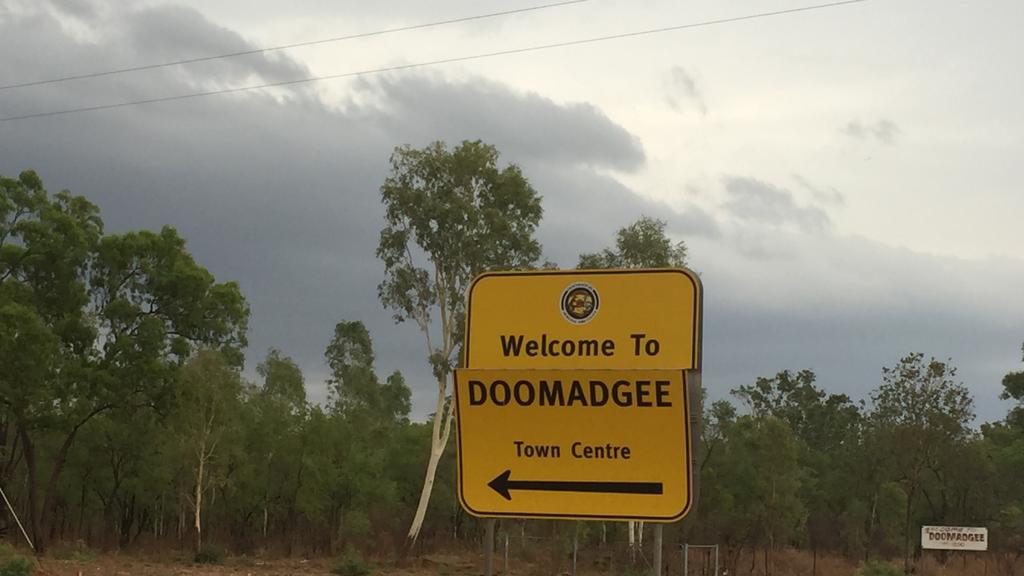
, Louise Milligan outlines the situation in Doomadgee, a remote community in QLD where Aboriginal women and young girls are dying from a disease eradicated in white populations many decades ago.
Our work often provides respite from the intensity of global events, but it also heightens our awareness of situations of gross inequity and racism. Our interest is also piqued by the link between health outcomes and the state of housing in our remote communities. This podcast won’t take up more than 15 minutes of your time. Thanks to Akira Monaghan for sharing it with us this morning.
In our work and personal lives we are committed to doing what we can to build a reconciled Australia, where Aboriginal and Torres Strait Islander cultures are foundational to our national identity and embraced by our institutions.
This is the sixth year that we have decided to work on the 26th January – a small but genuine reflection of our desire for a more truthful acknowledgement of our nationhood.
We are extremely proud to announce that our Innovate RAP has been endorsed by Reconciliation Australia!
The purpose of the Innovate RAP is to implement reconciliation initiatives, and from what we can tell, we are the only built environment design practice in Australia to be endorsed at this level.
Our Innovate RAP last for two years, and in that time, we have committed to the following major initiatives:
_Formalise cultural protocols we observe when visiting and working with First Nations communities. This document will be developed in such a way that it can be modified according to local context.
_Implement an education program that can be taught in remote schools to enhance students’ understanding of the built environment.
_Continue to offer pro or low-bono services to First Nations organisations for work of community benefit.
_Continue to contribute 1% of revenue to The Fulcrum Fund, which we established with the goal of funding projects in First Nations communities across Australia.
_Appoint a Cultural Governance Adviser to guide our approach to practice and project development.
In developing our Innovate RAP we had the opportunity to strengthen our Vision for Reconcilation:
TheFulcrum.Agency respects the diversity of Aboriginal and Torres Strait Islander peoples and acknowledges their long, continuous spiritual connection to their lands. We recognise that the taking of these lands has come at a significant cost to the culture and wellbeing of First Nations peoples and to an acceptance of our shared destiny
TheFulcrum.Agency is committed to using our skills in the built environment to build a reconciled Australia, where Aboriginal and Torres Strait Islander cultures are foundational to our national identity and embraced by our institutions.
Our vision for reconciliation in Australia is one in which Indigenous and non-Indigenous Australians live together as equals, enjoying the same benefits of health and well-being, the same opportunities for education and employment, and the same dignity of recognition and respect. It is vison for a country that acknowledges the pain of its colonial past while striving for a shared and optimistic future.
Our vision is led by all of our staff and is guided by the cultural authority of our clients and the communities with whom we are privileged to work. This shared work is motivated by a commitment to social justice and a desire to redress systemic racism and structural inequality.
Daily Practice
In our daily practice, we create opportunities for First Nations peoples to actively participate in the development of our cities and our regional and remote communities. We do this in several ways:
Strategy:
we provide strategic advice to Indigenous communities seeking to navigate local planning systems; and to non-Indigenous businesses looking to incorporate a First Nations perspective into their building initiatives.
Community Co-Production:
we insist that First Nations communities remain in control of the decisions that affect their lives and are at the forefront of the decision-making process.
Research:
we partner with First Nations researchers, communities and leaders to inform an evidence-based understanding of the relationship between the built environment and health and well-being.
Built Environment:
we draw on our skills in strategy, co-production and research to design places and spaces that care for Country on projects that directly improve the quality of the built environment in remote communities and our regional and metropolitan centres.
We are a small business that maintains an ambitious approach to employment practices. We foster a work environment that mentors emerging Indigenous creative practitioners and promotes ‘on Country’ cultural training for our staff. Our governance structure is overseen by First Nations experts in business and the built environment.
Perth people, we cannot recommend this play enough. We went to see it last night (along with a handful of clients and connections) and each one of us came away in awe. The play deals with issues of domestic violence and is demanding of both the performers and audience. Despite heavy themes it’s totally engrossing. 60 minutes feels like 15. As our friend
Meri Fatin
said, ‘would watch again in a heartbeat.’
The show runs until the 11 December and only a handful of tickets remain.
Buy yours now!
Together with our friends at Block Branding, we are thrilled to be supporting the directorial debut of Noongar artist Ian Michael, with his production of The Bleeding Tree by Angus Cerini at The Blue Room Theatre.
In a play described as ‘a fierce revenge fairy-tale’, a cast of First Nations women will tell the story of a mother and her daughters thrown into an unspeakable and harrowing situation.
Our support of this play is part of our commitment to highlighting the incredible talent of First Nations artists in this country. We can’t wait to see how Ian and his creative team interpret this powerful story.
The Bleeding Tree by Angus Cerini runs from 23 Nov – 11 Dec at The Blue Room Theatre in Northbridge. Book your tix here:
NAIDOC week starts today, and this year’s theme – Heal Country – feels particularly relevant to the work we do at Fulcrum.
As an agency working in the built environment, we spend a lot of time thinking about First Nations’ notions of Country. It is so radically different to the Western idea of the same word. We spotted this quote by the late ethnographer Deborah Bird on The Conversation* this morning and it helped to make sense of the difference:
Country is not a generalised or undifferentiated type of place, such as one might indicate with terms like ‘spending a day in the country’ or ‘going up the country’.Rather, Country is a living entity with a yesterday, today and tomorrow, with a consciousness, and a will toward life.
We join with all of you in celebrating the culture, wisdom and achievements of our First Nations people this NAIDOC week.
* ‘Although we didn’t produce these problems, we suffer them’: 3 ways you can help in NAIDOC’s call to Heal Country’ by Bhiamie Williamson
https://bit.ly/3wfOmEs
This article by TF.A Principal, Andrew Broffman, was first published in the Jan/Feb 2021 edition of Architecture Australia and is the second in a series of discussions on Indigenizing architectural practice in Australia. Sarah Lynn Rees invited Andrew to respond to the theme of unbuilt work by exploring projects that are never constructed not because they are speculative or utopian, but because their Indigenous association is met with complex barriers that are often impossible to overcome.
Architecture is as much about the flow of capital as it is about design. “Follow the money” used to be whispered by cops chasing gangsters. It is now on the lips of architects pursuing their next commission. For public infrastructure, the decisions made about project location and scope are invariably political. While patronage and pork-barrelling have long been accepted features of the political landscape, the bipartisan spoils of political largesse creates its own inequities. The circulation of capital and its trickle to Indigenous communities operates according to yet a different set of rules.
When one considers “unbuilt” projects, there is often a wistful regard for their visionary qualities. Untethered to gravity, these schemes challenge the imagination and provoke debate. Think Piranesi, Archigram, Hejduk and early Hadid. But “unbuilt” has an unsavoury side as well, where racism and the limits of distributive justice are laid bare. For Indigenous communities in Australia, many projects remain unbuilt, not because of their critical eye or utopian promise, but for more prosaic reasons: inadequate funding allowances, opaque grant requirements, lengthy contract negotiations, complex governance preconditions and onerous reporting constraints
Patronage exposed
Unlike Claude Rains’s character Captain Renault in
Casablanca
, we are no longer “shocked, shocked to find that gambling is going on in here.” The so-called “sports rorts” scandal that momentarily engulfed the federal Coalition just before the 2019 election, or the 2020 Crown Casino inquiry into money laundering, or the ongoing New South Wales saga regarding questionable grant approvals for local council projects in Coalition-held seats, are all reminders of the collusive nature of politics and the built environment.
For Indigenous organizations that rely on grants for capital works, the “house rules” are far more demanding. Corporate registration and governance compliance are strictly enforced. It can take months to gain government agreements before a ministerial sign-off occurs. Acquittals impose onerous reporting regimes on grant recipients.
(1)
And the servitude expected of Indigenous organizations, as they “beg” for what should be normal government business to foster civil society, reminds us that the rules for marginalized Australians – particularly Indigenous Australians – are always different.
During my time working on building projects with Indigenous communities in central Australia, I witnessed the arbitrary operation of the grant system and its effect on childcare centres, art and culture projects, food stores and community centres, all of which failed to materialize for reasons unrelated to the quality or buildabilty of their designs. In one project, a community store’s funding was contingent on the removal of soft drinks from the store’s shelves. In another, a women’s organization had its design of a memorial to victims of domestic violence ignored by a government infrastructure manager who believed he could deliver the project more quickly with his own scheme.
I have seen government, distrustful of an Indigenous community group’s ability to manage its finances, insist on third-party grant auspicing arrangements before funding would be approved. On a fully developed childcare project, created through a strong community engagement and design process, the building was shelved by government managers in favour of more expedient, “ready-made” transportables. For these projects, “unbuilt’ was not about visionary propositions, critique and provocation; it was about the barriers that First Nations communities confront to get things built – barriers that the broader community does not have to endure.
Indigenous Advancement Strategy
The typical avenue for the funding of building projects in remote Indigenous communities in Australia is through the Commonwealth’s Indigenous Advancement Strategy. In 2014, this Liberal–National Coalition (under prime minister Tony Abbott) diverted some 150 programs into five funding streams, including the Remote Australia Strategies Programme, under which capital works are supported. Urban and regional Indigenous community projects are funded under various state-based programs.
In 2015, within the first year of the Indigenous Advancement Strategy’s operation, it was found that “less than half of the successful applicants for the first round of the new federal Indigenous Affairs funding scheme were Aboriginal organisations.”
(2)
The federal government’s 2019–2020 budget includes a $5.2 billion allocation over four years for projects and proposals that fall into its various streams. The program’s funding application process involves a range of complex requirements that are outlined in the
Indigenous Advancement Strategy Grant Guidelines
, a 56-page document that covers the broad parameters of the program and its eligibility.
Applications are assessed through processes that require repetitive negotiations between the grant recipients and local bureaucrats, who must then negotiate with their Canberra counterparts before the minister potentially signs off. Successful applicants might breathe a sigh of relief upon approval, were it not for the equally difficult and lengthy process of formalizing the agreement, which itself can take up to a year. During this time, building prices continue to rise and the project’s scope must therefore be reduced to stay within the grant amount. A reduced scope then becomes cause for a variation to the funding agreement, which can lead to further delays. Communities begin to lose faith in the grant approvals process when it is prolonged for seemingly arbitrary reasons, reducing their willingness to engage in further conversations around the development of their projects.
Aboriginals Benefit Account
Another funding source for building projects in the Northern Territory is the Aboriginals Benefit Account (ABA). The ABA distributes funds from the royalties of mining on Aboriginal lands for projects in Aboriginal communities in the territory. Although grants are assessed by a committee made up largely of First Nations representatives, including members nominated by each of the four Northern Territory Land Councils, it is the Commonwealth that continues to exercise “more control over the purse strings and functions of the ABA in the Northern Territory.”
(3)
Eligibility for an ABA grant requires registration under the
Corporations (Aboriginal and Torres Strait Islander) Act 2006
or the
Corporations Act 2001
, and grants are typically capped at $250,000. Applications exceeding this amount are permitted but require a more detailed Business Plan and/or a Project Management Plan. Rules of the grant program are covered in a 22-page
Beneficial Grant Guidelines
booklet, a 15-page
Grant Funding Application Kit
and the 23-page
Head Agreement for Indigenous Grants
(the same funding agreement under the Indigenous Advancement Strategy). Consider this in contrast to how grants have been distributed in New South Wales, for example, where one local council received $90 million under the Stronger Communities Fund and was asked to apply for the amount only after they had received it.
(4)
Image: Andrew Broffman
National Aboriginal and Torres Strait Islander Art Museum: a case study in the still unbuilt
For an architect, there are few more exciting public building commissions than a cultural facility. Cultural projects can galvanize communities and garner the creative imagination of the many participants to result in places that celebrate cultural diversity. Art and culture centres can foster community cohesiveness and reinvigorate cities and regional towns. They can also be vexed and plagued by missteps and indecision that ultimately prevent the work from being built.
In August 2016, the Northern Territory Labor Party won government on a range of commitments, including a $50 million pledge to build an “iconic National Aboriginal Art Gallery” in Alice Springs. With great promise, an Initial Scoping Steering Committee was established in early 2017 comprised of Indigenous and non-Indigenous experts in the arts industry, including co-chairs Philip Watkins, chief executive officer of the locally based Desart, and Hetti Perkins, the former curator of Aboriginal and Torres Strait Islander art at the Art Gallery of New South Wales – both with local family ties to Arrernte Country. Also part of the committee was senior Alyawarre man Michael Liddle; respected arts administrator Michael Lynch; and co-chief executive officer of the Museum of Old and New Art in Hobart, Mark Wilsdon. In November 2017, the committee released its recommendations, including comprehensive consultation with Traditional Owners, strong First Nations representation throughout the development and running of the museum, and a proposed location on the outskirts of town.
(5)
Largely ignoring the recommendations of the Steering Committee, the Northern Territory government has pushed ahead with its own plans to build the facility, not in the “spectacular natural setting of the Desert Park precinct of Mparntwe,” as recommended, but instead in the town centre. The original vision to celebrate and promote Indigenous art and culture, though still proclaimed, has been subsumed by an agenda of business revitalization for the CBD. So focused has the Northern Territory government been on a CBD site that it has threatened compulsory acquisition of a nearby council-owned sports oval; the Alice Springs Town Council and some senior Custodians have been less enthusiastic.
Suggested alternative proposals include a further Northern Territory government offer to pay for a new council chamber if council agrees to vacate its site for the new gallery. The proposed move would then require further investment in a new sports facility to replace the premises given over to the relocated council. These sleights of hand have been dizzying. Though a new committee has been established, with significant local and national First Nations representation and arts expertise, it remains to be seen whether the project will ever be constructed.
(6)
Conclusion
The barriers that First Nations communities face in getting projects built are myriad, and made more evident when considered against the whimsical nature of mainstream political manoeuvring. A lack of trust by governments in the ability of Indigenous organizations to exercise good governance and manage finances responsibly; the assumption that consultation and engagement can be ignored without consequence; and the ceaseless paperwork burdens placed upon communities with limited resources all conspire against the fair distribution of investment in First Nations communities. Unbuilt? Sadly and unfairly, never built.
References
Mark Moran,
Serious Whitefella Stuff
(Melbourne: Melbourne University Press, 2016).
Anna Henderson, “Majority of grants from Indigenous Advancement Strategy first round given to non-Aboriginal groups,” ABC News, 5 May 2015,
David P. Pollack, “The political economy of the Aboriginals Benefit Account: Relevance of the 1985 Altman review 30 years on,” in Will Saunders (ed.),
Engaging Indigenous economy: Debating diverse approaches
, edited by Will Sanders (Canberra: ANU Press, 2016),
As an office we have decided to remain open on Tuesday 26
th
January as a reflection of our view that the date of Australia Day must change.
It’s incredible to think that it’s been five years since that first One Day concert in Fremantle, which seeded in our minds the need for a more truthful acknowledgment of our nationhood.
The recently released, ‘
2021 State of Reconciliation in Australia Report
’ argues that Australia needs to shift to a braver position on issues affecting Aboriginal and Torres Strait Islander peoples.
In her forward, Shelley Reys AO, CEO at Arrilla Indigenous Consulting, writes:
‘bravery… will be our change agent. Now is the time to take a deeply personal journey and have the uncomfortable conversations. And we need to extend those conversations to those within our sphere of influence, both professionally and personally.’
Something for us all to contemplate over the BBQ this weekend.
Andrew Broffman is a Principal at TF.A and leads our Sydney agency. In this article, Andrew unpacks the links between the state of health infrastructure, the principal of democracy and potential of self-determination.
In 1985 Indigenous rights activist and anti-nuclear campaigner Yami Lester, a Yankunytjatjara man born at Walyatjata in South Australia, challenged a group of young professionals (a doctor, an architect, an anthropologist) ‘to stop my people getting sick’. Yami Lester’s provocation lead to the creation of Healthabitat and the establishment of the
9 Healthy Living Practices
that today remain the benchmark for assessing the health hardware of Indigenous housing in Australia. (1)
32 years later, in May 2017, two months before Yami Lester died, Indigenous leaders met in the central desert and composed the
Uluru
Statement From the Heart
, a declaration that sought recognition of First Nations peoples through a voice to Parliament, agreement making and truth telling.
These events share a relationship between health and democracy, an affinity that is particularly relevant today as we grapple with the Coronavirus pandemic and seek an understanding of what comes next
Much has occurred in Indigenous housing since Yami Lester posed his challenge. Not all of it has been good. The lessons learned, however, include an understanding that investment in appropriate housing and infrastructure – culturally considered, well designed and constructed, appropriately managed and maintained – will contribute to healthier lives for Indigenous people living in regional and remote communities and urban areas across Australia.
We have also learnt that Indigenous housing and infrastructure decisions are strongest when the voices of those who are most affected shape the considerations and determine the directions of housing and health policy.
We have also learnt that Indigenous housing and infrastructure decisions are strongest when the voices of those who are most affected shape the considerations and determine the directions of housing and health policy. The ability to make decisions about the things that affect our lives is, after all, the foundation of democracy for all its citizens. Work that occurs in Indigenous communities must be understood as part of that larger project of democracy – self-determination.
Like housing, the state of health infrastructure more broadly within a community and across a region is an indicator of the strength or weakness of local decision-making processes. In those places where health is poor, democracy is also likely to be weak. Links have been established, for example, between infant mortality and democratisation in sub-Saharan Africa. And in Brazil it has been found that there is a clear relationship between heightened political participation and increased public spending on health care. (2)
Image:
At the community scale, consider the things that affect healthy places: functioning water supply, clean sewage disposal, appropriate waste management, serviceable transportation networks, reliable communications systems, resourced health facilities, and continuity in the delivery of professional and culturally competent health services. When these are not working, engagement with systems of decision-making will also suffer and community acceptance of government directions will be weakened. In the context of Covid-19 and restrictions on movement, “[w]hile autocratic regimes tend to take more stringent policy measures, such measures tend to be less effective in reducing mobility in autocratic countries compared to democracies. Comparing countries with a collectivist versus an individualist culture shows that the former have been more successful in taking measures to reduce mobility.” (3)
The Coronavirus pandemic has exposed both the fragility of public health systems around the world and the relative strengths of democratic institutions. In Australia, the response to the pandemic was early, decisive and largely accepted by the wider Australian public. But for communities of First Nations peoples, government responses were slow and often confusing. Where governments had once suggested that Indigenous communities were ‘cultural museums’ with no future (4), now they were telling Indigenous Australians to return to their communities. Where restrictions were being lifted in nearby urban centres, conflicting policies across Commonwealth biosecurity powers and state and territory border controls added to the uncertainty. (5)
Instead, it was Indigenous leaders and community health organisations that disseminated the important messages around hygiene and social distancing, demonstrating a resolve to manage exposure to the virus when governments have only been able to respond with the blunt tool of quarantine.
Image:
The Carnegie Endowment for Peace has stated that, “Civil society groups mobilizing responses on the front lines of the pandemic may reinforce democratic vitality at the local level.” (6) As restrictions are eased and the country emerges into the next phase of response, we should look to First Nations communities not only for guidance in building pandemic resilience but for reframing the quality of Australian democracy itself. The
Uluru Statement From the Heart,
with its democratic claims for Voice, Treaty and Truth, might frame this next phase.
In a recent article entitled
Governing the Pandemic
, Diane Smith concludes that “[a]rrangements for the establishment of a future national representative Indigenous body should recognize the foundation stone of capacity and resilience that exists within Indigenous polities, communities and their organisations, and ensure they are given a real voice in future national decision-making and recovery initiatives.”(7)
Finding marginalised people at the vanguard of democracy may be surprising, but it is not unusual. In her incisive essay, “The Idea of America,” for the
1619 Project
on the stifling impacts of slavery on American democracy, Nikole Hannah-Jones argues that African Americans have been the true torch bearers of democracy in the United States. Despite America’s violent history of slavery, African Americans have continued to insist that America live up to its promise of democracy and equality. “More than any other group in this country’s history,” Hannah-Jones states, “we have served, generation after generation, in an overlooked but vital role: It is we who have been the perfecters of this democracy.” (8)
In Australia, too, First Nations peoples have been leading the way. From Yorta Yorta elder William Cooper’s petition for Aboriginal representation in federal Parliament in 1937, to the Yirrkala Bark Petition in 1963, to the Freedom Rides of 1965, to the Referendum of 1967, to Yami Lester’s advocacy for the Marlinga Tjarutja people in 1985, to the Barunga Statement in 1988 and beyond, Indigenous Australians have patiently held out hope for equality, fairness and opportunity. The
Uluru Statement From the Heart
continues that effort, and offers a mirror to Australia’s democratic claims. The
Uluru Statement
asks the nation to live up to its ideals, a declaration that will ultimately benefit us all.
Healthier communities will underpin this aspiration as a necessary condition for political agency to thrive. And advocacy for healthy people and places can only be effective where democracy is strongest. As Australia looks to its immediate and long term future, the
Uluru Statement From the Heart
is a gift to all Australians, a way of imagining who we might be as a nation.
(7) Smith, Diane, “Governing the pandemic: Implications for Indigenous self- determination and self-governance” in Markham, F., Smith, D. & Morphy, F.,
Indigenous Australians and the COVID-19 crisis: perspectives on public policy
, Topical Issue no. 1/2020, Centre for Aboriginal Economic Policy Research, Australian National University, Canberra.
https://doi.org/10.25911/5e8702ec1fba2
We acknowledge the Whadjuk Noongar people as the original custodians of the land on which our office in Fremantle sits. We also acknowledge the original custodians of the places we work around Australia.