• Warunkuwu Master Plan

    Warunkuwu Master Plan
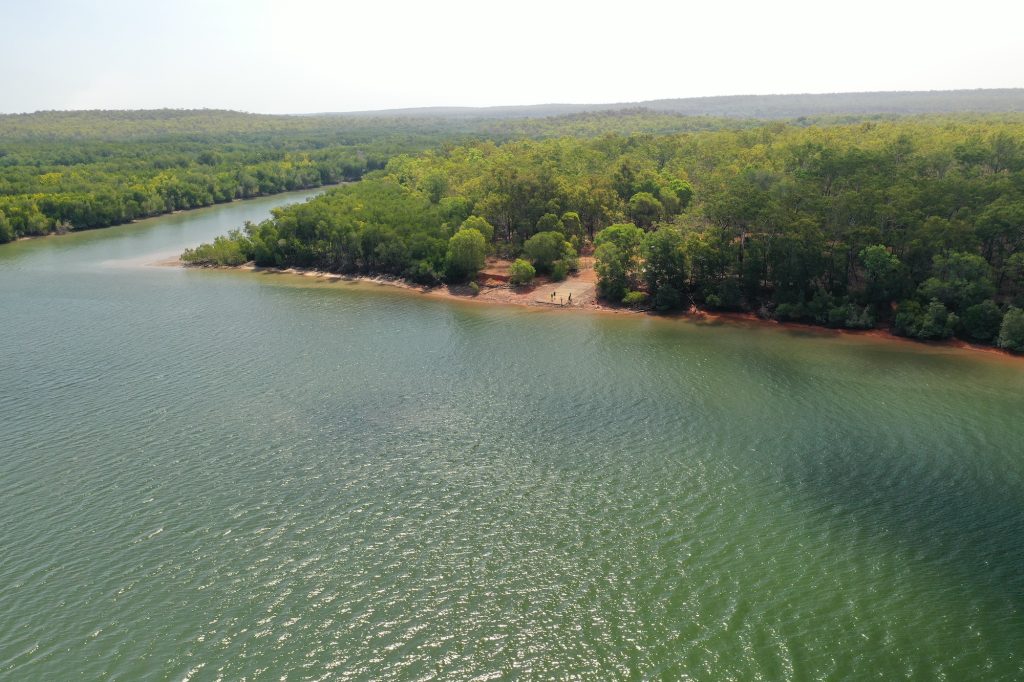
    Warunkuwu Barge Landing
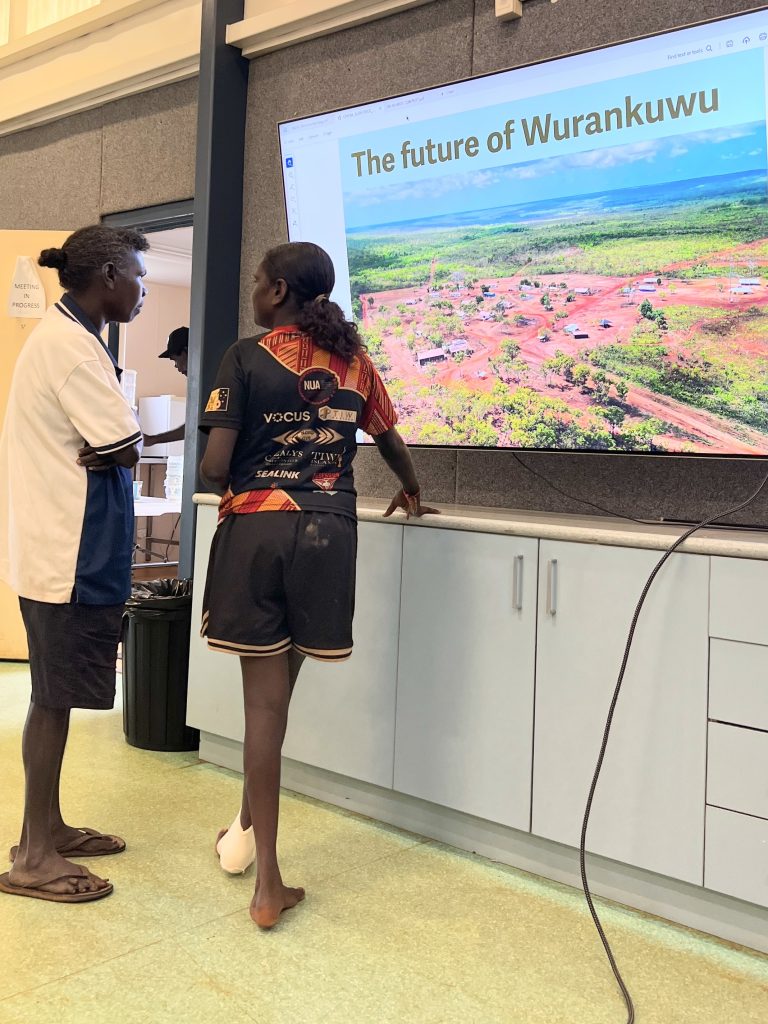
    Portaminni director Xaverina Poantimilui and daughter

    ‘We need to encourage the young people here, to speak from your heart. This is a plan for Wurankuwu as a township for future generations… this vision is for your children, your grandchildren… to make the community grow…’ Jacinta Tipungwuti
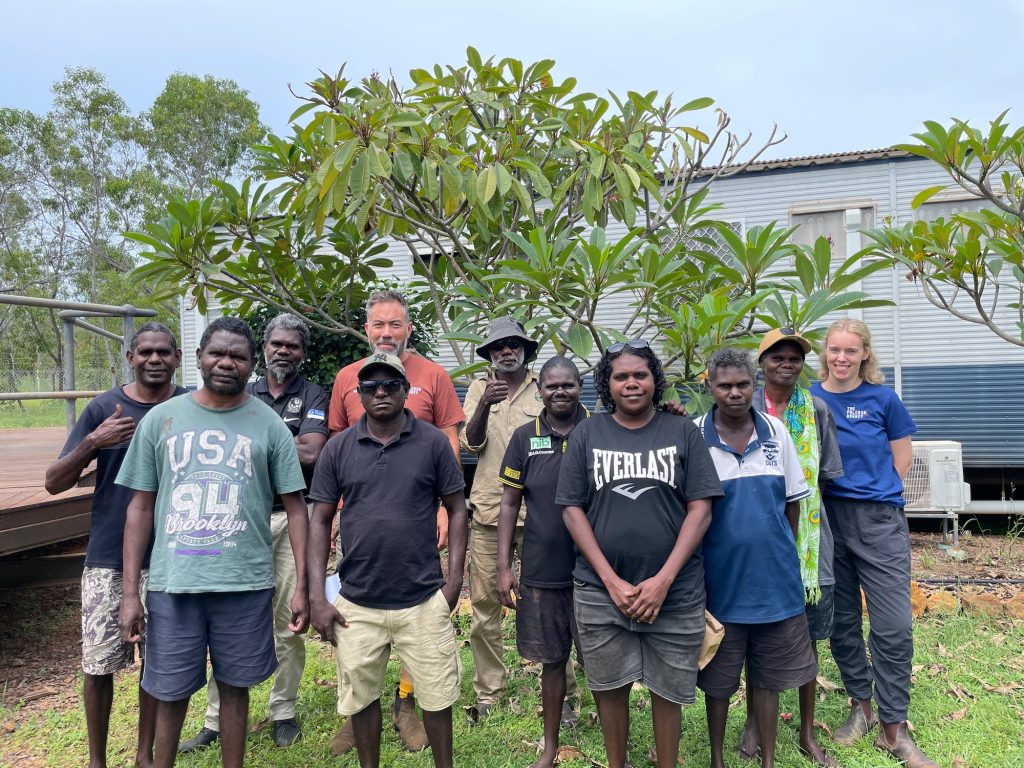
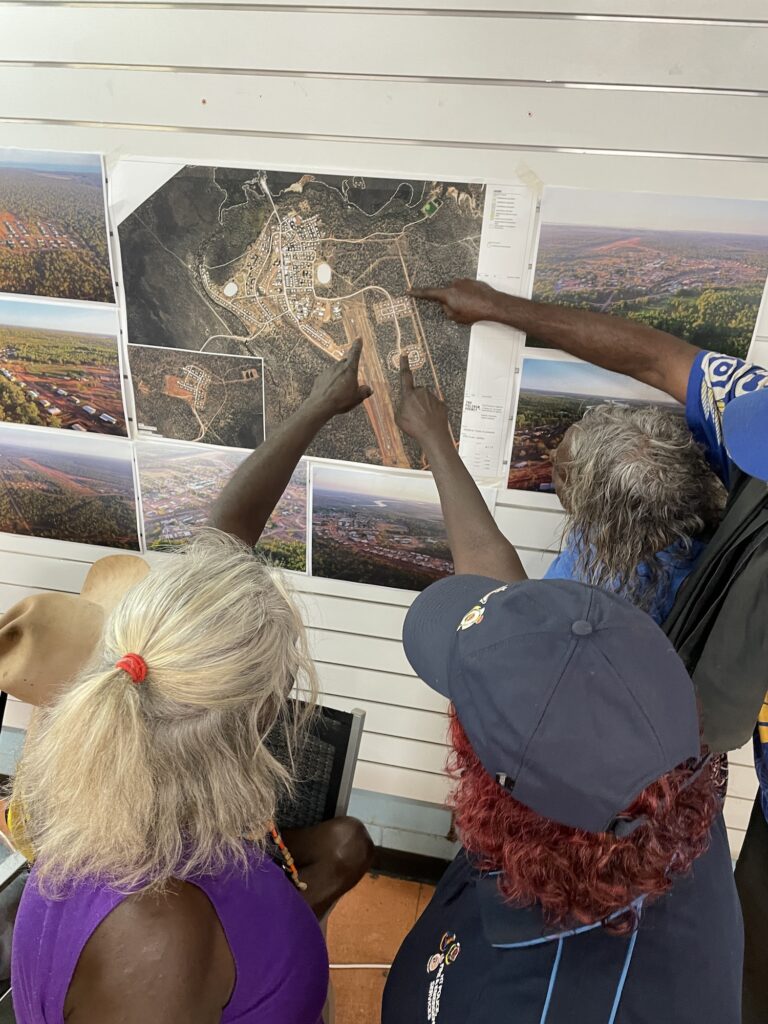
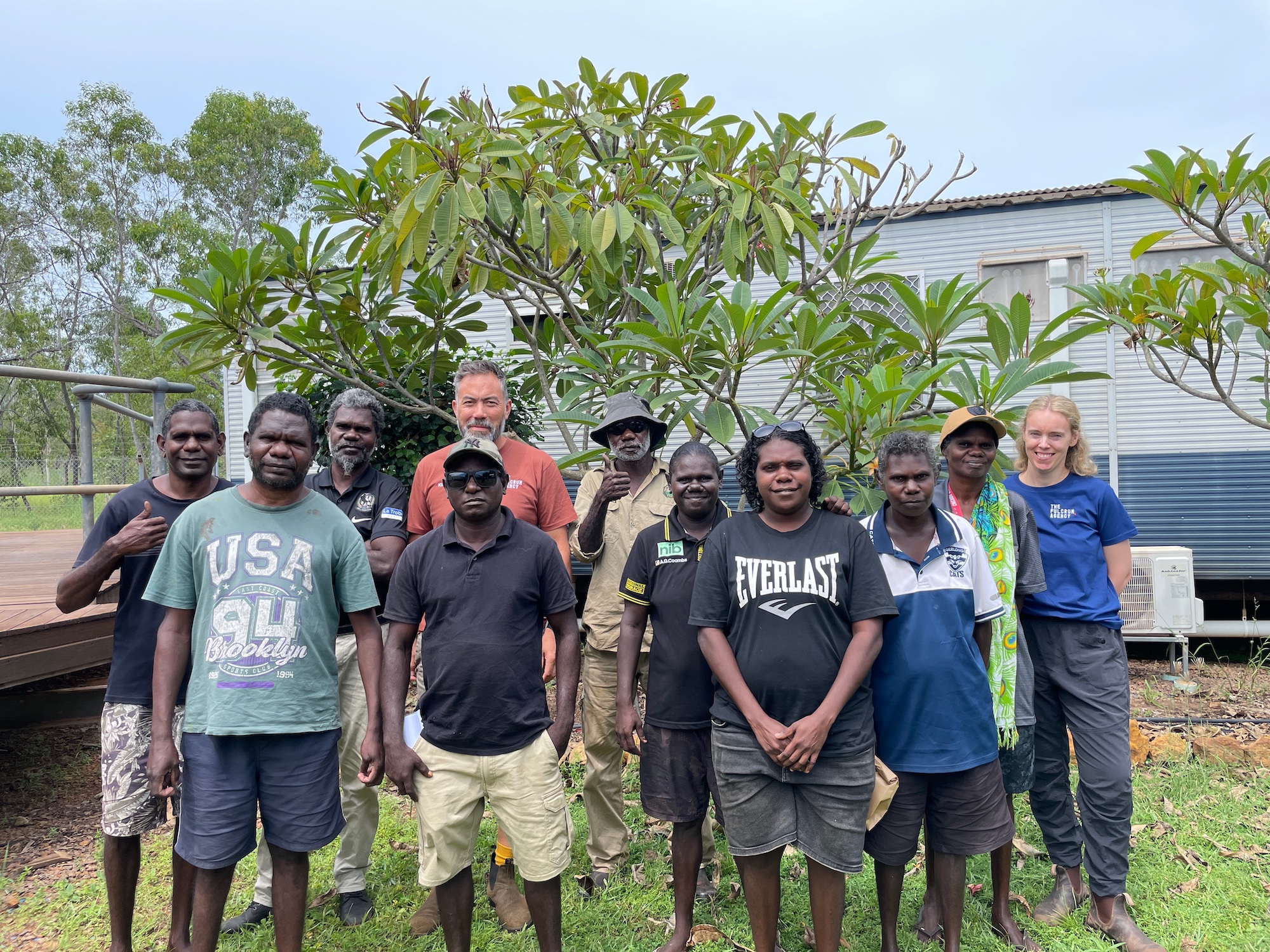
    Portaminni directors and TFA at the Master Plan validation workshop in Wurrumiyanga
    Wurankuwu Airstrip
    Next Project

    Warunkuwu Master Plan

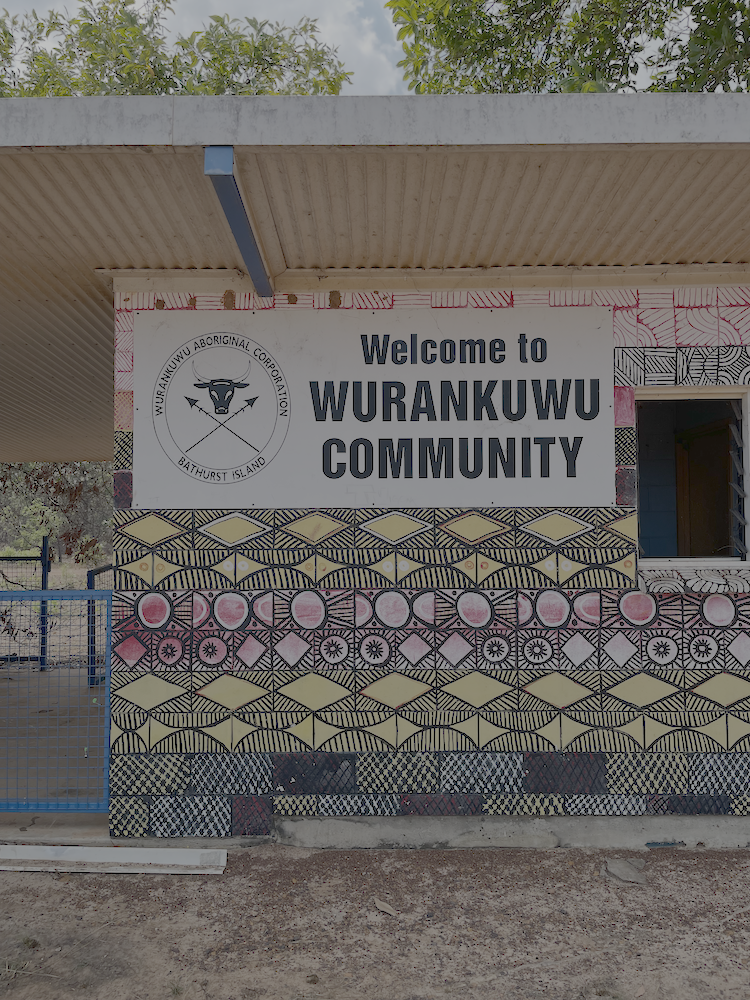
    Wurankuwu, also known as Ranku, is a remote Aboriginal community located on the western side of Bathurst Island in the Tiwi Islands, approximately 80 kilometres north of Darwin.

    Ranku stands at a pivotal moment in its history. For more than 30 years, it has existed as a homeland, and now, under the leadership of its Traditional Owners, Ranku is transitioning to a recognised Remote Community: a permanent, self-determined place where culture, livelihoods and economic opportunity can flourish.

    This Master Plan has been developed by Traditional Owners for all Tiwi.

    Remote communities and homelands are frequently shaped by ad-hoc planning and opportunistic development. The Wurankuwu Master Plan integrates technical and spatial planning with the deep knowledge and ambitions of Traditional Owners, ensuring that the built environment actively supports the community’s cultural, social and economic aspirations.

    The plan also provides a structured, community-endorsed framework to guide future planning under a Township Lease, giving the community a clear and authoritative foundation as it steps into its next chapter.

    This transition marks a fundamental shift in how the community plans for and takes ownership of its future. Population projections indicate growth potential comparable to other established communities in the Northern Territory, with up to 300 residents and approximately 50 houses, supported by improved services. 

    The transition from homeland to Remote Community is an act of self-determination. Traditional Owners envision Wurankuwu as an inclusive, thriving community, with expanded services, stronger infrastructure and economic opportunity for Tiwi people. Its impact will be felt not only in Wurankuwu, but across the Tiwi Islands, easing pressure on larger townships like Wurrumiyanga and strengthening the Tiwi economy as a whole.

    LocationTiwi Islands
    PartnersPortaminni Pty Ltd
    Office of Township Leasing, NT Government
    Project TypeCommunity Master Plan
    CompletionJanuary 2026
    Project TeamKieran Wong, Heather MacRae, Akira Monaghan

  • Bemkanin – Wadeye Community Plan

    Bemkanin – Wadeye Community Plan
    Wadeye Bunngul, June 2023. Important ceremonies take place in Wadeye each year. The townsite includes male and female ceremonial grounds, and everyone must respect these sites, including visitors. 
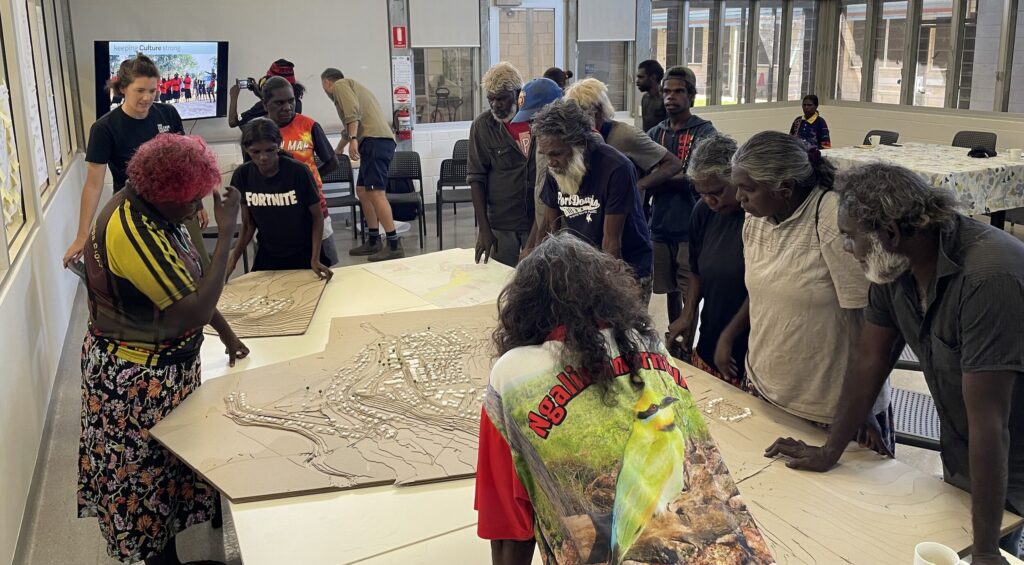
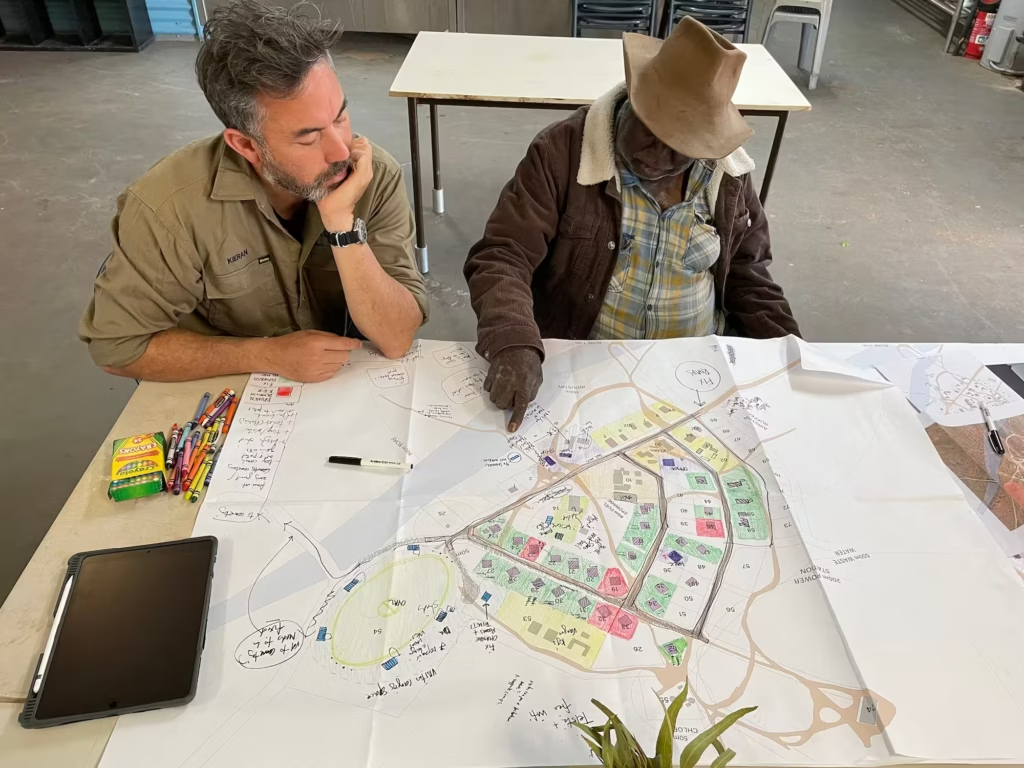
    Community meeting, September 2023
    Margaret Pulchen, Marita Pultchen, Heather McRae, Bridget Pulchen and Kieran Wong
    Community workshop, October 2023

    We need to do something for this country. We need to work together, get everyone together and work together.

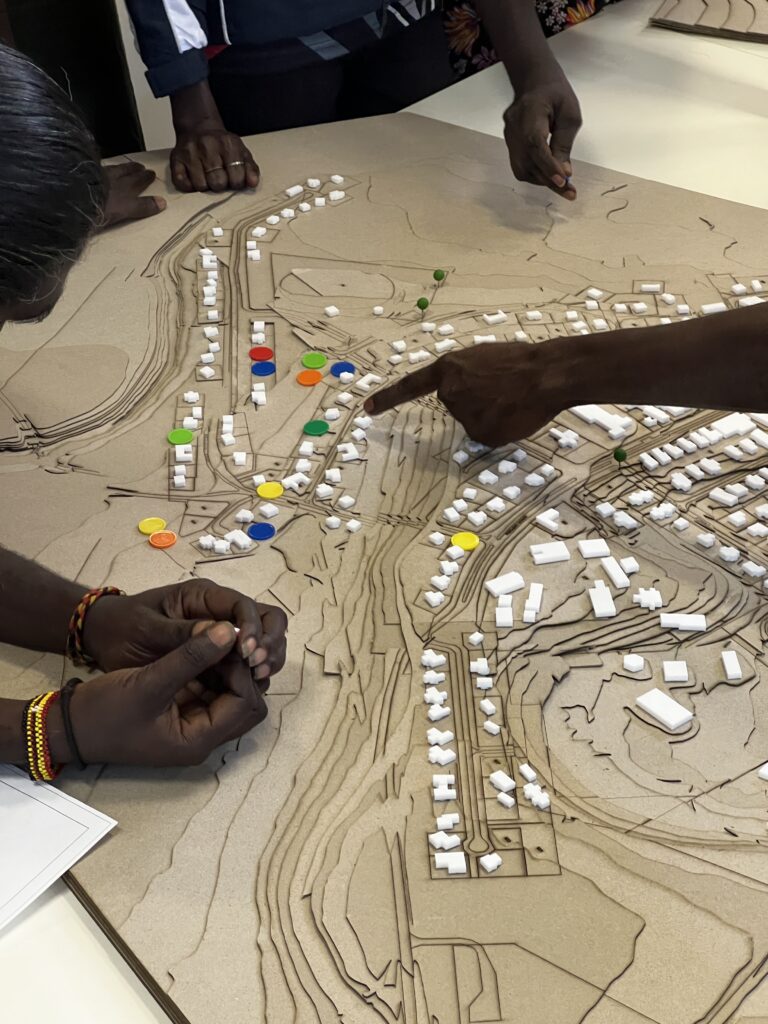
    Community workshop, September 2023
    Scenes from a series of community workshops, July 2023
    Next Project
    Ngurra Palyamaniny

    Martu Country

    Bemkanin – Wadeye Community Plan

    Wadeye, also known as Port Keats, is located in the Northern Territory, 270km south-west of Darwin. The region has been home to Indigenous peoples for more than 40,000 years, primarily the Murrinh Patha language group, along with the Marritjevin, Marri Amu, Marri Ngarr, Magati-ge, and Menhthe peoples.

    Today, there are approximately 20 clan groups living in the region. Culturally, the Kardu Diminin clan have ownership rights at Wadeye, and the other clans living in the township respect these rights. A population survey conducted in 2019 suggested that approximately 2500 people live in Wadeye.

    Despite this rich cultural heritage, the community faces significant challenges, including overcrowded, poorly located housing and inadequate health infrastructure. Kardu Diminin Corporation (KDC) initiated this project to develop a community-led vision for Wadeye centred on their optimism and hope for the future. 

    KDC partnered with The Fulcrum Agency to develop a comprehensive Vision and Community Plan through a genuinely community-led process. The collaboration involved multiple trips to Wadeye over nine months for in-depth conversations, workshops, and extensive consultations. TFA’s role was to share technical knowledge that would enable the community to make informed decisions. 

    The collaboration brought together community members and key stakeholders—including other clans, government agencies, and service providers—to create a comprehensive dialogue under community leadership. The process acknowledged the Traditional Owner’s cultural authority and deep connection to Country while building their capacity to imagine and articulate their aspirations for future generations.

    Through this collaborative process, the Wadeye community now has:

    • A comprehensive and aspirational Vision and Community Plan
    • Agreement among Traditional Owners and community members on potential changes to land use, development areas, accessibility improvements, and enhancements to public and communal spaces
    • A framework for redefining the township that moves beyond ad hoc planning to provide strategic direction for future development
    • Clear expectations that all stakeholders, including government agencies and service providers, will use this vision to frame their work and ensure alignment with Traditional Owners’ wishes
    • A foundation document that supports their aspiration to transition to a Township Lease model of land tenure. 

    Community members now have a clear framework for collective decision-making and genuine agency over their township’s future.

    LocationMurrinh-patha Country
    PartnersKardu Diminin Corporation
    Project TypeCommunity Masterplan
    Completion2023
    Project TeamKieran Wong, Heather MacRae
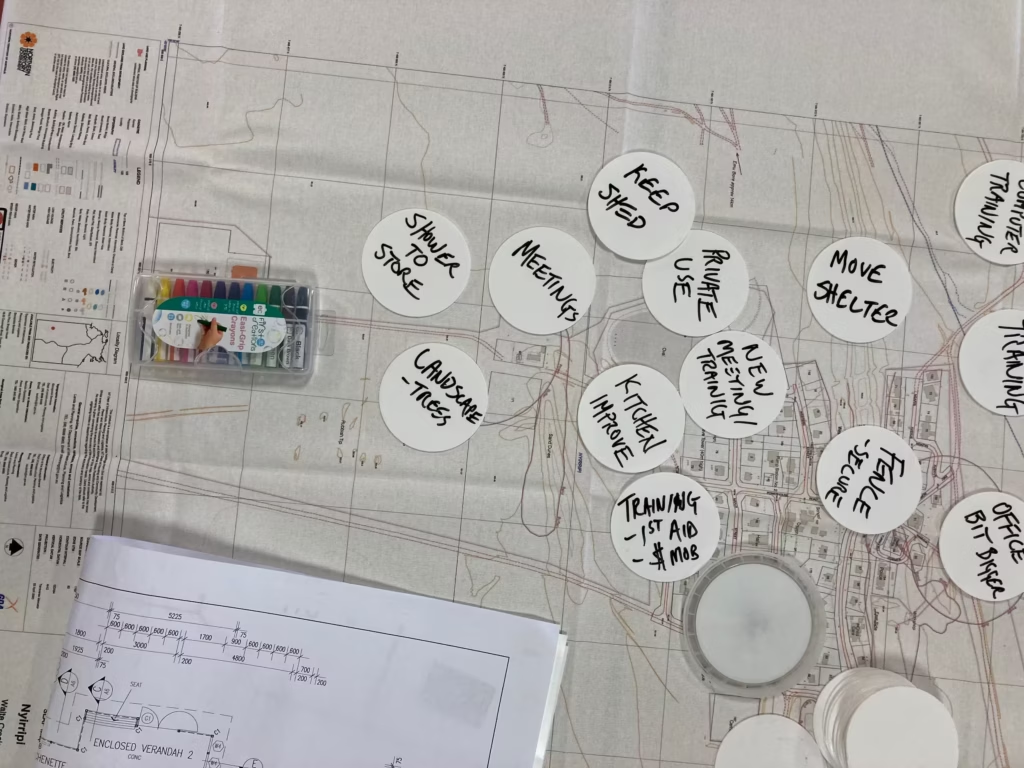
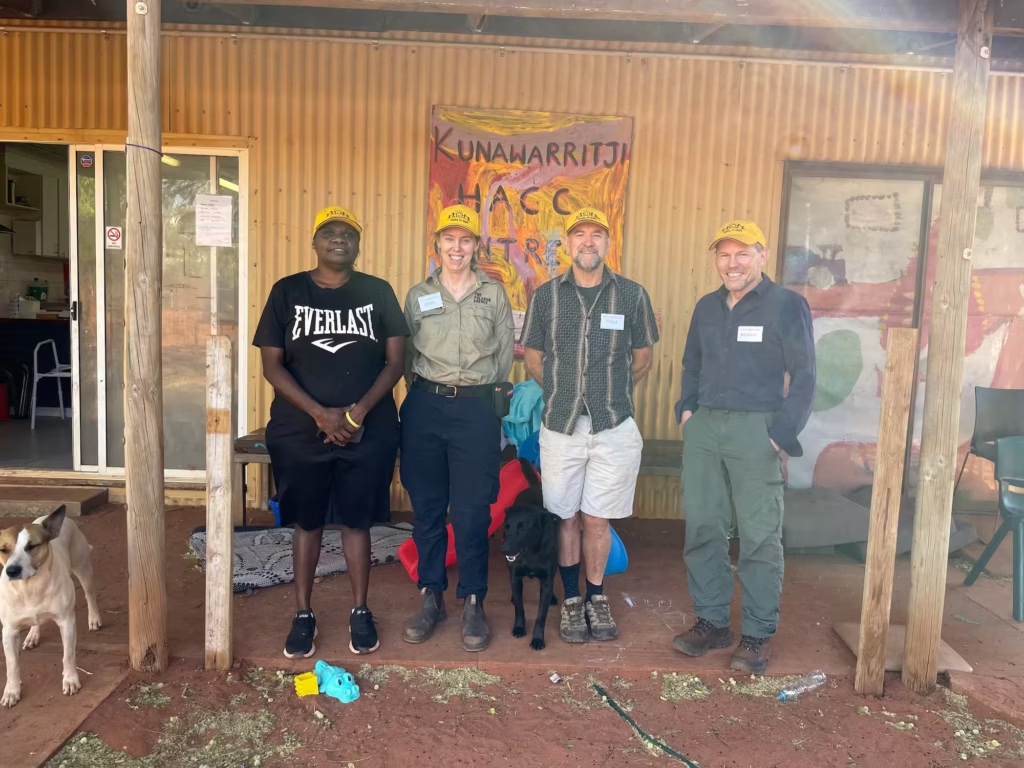
  • Nyirripi Learning Centre and Recreation Hall

    Nyirripi Learning Centre and Recreation Hall
    View of Karrku and Rurraki hills
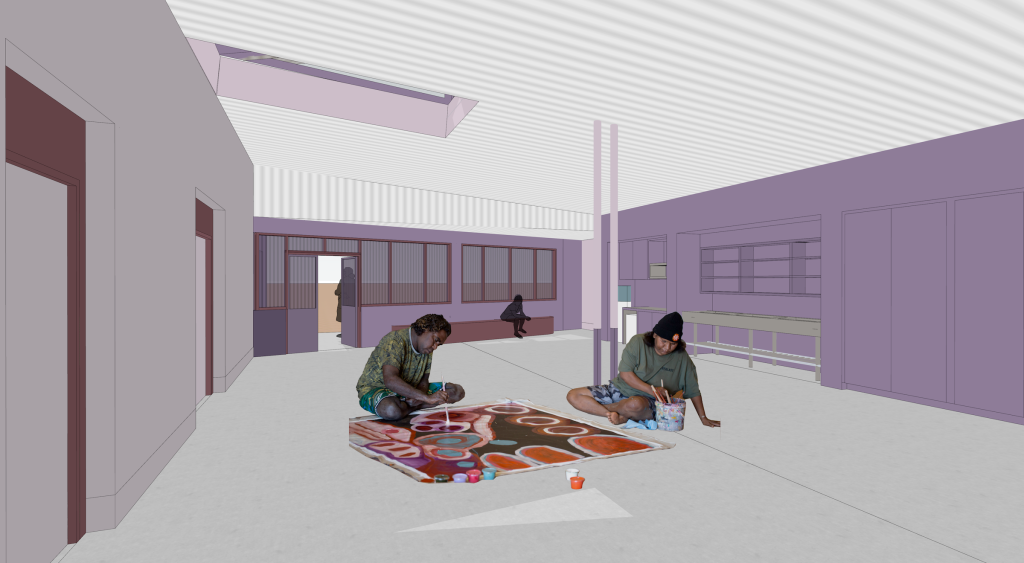
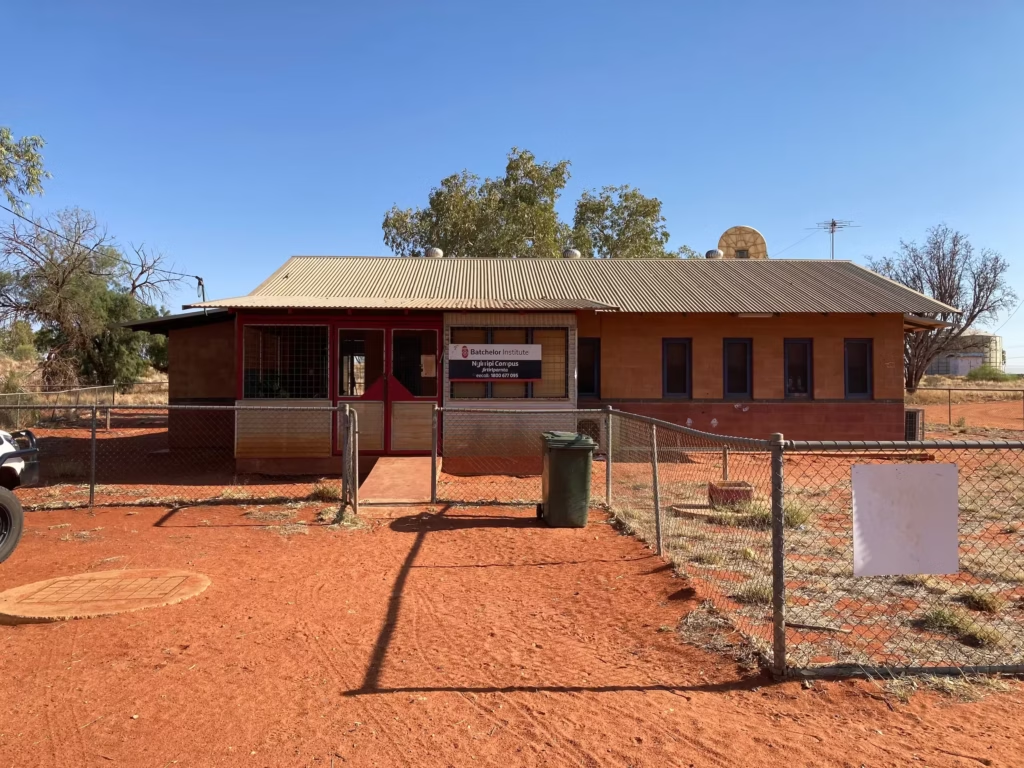
    Learning Centre – Since 2010, the Batchelor Institute has been working out of the Learning Centre, delivering a range of education and training courses. The community views this as an essential service and is eager for the building to be refreshed.
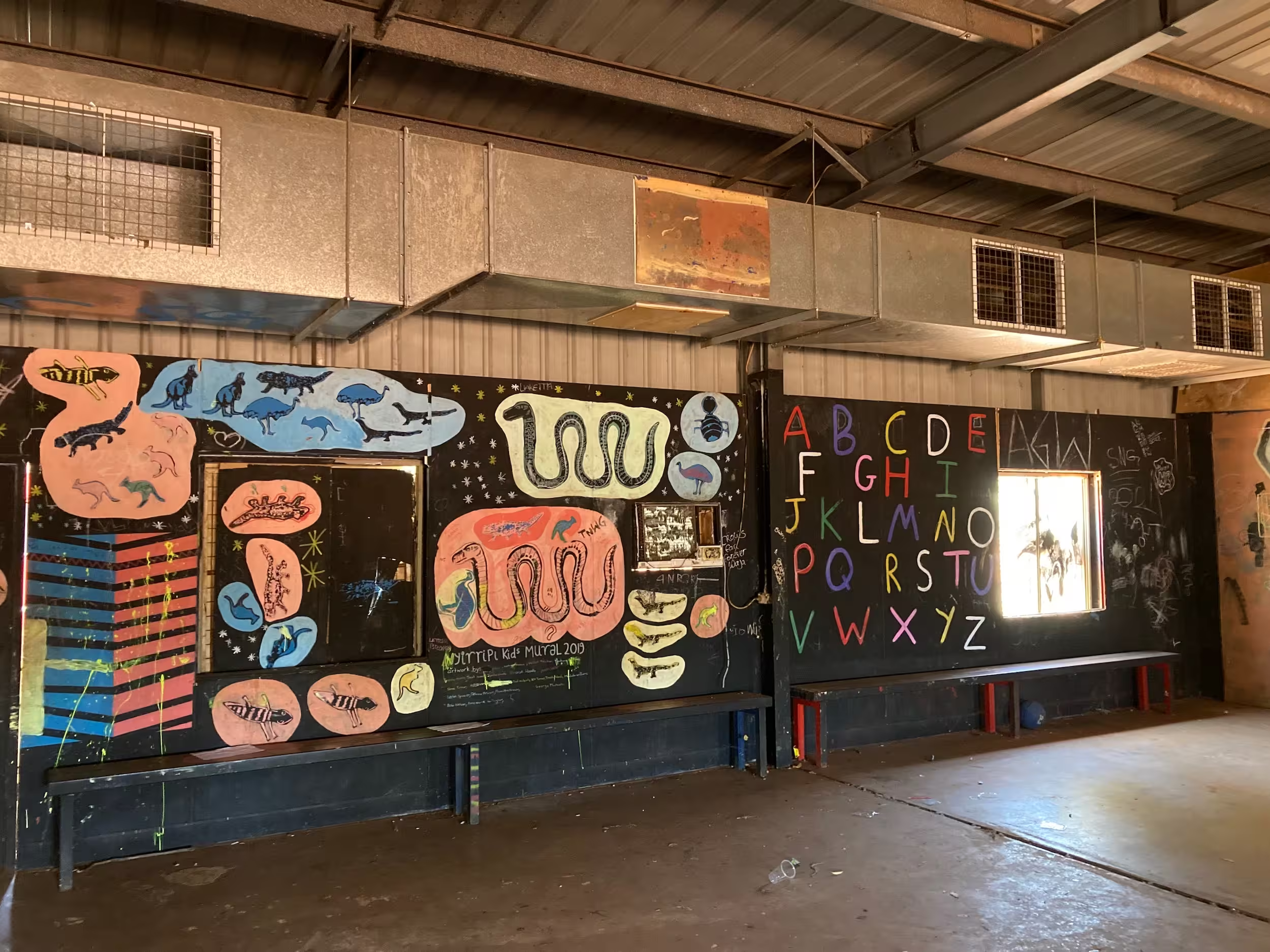
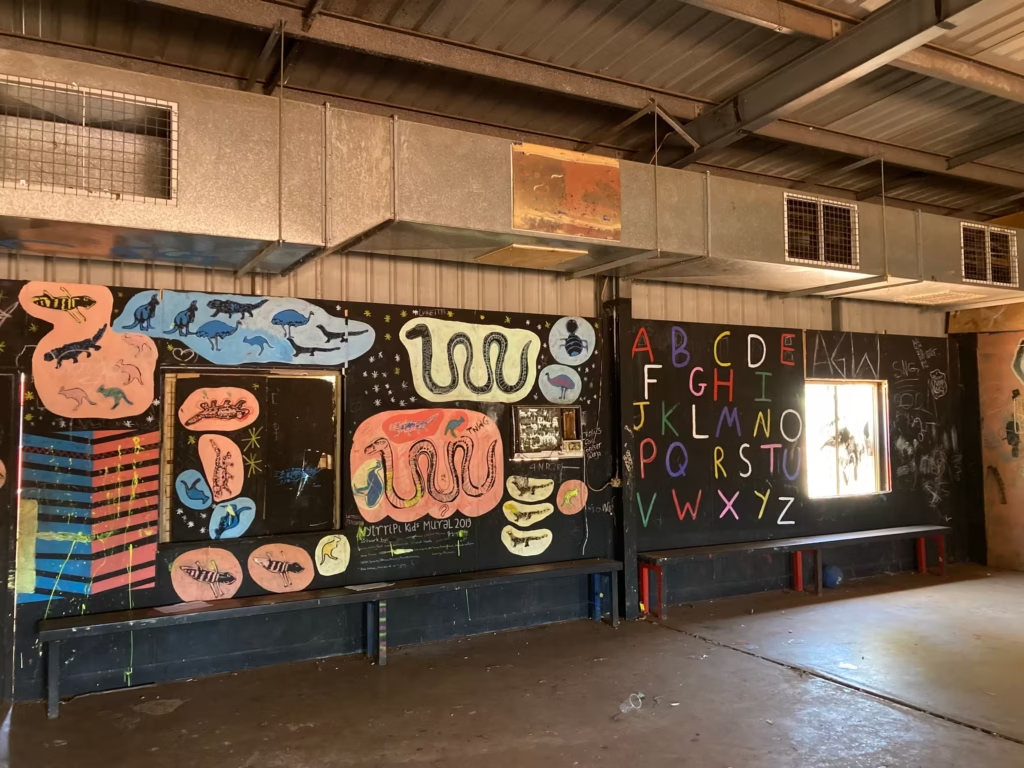
    Recreation Hall – When operating, the Hall provides activities for children, teens and young adults, including sport, music, art and craft, and is an important focus for the Nyirripi community.
    Consultation – As with all our community engagement, we listened closely and communicated clearly to ensure that what was said was heard.
    Next Project
    Room-to-Breathe

    Northern Territory

    Nyirripi Learning Centre and Recreation Hall

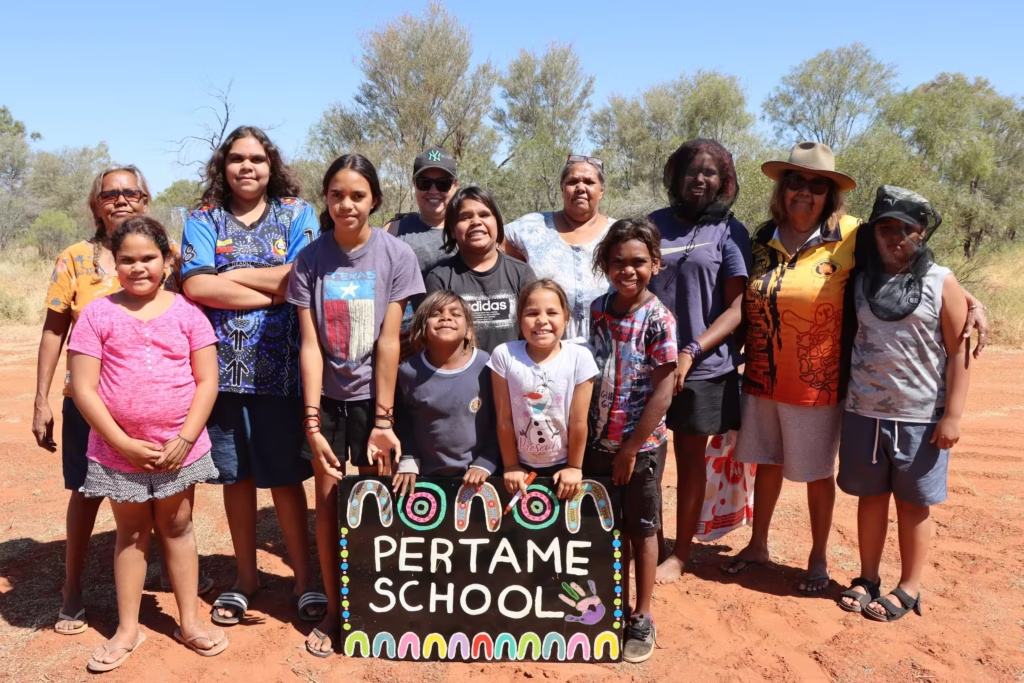
    Nyirippi is a Warlpiri community in the Central Desert, 420kms from Alice Springs, on Country protected by the Yunkanjini Aboriginal Land Trust.

    Life in the community has outpaced its modest Learning Centre and Recreation Hall. Both need upgrading to ensure that these important hubs continue to serve the community well into the future.

    The Learning Centre delivers a range of education and training courses and the community views this as an essential service and is eager for the building to be refreshed.

    The Recreation Hall has been closed due to unsafe building conditions. When operating, the Hall provides activities for children, teens and young adults, including sport, music, art and craft, and is an important focus for the Nyirripi community.

    The Granites Mine Affected Areas Aboriginal Corporation (GMAAAC) allocated funds for community engagement, concept design and costing for upgrades to these buildings.

    Working with GMAAAC and the Central Land Council (CLC), our role was to facilitate community engagement and provide design services that would enable GMAAAC to make informed decisions around the cost and feasibility of these projects. We were able to translate the aspirations of the community into an achievable and costed built form.

    We visited Nyirripi and worked closely with community stakeholders and staff to develop options that would meet their needs. As with all our community engagement, we listened closely and communicated clearly to ensure that what was said was heard.

    The design moves are modest – upgraded kitchens, weatherproofing, improved security, better disability access, a mix of small private spaces and larger rooms for training– but the impact will be huge.

    The concepts have been costed and the risks identified. The community is now fully briefed and able to pursue the next stage of the project with confidence.

    LocationWarlpiri Country
    PartnersCentral Land Council, Granites Mine Affected Areas Aboriginal Corporation
    Project TypeCommunity Engagement & Architecture
    CompletionOngoing
    Project TeamAndrew Broffman, Frances Silberstein
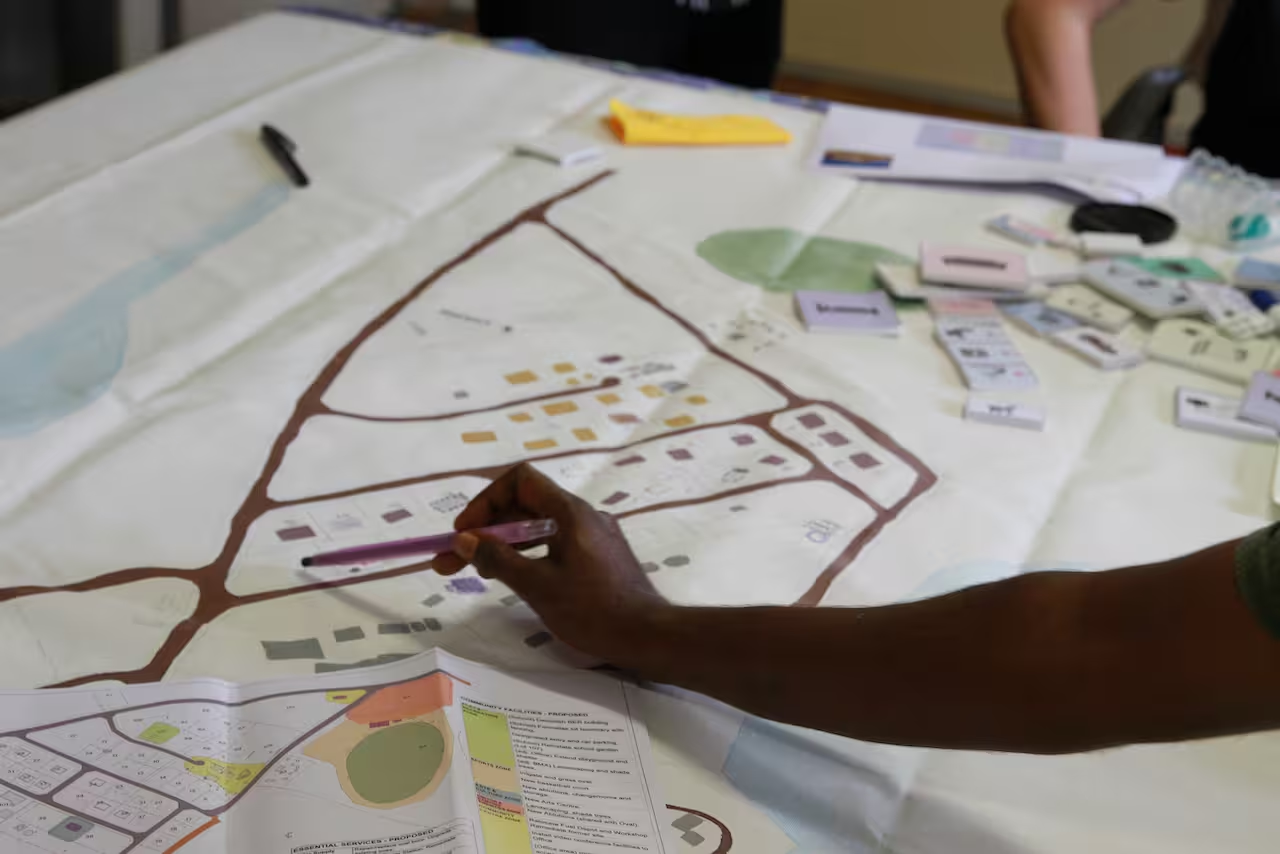
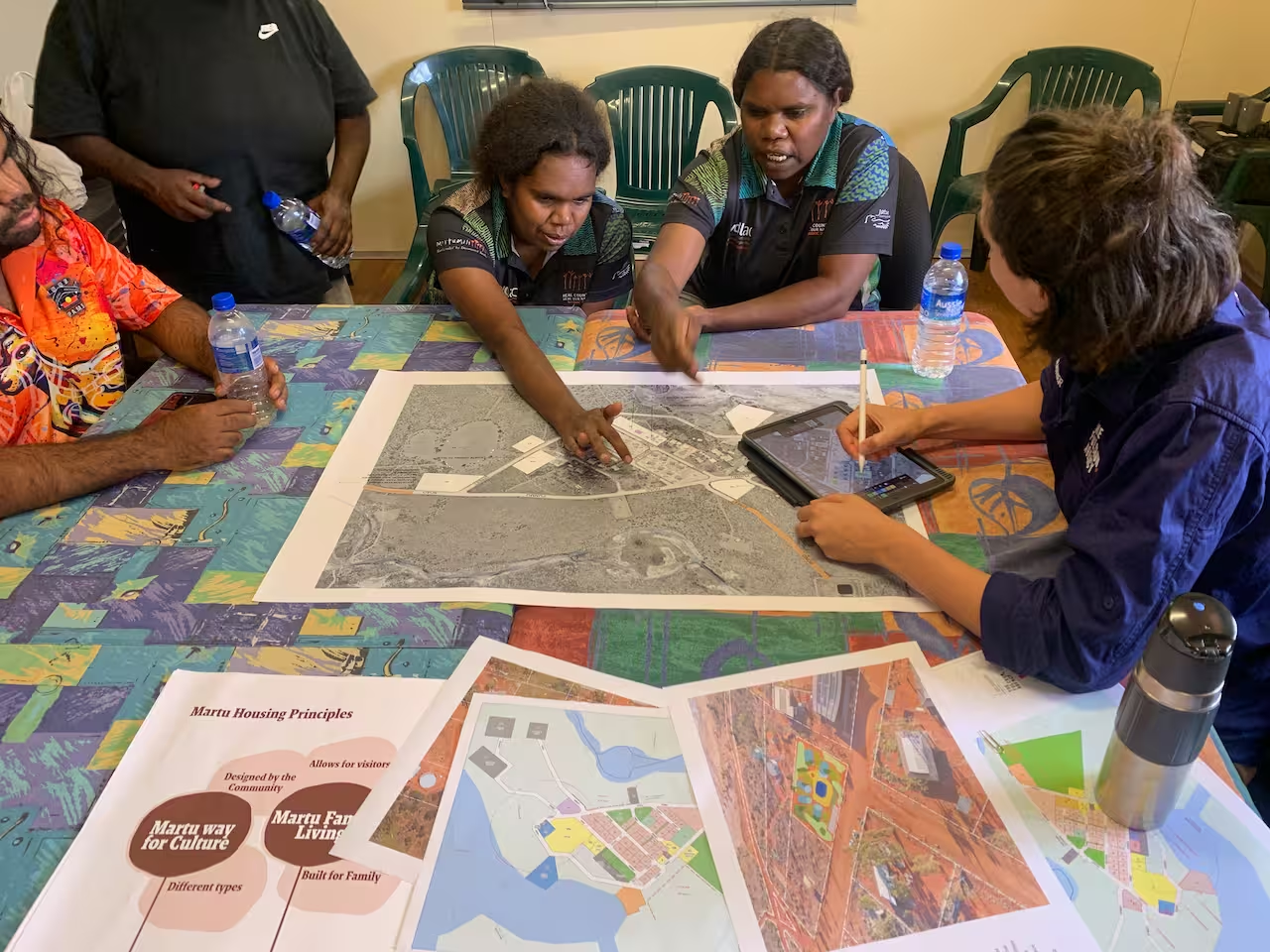
  • Martu Community Co-Design

    Martu Community Co-Design
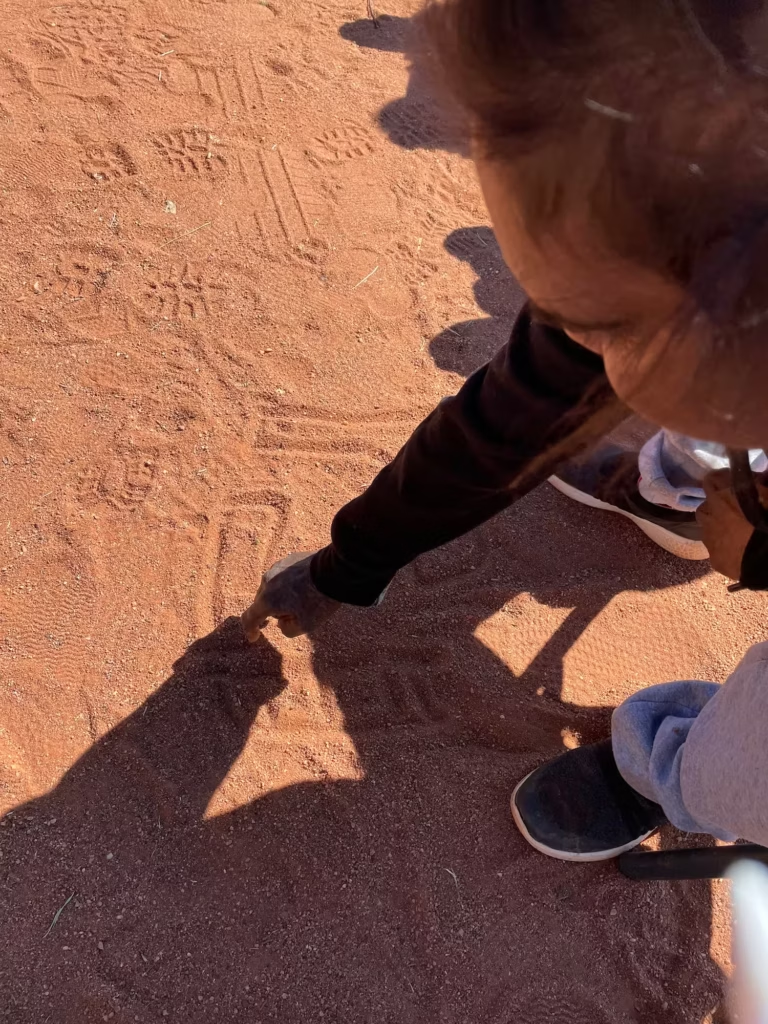
    Community consultation in Punmu
    Parnngurr walking tour

    ‘The co-design project gives Martu families the opportunity to lead and to have ownership. When we have these opportunities, we take it by the hand and nurture it and develop it.’

    Terrance Jack

    Community consultion in Parnngurr
    Next Project
    Stolen Generation Keeping Places

    TharawalWiradjuri and Dharug Country

    Martu Community Co-Design

    Martu people hold native title rights to 136,000 square kilometres in WA’s Central Western Desert, country that includes the communities of Punmu, Kunawarritji and Parnngurr. A comprehensive audit of these communities revealed a startling disconnect between existing infrastructure, housing and community requirements.

    Jamukurnu Yapalikurnu Aboriginal Corporation (JYAC) recognised the need for a community-led approach to address these challenges while ensuring future development would align with Martu cultural practices and protocols.

    JYAC partnered with us to implement a Community-Led Co-Design Process, with JYAC securing state government support for this phase of work. The collaboration was fundamentally driven by Martu voices and priorities, with TFA working alongside Martu advisors to conduct extensive community engagement across all three communities.

    The partnership approach included on-site discussions and workshops, walking tours and house visits, and various bespoke engagement tools designed to maximise participation from community members. This intensive co-design methodology investigated community planning aspirations, infrastructure needs, and housing requirements, with housing emerging as a central focus through rich discussions about current usage patterns and ideal future designs. 

    The process ensured that Martu people remained at the centre of all decision-making while TFA provided technical support to translate community aspirations into actionable plans.

    The project established a framework for true self-determination, with several significant outcomes:

    • Six core Martu Housing Principles to guide all future development: Martu Way for Culture, Martu Family Living, Safety, Health, Comfortable Living, and Quality Construction and Maintenance
    • Cultural alignment: Future development will now reflect Martu cultural practices and protocols rather than imposing external standards
    • Local decision-making: TFA’s process created pathways for Martu to have direct input into the design, delivery, and maintenance of community infrastructure
    • Governance foundation: Discussions facilitated by TFA led to recommendations for a formalised housing governance model that would give Martu people greater control over housing matters.
    • A plan to work together: The project identified the need for a clear, outcomes-focused Action Plan to guide implementation and ensure accountability.

    The co-design process established a foundation for genuine self-determination, with Martu communities now having the tools and framework to lead their development priorities. 

    As Terrance Jack expressed, “The co-design project allows Martu families to lead and to have ownership. When we have these opportunities, we take it by the hand and nurture it and develop it.” 

    LocationMartu Country
    PartnersJamukurnu Yapalikurnu Aboriginal Corporation (JYAC)
    Project TypeCommunity Masterplan and Housing Guide
    Completion2023
    Project TeamKieran Wong, Heather MacRae, Andrew Broffman, Akira Monaghan
  • Yarralin Community Masterplan

    Yarralin Community Masterplan

    This Masterplan serves as the community’s roadmap for development, ensuring that future growth aligns with their values while addressing practical needs in a coordinated and strategic manner. Community members now have genuine ownership over their collective future and the evolution of their Country.

    Next Project

    Yarralin Community Masterplan

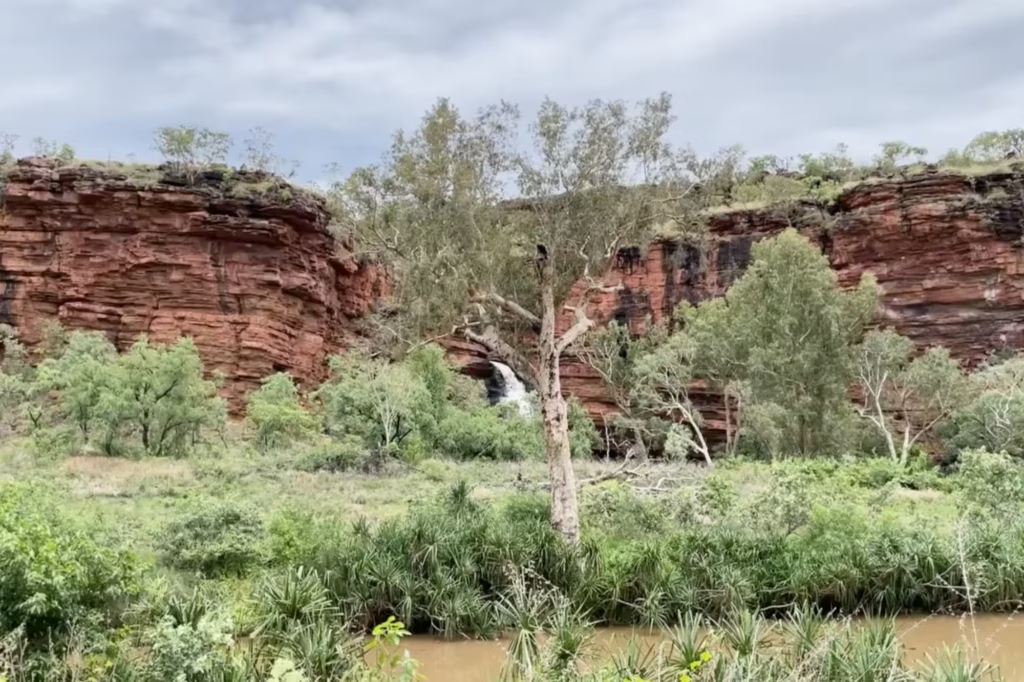
    Yarralin is located on the banks of the Wickham River, nestled between Victoria Downs Station, Judbarra National Park and the Victoria River. Despite its stunning location, the community faces significant challenges: inadequate infrastructure and services, insufficient housing, and accessibility problems during the wet season.

    Although the community had clear aspirations outlined in previous planning initiatives, they recognised the need for a cohesive spatial framework to progress beyond ad hoc development patterns and realise their vision in a coordinated manner.

    Walangeri Ngumpinku Aboriginal Corporation (WNAC) represents Traditional Owners and Aboriginal peoples residing in Yarralin. WNAC partnered with The Fulcrum Agency to develop a comprehensive Community Master Plan through a community-led process. The collaboration involved workshops, meetings, and extensive stakeholder interviews, ensuring community members drove the conversation from inception.

    The partnership approach cross-referenced new community input with the 2010 Community Plan to maintain continuity and respect for previously identified priorities. This process included analysing existing community assets, opportunities, and constraints together. The work culminated in a series of community-determined Guiding Principles for all future development, ensuring the framework reflected local values and knowledge.

    Through this collaborative process, Yarralin community now has:

    • A structured framework to guide their growth and development over the coming decades, owned and directed by the community
    • A clear sequence of development priorities ensuring critical infrastructure and services are delivered according to their needs
    • Built-in flexibility to adapt to changing community requirements over time
    • A comprehensive understanding of development constraints, including flood risk, soil conditions, cultural sites, and infrastructure capacity
    • Identified pathways to de-risk the implementation of their priorities
    • A community-owned vision that complements their Township Lease negotiations while addressing their broader strategic planning needs. 

    The Masterplan serves as the community’s roadmap for development, ensuring that future growth aligns with their values while addressing practical infrastructure and service needs in a coordinated and strategic manner. Community members now have genuine ownership over their collective future and the evolution of their Country.

    LocationNgarinman Country
    PartnersWalangeri Ngumpinku Aboriginal Corporation
    Project TypeCommunity Masterplan
    Completion2025
    Project TeamKieran Wong, Akira Monaghan, Christina Fogale