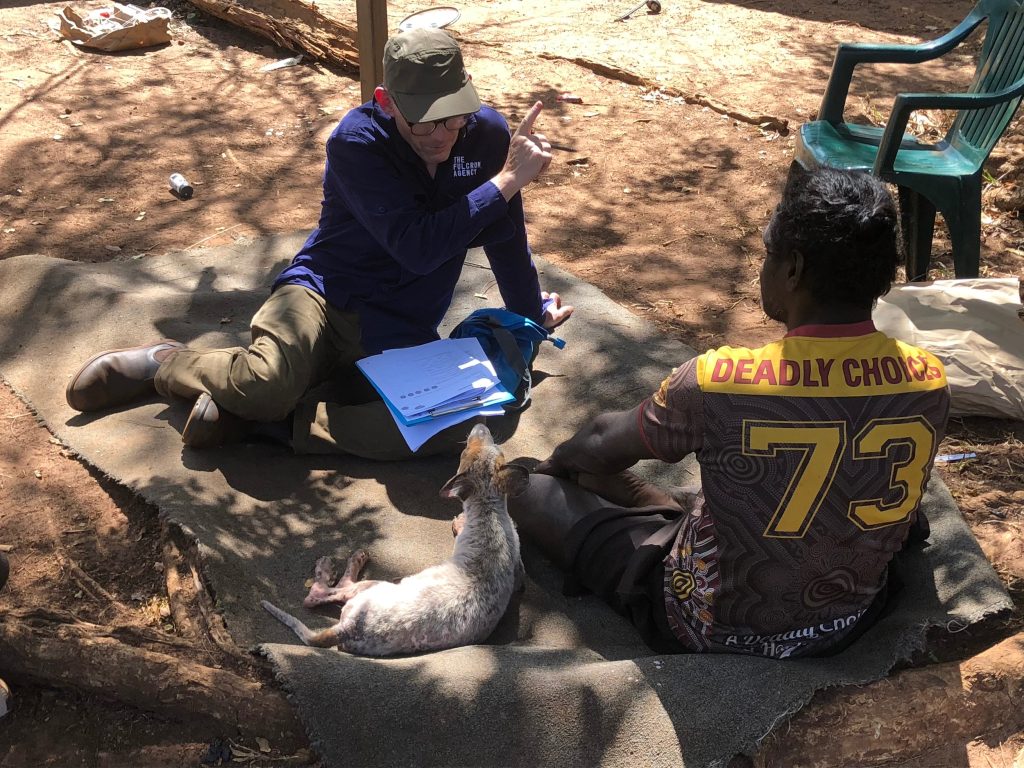
This is not to say communities have all the answers, but they do know what their needs are. All they seek is trustworthy, open minded and productive collaborations.
We know how to wait: Post Occupancy Evaluation for Remote Housing Northern Territory
The Fulcrum Agency was engaged by Aboriginal Housing Northern Territory (AHNT) on behalf of the Joint Steering Committee for Remote Housing Northern Territory to undertake an independent, on-the-ground Post Occupancy Evaluation of the current National Partnership for Remote Housing Northern Territory (NPRHNT).
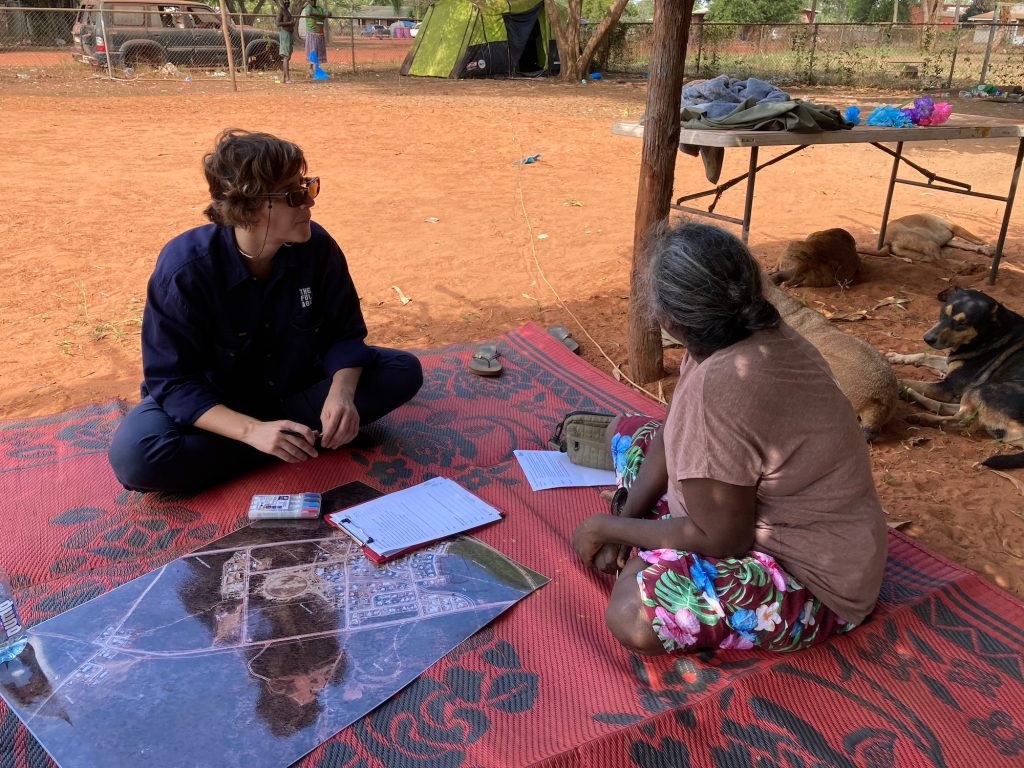
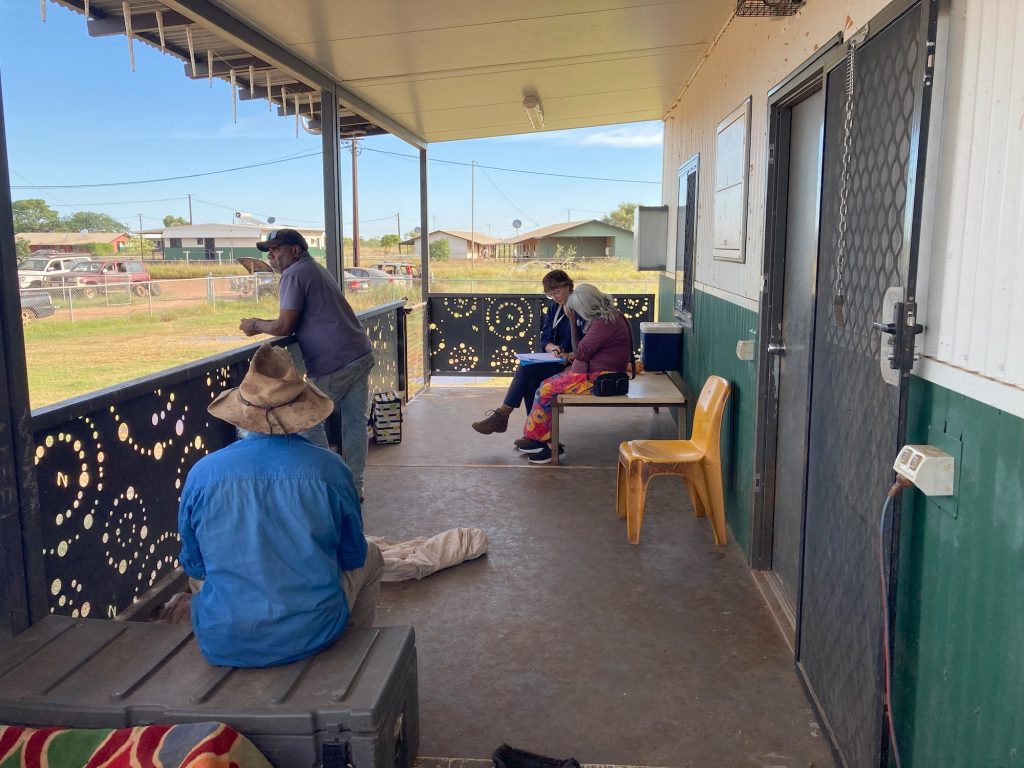
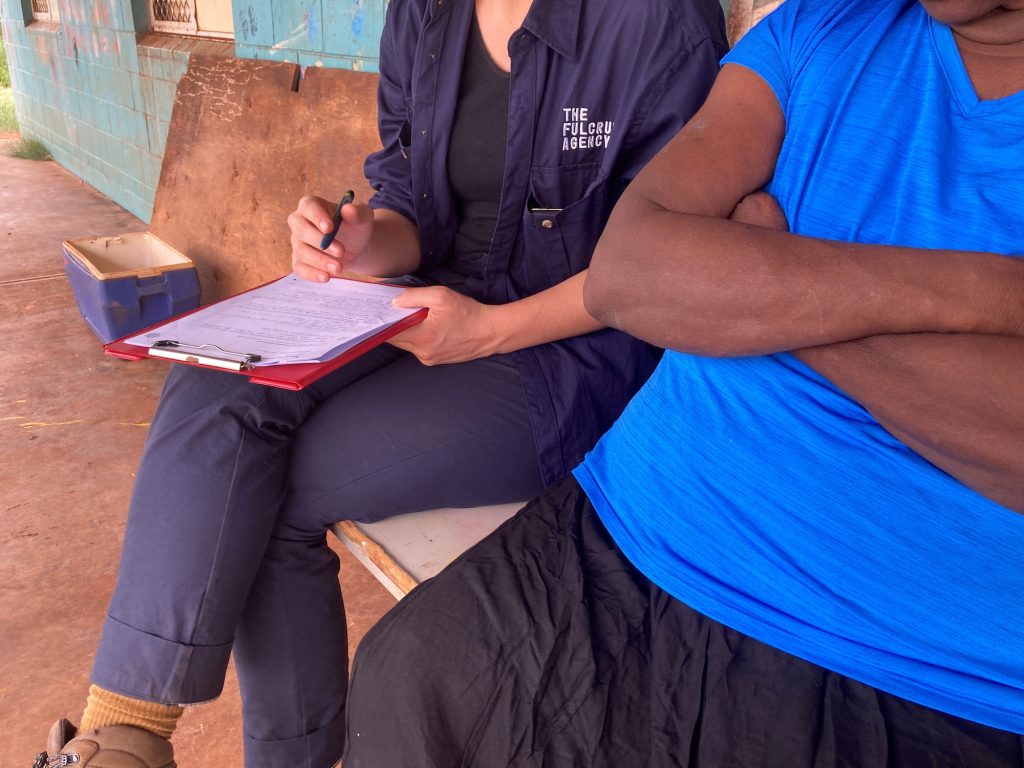
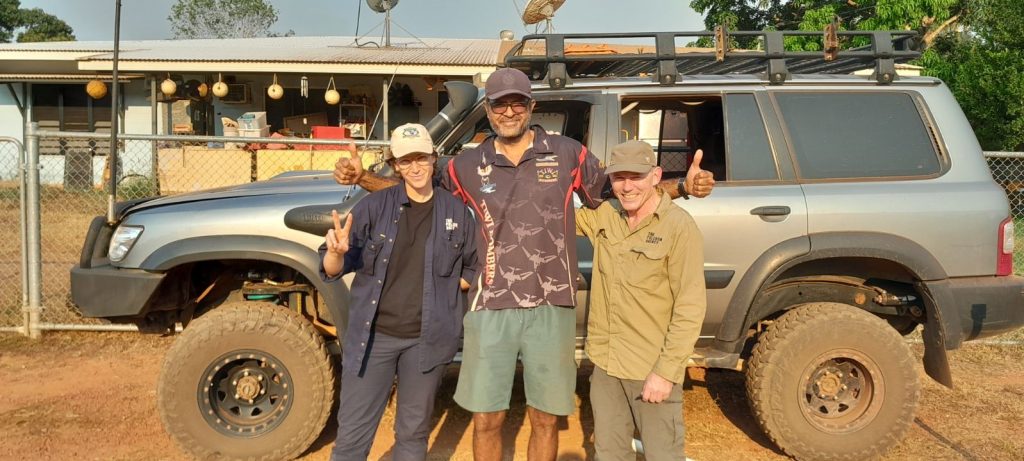
Our evaluation team, Andrew Broffman and Frances Silberstein, visited five discrete Aboriginal communities – one in each of the five NT regions – where they interviewed tenants, Housing Reference Group (HRG) members, and other community stakeholders. They reviewed past housing evaluations to understand recurring themes; conducted desktop reviews of house designs; reviewed local decision-making records to gain insight into community agency; and made on-site observations of housing layouts, building siting, and the urban context. They also facilitated online interviews with building contractors to understand the opportunities and obstacles to making an enduring impact on community economic development.
The evaluation is both qualitative and quantitative. The aim was to understand residents’ experiences of new housing: what is working and what is not. The role of our team was to listen carefully in a shared effort to improve housing delivery and its contribution to the wellbeing of Aboriginal Australians.
‘We know how to wait’ is both deeply informative and enjoyable to read, offering insights into the physical nature and social fabric of these five remote communities. Built on compelling stories, findings and analysis, the report examines five research questions spanning crowding, local decision making, economic development, climate response and healthy housing.
The report’s reflections are frank about what is at stake: ‘A report whose findings are not believed, or whose recommendations go nowhere is what communities expect.’ This Post Occupancy Evaluation was written to offer practical, implementable recommendations aimed at improving housing, strengthening community control, and supporting economic development for remote communities under ongoing and future housing agreements.
The findings and recommendations of this evaluation have been released to inform a new 10-year NT Remote Housing Agreement 2024–2034, backed by a $4 billion commitment from the Commonwealth and Northern Territory Governments to build 2,700 new homes across 73 remote communities.
The evaluation’s central finding, and its most urgent call to action, is that the housing challenge is not merely a technical one. The only persistent problem is the reluctance to trust what communities have to say. As the report states: ‘This is not to say communities have all the answers, but they do know what their needs are. All they seek is trustworthy, open minded and productive collaborations.’
When communities have genuine agency and are able to make their own decisions about housing that suits their needs and aspirations, the technical challenges will follow. Allocations will be clearer; house types will align with local needs; siting will be responsive; designs will reflect cultural protocols and a changing climate.
The promise of appropriate housing for Aboriginal communities will, perhaps then, become a reality.