• Ngurra Palyamaniny

    Ngurra Palyamaniny

    Our travelling kit includes washers, taps, door handles and other small items, allowing us to make immediate repairs to each house.

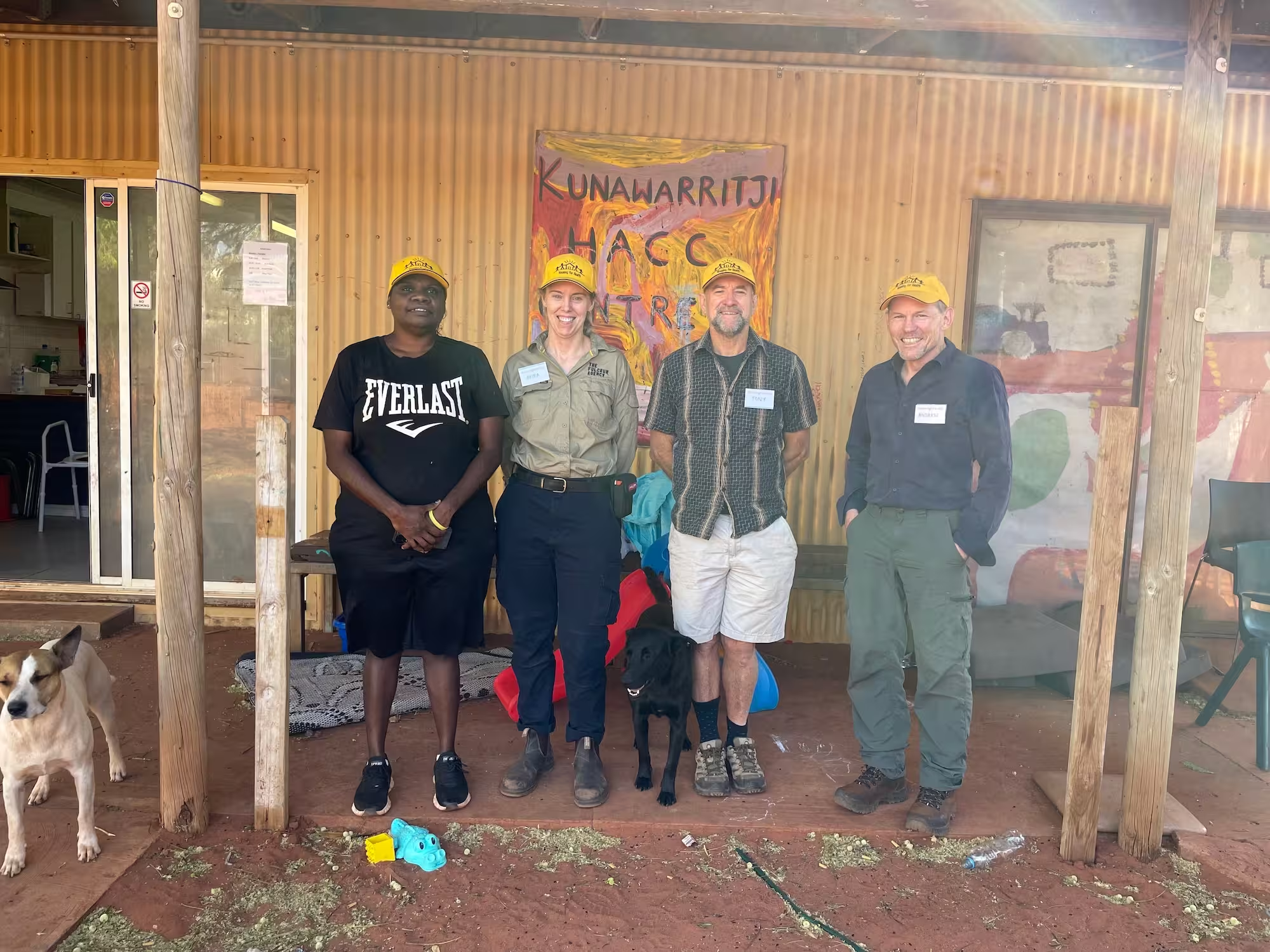
    Akira on the tools
    We trained and paid people from community to survey the houses and deliver straightforward repairs on the spot. 

    Ngurra Palyamaniny

    The remote Martu communities of Punmu, Kunawarritji and Parnngurr faced a critical housing crisis, with many properties barely habitable after years of neglect, poor maintenance, fluctuating occupancy and harsh environmental conditions, compounded by the lack of systemic funding for housing maintenance and repairs.

    Jamukurnu Yapalikurnu Aboriginal Corporation (JYAC), the Martu trustee corporation for native title rights, saw an opportunity through the WA Government’s Social Housing Economic Recovery Package (SHERP) to improve these conditions. This project formed part of a long-term community revitalisation movement driven by Martu, with JYAC having already completed preliminary surveys that identified what was needed to bring homes up to standard.

    JYAC partnered with us to provide comprehensive project management services, including grant writing, scope development, team coordination, budget management, community communications, and grant acquittal. We collaborated with two trusted partners, HealthHabitat and Aboriginal-owned CAdd Building and Maintenance Group, and built on our enduring relationship with JYAC and the Martu communities. 

    The project evolved using HealthHabitat’s Housing for Health ‘survey/fix’ methodology, which focuses on immediate improvements to existing houses rather than expensive rebuilding. This approach enabled teams to arrive equipped with toolkits for on-the-spot repairs while training and employing local people to do the same. 

    The collaborative approach prioritised houses according to HealthHabitat’s Healthy Living Principles: Tier 1 (Safety), Tier 2 (Health), and Tier 3 (Security), ensuring systematic and equitable treatment across all three communities. 

    A key focus was health hardware – the internal infrastructure that enables people to bathe and clean their homes properly. Extensive longitudinal research has consistently shown that restoring these basic health functions in homes leads to measurable improvements in residents’ health outcomes

    Through this collaborative process, the Martu communities now have:

    • Repaired housing across Punmu, Kunawarritji and Parnngurr, addressing years of neglect and improving habitability
    • Enhanced health outcomes through a focus on health hardware function
    • Enhanced community participation and engagement in housing maintenance, creating sustainable approaches for ongoing repairs. 

    The success of projects like these hinges on genuine community ownership and engagement. With JYAC taking the lead, the Martu communities weren’t just beneficiaries but active drivers of the entire process. Decisions flowed through the Martu Board of Directors and community leaders, ensuring the work reflected local priorities and knowledge from the ground up.

    LocationMartu Country
    PartnersJamukurnu Yapalikurnu Aboriginal Corporation, Healthabitat, CAdd Building and Maintenance Group
    Project TypeArchitecture
    Completion2024
    Project TeamAndrew Broffman, Akira Monaghan

  • Martu Community Co-Design

    Martu Community Co-Design
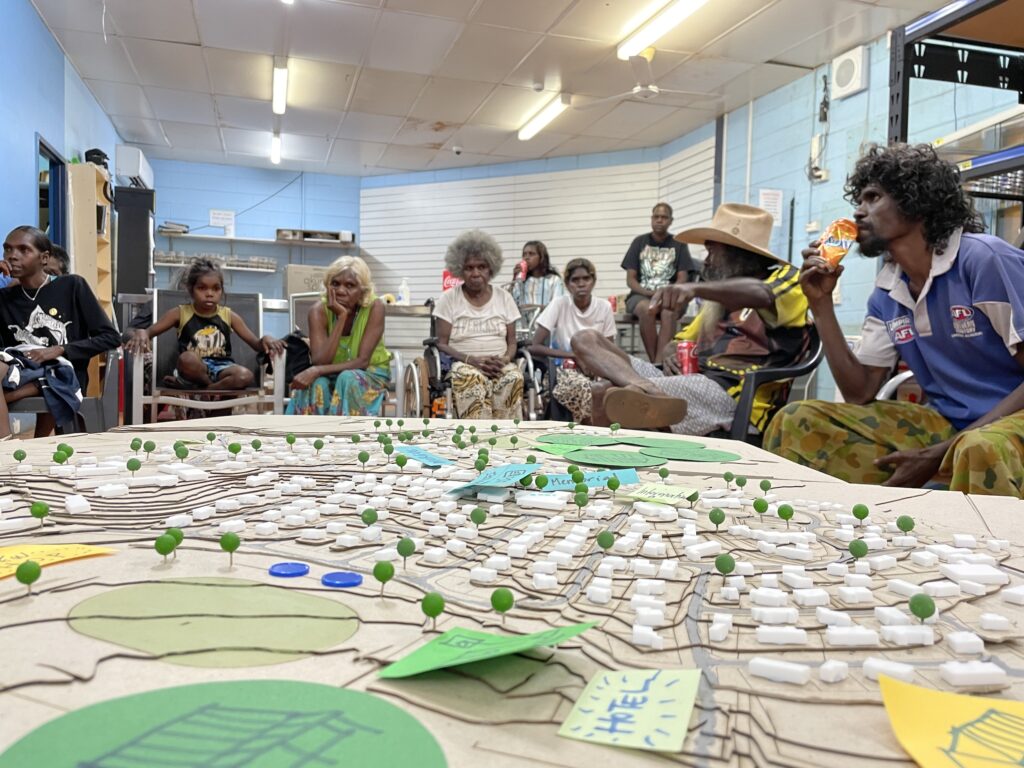
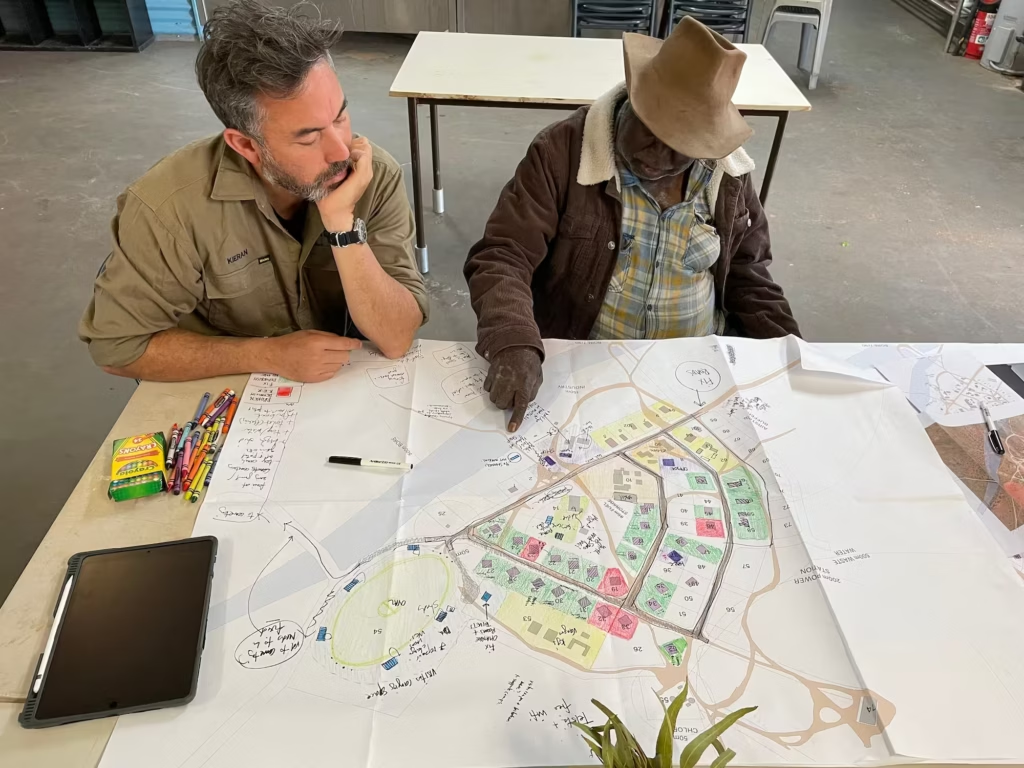
    Community consultation in Punmu
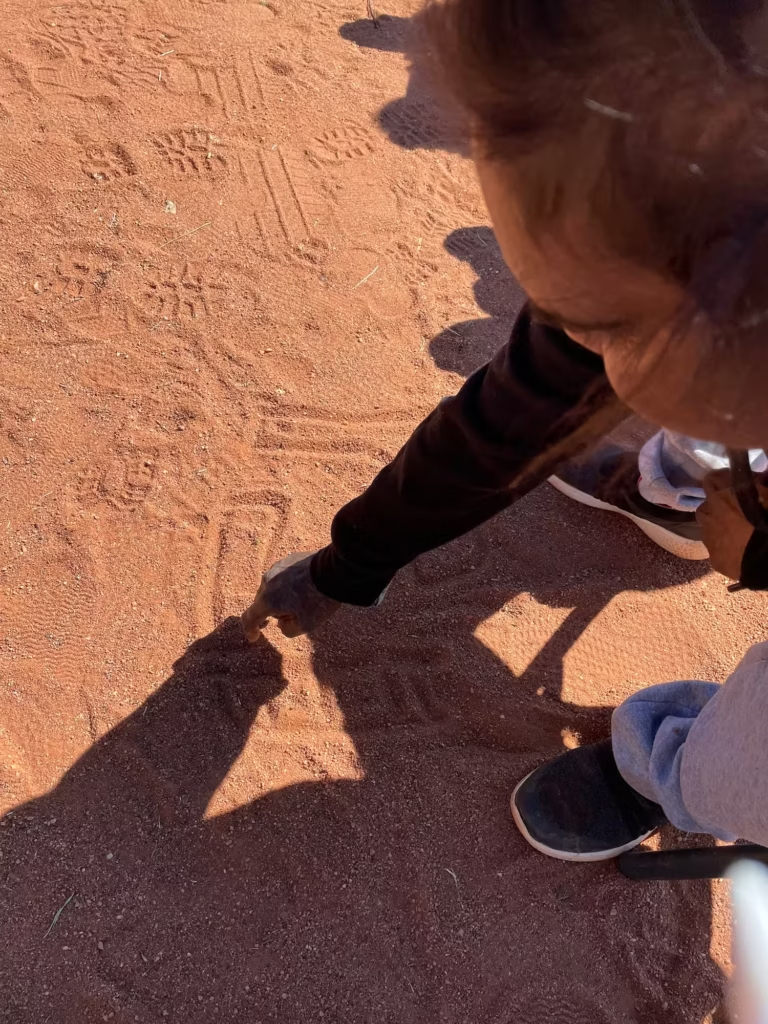
    Parnngurr walking tour

    ‘The co-design project gives Martu families the opportunity to lead and to have ownership. When we have these opportunities, we take it by the hand and nurture it and develop it.’

    Terrance Jack

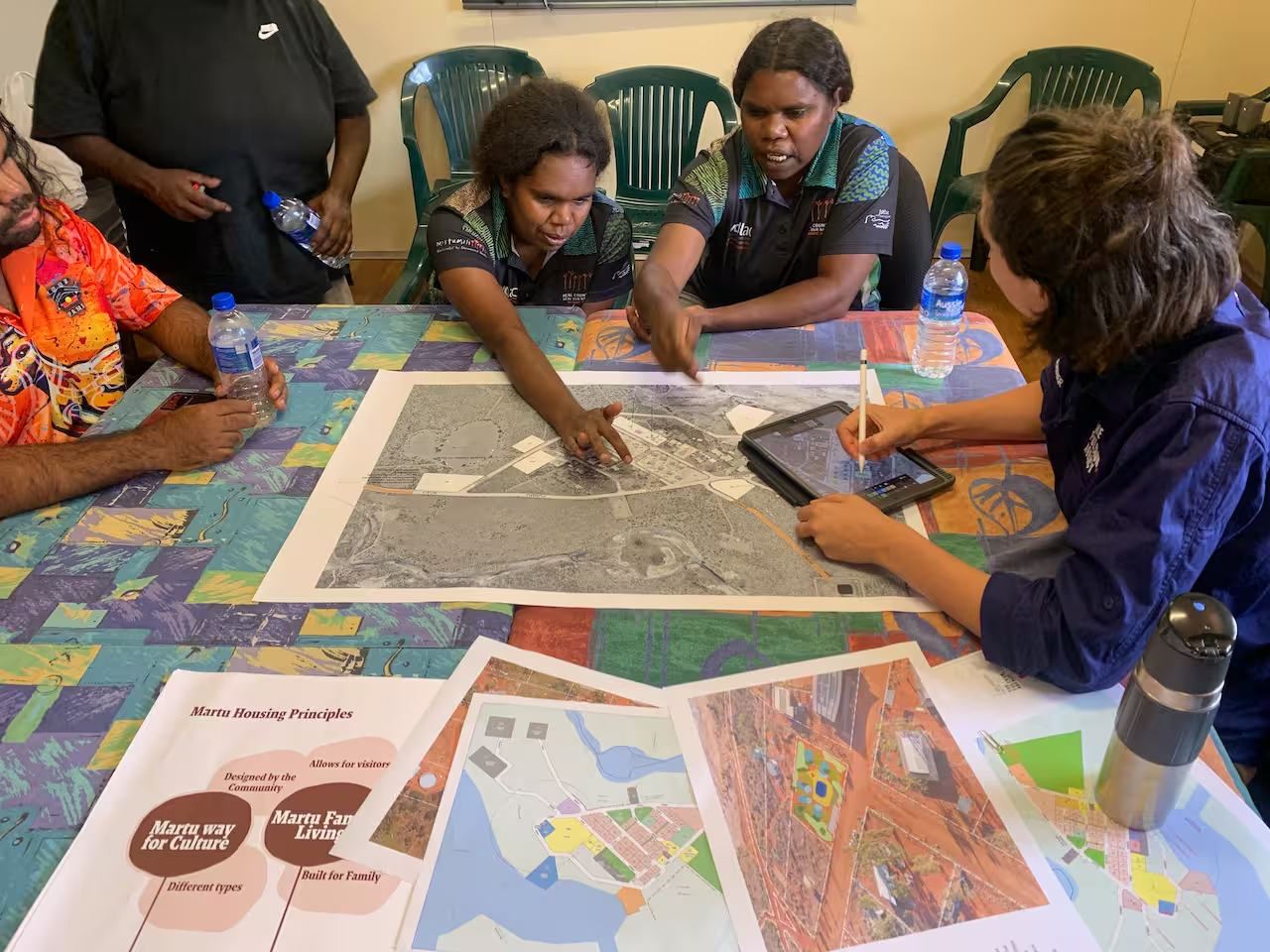
    Community consultion in Parnngurr
    Next Project
    Stolen Generation Keeping Places

    TharawalWiradjuri and Dharug Country

    Martu Community Co-Design

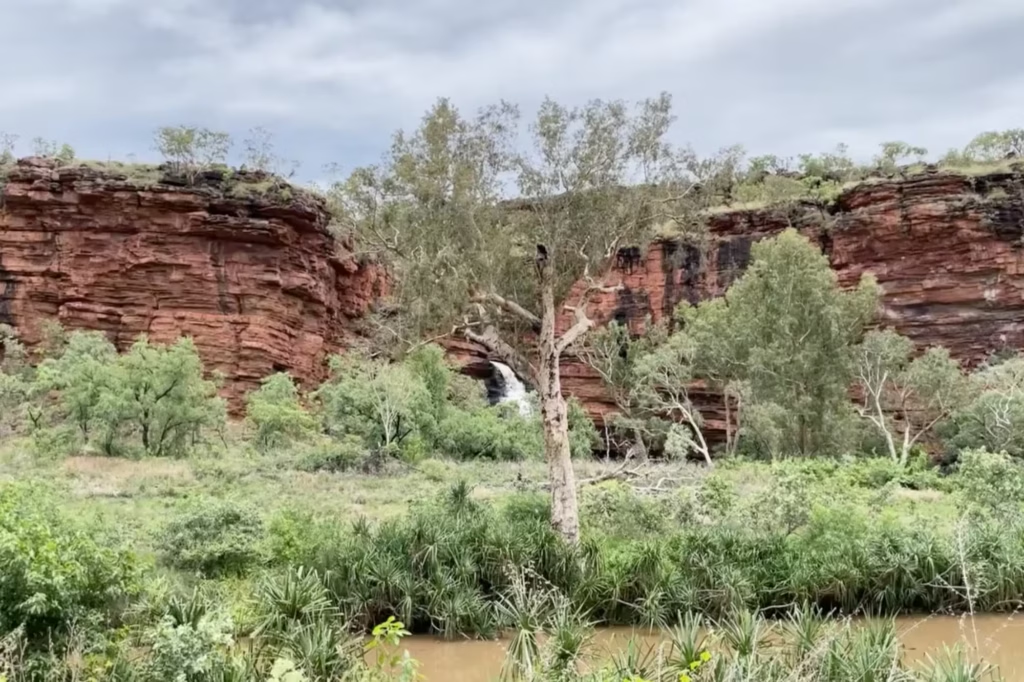
    Martu people hold native title rights to 136,000 square kilometres in WA’s Central Western Desert, country that includes the communities of Punmu, Kunawarritji and Parnngurr. A comprehensive audit of these communities revealed a startling disconnect between existing infrastructure, housing and community requirements.

    Jamukurnu Yapalikurnu Aboriginal Corporation (JYAC) recognised the need for a community-led approach to address these challenges while ensuring future development would align with Martu cultural practices and protocols.

    JYAC partnered with us to implement a Community-Led Co-Design Process, with JYAC securing state government support for this phase of work. The collaboration was fundamentally driven by Martu voices and priorities, with TFA working alongside Martu advisors to conduct extensive community engagement across all three communities.

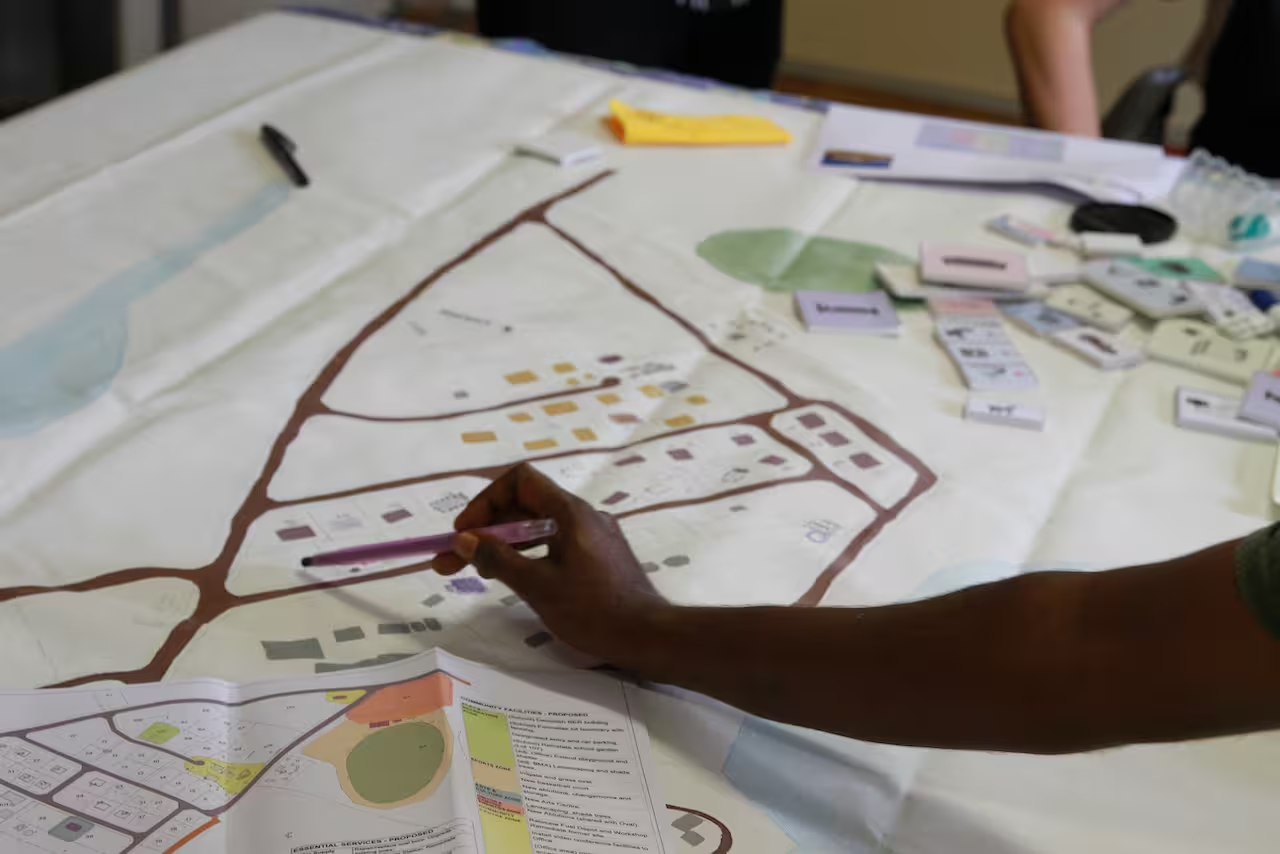
    The partnership approach included on-site discussions and workshops, walking tours and house visits, and various bespoke engagement tools designed to maximise participation from community members. This intensive co-design methodology investigated community planning aspirations, infrastructure needs, and housing requirements, with housing emerging as a central focus through rich discussions about current usage patterns and ideal future designs. 

    The process ensured that Martu people remained at the centre of all decision-making while TFA provided technical support to translate community aspirations into actionable plans.

    The project established a framework for true self-determination, with several significant outcomes:

    • Six core Martu Housing Principles to guide all future development: Martu Way for Culture, Martu Family Living, Safety, Health, Comfortable Living, and Quality Construction and Maintenance
    • Cultural alignment: Future development will now reflect Martu cultural practices and protocols rather than imposing external standards
    • Local decision-making: TFA’s process created pathways for Martu to have direct input into the design, delivery, and maintenance of community infrastructure
    • Governance foundation: Discussions facilitated by TFA led to recommendations for a formalised housing governance model that would give Martu people greater control over housing matters.
    • A plan to work together: The project identified the need for a clear, outcomes-focused Action Plan to guide implementation and ensure accountability.

    The co-design process established a foundation for genuine self-determination, with Martu communities now having the tools and framework to lead their development priorities. 

    As Terrance Jack expressed, “The co-design project allows Martu families to lead and to have ownership. When we have these opportunities, we take it by the hand and nurture it and develop it.” 

    LocationMartu Country
    PartnersJamukurnu Yapalikurnu Aboriginal Corporation (JYAC)
    Project TypeCommunity Masterplan and Housing Guide
    Completion2023
    Project TeamKieran Wong, Heather MacRae, Andrew Broffman, Akira Monaghan